Counterforce Brace for Golfer’s Elbow — Explained by Medical Evidence, Not Myths
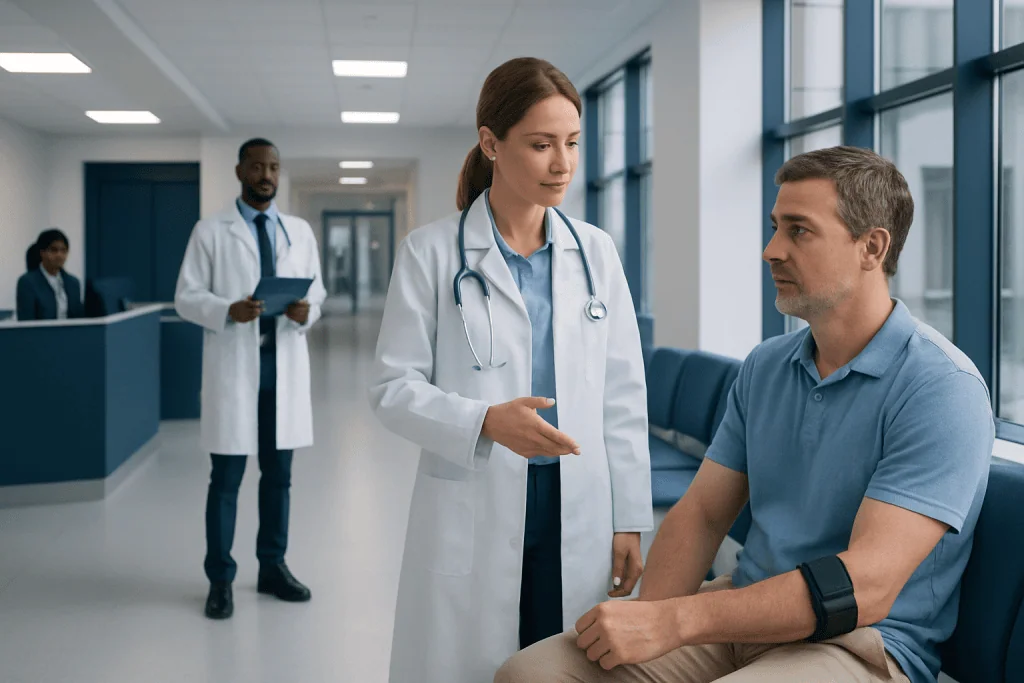
A counterforce brace may ease symptoms by shifting stress away from the irritated tendon near the inner elbow. The brace is most helpful during activities that trigger pain, rather than as a stand-alone treatment.
Key Takeaways
- A counterforce brace may ease symptoms by shifting stress away from the irritated tendon near the inner elbow.
- The brace is most helpful during activities that trigger pain, rather than as a stand-alone treatment.
- Correct fit and placement matter; a brace that is too tight or poorly positioned may irritate the arm.
- Persistent, severe, or spreading pain should be assessed by a qualified doctor to confirm the diagnosis.
- Recovery usually depends on combining symptom control with gradual strengthening and load management.
A counterforce brace for golfer's elbow can help some people by reducing the load on irritated forearm tendons during gripping and wrist motion. It is not a cure on its own, but it may be a useful part of a broader plan that includes activity changes, exercises, and medical assessment when symptoms persist.
Overview: does a counterforce brace help golfer's elbow?
A counterforce brace for golfer’s elbow may help reduce pain during activity by decreasing the force transmitted through the irritated tendon attachment on the inner side of the elbow. In medical terms, golfer’s elbow is often called medial epicondylitis, although many experts view it as a tendon overuse problem rather than a purely inflammatory condition. The brace does not repair the tendon by itself, but it can make movement more comfortable while the tendon is given time and the right rehabilitation to recover.
Medical evidence suggests that braces can provide short-term symptom relief for some people, especially during gripping, lifting, racquet sports, throwing, or repeated wrist flexion. However, studies on elbow straps and braces show mixed results, partly because symptoms, tendon changes, and activity demands differ from one person to another. This means a brace is best seen as one tool within a broader treatment plan, not as a guaranteed fix.
This matters because many people either expect too much from a brace or dismiss it too quickly. A balanced, evidence-based view is that a properly fitted counterforce brace may reduce pain enough to allow safer activity modification and exercise progression. If symptoms continue, a clinician may also assess for other causes of inner elbow pain, including nerve irritation or other tendon conditions such as tennis elbow affecting the outer side of the joint.
What a counterforce brace is and how it works

A counterforce brace is usually a narrow strap worn around the upper forearm, a short distance below the elbow rather than directly over the painful spot. It applies gentle pressure to the forearm muscles that attach to the medial epicondyle, the bony area on the inside of the elbow. The goal is to spread the load across the muscle-tendon unit so the irritated tendon origin experiences less strain during movement.
In golfer’s elbow, pain is commonly triggered when the wrist bends downward, the forearm turns, or the hand grips firmly. By changing how force is distributed, the brace may lower stress at the injured tendon attachment. Some people notice better tolerance for tasks like carrying bags, typing for long periods, using tools, or sports that involve repeated swinging or throwing.
There are limits to what a brace can do. It does not correct poor technique, weak shoulder or forearm muscles, sudden increases in training, or repetitive workplace strain. It also does not replace a structured rehabilitation plan, which may include physical therapy and rehabilitation to improve strength, movement control, and return to activity.
Who may benefit most, and who may not

A counterforce brace tends to be most useful for people whose pain is clearly linked to activity and who feel discomfort with gripping, lifting, wrist flexion, or forearm rotation. It may help recreational athletes, manual workers, musicians, and office workers whose symptoms flare during repeated hand and forearm use. Some people benefit mainly during sports or work tasks, while others use it temporarily during daily activities as their symptoms improve.
It may be less helpful when pain is present even at rest, when there is significant swelling, when the diagnosis is uncertain, or when symptoms involve numbness and tingling into the ring and little fingers. In those cases, another problem such as ulnar nerve compression, joint disease, neck-related pain, or a more significant tendon injury may be contributing. Wearing a brace without clarification can delay the right treatment.
Comfort and fit also affect benefit. A strap that causes throbbing, skin irritation, hand swelling, or tingling is not appropriate. People with circulation problems, fragile skin, or certain nerve conditions should ask a doctor or therapist before using one regularly. If the diagnosis is unclear, assessment by an orthopedic or sports medicine specialist can help distinguish golfer’s elbow from related disorders such as ulnar nerve compression.
How to use a brace correctly
For most designs, the brace is worn around the forearm about 2 to 3 centimeters below the inner elbow, over the bulk of the forearm muscles rather than over the bony point itself. The pressure should feel firm but not tight enough to cause numbness, color change, or increased pain. Because brace designs differ, following the manufacturer instructions and a clinician’s advice is sensible.
In general, the brace is most often used during activities that trigger symptoms, such as exercise, sports, lifting, tool use, or repetitive household tasks. It does not usually need to be worn all day if the arm is comfortable at rest. Removing it after activity allows the skin to breathe and reduces the chance of irritation.
People often make two common mistakes: placing the strap directly on the painful area, or tightening it as much as possible in the hope of stronger support. Neither is helpful. Proper positioning and moderate tension are more important than force. If there is uncertainty about fit or function, a clinician may demonstrate use during a visit that includes orthopedic rehabilitation or sports injury assessment.
- Use the brace during activities that usually provoke pain.
- Do not place it directly over the inner elbow bone.
- Loosen or remove it if tingling, swelling, or color change occurs.
- Combine brace use with activity modification and exercise.
What the evidence says beyond common myths
A common myth is that braces heal tendon injuries simply by wearing them. Current evidence does not support that idea. Research on elbow straps and orthoses suggests they may reduce pain and improve function in the short term for some patients, but outcomes vary, and they do not replace treatment aimed at the underlying tendon problem.
Another myth is that more immobilization is always better. In reality, tendons usually respond best to carefully managed loading rather than complete long-term rest. Relative rest, gradual return to activity, and progressive strengthening often matter more than passive support alone. If the brace helps a person move with less pain, it may support rehabilitation rather than substitute for it.
A third misconception is that any inner elbow pain must be golfer’s elbow. Pain around the elbow can come from the tendon, joint, nerve, or referred pain from the neck or shoulder. When symptoms are atypical, persistent, or worsening, a medical evaluation and, if needed, MRI or other imaging may help confirm the diagnosis and guide treatment choices.
Diagnosis and treatment options beyond the brace
Diagnosis usually begins with a medical history and physical examination. A doctor asks when the pain started, what activities trigger it, whether there is weakness or numbness, and whether work or sport technique may be contributing. During the exam, pain is often reproduced by resisted wrist flexion, gripping, or stretching the forearm flexor muscles. Imaging is not always necessary, but ultrasound or MRI may be considered if symptoms are prolonged, severe, or unclear.
Treatment commonly starts with reducing or modifying the activity that triggered symptoms. Ice or heat may be used for comfort, and short-term pain-relieving medicines may be discussed with a doctor when appropriate. A structured exercise plan is often central to recovery, especially exercises that gradually strengthen the wrist flexors, forearm muscles, shoulder, and upper back while improving load tolerance.
Physical therapy may also address posture, movement patterns, sports technique, ergonomics, and return-to-work planning. Some people need temporary changes in grip size, keyboard setup, lifting technique, or sports equipment. In selected cases, doctors may discuss injections or other interventions, but these decisions depend on the cause, duration of symptoms, and individual goals. Surgery is uncommon and usually reserved for symptoms that do not improve after a substantial period of well-managed non-surgical care.
Self-care and prevention strategies
Self-care works best when it focuses on load management rather than complete avoidance of movement. Reducing the intensity, duration, or frequency of painful activities for a period can calm symptoms while maintaining general use of the arm. Gentle mobility work and progressive strengthening, ideally guided by a clinician, can help the tendon adapt as pain settles.
Prevention often means identifying why the tendon became overloaded in the first place. Sudden changes in training volume, poor swing or throwing mechanics, repetitive forceful gripping, and inadequate recovery are common contributors. In work settings, frequent breaks, changing hand position, adjusting tool handles, and improving ergonomics may reduce recurrence.
Warm-up before sports and gradual progression are also important. A brace may still have a role during the return-to-activity phase, especially if it improves comfort, but long-term prevention depends more on better movement patterns and stronger, more resilient muscles than on any single device.
When to seek medical care
Medical care is appropriate if inner elbow pain lasts more than a few weeks, keeps returning, or interferes with work, sport, sleep, or daily tasks. A doctor should also assess symptoms that do not improve with rest and self-care, or pain that seems out of proportion to activity. A clear diagnosis matters because not all elbow pain comes from the same structure.
Urgent assessment is advisable if pain follows a sudden injury, if the elbow cannot be moved normally, or if there is significant swelling, deformity, fever, or rapidly increasing redness. Numbness, tingling, hand weakness, or pain that radiates below the elbow may suggest nerve involvement rather than a simple tendon problem.
For international patients who need evaluation, Acibadem International’s multidisciplinary specialists at JCI-accredited hospitals diagnose and treat elbow and sports-related conditions with individualized care plans. The most appropriate pathway may include orthopedic assessment, rehabilitation, and imaging when needed.
Frequently asked questions
Can a counterforce brace cure golfer's elbow?
No. A counterforce brace may reduce pain during activity, but it does not heal the tendon on its own. Recovery usually depends on a combination of load management, exercise, and medical review if symptoms continue.
Where should a golfer's elbow brace be placed?
It is usually placed around the upper forearm, just below the inner elbow, not directly over the painful bone. Exact placement can vary by design, so the product instructions and a clinician's advice are helpful. The brace should feel snug, not painfully tight.
Should the brace be worn all day?
Usually not. Many people wear it mainly during activities that trigger symptoms, such as sports, lifting, or repetitive work. If the arm is comfortable at rest, continuous wear is often unnecessary.
What if the brace makes the arm tingle or the hand swell?
The brace should be loosened or removed right away. Tingling, swelling, color change, or increased pain can mean the fit is too tight or the diagnosis may need to be reconsidered. A doctor or therapist can check the fit and evaluate other causes of elbow pain.
Is golfer's elbow always caused by golf?
No. Many cases are related to repeated gripping, lifting, tool use, keyboard work, throwing, racquet sports, or other repetitive forearm activity. The name comes from a pattern of tendon overload, not from golf alone.
How long does golfer's elbow usually take to improve?
Improvement can take weeks to months, depending on how long symptoms have been present and whether the tendon continues to be overloaded. Early attention to activity changes and rehabilitation often helps. Persistent or worsening pain should be assessed by a qualified clinician.
References
- American Academy of Orthopaedic Surgeons
- National Institute for Health and Care Excellence
- American Society for Surgery of the Hand
- Mayo Clinic
- National Library of Medicine
This article is for general information only and is not a substitute for professional medical advice. Please consult a qualified doctor about your individual situation.
Joint and spine care in Turkey — expert assessment & treatment
JCI-accredited · board-certified surgeons · reply within 24h
Add us as a Preferred Source to see more of our trusted health content across Google Search, AI Overviews and Discover.