Cranial Nerves Diagram — Explained by Medical Evidence, Not Myths
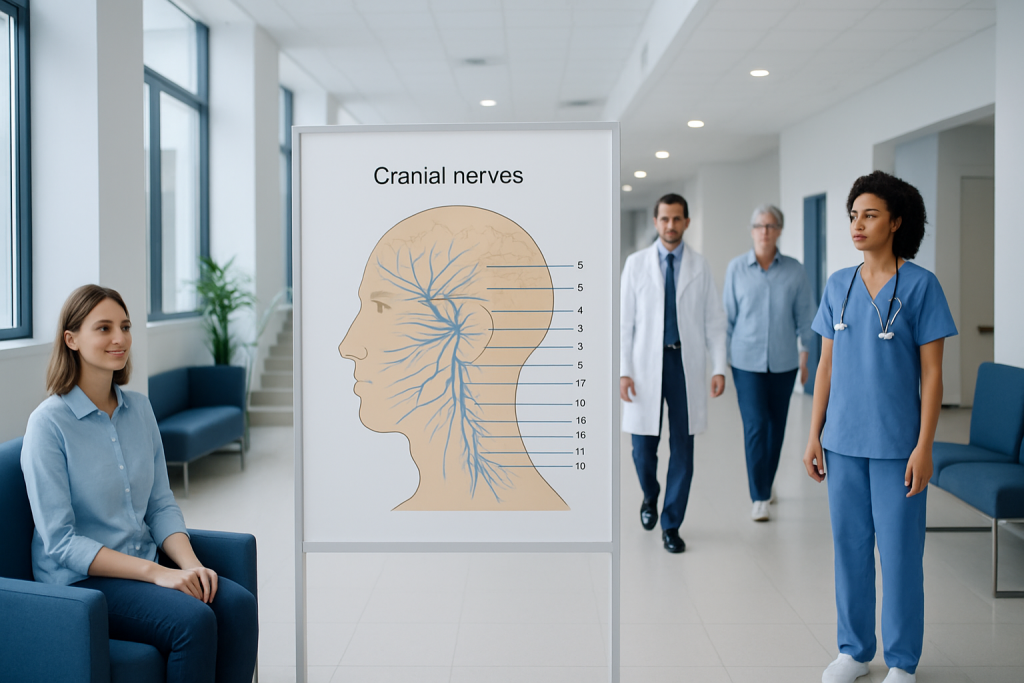
A cranial nerves diagram labels 12 pairs of nerves, numbered I to XII. These nerves help control smell, vision, eye movement, facial sensation, hearing, balance, swallowing, and tongue movement.
Key Takeaways
- A cranial nerves diagram labels 12 pairs of nerves, numbered I to XII.
- These nerves help control smell, vision, eye movement, facial sensation, hearing, balance, swallowing, and tongue movement.
- Doctors use symptoms and a focused neurological exam to determine whether a cranial nerve problem may be present.
- Not every symptom means nerve damage; many problems are temporary or related to common conditions such as infection, migraine, or inflammation.
- Sudden vision loss, facial weakness, trouble swallowing, or double vision should be assessed promptly by a doctor.
A cranial nerves diagram shows the 12 paired nerves that connect the brain to the head, neck, and some internal organs. It is most useful when paired with medical context: each nerve has a specific job, and symptoms can help doctors identify which nerve may be affected.
Overview: What a cranial nerves diagram actually shows
A cranial nerves diagram is a visual map of the 12 pairs of cranial nerves that arise from the brain and brainstem. These nerves carry signals for sensation, movement, and automatic body functions. In practical terms, the diagram helps explain why one person may notice double vision, another may lose their sense of smell, and another may develop facial weakness or difficulty swallowing.
Unlike a simple anatomy chart, a medically useful explanation connects each labeled nerve to its real-life function. Cranial nerves do not all do the same job. Some are mainly sensory, such as smell or vision. Others are mainly motor, helping the eyes, face, tongue, throat, or shoulders move. A few carry mixed signals, combining movement and sensation.
Doctors do not rely on a diagram alone to diagnose disease. They use the pattern of symptoms, a neurological examination, and sometimes imaging or other tests to understand whether a specific nerve is affected. This is why accurate interpretation matters more than memorizing names.
The 12 cranial nerves and what each one does
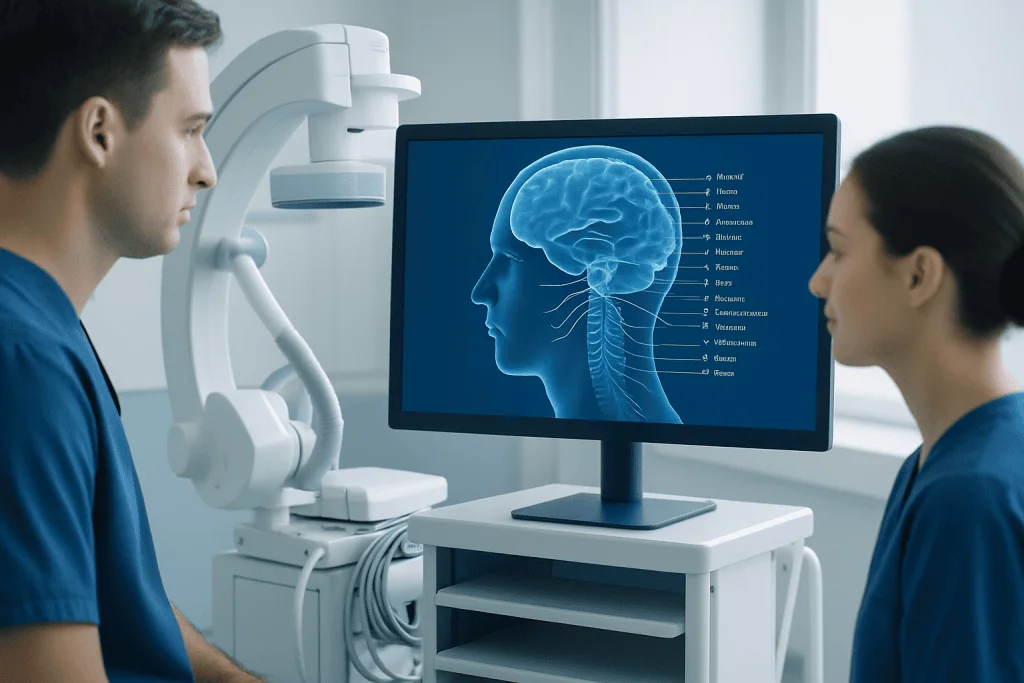
The cranial nerves are numbered from I to XII. A standard cranial nerves diagram usually lists them in order, but the most helpful way to understand them is by function.
- I Olfactory: smell.
- II Optic: vision.
- III Oculomotor: most eye movements, eyelid lifting, and pupil constriction.
- IV Trochlear: movement of the eye, especially looking down and inward.
- V Trigeminal: facial sensation and chewing muscles.
- VI Abducens: outward movement of the eye.
- VII Facial: facial expression, taste from part of the tongue, and some tear and saliva production.
- VIII Vestibulocochlear: hearing and balance.
- IX Glossopharyngeal: taste from part of the tongue, swallowing, and some throat sensation.
- X Vagus: swallowing, voice, and important automatic functions involving the throat, heart, lungs, and digestive tract.
- XI Accessory: shoulder and neck muscle movement.
- XII Hypoglossal: tongue movement.
A diagram often also hints at where the nerves travel. Some go to the nose or eyes, some to the face and jaw, and others to the throat and deeper organs. This pathway matters because pressure, inflammation, injury, infection, or reduced blood flow can affect a nerve at different points along its course.
For patients, the key idea is simple: when a specific function changes, such as hearing, facial movement, or swallowing, it can give a clue about which cranial nerve may be involved. This helps doctors narrow the possible causes and decide what testing is needed.
Common symptoms linked to cranial nerve problems

Symptoms vary depending on which cranial nerve is affected. Changes can involve the senses, muscle control, or both. A person may notice mild symptoms that come and go, or more persistent changes that interfere with daily activities.
Examples include loss or change in smell, blurred or double vision, drooping of an eyelid, facial numbness, facial pain, weakness of facial expression, hearing loss, ringing in the ears, dizziness, hoarseness, difficulty swallowing, shoulder weakness, or trouble moving the tongue clearly when speaking. Some symptoms appear alone, while others occur together.
It is important to remember that these symptoms do not always mean a serious neurological disorder. For example, altered smell can happen with a viral illness, facial pain may be related to dental or sinus problems, and dizziness can have several inner-ear causes. Still, new or unexplained symptoms deserve medical attention, especially if they are sudden, progressive, or associated with weakness, severe headache, or other neurological changes.
Some cranial nerve symptoms may overlap with conditions such as trigeminal neuralgia or Bell's palsy. A careful assessment helps distinguish temporary irritation from a more complex nerve disorder.
Why cranial nerves can be affected: causes and risk factors
Cranial nerve problems can develop for many reasons. Common causes include infections, inflammation, viral illnesses, diabetes-related nerve injury, migraine, trauma, tumors, vascular compression, stroke, autoimmune disease, and degenerative neurological conditions. In some cases, symptoms are short-lived and improve as the underlying problem resolves. In others, further testing is needed to identify the source.
Structural pressure on a nerve is one important mechanism. A blood vessel, swelling, or mass can compress a nerve and change its function. Inflammatory conditions may affect the nerve covering, slowing or disrupting signal transmission. Reduced blood flow can also injure a nerve, particularly in older adults or people with vascular risk factors.
Risk factors depend on the suspected cause. They may include older age, smoking, high blood pressure, diabetes, recent head injury, recent infection, autoimmune disease, or a history of neurological illness. However, some people develop cranial nerve symptoms without an obvious risk factor, which is why a professional evaluation is valuable.
Because cranial nerve symptoms can reflect problems in the brain, brainstem, face, ear, or throat, diagnosis is often multidisciplinary. Depending on the pattern, assessment may involve neurology, ENT, ophthalmology, or neurosurgery teams.
How doctors evaluate a cranial nerves diagram in real life
In clinical care, the diagram becomes a roadmap for examination. A doctor begins by asking when symptoms started, whether they are getting worse, and whether there are associated problems such as headache, numbness, weakness, infection, hearing change, or swallowing difficulty. The symptom pattern often provides the first clue.
A cranial nerve exam is then performed. This may include checking smell, visual fields, eye movements, pupil responses, facial sensation, facial symmetry, hearing, balance, palate movement, voice quality, shoulder strength, and tongue movement. These tests are usually brief and painless, but they can reveal which nerve or nerves may be involved.
If needed, further tests may include blood work, hearing tests, balance testing, eye assessment, or imaging such as MRI scan or CT scan. Imaging can help identify inflammation, compression, stroke, bleeding, tumor, or other structural causes. In selected cases, doctors may also recommend nerve-specific testing or referral to a specialist.
The goal of diagnosis is not only to name the affected nerve but to find the reason behind the symptoms. That is what guides treatment and gives the best chance of symptom control or recovery.
Treatment options and what recovery may involve
Treatment depends on the cause, the nerve involved, and how severe the symptoms are. Some problems improve with time and supportive care, while others need medicines, rehabilitation, or procedures. The focus is usually on treating the underlying condition rather than the diagram label itself.
Examples include antiviral or anti-inflammatory treatment in selected infection-related cases, pain management for nerve pain, blood sugar control when diabetes contributes, and targeted care for eye protection, hearing problems, or swallowing difficulty. If a structural issue is found, treatment may involve specialist procedures or surgery. Rehabilitation can also play an important role, especially when speech, facial movement, balance, or swallowing has been affected.
For some disorders, management may include evaluation for neurosurgery or coordinated neurological care. Patients with facial weakness, severe nerve pain, or signs of brain involvement may need referral to specialists with experience in cranial nerve disorders.
Recovery varies. Some cranial nerve symptoms resolve fully, while others improve gradually over weeks or months. A prompt diagnosis often helps, especially when the cause is treatable or when complications such as eye injury from incomplete eyelid closure can be prevented early.
Self-care, prevention, and living with symptoms
There is no single way to prevent all cranial nerve disorders because the causes are diverse. However, general health measures may reduce risk in some cases. These include controlling blood pressure and diabetes, avoiding smoking, using protective equipment to reduce head injury risk, and seeking timely care for ear, eye, dental, or sinus infections.
Self-care should match the symptom. For example, people with facial weakness may need eye lubrication or other measures advised by a doctor to protect the cornea. Those with dizziness may benefit from avoiding sudden position changes until they are assessed. If swallowing is difficult, it is safer to seek medical guidance rather than trying to manage it alone, because choking and poor nutrition can occur.
Living with persistent symptoms can be frustrating, especially when they affect vision, balance, speech, or facial expression. Follow-up is important because symptoms may evolve over time. A doctor can also help coordinate supportive therapies, such as speech and swallowing support, balance rehabilitation, or pain management.
Near the end of a patient journey, some people benefit from care at centers where several specialties work together. Acibadem International’s multidisciplinary specialists and JCI-accredited hospitals evaluate and treat neurological conditions for international patients when more advanced assessment is needed.
When to seek medical care
Medical care is recommended for new, unexplained cranial nerve symptoms, especially if they last more than a short time or keep returning. Examples include double vision, new hearing loss, facial drooping, persistent facial numbness, severe facial pain, hoarseness, trouble swallowing, or tongue weakness. Even when the cause is not serious, these symptoms deserve proper assessment.
Urgent medical attention is needed if symptoms begin suddenly or occur with weakness in an arm or leg, confusion, severe headache, trouble speaking, or loss of balance, because these can be signs of stroke or another emergency. Sudden vision loss, inability to close one eye, or choking with swallowing should also be assessed promptly.
Seeing a doctor early can make diagnosis simpler and may help prevent complications. Patients do not need to know which numbered nerve is involved before seeking care. The purpose of the exam is to connect the symptoms to the correct part of the nervous system and decide on the safest next steps.
Frequently asked questions
What is the easiest way to understand a cranial nerves diagram?
The easiest approach is to link each nerve to a main function rather than trying to memorize a list. For example, think of smell, vision, eye movement, facial sensation, hearing, swallowing, and tongue movement as the key categories.
How many cranial nerves are there?
There are 12 pairs of cranial nerves, numbered I through XII. They arise from the brain and brainstem and serve areas of the head, neck, and in some cases the chest and abdomen.
Can a cranial nerve problem go away on its own?
Some cranial nerve symptoms improve as the underlying cause resolves, especially when related to temporary inflammation or infection. Others may persist or worsen, which is why medical evaluation is important if symptoms are new, severe, or progressive.
Does facial pain always mean a trigeminal nerve problem?
No. Facial pain can come from dental issues, sinus disease, jaw disorders, headache disorders, or nerve-related conditions. A doctor considers the pain pattern, triggers, and examination findings before deciding whether the trigeminal nerve is involved.
Why would a doctor order an MRI for cranial nerve symptoms?
MRI can help show the brain, brainstem, and nearby structures in detail. It may be used to look for inflammation, compression, stroke, tumor, or other causes when symptoms suggest a cranial nerve disorder.
Are cranial nerve symptoms always a sign of a brain disease?
Not always. Some symptoms arise from conditions affecting the ear, eye, face, throat, or local nerve pathway rather than the brain itself. Still, the symptoms can overlap, so a professional assessment is the safest way to identify the cause.
References
- National Institute of Neurological Disorders and Stroke
- MedlinePlus
- National Eye Institute
- American Academy of Neurology
- Merck Manual Consumer Version
This article is for general information only and is not a substitute for professional medical advice. Please consult a qualified doctor about your individual situation.
Explore treatments in Turkey — costs, top hospitals & a free quote
JCI-accredited · board-certified surgeons · reply within 24h
Add us as a Preferred Source to see more of our trusted health content across Google Search, AI Overviews and Discover.

More from the Health Library



Related Specialists

Dr. Dilek Tomatır
Ophthalmology
Prof. Dr. Cem Fıçıcıoğlu
Gynecology & Obstetrics
Prof. Dr. Güler Berkiten
Otorhinolaryngology
Asst. Prof. Dr. Hülya Kuşoğlu
Infectious Diseases & Clinical Microbiology