Craniofacial Surgery News: Procedure, Recovery and Results

Craniofacial surgery is a broad term for reconstructive procedures involving the skull, face, jaws and surrounding tissues. Treatment is planned by a multidisciplinary team and differs according to age, diagnosis, anatomy and functional needs.
Key Takeaways
- Craniofacial surgery is a broad term for reconstructive procedures involving the skull, face, jaws and surrounding tissues.
- Treatment is planned by a multidisciplinary team and differs according to age, diagnosis, anatomy and functional needs.
- Modern imaging and virtual surgical planning can help teams prepare precise, individualized operations.
- Recovery commonly includes swelling, pain management, wound care and regular follow-up; the timeline varies by procedure.
- Every operation has risks, so families and patients should discuss expected benefits, alternatives and warning signs with the surgical team.
Craniofacial surgery news often focuses on advances in planning, imaging and team-based care, but the most important questions remain practical: who may benefit, what happens during surgery and what recovery involves. Craniofacial procedures are individualized reconstructive operations used to improve skull or facial form, protect function and support breathing, vision, eating and development where needed.
Craniofacial Surgery News: What It Means for Patients
Craniofacial surgery news commonly highlights improvements in three-dimensional imaging, computer-assisted planning and coordinated specialist care. For patients and families, these developments support more individualized decision-making, but they do not change a central principle: craniofacial surgery is recommended only after careful assessment of a person’s anatomy, symptoms, development and goals.
Craniofacial surgery refers to reconstructive operations on the skull, forehead, eye sockets, cheekbones, nose, jaws, face and related soft tissues. It may be performed for conditions present at birth, changes after injury, tumors, infections or prior surgery. The goals can include creating space for brain growth, improving protection of the eyes, supporting breathing or feeding, restoring facial balance, or repairing a structural difference.
Some operations are completed in a single stage, while others are timed across childhood or adulthood. A surgeon will explain whether surgery is medically necessary, likely to improve function, mainly intended to restore appearance, or designed to achieve more than one goal.
Conditions Treated and Who May Be a Candidate
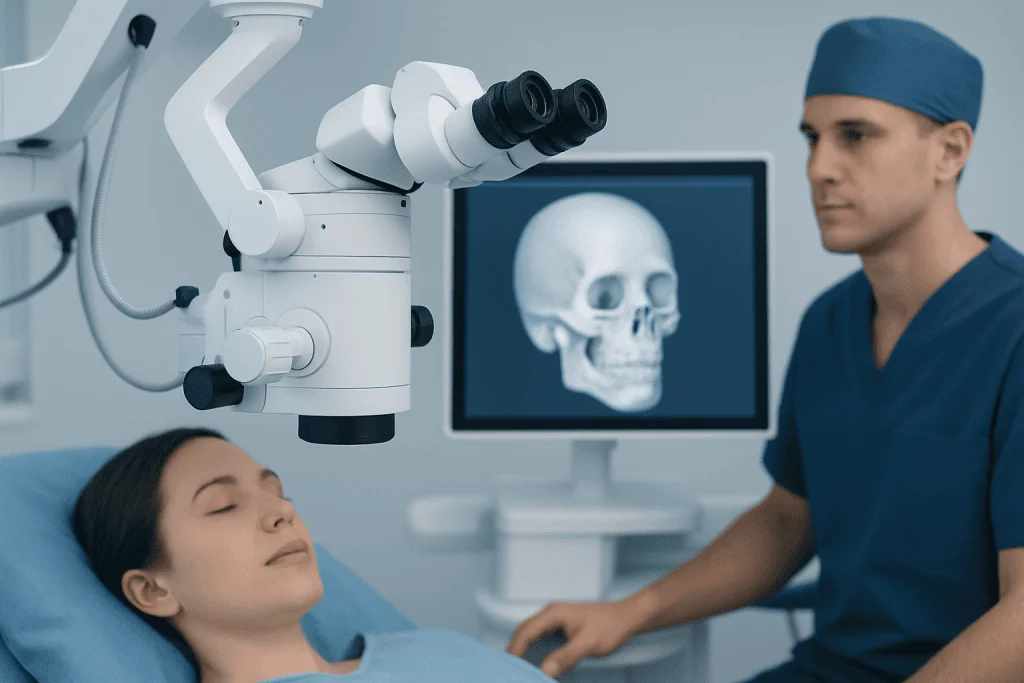
People may be referred for craniofacial assessment because of an unusually shaped skull, early closure of skull sutures, facial asymmetry, cleft-related differences, jaw misalignment, injury or a change caused by disease. For example, craniosynostosis is a condition in which one or more fibrous joints between skull bones close too early. In selected children, surgery may help provide room for expected brain growth and improve skull shape.
Other possible reasons for treatment include complex facial fractures, congenital differences affecting the face or jaw, orbital reconstruction, and deformities after treatment for tumors or infection. Not every structural difference requires surgery. Observation, orthodontic care, speech therapy, eye care, hearing support or other non-surgical approaches may be appropriate depending on the diagnosis.
Candidacy depends on the underlying condition, severity, symptoms, general health, age and expected benefit. In children, timing is particularly important because facial bones and the skull are developing. In adults, the team also considers medical conditions, smoking status, prior operations, bone quality and realistic goals.
- Symptoms affecting breathing, vision, feeding, hearing or dental function
- Evidence of restricted skull growth or pressure-related concerns in selected conditions
- Functional limitations after facial injury or previous treatment
- A clear reconstructive goal with benefits that outweigh the likely risks
How Craniofacial Surgery Is Planned and Performed

Craniofacial care is usually delivered by a team that may include craniofacial and plastic surgeons, neurosurgeons, maxillofacial surgeons, anesthesiologists, pediatricians, orthodontists, dentists, ophthalmologists, ear, nose and throat specialists, speech and language therapists, psychologists and specialist nurses. This multi-specialty approach helps ensure that important functions such as brain development, vision, airway health, speech and bite are considered alongside facial structure.
Assessment may include a physical examination, photographs, dental models or scans, and imaging such as CT or MRI when clinically appropriate. Three-dimensional imaging and virtual surgical planning can help the team understand bone position, map surgical movements and prepare customized guides or implants in selected cases. These tools assist planning; they do not replace surgical judgment or individualized discussion.
Although the details vary, a typical procedure begins with general anesthesia. Surgeons make incisions in locations chosen to reduce visible scarring where possible, then reshape, move, stabilize or reconstruct bone and soft tissue. Plates, screws, grafts, implants or temporary devices may be used when needed. The team monitors blood loss, airway safety and other factors throughout the operation, and some complex procedures require a planned stay in a high-dependency or intensive-care setting after surgery.
Patients considering reconstructive facial procedures can learn more about craniofacial surgery as part of a detailed consultation. The surgeon should explain the intended steps, likely length of hospitalization, possible staged treatment and alternatives before consent is given.
Benefits, Limitations and Possible Risks
The possible benefits of craniofacial surgery depend on the diagnosis. Surgery may improve protection of the brain or eyes, relieve a structural obstruction, help restore chewing or facial movement, support dental treatment, improve symmetry after trauma, or address a skull or facial difference that affects daily life. In some children, surgery is part of a longer treatment plan that also includes developmental, dental, speech or vision care.
Results should be viewed realistically. Surgery cannot always create complete symmetry, prevent all future treatment or resolve every functional concern. Growth, healing, scar formation and the natural complexity of craniofacial conditions can influence the outcome. A surgeon can discuss which changes are likely, which are uncertain and whether further procedures may be considered later.
As with any major operation, risks include bleeding, infection, blood clots, reactions to anesthesia, poor wound healing, visible scarring and the need for revision surgery. Depending on the surgical area, there may also be risks involving sensation, movement, teeth, the eyes, vision, hearing, breathing, cerebrospinal fluid leakage or bone healing. Children undergoing larger procedures may require blood transfusion; the care team will discuss this possibility and related safety measures in advance.
Risk is not the same for every patient. Thorough preoperative evaluation, experienced anesthesia care, careful surgical planning and clear postoperative instructions are important parts of reducing avoidable complications.
Recovery Timeline and Follow-Up Care
Recovery after craniofacial surgery varies substantially. The first days generally focus on observation, comfort, hydration, nutrition, wound care and safe breathing. Swelling and bruising, especially around the eyes, are common after many facial procedures and can temporarily look more noticeable before they improve. Pain is managed with medications prescribed by the clinical team.
Hospital stay may range from a short admission to a longer period for complex reconstruction. Patients may have dressings, drains, splints or other temporary supports, depending on the procedure. The team will give individualized instructions about bathing, sleeping position, diet, mouth care, activity restrictions and school or work return.
In the first few weeks, patients typically need rest and follow-up appointments to check healing. Light activity may be resumed gradually when approved, while contact sports, heavy lifting and activities that could injure the face are usually delayed. Bone healing and the settling of swelling can continue for months, so the final appearance may not be clear early in recovery.
Long-term follow-up is especially important for children because growth can change facial proportions and treatment needs. Follow-up may involve surgery, orthodontics, eye care, hearing checks, speech support or psychological care. Keeping scheduled appointments helps the team identify concerns early and coordinate future stages if needed.
Preparation, Prevention and Self-Care
Many craniofacial conditions present at birth and cannot be prevented by individual actions. However, people can support safer surgery and recovery by attending preoperative assessments, sharing a complete medication and health history, following advice about eating and drinking before anesthesia, and arranging practical help at home after discharge.
Smoking and nicotine products can interfere with wound and bone healing. Adults who smoke should ask their medical team about stopping before surgery and throughout recovery. Patients should also tell the team about vitamins, herbal products, anticoagulants and other medicines, since some may need to be adjusted under medical supervision.
After discharge, self-care includes taking medicines only as directed, keeping wounds clean according to instructions, maintaining appropriate nutrition and hydration, and avoiding unapproved activity. Parents and caregivers should follow the team’s guidance closely for infant feeding, sleep, helmets or other protective measures when these are relevant.
Emotional wellbeing also matters. A visible facial difference, hospitalization or repeated procedures can affect confidence and family stress. Counseling, peer support and child-life or psychology services can be valuable additions to medical care when wanted.
When to Seek Medical Care
A planned consultation is appropriate for a child or adult with a newly noticed skull or facial difference, persistent jaw or bite problems, facial asymmetry, a history of significant facial trauma, or symptoms that may be linked to structural changes. Prompt specialist assessment is particularly important if a child has concerns related to growth, eye position, feeding, breathing or development.
After craniofacial surgery, the treating team should be contacted urgently for fever, increasing redness or drainage from a wound, worsening swelling after it had started to improve, uncontrolled pain, repeated vomiting, poor fluid intake, unusual sleepiness, breathing difficulty, new vision changes or any concern about a child’s behavior. Emergency care is needed for severe breathing problems, heavy bleeding, loss of consciousness, seizures or sudden neurologic symptoms.
Acibadem International’s multidisciplinary specialists and JCI-accredited hospitals diagnose and treat craniofacial conditions for international patients. A consultation can help patients and families understand whether monitoring, supportive care or a reconstructive procedure is the most appropriate next step.
Frequently asked questions
What is craniofacial surgery?
Craniofacial surgery is a group of reconstructive procedures involving the skull, face, jaws, eye sockets and nearby tissues. It may be used for congenital conditions, trauma, tumors, infections or changes after prior treatment. The exact operation is tailored to the person’s anatomy and clinical needs.
Is craniofacial surgery only for children?
No. Many craniofacial operations are performed in infancy or childhood because growth can influence timing, but adults may also need treatment. Adult procedures may address injury, jaw alignment, reconstruction after disease, previous surgery or persistent congenital differences.
How long does recovery from craniofacial surgery take?
Initial recovery often takes several weeks, but the timeline depends on the procedure and the patient’s overall health. Swelling and bruising can take weeks to settle, while bone healing and final changes in appearance may continue for months. The surgical team provides activity and follow-up guidance for each individual case.
What are the main risks of craniofacial surgery?
Possible risks include bleeding, infection, anesthesia-related problems, scarring, delayed healing and the need for additional treatment. Procedures near the eyes, brain, teeth, nerves or airway can carry further location-specific risks. A specialist team will explain the risks most relevant to the planned operation.
Will craniofacial surgery leave scars?
Any incision can leave a scar, although surgeons often plan incision placement carefully to make scars less noticeable where possible. Scar appearance changes over time and varies with skin type, healing and the type of operation. The team can advise on appropriate wound and scar care after surgery.
Can craniofacial surgery improve breathing, vision or eating?
It can improve function when a structural problem is contributing to difficulty with breathing, eye protection, chewing or feeding. However, the benefit depends on the specific diagnosis and procedure. Assessment by the relevant specialists helps determine whether surgery is likely to address the concern.
References
- American Society of Plastic Surgeons
- American Association of Neurological Surgeons
- Centers for Disease Control and Prevention
- National Health Service
- World Health Organization
This article is for general information only and is not a substitute for professional medical advice. Please consult a qualified doctor about your individual situation.
Explore treatments in Turkey — costs, top hospitals & a free quote
JCI-accredited · board-certified surgeons · reply within 24h
Add us as a Preferred Source to see more of our trusted health content across Google Search, AI Overviews and Discover.