Crohn’s Disease Infusion Therapy for Inflammation

An infusion is a way of delivering certain biologic medicines for Crohn's disease; it is not an early sign of the condition. Early Crohn's disease symptoms can include ongoing diarrhea, abdominal pain, fatigue, weight loss, and blood or mucus in stool.
Key Takeaways
- An infusion is a way of delivering certain biologic medicines for Crohn's disease; it is not an early sign of the condition.
- Early Crohn's disease symptoms can include ongoing diarrhea, abdominal pain, fatigue, weight loss, and blood or mucus in stool.
- Infusion treatment is individualized after assessment of disease activity, previous treatments, infection risks, and overall health.
- Most infusion reactions are mild and can be managed promptly by the clinical team, but urgent symptoms should be reported immediately.
- Regular monitoring helps clinicians check treatment response, medication safety, nutrition, and complications.
Crohn's disease infusion therapy is a hospital or clinic treatment in which certain biologic medicines are given through a vein to reduce intestinal inflammation and help maintain remission. It is usually considered for moderate to severe Crohn's disease, particularly when symptoms continue despite other medicines or when there are complications.
Crohn's Disease Infusion: What It Means
A Crohn’s disease infusion is treatment given directly into a vein, usually at an infusion center, hospital clinic, or supervised outpatient setting. The medicines used are commonly biologic therapies: targeted medicines that act on parts of the immune system involved in ongoing intestinal inflammation. Infusions can reduce symptoms, support healing of the bowel lining, and lower the risk of flares and some complications in appropriate patients.
An infusion itself is not an early symptom of Crohn’s disease. Rather, people may search for this term when they have recently been diagnosed, are considering biologic treatment, or are experiencing symptoms before or after an infusion. The need for an infusion does not necessarily mean that a person is seriously unwell; it means a gastroenterology team has identified a treatment approach that may be suitable for the pattern and severity of their disease.
Crohn’s disease is a long-term form of inflammatory bowel disease. It can affect any part of the digestive tract, from the mouth to the anus, although it often involves the end of the small intestine and the colon. Inflammation may extend deeper into the bowel wall than in some other bowel conditions, which is why early assessment and ongoing care are important.
Early Signs and Symptoms of Crohn's Disease
Crohn’s disease can begin gradually, and symptoms vary widely from one person to another. Common early symptoms include diarrhea that persists or recurs, cramping or pain in the abdomen, an urgent need to use the toilet, reduced appetite, tiredness, and unintentional weight loss. Some people notice blood or mucus in the stool, although rectal bleeding has several possible causes and should be assessed by a clinician.
Inflammation can also affect health beyond the digestive system. Possible signs include fever, anemia, mouth ulcers, joint pain or swelling, eye inflammation, and tender skin rashes. In children and teenagers, slower growth or delayed puberty may occasionally be an important clue. Symptoms can come and go, with periods of active disease followed by quieter periods known as remission.
Not everyone with bowel symptoms has Crohn’s disease. Infections, irritable bowel syndrome, celiac disease, ulcerative colitis, medication effects, and other digestive conditions can cause similar concerns. A diagnosis should therefore be based on a full clinical assessment rather than symptoms alone.
- Persistent diarrhea, particularly when it disrupts daily life or sleep
- Abdominal pain, cramping, or bloating that keeps returning
- Fatigue, fever, reduced appetite, or unexplained weight loss
- Blood in stool, anemia, or symptoms outside the digestive tract
Why Crohn's Disease Develops and Who May Be at Risk
The exact cause of Crohn’s disease is not fully understood. It is thought to result from an inappropriate immune response in a person with genetic susceptibility, influenced by the gut microbiome and environmental factors. It is not caused by stress, a single food, or anything a person has done. Stress may worsen symptoms for some people, but it is not considered the underlying cause.
A family history of inflammatory bowel disease can increase the likelihood of developing Crohn’s disease, although many people with the condition have no affected relatives. Cigarette smoking is a well-established factor associated with a higher risk of Crohn’s disease and with more difficult disease control. Age, prior disease course, the location of inflammation, and complications such as narrowing or fistulas can all influence treatment decisions.
Diet does not cause Crohn’s disease, but food choices may affect symptoms during a flare or when a narrowed area of bowel is present. Restrictive diets without professional guidance can contribute to nutritional deficiencies. A gastroenterologist and dietitian can help patients identify a practical eating pattern that supports nutrition while respecting individual symptom triggers.
How Diagnosis and Treatment Planning Are Confirmed
Clinicians begin with a discussion of symptoms, medical history, family history, medicines, travel, and infection exposure, followed by a physical examination. Blood tests may check for inflammation, anemia, dehydration, vitamin deficiencies, and liver function. Stool testing can help identify intestinal inflammation and exclude infections that can resemble or trigger a flare.
Colonoscopy with biopsies is commonly used to examine the colon and the end of the small bowel. Imaging such as magnetic resonance enterography, computed tomography enterography, or ultrasound may be used to assess areas of small bowel that cannot be reached during colonoscopy and to look for complications. No single test explains every case; results are interpreted together.
Before starting an infusion biologic, the care team typically reviews vaccination history and screens for infections that could become active with immune-modifying therapy, such as tuberculosis and hepatitis B. This preparation helps select the safest option and establishes baseline information for future monitoring. Treatment planning also considers pregnancy plans, previous medicines, other health conditions, and patient preferences.
What Happens During Crohn's Disease Infusion Treatment
Infused biologic medicines work in different ways. Some block inflammatory proteins such as tumor necrosis factor, while others target immune-cell movement or signaling pathways. The best choice depends on the person’s disease features, prior treatment response, medical history, and safety considerations. Some biologics are given by infusion, while others are injected under the skin at home or in a clinic.
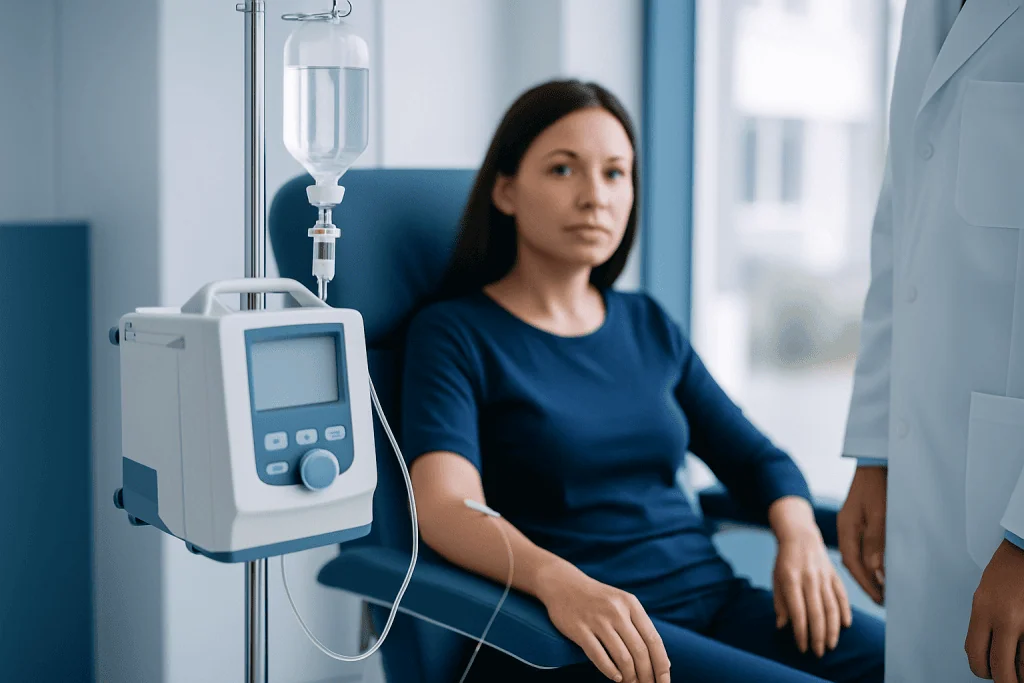
At an infusion appointment, a nurse checks the person’s condition, vital signs, and any recent infections or new symptoms. An intravenous line is placed in a vein, and the medicine is administered over a scheduled period. The first dose and later maintenance doses may follow different schedules depending on the prescribed medicine. The team observes the patient during treatment and, when needed, briefly afterward.
People should tell the infusion team about fever, cough, painful urination, open wounds, recent antibiotic use, planned surgery, pregnancy, or new medicines before treatment. A clinician may postpone an infusion if there is a significant active infection. It is also helpful to ask whether eating, drinking, driving, work plans, or premedication need to be adjusted for the specific medicine being used.
- Bring an updated medication list and report new allergies or health changes.
- Ask how often monitoring blood tests and follow-up visits are needed.
- Do not stop, delay, or change Crohn’s medicines without advice from the prescribing team.
Benefits, Side Effects, and Ongoing Monitoring
The purpose of infusion therapy is not only to relieve diarrhea and pain, but also to control inflammation that may continue even when symptoms are mild. Clinicians may monitor response using symptoms, blood and stool markers, endoscopy, and imaging where appropriate. Improvement can take time, and the timing differs among medicines and individuals.
Possible side effects include headache, tiredness, nausea, rash, joint discomfort, or mild cold-like symptoms. Reactions during or soon after an infusion can include itching, flushing, fever, dizziness, chest discomfort, shortness of breath, or changes in blood pressure. Infusion staff are trained to recognize these reactions, slow or stop the infusion if needed, and provide treatment.
Because biologic medicines alter immune activity, they can increase susceptibility to certain infections. Serious infections are uncommon but require prompt attention. Continuing scheduled safety checks, discussing vaccines with the treating clinician, and reporting signs of infection early are important parts of safe treatment. Some people eventually need a different medicine if the first treatment is not effective enough or causes unacceptable side effects.
Daily Care and When to Seek Medical Care
Medication works best alongside regular follow-up and practical self-care. Patients can support their care by taking medicines as prescribed, avoiding smoking, staying hydrated, maintaining adequate nutrition, and keeping a record of symptoms, bowel habits, and possible triggers. A dietitian may be especially helpful for weight loss, anemia, food avoidance, or concerns about vitamin and mineral intake.
Medical advice should be sought promptly for ongoing diarrhea, worsening abdominal pain, fever, new rectal bleeding, unexplained weight loss, or symptoms that are not improving with the agreed care plan. Anyone receiving infusion therapy should contact their treating team before the next dose if they develop signs of infection, such as fever, persistent cough, shortness of breath, painful urination, or a spreading skin rash.
Urgent medical care is needed for severe or rapidly worsening abdominal pain, a swollen abdomen with vomiting, heavy rectal bleeding, fainting, severe dehydration, confusion, or trouble breathing. These symptoms can have different causes, but they should not be managed at home. Acibadem International’s multidisciplinary specialists and JCI-accredited hospitals diagnose and treat Crohn’s disease for international patients, with treatment decisions guided by individual clinical needs.
Frequently asked questions
Is an infusion a cure for Crohn's disease?
Infusion therapy does not cure Crohn's disease, but it can control inflammation and help many people achieve or maintain remission. The condition usually needs long-term monitoring because symptoms and inflammation can return if treatment is stopped or becomes less effective.
How long does a Crohn's disease infusion take?
The length of an infusion depends on the specific medicine, the dose schedule, and whether observation is needed afterward. Some appointments are relatively short, while others take several hours, particularly at the beginning of treatment. The infusion team can explain what to expect for the prescribed medicine.
Can a person receive an infusion when they have a cold or fever?
A person should contact the prescribing team before attending if they have fever, a significant cough, flu-like symptoms, diarrhea that may be infectious, or another possible infection. The clinician may advise proceeding, testing, treatment for the infection, or delaying the infusion depending on the situation.
What are the early warning signs of an infusion reaction?
Itching, hives, flushing, fever, chills, dizziness, nausea, chest discomfort, wheezing, or shortness of breath can occur during or after an infusion. Patients should tell the nurse immediately if they feel unwell during treatment. Emergency help is needed for severe breathing difficulty, facial swelling, or fainting.
Will symptoms improve after the first infusion?
Some people notice improvement early, but the response varies by medicine and by the severity and location of Crohn's disease. Others need several doses before meaningful improvement is clear. Follow-up testing may be needed because symptoms alone do not always reflect the level of inflammation.
Can Crohn's disease be managed with diet alone instead of an infusion?
Nutrition is an important part of Crohn's disease care, but diet alone does not reliably control moderate to severe intestinal inflammation for most adults. A personalized food plan can reduce symptoms and prevent deficiencies, while medicines are used to treat the underlying inflammation. A gastroenterologist and dietitian can help create a safe plan.
References
- Crohn's & Colitis Foundation
- National Institute of Diabetes and Digestive and Kidney Diseases
- American Gastroenterological Association
- European Crohn's and Colitis Organisation
- National Health Service
This article is for general information only and is not a substitute for professional medical advice. Please consult a qualified doctor about your individual situation.
Persistent digestive symptoms? Get evaluated in Turkey
JCI-accredited · board-certified surgeons · reply within 24h
Add us as a Preferred Source to see more of our trusted health content across Google Search, AI Overviews and Discover.