Crohn’s Disease vs Ulcerative Colitis: How Doctors Tell Them Apart

Both Crohn’s disease and ulcerative colitis are types of inflammatory bowel disease, but they affect the digestive tract in different patterns. Crohn’s disease can involve any part of the digestive tract and may affect the full thickness of the bowel wall.
Key Takeaways
- Both Crohn’s disease and ulcerative colitis are types of inflammatory bowel disease, but they affect the digestive tract in different patterns.
- Crohn’s disease can involve any part of the digestive tract and may affect the full thickness of the bowel wall.
- Ulcerative colitis affects the colon and rectum, with continuous inflammation limited mainly to the inner lining.
- Diagnosis usually relies on a combination of history, stool tests, blood tests, colonoscopy, imaging, and tissue biopsy.
- The correct diagnosis helps guide treatment choices, monitoring, and decisions about surgery.
Crohn’s disease and ulcerative colitis are the two main forms of inflammatory bowel disease, and they can look similar at first. Doctors tell them apart by combining symptoms, lab tests, imaging, endoscopy, and biopsy results to see where inflammation is located and how it behaves.
Overview: Why the Difference Matters
Crohn’s disease and ulcerative colitis are chronic inflammatory bowel diseases, often grouped together as IBD. They share many symptoms, including diarrhea, abdominal pain, urgency, fatigue, and periods of flare-ups followed by quieter phases. Because of this overlap, many people wonder how doctors can confidently tell one from the other.
The distinction matters because these conditions do not affect the digestive tract in the same way. Crohn’s disease can involve any part of the digestive tract from the mouth to the anus, although it commonly affects the end of the small intestine and the beginning of the colon. Ulcerative colitis, in contrast, affects only the colon and rectum. The location and pattern of inflammation often provide the first major clue.
Doctors also look at how deep the inflammation goes. In Crohn’s disease, inflammation may extend through the full thickness of the bowel wall, which can lead to complications such as narrowing, fistulas, or abscesses. In ulcerative colitis, inflammation usually stays in the inner lining of the colon. This difference helps explain why the diseases can behave differently over time and why treatment planning may not be exactly the same.
Symptoms: What Overlaps and What May Be Different
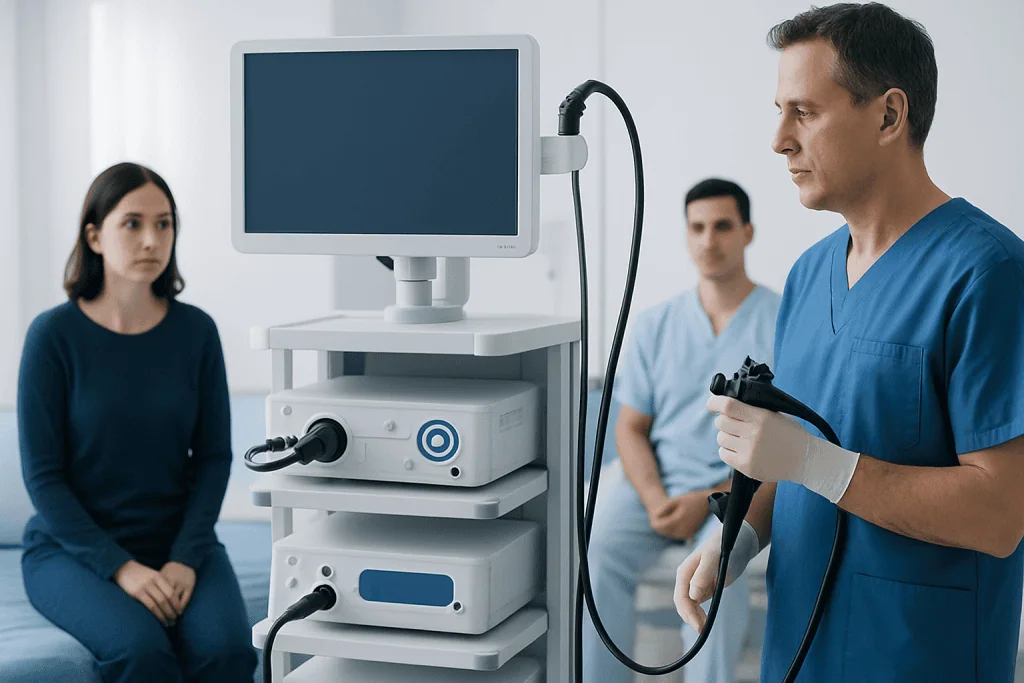
Both conditions may cause chronic diarrhea, abdominal cramping, blood or mucus in the stool, weight loss, reduced appetite, fatigue, and the need to rush to the toilet. Some people also develop symptoms outside the gut, such as joint pain, skin changes, eye inflammation, or mouth ulcers. Since these features can occur in both conditions, symptoms alone are usually not enough to make a definite diagnosis.
Certain patterns can still be helpful. Ulcerative colitis more often causes bloody diarrhea, urgency, and a feeling of incomplete emptying, especially when the rectum is inflamed. Crohn’s disease may be more likely to cause patchy pain, weight loss, poor nutrient absorption, and symptoms related to the small intestine. Some people with Crohn’s disease also develop perianal problems such as fissures, fistulas, or abscesses, which are less typical in ulcerative colitis.
Symptoms can range from mild to severe in either disease, and they may change over time. Some patients have long periods of remission, while others need closer follow-up because of repeated flares. This is why doctors focus on the full picture rather than a single symptom or a single test result.
Where and How Inflammation Appears
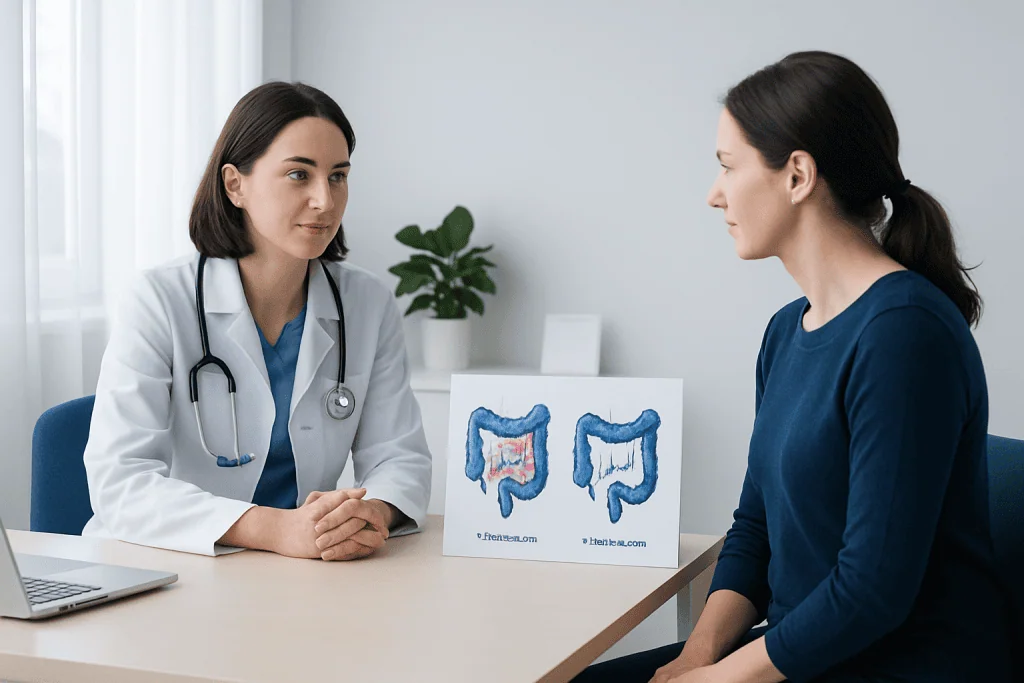
One of the clearest ways doctors distinguish Crohn’s disease from ulcerative colitis is by looking at the distribution of inflammation. Ulcerative colitis starts in the rectum and extends upward in a continuous pattern through part or all of the colon. There are no normal areas between inflamed sections. This continuous spread is a classic feature.
Crohn’s disease usually causes patchy inflammation, with diseased segments separated by healthy-looking areas, sometimes called “skip lesions.” It can involve the small intestine, colon, upper digestive tract, or the area around the anus. When the terminal ileum is involved, Crohn’s disease may resemble other digestive conditions, so doctors often use imaging and biopsy to clarify the diagnosis.
The depth of inflammation is another major difference. In ulcerative colitis, inflammation mainly affects the mucosa, the inner lining of the colon. In Crohn’s disease, inflammation can be transmural, meaning it can reach deeper layers of the bowel wall. This is why Crohn’s disease is more likely to cause strictures, fistulas, and deeper ulcerations. These features may be seen during colonoscopy or on cross-sectional imaging used to evaluate inflammatory bowel disease.
Causes and Risk Factors Doctors Consider
Neither Crohn’s disease nor ulcerative colitis has a single known cause. Experts believe both arise from a complex interaction between the immune system, genetics, the gut microbiome, and environmental factors. In both diseases, the immune system reacts in an ongoing way that leads to inflammation in the digestive tract.
Family history can increase the likelihood of IBD, and a personal history of other immune-mediated conditions may sometimes be relevant. Age can offer clues as well, since many patients are diagnosed in adolescence or early adulthood, though these diseases can begin at any age. Smoking history is also important: smoking is linked to a higher risk of Crohn’s disease and can worsen its course, while its relationship with ulcerative colitis is more complex and does not support smoking as a treatment or prevention strategy.
Doctors also think broadly about other possible explanations before confirming IBD. Infections, irritable bowel syndrome, celiac disease, medication-related inflammation, and other forms of colitis may mimic either condition. Part of the diagnostic process is carefully ruling out these alternatives so that the patient receives the most appropriate care.
How Doctors Diagnose Crohn’s Disease and Ulcerative Colitis
Diagnosis usually starts with a detailed history and physical examination. Doctors ask about the duration of symptoms, stool frequency, bleeding, weight changes, abdominal pain, fever, family history, and any symptoms outside the digestive tract. Blood tests may look for inflammation, anemia, dehydration, or vitamin and mineral deficiencies. Stool tests can help exclude infection and may measure markers such as fecal calprotectin, which can suggest intestinal inflammation.
Endoscopy is central to diagnosis. A colonoscopy allows doctors to inspect the colon and terminal ileum directly and to take small tissue samples for biopsy. In ulcerative colitis, endoscopy often shows continuous inflammation beginning in the rectum. In Crohn’s disease, doctors may see patchy inflammation, deeper ulcers, narrowing, or areas of involvement beyond the colon. Biopsy findings can support the diagnosis, although no single microscopic feature is present in every case.
Imaging can be especially helpful when Crohn’s disease is suspected in the small intestine or when complications need to be assessed. Techniques such as MR enterography or CT enterography help show bowel wall thickening, strictures, fistulas, and abscesses. Some patients may also need upper endoscopy, capsule evaluation, or specialized scans depending on their symptoms.
Even after thorough testing, a small number of patients are initially labeled as having indeterminate colitis or IBD-unclassified. This means the inflammation has features that do not fit neatly into one category at first. Over time, repeat assessment may clarify whether the condition behaves more like Crohn’s disease or ulcerative colitis.
Treatment Differences and Why the Exact Diagnosis Helps
Treatment goals are similar in both conditions: reduce inflammation, relieve symptoms, help the bowel heal, prevent complications, and support long-term quality of life. However, the exact diagnosis still matters because the location of disease, depth of inflammation, and type of complications influence which treatments are most suitable. Care is often individualized based on disease severity, previous response to therapy, and the presence of complications outside the bowel.
Medical treatment may include anti-inflammatory drugs, immune-modifying medicines, biologic therapies, and nutritional support. Some therapies are used in both diseases, while others are chosen more selectively depending on whether the inflammation is in the colon alone or also in the small bowel and whether fistulas or strictures are present. Ongoing monitoring is important to check symptom control, inflammation markers, side effects, and nutritional health.
Surgery plays different roles in the two conditions. In ulcerative colitis, removing the colon can effectively eliminate the diseased organ, although it is major surgery and requires careful discussion about long-term outcomes. In Crohn’s disease, surgery may be necessary for complications such as strictures, abscesses, or fistulas, but it does not cure the disease because inflammation can return in other areas of the digestive tract. When needed, patients may be referred for colon and rectal surgery or advanced gastroenterology care as part of a multidisciplinary treatment plan.
Prevention, Self-care, and Living With Diagnostic Uncertainty
There is no guaranteed way to prevent Crohn’s disease or ulcerative colitis, but good self-care can support overall health and may help reduce the impact of flares. Patients are often advised to avoid smoking, stay well hydrated, follow medical advice about nutrition, and keep track of foods that worsen symptoms during active inflammation. Because triggers vary from person to person, a personalized approach is usually more useful than highly restrictive self-directed diets.
Regular follow-up matters, even when symptoms improve. Doctors may monitor blood counts, inflammatory markers, vitamin levels, bone health, and the need for routine colon surveillance in long-standing colitis. Vaccination review and infection prevention can also be important, especially for people receiving immune-suppressing therapies.
Living with uncertainty can be stressful when symptoms are present but the diagnosis is still being refined. Patients may benefit from asking which tests are still needed, what features point toward one diagnosis over another, and how treatment decisions are being made in the meantime. Near the end of the evaluation process, some people seek care at specialized centers; Acibadem International’s multidisciplinary specialists and JCI-accredited hospitals diagnose and treat inflammatory bowel disease for international patients.
When to See a Doctor
Persistent diarrhea, rectal bleeding, unexplained weight loss, ongoing abdominal pain, or fatigue that does not improve should be discussed with a doctor. These symptoms do not always mean inflammatory bowel disease, but they do deserve proper evaluation. Early diagnosis can help reduce the risk of complications and improve symptom control.
Urgent medical attention is important if there is severe abdominal pain, high fever, heavy bleeding, signs of dehydration, repeated vomiting, or a swollen abdomen with inability to pass stool or gas. These can be warning signs of a serious flare or another condition that needs prompt assessment.
People already diagnosed with IBD should also seek review if their usual symptoms suddenly worsen, if new perianal pain or drainage appears, or if they are concerned about side effects from treatment. Regular communication with a qualified gastroenterologist helps ensure the diagnosis remains accurate and the treatment plan stays appropriate as the disease evolves.
Frequently asked questions
What is the main difference between Crohn’s disease and ulcerative colitis?
The main difference is where inflammation occurs and how it affects the bowel wall. Ulcerative colitis affects only the colon and rectum in a continuous pattern, while Crohn’s disease can affect any part of the digestive tract in patchy areas and may involve deeper bowel layers.
Can symptoms alone tell doctors which condition a person has?
Usually not. Symptoms often overlap, so doctors need test results to make a more reliable distinction. Colonoscopy, biopsy, stool studies, blood tests, and imaging are often used together.
Is bleeding more common in ulcerative colitis or Crohn’s disease?
Rectal bleeding is generally more common in ulcerative colitis because the rectum is frequently involved. Crohn’s disease can also cause bleeding, but it may be less prominent depending on which part of the digestive tract is affected.
Can a person be diagnosed with both Crohn’s disease and ulcerative colitis?
Doctors usually classify a patient as having one or the other, but sometimes the diagnosis is unclear at first. In those cases, terms like indeterminate colitis or IBD-unclassified may be used until the disease pattern becomes clearer over time.
Does surgery cure inflammatory bowel disease?
Surgery can be very effective for certain complications and may remove diseased bowel, but its role differs by condition. Removing the colon can effectively eliminate ulcerative colitis in the colon, while Crohn’s disease can return in other parts of the digestive tract after surgery.
How long does it take to diagnose Crohn’s disease or ulcerative colitis?
The timeline varies depending on symptoms, access to testing, and how typical the findings are. Some people are diagnosed quickly after colonoscopy and biopsy, while others need additional imaging, repeat evaluation, or time for the disease pattern to become more definite.
References
- National Institute of Diabetes and Digestive and Kidney Diseases
- Crohn’s & Colitis Foundation
- American College of Gastroenterology
- European Crohn’s and Colitis Organisation
- Mayo Clinic
This article is for general information only and is not a substitute for professional medical advice. Please consult a qualified doctor about your individual situation.
Ulcerative Colitis in Turkey — costs, top hospitals & a free quote
JCI-accredited · board-certified surgeons · reply within 24h
Add us as a Preferred Source to see more of our trusted health content across Google Search, AI Overviews and Discover.