

CT Coronary Angiography: What It Shows and How to Prepare

CT coronary angiography uses CT imaging and contrast dye to show the coronary arteries in detail. It can help evaluate chest pain, suspected coronary artery disease, and some abnormal heart test results.
Key Takeaways
- CT coronary angiography uses CT imaging and contrast dye to show the coronary arteries in detail.
- It can help evaluate chest pain, suspected coronary artery disease, and some abnormal heart test results.
- Preparation may include avoiding caffeine, fasting for a few hours, and discussing medicines, allergies, kidney problems, and pregnancy.
- The test is usually quick, but heart rate control and contrast injection are often needed for clear images.
- Results may be normal, show plaque buildup, or reveal narrowing that needs medical follow-up.
CT coronary angiography is a noninvasive imaging test that creates detailed pictures of the heart’s arteries. It helps doctors look for narrowing, plaque, or other changes that may affect blood flow and guides decisions about further testing or treatment.
Overview
CT coronary angiography, also called coronary CT angiography or CCTA, is a specialized scan used to look at the coronary arteries that supply blood to the heart muscle. It combines computed tomography imaging with an intravenous contrast dye to create detailed pictures of the heart and blood vessels. Because it does not require catheters to be inserted into the arteries, it is considered a noninvasive alternative to traditional catheter angiography in many situations.
The main purpose of CT coronary angiography is to identify whether the coronary arteries are normal, narrowed, or blocked by plaque buildup. It can also show the location and extent of calcified and non-calcified plaque. This information helps doctors assess the likelihood of coronary artery disease and decide whether lifestyle changes, medication, or further testing may be needed.
In addition to evaluating suspected artery narrowing, the scan may provide information about heart anatomy, bypass grafts, some congenital variations, and nearby chest structures. In some cases, it is used alongside tests that assess calcium buildup, such as a coronary artery calcification evaluation, to give a broader picture of cardiovascular risk.
What CT Coronary Angiography Shows
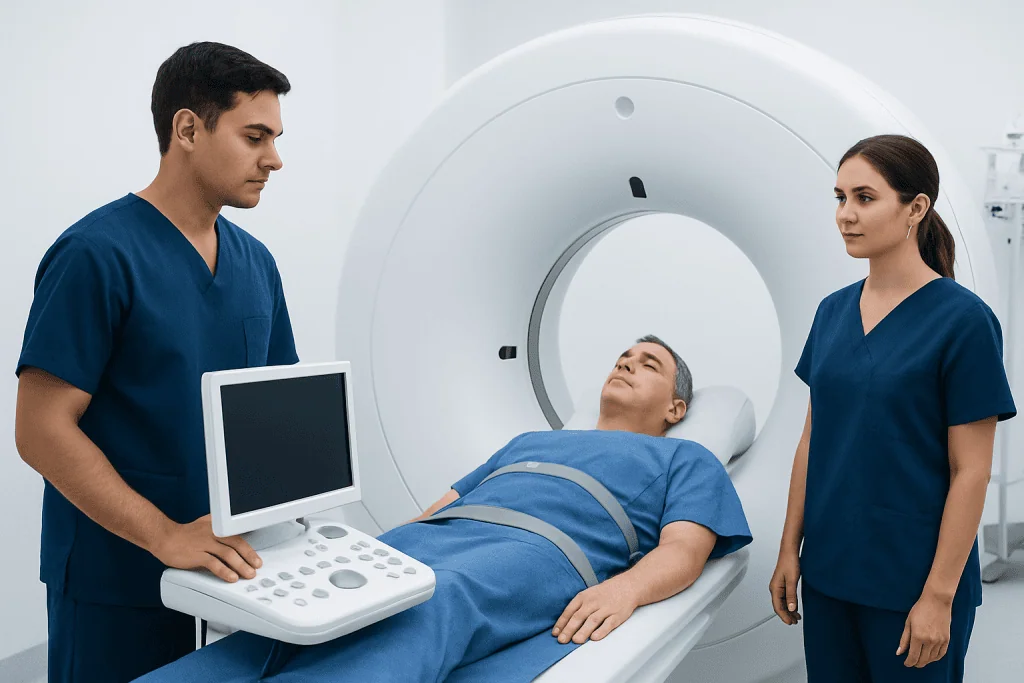
This test is designed to show the inside of the coronary arteries with high detail. Doctors use it to look for plaque, artery narrowing, complete blockages, and changes in vessel shape. It can help distinguish between arteries that are widely open and those that may have significant disease affecting blood flow.
CT coronary angiography can identify both calcified plaque, which contains calcium deposits, and softer plaque that may not be visible on some other tests. This matters because coronary artery disease may be present even before severe blockage develops. Seeing plaque early can support preventive treatment and closer follow-up.
The scan may also help evaluate:
- Unexplained chest discomfort or shortness of breath
- Intermediate risk of coronary artery disease
- Abnormal or unclear results from stress tests
- Coronary artery anatomy before some procedures
- Bypass grafts or selected stent-related questions in certain patients
Although CT coronary angiography is very useful, it does not replace every other heart test. If a blocked artery seems likely to need treatment, a doctor may still recommend a more direct evaluation such as coronary angiography or, when appropriate, procedures like coronary artery bypass surgery.
Who May Need the Test

Doctors often recommend CT coronary angiography for people with symptoms that could be related to reduced blood flow to the heart, especially chest pain with unclear cause. It is commonly used when a person’s risk is not very low or very high and when a detailed look at the coronary arteries could help avoid unnecessary invasive testing.
The test may be helpful for people with suspected coronary artery disease, those with equivocal stress test findings, or people whose symptoms do not match previous test results. It may also be used to assess certain congenital coronary artery patterns or to review artery anatomy before treatment planning.
Not everyone is an ideal candidate. A doctor may choose another test if there is an irregular or very fast heart rhythm, severe kidney impairment, pregnancy, inability to hold the breath briefly, or a known contrast allergy that cannot be managed safely. The best test depends on the person’s symptoms, medical history, and the clinical question being asked.
How to Prepare for CT Coronary Angiography
Preparation instructions can vary slightly by hospital, but most people are asked not to eat for a few hours before the scan and to drink water unless told otherwise. Caffeine is often avoided on the day of the test because it can raise the heart rate and affect image quality. Patients should follow the imaging center’s exact instructions, especially if they take regular medicines.
Before the scan, the care team will ask about kidney disease, diabetes medicines, contrast allergies, asthma, thyroid conditions, and possible pregnancy. It is important to mention all medications and supplements. Some people may be given medicine to slow the heart rate, often a beta blocker, because clearer pictures are obtained when the heart beats more slowly and steadily.
Metal objects on the chest area may need to be removed, and an intravenous line is placed to inject contrast dye. In some cases, a medicine such as nitroglycerin may be used shortly before the scan to widen the coronary arteries and improve visibility. Patients should only take such medications under medical supervision and after discussing blood pressure and other health conditions.
People who are anxious about medical tests can let the team know in advance. Understanding the process often helps: the scan itself is usually short, painless, and done while lying still on a table that moves through the CT scanner.
What Happens During the Scan
When the test begins, sticky electrodes are placed on the chest to monitor the heartbeat. The scan is timed to specific parts of the cardiac cycle so that the images are as sharp as possible. The patient lies on the scanning table and is asked to stay still and hold the breath for short periods.
Contrast dye is injected through the IV line during image acquisition. Many people notice a brief warm sensation or a metallic taste in the mouth; this usually passes quickly. The scanner then takes a rapid series of images of the heart and coronary arteries.
The whole appointment may last longer because of preparation, heart rate control, and monitoring, but the actual image capture is often completed within minutes. After the scan, patients are usually observed briefly and encouraged to drink fluids unless another medical condition limits fluid intake.
Understanding the Results
A normal CT coronary angiography result means the coronary arteries appear open without important narrowing. This can be reassuring and may help a doctor consider other causes of symptoms. Even with a normal scan, follow-up may still be needed if symptoms continue or change.
An abnormal result may show plaque buildup, mild to moderate narrowing, severe narrowing, or less commonly unusual coronary anatomy. The report may describe whether plaque is calcified, non-calcified, or mixed, and whether the narrowing looks likely to affect blood flow. These details help doctors estimate risk and guide next steps.
Depending on the findings, management may include lifestyle measures, cholesterol-lowering medication, blood pressure control, diabetes management, or additional testing. In some situations, treatment may involve procedures such as coronary stent placement or other interventions if significant disease is confirmed and symptoms or risk warrant it.
Results are interpreted alongside the person’s age, symptoms, family history, blood test results, and other cardiovascular risk factors. A scan provides valuable information, but it is only one part of the overall clinical picture.
Benefits, Limits, and Possible Risks
One of the main benefits of CT coronary angiography is that it offers detailed coronary imaging without an invasive catheter procedure. It can help rule out significant coronary artery disease in many patients and may shorten the path to diagnosis. For some people, this means fewer unnecessary invasive tests and faster reassurance.
Like all medical imaging tests, it also has limitations. Image quality can be reduced by a very fast or irregular heartbeat, extensive calcium in the arteries, body movement, or difficulty holding the breath. In addition, the test shows anatomy very well, but it does not always prove how much a narrowing affects blood flow; another functional test may still be needed.
There are also some risks to consider. The test uses ionizing radiation, though modern scanners and protocols aim to keep exposure as low as reasonably possible. The contrast dye can rarely cause allergic reactions and may affect kidney function in susceptible patients. For these reasons, doctors weigh the benefits and risks carefully before recommending the scan.
Aftercare, Prevention, and When to Seek Medical Advice
Most people can return to usual activities soon after CT coronary angiography unless they have been told otherwise. Drinking fluids after the test may help clear the contrast dye, if appropriate for the individual’s health. If heart rate medicine was given, temporary monitoring or advice about dizziness and blood pressure may be provided.
If the scan shows plaque or narrowing, prevention becomes especially important. This may include stopping smoking, eating a heart-healthy diet, being physically active, maintaining a healthy weight, improving sleep, and controlling blood pressure, cholesterol, and blood sugar. Medications may also be recommended to reduce future cardiovascular risk.
Medical advice should be sought promptly for ongoing chest pain, chest pressure with exertion, shortness of breath, fainting, or symptoms that are new or worsening. Emergency care is needed for severe chest pain, sudden shortness of breath, or symptoms suggestive of a heart attack. For international patients who need coordinated evaluation, Acibadem International’s multidisciplinary specialists in JCI-accredited hospitals diagnose and treat heart and vascular conditions using advanced imaging and individualized care plans.
Even when the test result is reassuring, persistent symptoms deserve medical review. A normal scan does not mean every cause of chest discomfort has been excluded, so follow-up with a qualified doctor remains important.
Frequently asked questions
Is CT coronary angiography the same as a regular angiogram?
No. CT coronary angiography is a noninvasive imaging test that uses a CT scanner and contrast dye through a vein, while a regular angiogram usually involves inserting a catheter into an artery. Both can evaluate coronary arteries, but they are used in different clinical situations.
How long does CT coronary angiography take?
The actual scan is usually quite short and may take only a few minutes. The full visit often takes longer because of check-in, preparation, IV placement, heart rate control, and brief observation afterward.
Do patients need to fast before CT coronary angiography?
Many centers ask patients not to eat for a few hours before the scan. Instructions vary, so the safest approach is to follow the preparation guidance given by the hospital or imaging department.
Is CT coronary angiography painful?
The scan itself is generally painless. The main discomfort is usually from placing the IV line, and some people notice temporary warmth or a metallic taste when the contrast dye is injected.
Can CT coronary angiography detect early heart disease?
Yes, it can often detect plaque in the coronary arteries even before severe blockage develops. This makes it useful for identifying signs of coronary artery disease and helping doctors plan prevention or treatment.
Are there risks from the contrast dye or radiation?
There are some risks, but they are weighed against the expected benefit of the test. Contrast dye can rarely trigger allergic reactions or affect kidney function in certain people, and CT scans use radiation, although modern protocols aim to minimize exposure.
References
- American Heart Association
- Radiological Society of North America
- American College of Cardiology
- Society of Cardiovascular Computed Tomography
- National Heart, Lung, and Blood Institute
This article is for general information only and is not a substitute for professional medical advice. Please consult a qualified doctor about your individual situation.
Coronary Angiography in Turkey — costs, top hospitals & a free quote
JCI-accredited · board-certified surgeons · reply within 24h
Add us as a Preferred Source to see more of our trusted health content across Google Search, AI Overviews and Discover.
Check your numbers in seconds
BMI, calories, due date, blood pressure and 30+ more clinical calculators — free, instant, doctor-reviewed ranges.

Cardiology Department
Diagnosis and treatment of heart and vascular conditions, from prevention to advanced interventional procedures.
90 specialists in this unitMore from the Health Library



Related Specialists

Prof. Dr. Ata Can Atalar
Orthopedic Surgery & Traumatology
Fzt. Sena Durmaz
Physical Medicine & Rehabilitation
Prof. Dr. S. Tolga Aydoğ
Physical Medicine & Rehabilitation
Dr. Fatih Kaya
General Surgery