Cubitus Valgus: An Evidence-Based Guide for Patients
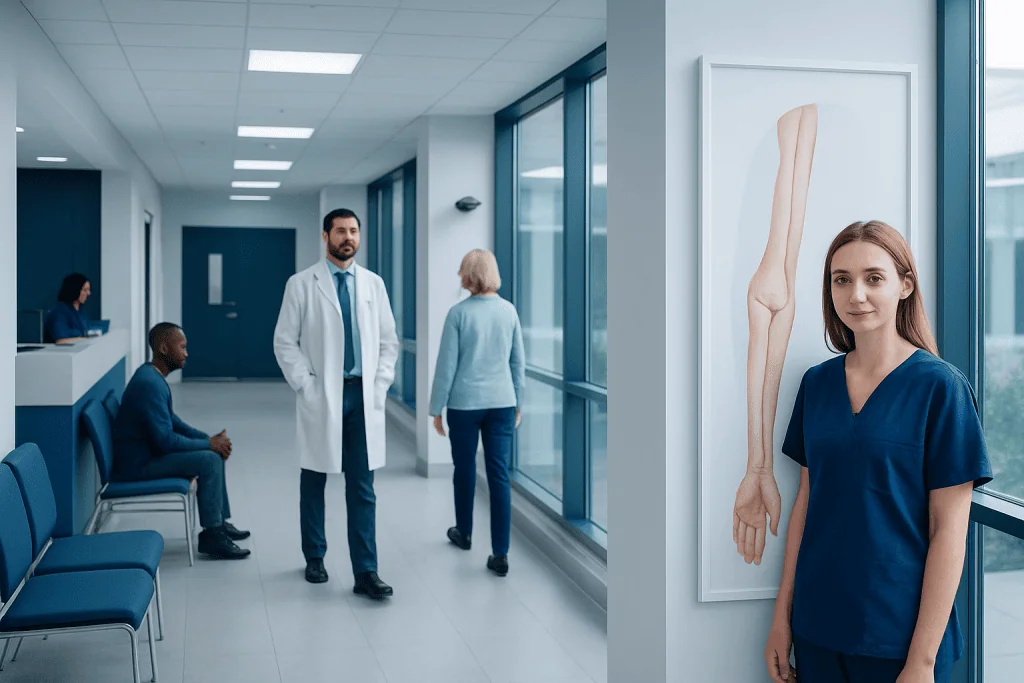
Cubitus valgus means the elbow has a larger-than-usual outward carrying angle. Some cases cause no symptoms, while others lead to cosmetic concern, limited function, pain, or ulnar nerve irritation.
Key Takeaways
- Cubitus valgus means the elbow has a larger-than-usual outward carrying angle.
- Some cases cause no symptoms, while others lead to cosmetic concern, limited function, pain, or ulnar nerve irritation.
- Common causes include congenital differences, healed fractures around the elbow, and growth plate injury in childhood.
- Diagnosis is based on physical examination and imaging to measure alignment and look for underlying bone changes.
- Treatment ranges from observation and rehabilitation to surgery when deformity is significant or nerve symptoms are present.
Cubitus valgus is a condition in which the forearm angles outward more than usual when the arm is straight and the palm faces forward. It may be a normal anatomical variation in some people, but it can also develop after childhood growth disturbance, fracture, or other elbow conditions, especially if it causes pain, weakness, or numbness.
Overview: what cubitus valgus means
Cubitus valgus is an increased outward angulation of the forearm in relation to the upper arm when the elbow is fully extended and the palm faces forward. This angle, sometimes called the carrying angle, is a normal part of elbow anatomy. In cubitus valgus, the angle is larger than expected for that person’s age, body structure, and side-to-side comparison.
For many people, cubitus valgus is mild and does not cause health problems. It may simply be noticed when comparing one arm with the other or during a routine examination. In other cases, the change in alignment is linked to a previous injury, a congenital difference present from birth, or a problem affecting bone growth around the elbow.
What matters most is not the appearance alone, but whether the elbow works well and whether there are symptoms. Some patients seek evaluation because of visible asymmetry, while others have pain, stiffness, weakness, or tingling in the ring and little fingers due to pressure on the ulnar nerve. A careful assessment helps distinguish a harmless variation from a condition that may benefit from treatment.
Signs and symptoms patients may notice
The most obvious sign is that the forearm points farther away from the body than usual when the arm is straight. This may affect one elbow or both, although one-sided cubitus valgus is common after an old injury. Some people first notice that sleeves fit unevenly or that the elbow shape looks different in photographs or mirrors.
Symptoms vary widely. Mild cases may cause no discomfort at all. More noticeable deformity can be associated with elbow pain, a feeling of instability, reduced range of motion, or difficulty with activities that load the joint. Athletes and physically active adults may be more aware of symptoms during throwing, lifting, or repetitive arm use.
One of the most important symptom patterns involves the ulnar nerve, which passes near the inner side of the elbow. When cubitus valgus stretches or irritates this nerve over time, patients may develop numbness or tingling in the ring and little fingers, hand weakness, clumsiness with fine tasks, or discomfort along the inner elbow. Persistent nerve symptoms deserve medical attention because long-standing irritation can become harder to reverse.
- Visible increase in the elbow carrying angle
- Uneven appearance between the two arms
- Elbow pain or aching with activity
- Reduced movement or stiffness
- Numbness or tingling in the ring and little fingers
- Weak grip or hand fatigue
Causes and risk factors

Cubitus valgus can be congenital, meaning it develops as part of bone formation before birth, or acquired later in life. Congenital cases may occur on their own or alongside other skeletal differences. Acquired cubitus valgus is often related to how a fracture near the elbow healed in childhood, especially around the lower end of the humerus or the lateral side of the elbow.
A classic cause is nonunion or growth disturbance after a lateral condyle fracture of the humerus in childhood. Because the elbow grows through specialized areas called growth plates, injuries in this region can change future alignment. Over time, even an injury that seemed to heal can leave a person with a larger carrying angle as growth continues. Other causes may include malunion after fracture, previous infection, bone developmental disorders, or less commonly conditions that affect the shape of the elbow joint.
Risk factors depend on the underlying cause. A history of childhood elbow trauma, delayed treatment of fractures, or growth plate injury increases risk. People with longstanding deformity are also more likely to develop ulnar nerve problems over time. If elbow alignment problems are part of a broader bone or joint issue, clinicians may also consider related conditions such as skeletal alignment disorders elsewhere in the body, although cubitus valgus itself is specific to the elbow.
How doctors diagnose cubitus valgus
Diagnosis begins with a medical history and physical examination. The doctor usually asks when the elbow shape was first noticed, whether there was a prior injury, and whether symptoms such as pain, weakness, or numbness have developed. The elbow is examined for carrying angle, range of motion, tenderness, joint stability, muscle strength, and signs of ulnar nerve involvement.
Because carrying angle naturally varies, the clinician typically compares both arms and considers age and body proportions. Measurement may be done with a goniometer during examination. The doctor also checks whether symptoms point to another elbow problem that may mimic or accompany the deformity, such as stiffness after injury or compression neuropathy.
X-rays are the main imaging test used to evaluate bone alignment and to identify old fractures, growth plate changes, or joint irregularities. In selected cases, additional studies may be needed. Nerve testing can help assess ulnar nerve function when numbness or weakness is present, and advanced imaging may be considered if surgery is being planned. If a patient has persistent nerve symptoms, evaluation for related ulnar nerve entrapment may also be appropriate.
Treatment options: observation, rehabilitation, and surgery
Treatment depends on the cause of cubitus valgus, the degree of deformity, and whether symptoms affect daily life. If the elbow works well and there is no pain or nerve irritation, careful observation may be all that is needed. In these cases, regular follow-up can help monitor changes in function, especially in children who are still growing.
When symptoms are mild, conservative care may include activity modification, guided exercises, and rehabilitation to maintain mobility and strength. Physical therapy can be helpful for movement control, muscle balance, and reducing strain around the elbow and shoulder. In a broader musculoskeletal care plan, some patients may benefit from physical therapy and rehabilitation to support function and comfort.
Surgery is considered when there is significant deformity, functional limitation, cosmetic concern with clear patient goals, or ulnar nerve symptoms that do not improve. Procedures may include corrective osteotomy, in which the bone is surgically realigned, and in some cases treatment of the ulnar nerve if it is compressed or stretched. This may involve specialized orthopedic surgery after imaging and clinical evaluation. If nerve symptoms are prominent, clinicians may also discuss assessment and management approaches used in peripheral nerve surgery settings, depending on the exact problem.
After surgery, recovery usually includes protection of the elbow followed by rehabilitation. The goals are to allow bone healing, restore movement, improve strength, and reduce the chance of stiffness. The best approach is individualized, and decisions are usually made with an orthopedic specialist familiar with elbow alignment disorders.
Living with cubitus valgus: self-care and prevention
Not all cases of cubitus valgus can be prevented, particularly when the condition is congenital. However, preventing avoidable complications starts with proper evaluation of elbow injuries, especially in children. Fractures around the elbow should be assessed promptly because growth plate or joint injuries can affect alignment as the child grows.
For people already diagnosed with cubitus valgus, self-care focuses on protecting function. It may help to avoid repetitive elbow strain if it triggers symptoms, maintain good arm and shoulder strength through clinician-guided exercises, and monitor for numbness, tingling, or increasing weakness in the hand. Symptom tracking can be useful when discussing next steps with a doctor.
If the condition is mild and stable, many people continue everyday activities without limitation. Supportive care should not replace medical review when symptoms change, but it can play a valuable role in comfort and joint health. Near the end of the care pathway, patients seeking coordinated evaluation may choose centers such as Acibadem International, where multidisciplinary specialists in JCI-accredited hospitals assess and treat elbow deformities for international patients.
When to seek medical care
Medical evaluation is important if a person notices a new elbow deformity, especially after an injury. A changing carrying angle, persistent pain, restricted motion, or visible asymmetry in a child should not be ignored. Early assessment can identify fractures, growth disturbances, or healing problems before they lead to more lasting alignment changes.
Prompt medical care is also advisable if there are signs of ulnar nerve involvement. These include numbness or tingling in the ring and little fingers, hand weakness, dropping objects, or shrinking of hand muscles. These symptoms may suggest ongoing nerve irritation that could require further testing and treatment.
Urgent care is appropriate after recent trauma if the elbow is severely painful, obviously deformed, swollen, or difficult to move. In general, any patient with worsening symptoms or uncertainty about the cause of elbow changes should speak with a qualified doctor or orthopedic specialist.
Frequently asked questions
Is cubitus valgus always abnormal?
No. A mild outward carrying angle is a normal feature of the elbow, and some people naturally have a slightly larger angle than others. Cubitus valgus becomes more clinically important when the angle is clearly increased, one side differs from the other, or symptoms such as pain or numbness appear.
Can cubitus valgus develop after a childhood fracture?
Yes. One of the best-known causes is a fracture near the elbow that heals in a way that changes growth or alignment, particularly around the lateral condyle of the humerus. The deformity may not be fully obvious until months or years later as the child grows.
Does cubitus valgus cause nerve problems?
It can. A larger elbow angle may place long-term stretch or pressure on the ulnar nerve, which runs along the inner side of the elbow. This may lead to tingling in the ring and little fingers, hand weakness, or clumsiness if not assessed.
How is cubitus valgus measured?
Doctors usually measure the carrying angle during a physical examination with the elbow straight and the palm facing forward. They also compare both arms and use X-rays when needed to assess bone alignment and look for old injuries or growth changes.
Will every patient need surgery?
No. Many patients do not need surgery, especially if the deformity is mild and there are no functional or nerve-related symptoms. Surgery is usually reserved for more significant deformity, limitation in daily activities, or persistent ulnar nerve problems.
Can exercise correct cubitus valgus?
Exercise cannot realign a bony deformity on its own. However, guided rehabilitation may improve strength, motion, and comfort, and it can help support function before or after other treatments.
This article is for general information only and is not a substitute for professional medical advice. Please consult a qualified doctor about your individual situation.
Explore treatments in Turkey — costs, top hospitals & a free quote
JCI-accredited · board-certified surgeons · reply within 24h
Add us as a Preferred Source to see more of our trusted health content across Google Search, AI Overviews and Discover.

More from the Health Library

Exercise and Menstruation: A Complete Medical Overview

Si Joint Dysfunction — Explained by Medical Evidence, Not Myths

Lymphedema: What Patients Need to Know

Lactic Acid for Skin: An Evidence-Based Guide for Patients

Splinter Hemorrhage — Explained by Medical Evidence, Not Myths