Cutting a Finger — Explained by Medical Evidence, Not Myths

Apply steady direct pressure with clean gauze or cloth to stop bleeding before examining the cut. Rinse most minor cuts with clean running water; avoid putting harsh antiseptics deep into the wound.
Key Takeaways
- Apply steady direct pressure with clean gauze or cloth to stop bleeding before examining the cut.
- Rinse most minor cuts with clean running water; avoid putting harsh antiseptics deep into the wound.
- Deep, gaping, contaminated or bleeding wounds may need professional cleaning, closure and tetanus assessment.
- Numbness, tingling, inability to bend or straighten the finger, or a pale or cold fingertip can indicate deeper injury.
- Keep the wound clean and covered, and seek medical advice if redness, swelling, pain or drainage increases.
Cutting a finger is common and often manageable with prompt first aid: control bleeding with direct pressure, rinse the wound under clean running water, and cover it with a sterile dressing. A deep cut, ongoing bleeding, numbness, weakness, contamination or signs of infection should be assessed by a healthcare professional.
Cutting a Finger: What to Do First
When cutting a finger, the first priorities are stopping bleeding, protecting the wound and checking whether the injury may involve deeper structures. Many small, clean cuts affect only the skin and heal well with home care. However, fingers contain tendons, nerves, blood vessels and joints close to the surface, so a wound that appears small can occasionally need medical assessment.
Before helping, wash hands if possible or use disposable gloves. Apply firm, continuous pressure to the cut with clean gauze, a clean cloth or a sterile dressing. Keep the hand raised above heart level if practical. Avoid repeatedly lifting the dressing to check the wound, since this can disrupt clotting and restart bleeding.
Once bleeding has slowed or stopped, remove rings from the injured hand early, as swelling can make them difficult to remove later. If a ring cannot be removed and the finger is becoming swollen, painful, pale or numb, urgent medical help is important. Do not tie anything tightly around the finger to control bleeding.
How to Clean and Dress a Minor Finger Cut
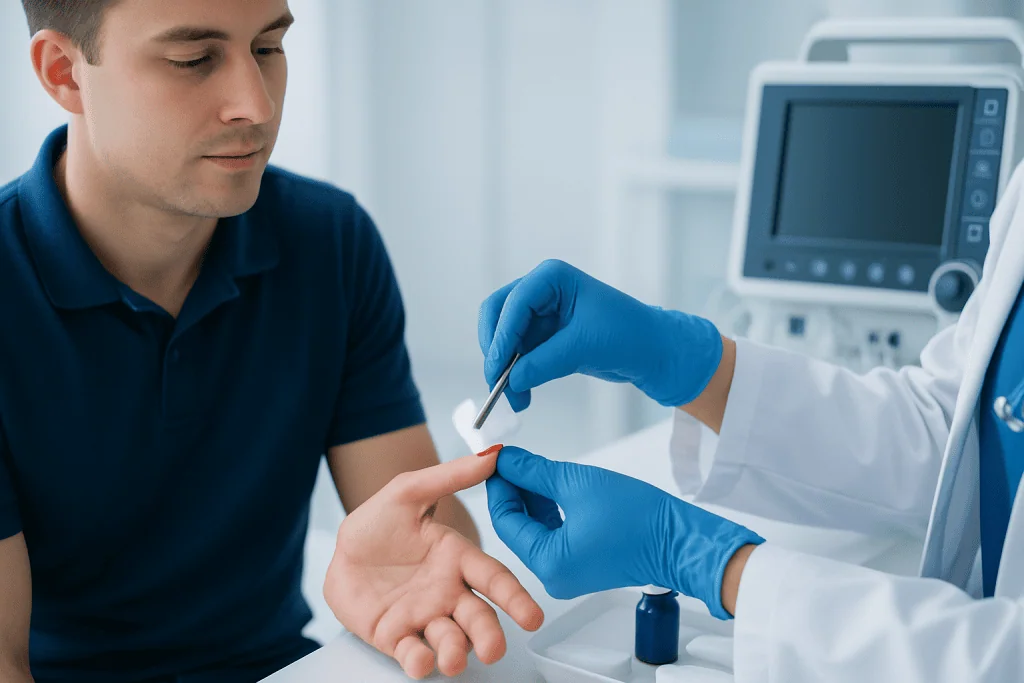
For a minor cut, rinse the area gently under clean running water. Mild soap can be used on the surrounding skin, but it does not need to be pushed into the wound. Remove visible dirt with clean tweezers only if it comes away easily; tweezers should be cleaned with alcohol first. If debris is embedded, or the cut was caused by dirty material, professional evaluation is safer.
After cleaning, gently pat the area dry and cover it with a sterile non-stick dressing or clean bandage. A thin layer of petroleum jelly can help prevent the dressing from sticking and keep the wound surface moist while it heals. Change the dressing daily, or sooner if it becomes wet, dirty or loose.
Hydrogen peroxide, iodine solutions and rubbing alcohol can irritate healing tissue when used repeatedly inside an open wound. They are not usually necessary for routine home care. Avoid sealing a dirty, deep or puncture-type wound with adhesive strips or skin glue at home, because bacteria or debris may be trapped inside.
- Keep the injured finger protected from friction and repeated bending when possible.
- Use a waterproof cover for washing dishes or bathing if the dressing may get wet.
- Take simple pain relief only if it is suitable for the individual’s health conditions and current medicines.
What a Cut Can Affect Beyond the Skin

A cut may be superficial, meaning it involves the outer skin only, or it may extend into fatty tissue, muscle, tendon, nerve, blood vessel, nail bed, joint or bone. The location of the cut matters. Wounds over the palm side of the finger, near a joint, at the fingertip, around the nail, or across a skin crease deserve particular attention because they can affect movement, sensation or healing.
A tendon injury may cause difficulty bending or straightening part of the finger. Nerve injury can lead to numbness, altered sensation, burning or tingling on one side of the finger. Damage to circulation may make the fingertip look pale, blue or unusually cold. These findings are not expected with a simple skin cut and should be assessed urgently.
Some cuts also involve the nail or nail bed. A painful blood collection under the nail, a split nail, or a laceration extending beneath the nail can require treatment to reduce pain and support normal nail growth. Injuries from broken glass, knives, tools, machinery, animal bites or human bites may carry additional risks because of contamination or unseen deeper damage.
Medical Assessment, Stitches and Tetanus Protection
A clinician will usually ask how the injury happened, when it occurred and whether the object was clean. They will examine the wound, circulation, feeling and finger movement. The area may be numbed so the wound can be cleaned thoroughly and explored safely. An X-ray may be recommended if there is concern about a fracture, retained glass or metal, or an injury near a joint.
Some wounds heal best with closure using stitches, adhesive strips, tissue adhesive or other methods. The choice depends on wound depth, location, tension on the skin, contamination and the time since injury. Not every cut needs stitches, and closing a contaminated wound may not be appropriate. Prompt assessment is useful when a cut is deep, gaping or located where movement may pull it open.
Tetanus vaccination status should be reviewed after a cut, particularly if the wound is dirty, punctured, crushed, or caused by an object exposed to soil, rust or animal material. Rust itself does not cause tetanus, but an unclean object may carry contamination. A clinician can advise whether a tetanus booster or other prevention is needed based on the wound and vaccination history.
For injuries affecting tendons, nerves, joints or bones, hand surgery assessment may be needed. Early evaluation can help guide wound repair, splinting and rehabilitation where appropriate.
Healing, Daily Care and Infection Awareness
Most uncomplicated superficial cuts begin to feel better over several days, although tenderness can last longer in areas used frequently. Protect the skin as it heals and avoid picking at scabs. If adhesive strips were applied by a clinician, follow their instructions and allow them to loosen naturally unless advised otherwise.
Some mild redness at the wound edge and slight discomfort can be normal initially. Infection is more concerning when redness spreads, warmth, swelling or pain increases, pus-like drainage develops, red streaks appear, or there is fever or feeling unwell. People with diabetes, reduced circulation, immune suppression or conditions that affect wound healing may need earlier clinical advice for even a seemingly minor injury.
Finger stiffness can occur after an injury, especially if the digit is held still for a long time. Unless a clinician has advised splinting or restricted movement, gentle comfortable movement can help maintain flexibility. A wound over a joint may need individualized advice because excess movement can reopen it.
When to Seek Medical Care
Urgent medical care is recommended if bleeding does not stop after sustained direct pressure, blood is spurting or rapidly soaking through dressings, or there is a partial or complete amputation. Call emergency services for severe bleeding, fainting, signs of shock, or a serious machinery-related injury. If part of a finger is detached, wrap it in clean, damp gauze, place it in a sealed bag, and keep the bag cool on ice water without allowing the tissue to touch ice directly.
Same-day assessment is advisable for a deep or gaping cut; visible fat, tendon or bone; numbness; loss of movement; a pale, blue or cold finger; a wound near a joint or nail bed; embedded material; or a cut caused by a bite, dirty object, broken glass, or a high-force injury. Medical review is also appropriate when tetanus vaccination status is uncertain.
Seek care in the following days if there are possible signs of infection or the wound is not healing as expected. Acibadem International’s multidisciplinary specialists and JCI-accredited hospitals can assess and treat hand and finger injuries for international patients when specialist care is needed.
Preventing Future Finger Cuts
Many finger cuts can be reduced through simple safety habits. Use a stable cutting board, keep knives sharp and pointed away from the body, and avoid trying to catch a falling knife. Store sharp tools securely and use the right tool for the job rather than improvising with a blade.
Protective gloves can be useful for food preparation, gardening, construction, cleaning broken materials and handling sharp objects. Gloves do not remove all risk, so careful technique remains important. Safety guards, adequate lighting and avoiding rushed work also help prevent injuries.
Children should be supervised around sharp tools and taught age-appropriate safety skills. Broken glass should be swept up with a brush and pan rather than handled directly. Keeping tetanus vaccinations up to date provides an important layer of protection should a wound occur.
Frequently asked questions
Should a cut on a finger be kept covered or exposed to air?
A clean dressing usually protects a finger cut from dirt, friction and repeated injury. It can also prevent the wound from drying out excessively or sticking to clothing. The dressing should be changed daily and whenever it becomes wet or soiled.
How long should pressure be applied to a bleeding finger cut?
Firm, steady pressure should be applied continuously without repeatedly checking the wound. If bleeding remains significant after sustained pressure, or if blood is spurting or soaking through dressings, urgent medical assessment is needed. Elevating the hand may help, but it does not replace direct pressure.
Can a finger cut damage a nerve or tendon?
Yes. A deeper cut can injure nerves or tendons, particularly on the palm side of the finger or near a joint. Numbness, tingling, weakness, or inability to fully bend or straighten the finger should be assessed promptly.
Does a cut from a rusty object always need a tetanus shot?
Rust does not itself cause tetanus, but an object may be contaminated depending on where it has been. The need for a tetanus booster depends on the type of wound and the person’s vaccination history. A healthcare professional can provide individualized advice.
When might a finger cut need stitches?
Stitches or another closure method may be considered for a deep, gaping or longer cut, especially if the wound edges do not stay together or it lies across a joint. The wound should be assessed promptly because closure is not suitable for every injury, particularly if it is contaminated. A clinician can clean the wound and decide on the safest treatment.
What are signs that a finger cut may be infected?
Possible signs include increasing redness, warmth, swelling, pain, pus-like drainage, red streaks or fever. Worsening symptoms after initial improvement also warrant medical advice. People with diabetes or weakened immunity should seek advice early if they have concerns about a wound.
This article is for general information only and is not a substitute for professional medical advice. Please consult a qualified doctor about your individual situation.
Explore treatments in Turkey — costs, top hospitals & a free quote
JCI-accredited · board-certified surgeons · reply within 24h
Add us as a Preferred Source to see more of our trusted health content across Google Search, AI Overviews and Discover.

More from the Health Library

Circadian Rhythm — Explained by Medical Evidence, Not Myths

Clascoterone: A Complete Medical Overview

Omega 3 of 3 6 9 — Explained by Medical Evidence, Not Myths

Ectopia Lentis: A Complete Medical Overview

Histology: An Evidence-Based Guide for Patients