Cysto Transurethral Resection of Bladder Tumor: Procedure, Recovery and Results

TURBT removes bladder tumors through a cystoscope passed through the urethra, so abdominal incisions are usually not needed. The tissue removed during TURBT is examined in a laboratory to confirm the diagnosis, tumor grade and depth of invasion.
Key Takeaways
- TURBT removes bladder tumors through a cystoscope passed through the urethra, so abdominal incisions are usually not needed.
- The tissue removed during TURBT is examined in a laboratory to confirm the diagnosis, tumor grade and depth of invasion.
- Many people go home the same day or after a short stay, although temporary urinary symptoms are common during healing.
- Follow-up cystoscopy is important because bladder tumors, particularly non-muscle-invasive cancers, can recur.
- The pathology result after TURBT guides whether surveillance, bladder medication, repeat TURBT or more extensive treatment is needed.
Cysto transurethral resection of bladder tumor, often called TURBT, is a minimally invasive procedure used to remove visible bladder tumors and determine whether cancer is present and how deeply it has grown. It is usually performed through the urethra, without cuts in the abdomen, and is an important first step in diagnosing and treating many bladder tumors.
Overview: What Is Cysto Transurethral Resection of Bladder Tumor?
Cysto transurethral resection of bladder tumor is a procedure in which a urologist uses a thin viewing instrument, called a cystoscope or resectoscope, to inspect the bladder and remove abnormal tissue. It is commonly shortened to TURBT, meaning transurethral resection of bladder tumor. The procedure can help establish whether a growth is cancerous and, if it is, provide key information about its type, grade and stage.
The instrument is passed through the urethra, the natural channel through which urine leaves the body. This means the surgeon can reach the bladder without making an incision in the abdomen. During the procedure, visible tumors are shaved or removed in small pieces, and samples can be taken from the surrounding bladder lining when needed.
TURBT is often both diagnostic and therapeutic. For many tumors that are limited to the bladder lining or connective tissue beneath it, it may remove all visible disease. It does not necessarily mean that no further treatment will be needed; the pathology findings and ongoing cystoscopy surveillance determine the next steps.
Who May Need TURBT and How It Works
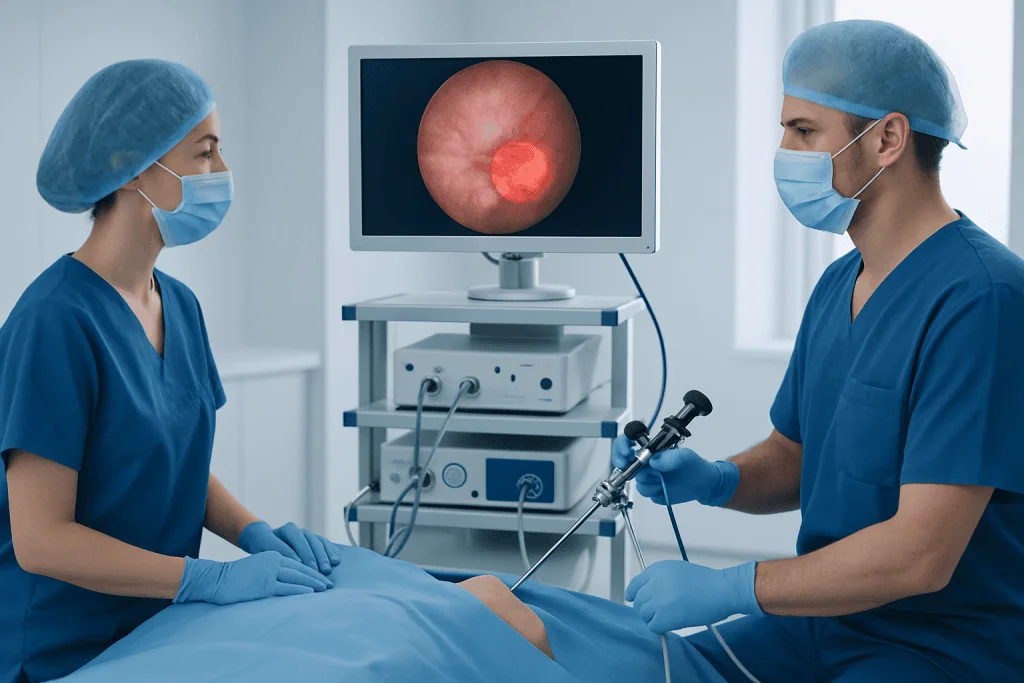
A urologist may recommend TURBT after a bladder abnormality is seen during cystoscopy, ultrasound, CT imaging or another investigation. It is frequently performed for people who have blood in the urine, unexplained urinary symptoms, or a bladder lesion that requires tissue diagnosis. Visible blood in the urine should always be assessed promptly, even if it occurs once or goes away.
The procedure is especially important when there is concern for bladder cancer. It allows the clinical team to determine whether a tumor is non-muscle-invasive, meaning it is confined to the inner bladder layers, or whether it involves the bladder muscle. This distinction strongly influences the treatment plan and outlook. For broader information about the condition, readers may find bladder cancer helpful.
Before TURBT, the urology team reviews medical history, medicines, allergies and anesthesia needs. Blood-thinning medicines, diabetes medicines and supplements may need individual instructions before surgery. A urine test may be performed to identify and treat an infection before the procedure, and imaging may be used to assess the urinary tract.
- Suitable candidates: people with a suspected or known bladder tumor who are well enough for anesthesia.
- Special considerations: active urinary infection, significant bleeding risk or certain medical conditions may require treatment or planning before surgery.
- Purpose: remove visible tumor, obtain adequate tissue for pathology, and guide further care.
Step by Step: What Happens During the Procedure?

TURBT is usually performed under general anesthesia, where the patient is asleep, or spinal anesthesia, where the lower body is numb. The anesthesiologist and surgeon select the most appropriate option based on health needs, the expected length of surgery and patient preferences. The procedure commonly takes less than an hour, although this varies with the number, size and location of tumors.
After anesthesia begins, the urologist carefully inserts a cystoscope through the urethra into the bladder. Sterile fluid is used to gently fill the bladder so its lining can be viewed. The surgeon examines the bladder, identifies abnormal areas and uses a small wire loop or another instrument to remove tumor tissue. The base of the tumor is treated to control bleeding and to obtain tissue that may include bladder muscle for accurate staging.
Removed tissue is sent to a pathology laboratory. The report typically describes whether cancer is present, the tumor type, grade and whether muscle is included or involved. In selected cases, a medication may be placed in the bladder soon after surgery to lower the chance of early recurrence. This is not appropriate for everyone, particularly if there is concern for bladder perforation or significant bleeding.
For patients seeking coordinated evaluation and care, transurethral resection of bladder tumor (TURBT) can be planned by a urology team alongside pathology, anesthesia and oncology specialists when needed.
What to Expect After Transurethral Resection of Bladder Tumor?
After the procedure, the patient is monitored while anesthesia wears off. A urinary catheter may be placed temporarily to drain urine and allow the bladder to rest. Some people need the catheter only for a short period, while others may require it longer if a larger area was treated, bleeding needs observation or the bladder wall requires additional healing time.
It is common to notice mild burning when passing urine, increased frequency, urgency, small clots or pink-tinged urine for a limited time after TURBT. These symptoms usually improve gradually. Drinking fluids as advised by the surgical team can help keep urine flowing, but people with heart or kidney conditions should follow their individualized fluid guidance.
Most patients return home on the same day or after an overnight stay. The team provides instructions about bathing, physical activity, driving, pain relief, catheter care if applicable and when to restart regular medicines. Heavy lifting, strenuous exercise and activities that increase abdominal pressure are often avoided temporarily to reduce bleeding risk.
The pathology result may take several days. A follow-up visit is important because it explains what was found and whether the tumor was fully removed, whether another TURBT is advisable, and whether bladder-directed treatment or additional imaging is needed.
How Long Does It Take the Bladder to Heal After TURBT Surgery?
Bladder healing after TURBT varies according to the size, number and depth of tumors removed, as well as whether bleeding, infection or a bladder injury occurred. Many people feel noticeably better within one to two weeks, while deeper resection areas may take several weeks to heal fully. The urologist can give the most accurate estimate after reviewing the procedure findings.
During healing, temporary urinary urgency, frequency and discomfort can occur because the bladder lining is sensitive. Light blood staining in the urine may come and go, particularly after increased activity. However, bleeding that becomes heavy, does not improve, or is associated with difficulty passing urine should be reported promptly.
People should follow their discharge instructions closely, including limits on strenuous activity and guidance about fluids. They should not assume that feeling well means the bladder has fully healed; follow-up appointments remain important for reviewing pathology and safely planning any additional treatment.
Benefits, Risks and Results of TURBT
The main benefit of TURBT is that it provides essential information while also removing visible tumor tissue. For many early bladder tumors, it is the first and sometimes the main local treatment. Its findings help prevent both undertreatment and overtreatment by showing whether cancer has reached the bladder muscle.
As with any procedure, TURBT has possible risks. These include bleeding, urinary tract infection, temporary pain or difficulty passing urine, injury to the urethra, and a small risk of making a hole in the bladder wall. Rarely, more significant bleeding, clot retention or a bladder perforation may require catheter drainage, a longer hospital stay or further treatment.
Pathology sometimes shows that the first resection did not provide enough tissue to assess depth, or that a high-grade or deeper tumor needs another resection. A repeat TURBT can be recommended to ensure accurate staging and remove remaining disease. If cancer is muscle-invasive, treatment discussions may include bladder cancer treatment options such as systemic therapy, radiation-based approaches or surgery, depending on individual circumstances.
The result of TURBT is therefore more than whether a tumor was removed on the day of surgery. It is the complete clinical picture: pathology, imaging, risk category, recovery and the plan for monitoring or further therapy.
What Is the Success Rate of Transurethral Resection of a Bladder Tumor?
There is no single success rate for transurethral resection of a bladder tumor because outcomes depend on the tumor’s size, number, grade, stage, location and whether it has invaded the bladder muscle. TURBT is highly valuable for removing visible tumors and obtaining tissue needed for accurate diagnosis. In many non-muscle-invasive cases, it can remove all visible tumor at the time of the procedure.
However, a visually complete resection does not guarantee that bladder cancer will not return or that microscopic cancer cells are absent. Some tumors require repeat resection, medication placed directly into the bladder, or other treatments to reduce the risk of recurrence or progression. The urology team uses the pathology report to explain the individual expected benefit and follow-up plan.
For this reason, successful care includes appropriate surveillance after surgery. Scheduled cystoscopy allows clinicians to identify new or returning tumors early, often before they cause noticeable symptoms.
Can Bladder Cancer Come Back After TURBT?
Yes. Bladder cancer can come back after TURBT, particularly when it is non-muscle-invasive. Recurrence does not necessarily mean that the original procedure was unsuccessful; bladder cancer can develop again in the lining of the bladder over time. The likelihood varies considerably by tumor biology and risk category.
Follow-up commonly includes cystoscopy at intervals selected by the urologist. Urine tests, imaging and repeat biopsies may also be used in specific situations. Some patients benefit from medicine delivered directly into the bladder, called intravesical therapy, to lower the chance of recurrence or progression.
Regular follow-up is one of the most effective parts of long-term care. Patients should attend scheduled appointments even if they have no urinary symptoms. They should also tell their clinician about new blood in the urine, persistent burning, recurrent infections or changes in urinary habits.
When to Seek Medical Care
After TURBT, patients should contact their surgical team urgently if they develop heavy bright-red bleeding, large blood clots, inability to pass urine, worsening lower abdominal pain, fever, chills, persistent vomiting or symptoms that are becoming worse rather than improving. These symptoms do not always indicate a serious complication, but they need timely clinical assessment.
Medical advice should also be sought for possible urinary infection, such as painful urination with fever, cloudy or foul-smelling urine, or new pelvic discomfort. Anyone with new visible blood in the urine before or long after TURBT should arrange medical evaluation rather than waiting for the next routine visit.
Acibadem International’s multidisciplinary specialists and JCI-accredited hospitals support international patients who need assessment, TURBT and follow-up planning. Individual recommendations should always come from the treating urologist, based on pathology results and overall health.
Frequently asked questions
Is cysto transurethral resection of bladder tumor the same as TURBT?
Yes. Cysto transurethral resection of bladder tumor refers to removal of a bladder tumor using a cystoscope passed through the urethra. TURBT is the common abbreviation for transurethral resection of bladder tumor.
Will TURBT remove the entire bladder?
No. TURBT removes a tumor and, when needed, a small area of surrounding bladder tissue through the urethra. The bladder is preserved, although more extensive treatments may be discussed if cancer has invaded muscle or has other high-risk features.
Is a catheter always needed after TURBT?
A catheter is often used after TURBT, but it is not required for every patient or for the same duration. The need depends on the extent of resection, bleeding, urinary drainage and the surgeon's assessment.
When can someone return to work after TURBT?
Return-to-work timing depends on the person's recovery and the physical demands of their job. People with sedentary work may return sooner than those whose work involves lifting or strenuous activity, but the surgical team should provide individualized advice.
Why might a second TURBT be recommended?
A repeat TURBT may be recommended when the first specimen does not include enough bladder muscle for accurate staging, when a tumor is high grade, or when residual tumor is possible. It helps confirm the diagnosis and can improve treatment planning.
Does blood in urine always mean cancer has returned after TURBT?
No. Blood in the urine can result from healing, infection, stones, medication effects or other urinary conditions. Even so, it should be reported to a healthcare professional, especially if it is new, persistent, heavy or accompanied by pain, fever or difficulty urinating.
References
- American Urological Association
- European Association of Urology
- National Cancer Institute
- American Cancer Society
- NHS
This article is for general information only and is not a substitute for professional medical advice. Please consult a qualified doctor about your individual situation.
Oncology care in Turkey — second opinion and treatment plan
JCI-accredited · board-certified surgeons · reply within 24h
Add us as a Preferred Source to see more of our trusted health content across Google Search, AI Overviews and Discover.