Deep Breathing for Anxiety Attack: What Patients Need to Know

Slow, gentle breathing can ease common anxiety attack symptoms such as chest tightness, dizziness, and feeling out of control. Breathing techniques work best when the exhale is slightly longer than the inhale and the breath comes from the diaphragm, not the upper chest.
Key Takeaways
- Slow, gentle breathing can ease common anxiety attack symptoms such as chest tightness, dizziness, and feeling out of control.
- Breathing techniques work best when the exhale is slightly longer than the inhale and the breath comes from the diaphragm, not the upper chest.
- If symptoms are new, severe, or could be related to a medical emergency, prompt medical evaluation is important.
- Breathing exercises are often most effective when combined with longer-term anxiety care, such as counseling, lifestyle changes, or medical treatment.
- Regular practice between episodes can make deep breathing easier to use during moments of distress.
Deep breathing for anxiety attack can reduce the body’s stress response by slowing rapid breaths, relaxing tense muscles, and helping attention return to the present moment. It is not a cure for anxiety, but when done correctly, it can be a practical first-step tool during sudden panic or overwhelming fear.
How deep breathing helps during an anxiety attack
Deep breathing for anxiety attack can help because it interrupts the rapid, shallow breathing pattern that often happens during panic. When a person becomes frightened, the body may switch into a “fight-or-flight” response, causing the heart to beat faster, muscles to tense, and breathing to become quick and chest-based. This can worsen symptoms such as dizziness, tingling, chest discomfort, and the frightening feeling of not getting enough air.
Slow breathing does not always stop an anxiety attack instantly, but it can reduce the physical intensity. A slower breathing rhythm may help lower overbreathing, support a steadier heart rate, and send the nervous system a signal that the immediate threat is passing. Many people feel calmer when the exhale is unforced and slightly longer than the inhale.
It is also important to know what deep breathing is not. It is not taking repeated huge breaths or forcing the lungs to fill completely. Overly large breaths can sometimes make lightheadedness worse. The goal is a gentle, controlled pattern that feels sustainable for several minutes.
Recognizing an anxiety attack and why breathing may feel difficult
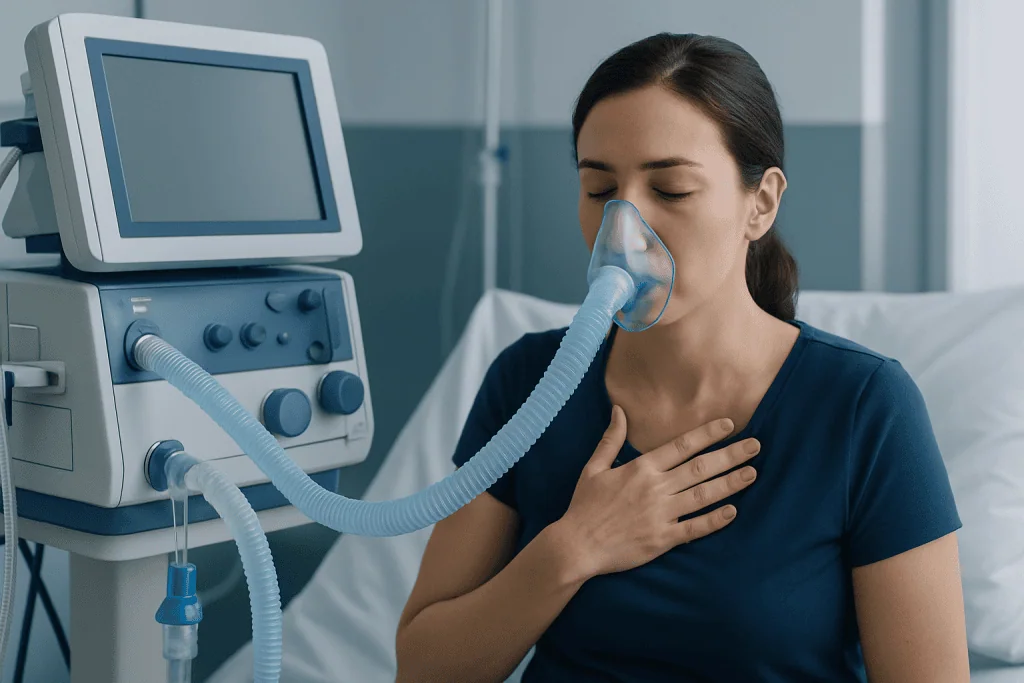
An anxiety attack or panic episode can feel overwhelming, even when there is no physical danger. Common symptoms include sudden fear, a racing heart, sweating, trembling, chest tightness, shortness of breath, nausea, dizziness, numbness, and a sense of losing control. Some people also feel detached from their surroundings or worry that they are having a serious medical event.
Breathing often changes early in the episode. A person may start breathing quickly through the mouth, sigh repeatedly, or feel unable to take a satisfying breath. Although this sensation can be very distressing, it is often related to hyperventilation rather than a true lack of oxygen.
Anxiety attacks can happen on their own or alongside conditions such as generalized anxiety disorder, phobias, or panic disorder. They may also occur during periods of stress, poor sleep, heavy caffeine intake, illness, or major life changes. Recognizing the pattern can make the symptoms less mysterious and help a person respond more effectively.
A step-by-step breathing technique patients can try
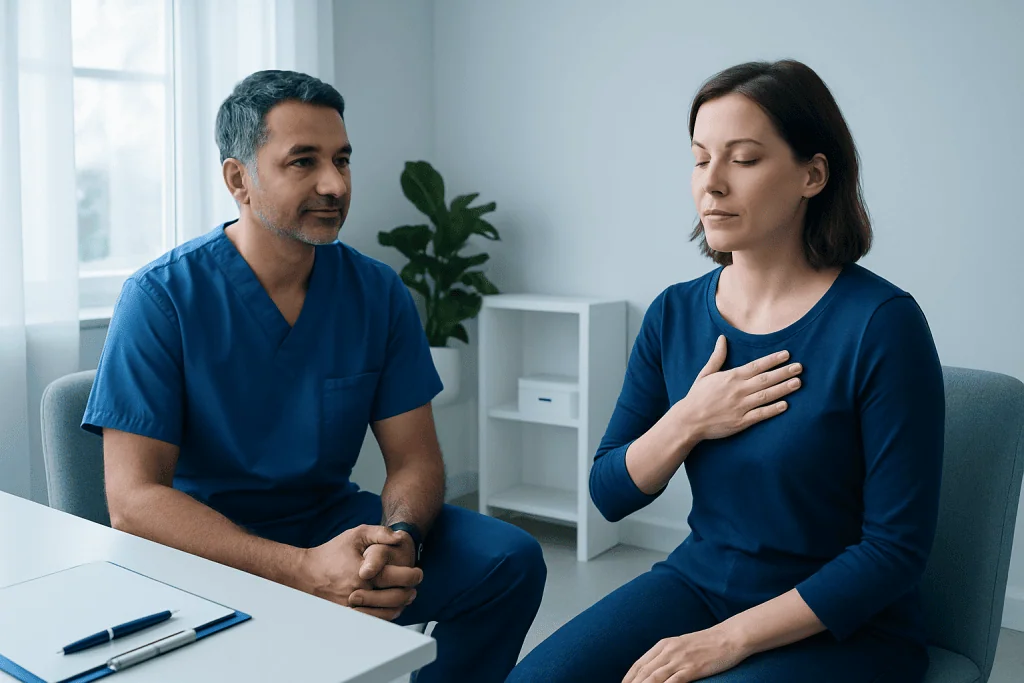
A simple, evidence-based approach is to sit upright if possible, relax the shoulders, and place one hand on the chest and the other on the abdomen. Then inhale gently through the nose for about four counts, allowing the lower hand to rise more than the upper hand. Pause briefly only if comfortable, then exhale slowly through the mouth or nose for about six counts. This longer exhale is often the most calming part of the cycle.
Repeating this pattern for one to five minutes may help symptoms settle. If counting increases stress, it may be better to focus on words such as “in” and “out,” or to match the breath to a steady visual cue. The pace does not need to be exact. Comfort and smoothness are more important than perfect timing.
Some people prefer other structured methods, such as box breathing or paced breathing. However, during a strong panic episode, very rigid patterns can occasionally feel difficult to follow. A more flexible goal is often helpful:
- breathe through the nose if possible
- let the abdomen expand softly
- avoid gulping air
- make the exhale a little longer than the inhale
- continue until the body begins to feel less tense
If breathing alone is not enough, pairing it with grounding can help. Looking around the room, naming five things that can be seen, or feeling both feet on the floor may reduce the sense of unreality and support the calming effect of slow breathing.
Common mistakes that can make symptoms feel worse
One of the most common mistakes is trying too hard to “fix” the breath. During anxiety, people may take repeated deep gasps, force a large inhale, or breathe too quickly in an effort to get relief. This can increase hyperventilation and may worsen dizziness, tingling, chest discomfort, or the feeling of air hunger.
Another challenge is expecting immediate or complete relief. Breathing exercises are a tool to lower intensity, not necessarily to erase all symptoms right away. If a person becomes discouraged after a few breaths, anxiety can build again. It is often more realistic to aim for gradual easing rather than instant calm.
Some people also tense the neck, jaw, or shoulders while trying to breathe deeply. Relaxing these areas, unclenching the teeth, and softening the abdomen may help the breath become more natural. Practicing when calm can make the technique easier to use under stress.
If a person notices breathing exercises consistently trigger more distress, they should discuss this with a clinician or mental health professional. A different approach, such as guided relaxation, cognitive behavioral strategies, or psychotherapy, may be more suitable.
When breathing exercises are most useful and when they are not enough
Deep breathing is often most useful at the first signs of escalating anxiety, such as chest fluttering, faster breathing, or a sense of dread. Starting early may prevent the cycle of rapid breathing and panic from gaining momentum. It can also be useful after the peak of symptoms, when the body still feels tense or shaky.
Breathing techniques are only one part of care. If anxiety attacks happen repeatedly, affect work or relationships, disturb sleep, or lead to avoiding everyday situations, a fuller evaluation may help. Treatment can include counseling, stress management, sleep support, and in some cases psychiatric care or medication under medical supervision.
It is also important to remember that not all symptoms that resemble panic are caused by anxiety. Conditions affecting the heart, lungs, thyroid, blood sugar, or medications can produce similar sensations. For persistent or unclear symptoms, a medical assessment helps ensure the right diagnosis and treatment plan.
Prevention and self-care between anxiety episodes
Breathing skills tend to work better when practiced regularly, not only during a crisis. Even five to ten minutes of slow, diaphragmatic breathing once or twice a day can make the technique more familiar. Regular practice may help the body shift into a calmer pattern more quickly when anxiety rises.
General self-care also matters. Adequate sleep, regular movement, balanced meals, hydration, and limiting excess caffeine or alcohol can all reduce physical sensations that mimic or trigger anxiety. Some people also benefit from mindfulness, journaling, or structured relaxation methods. When symptoms are frequent, evaluation for an anxiety disorder may be appropriate.
Keeping a simple record of episodes can also be useful. A person can note what happened before the attack, how the body felt, what breathing method was tried, and what helped. This may reveal patterns and provide valuable information for a healthcare professional.
For individuals who need additional support, a multidisciplinary plan may include counseling and lifestyle guidance, and in selected cases cognitive behavioral therapy. Near the end of the care journey, some patients choose centers such as Acibadem International, where multidisciplinary specialists in JCI-accredited hospitals assess and treat anxiety-related conditions for international patients.
When to seek medical care
Medical care is important if symptoms are new, unusually severe, or difficult to distinguish from another condition. Chest pain, fainting, blue lips, one-sided weakness, confusion, severe shortness of breath, or symptoms that begin with exertion should not be assumed to be anxiety. These situations need urgent medical evaluation.
A person should also speak with a doctor if anxiety attacks are recurring, interfere with daily life, or lead to ongoing avoidance of work, travel, sleep, or social situations. Professional assessment can help identify whether panic disorder, another mental health condition, or a physical illness is contributing to symptoms.
Emergency help is especially important when symptoms are accompanied by thoughts of self-harm, inability to stay safe, or substance misuse. Prompt support can provide both immediate safety and a plan for longer-term treatment.
Frequently asked questions
Can deep breathing stop an anxiety attack immediately?
Deep breathing may reduce the intensity of an anxiety attack, but it does not always stop it right away. Many people notice gradual relief over a few minutes rather than instant calm. The goal is to slow the body’s stress response and make symptoms more manageable.
What is the best breathing pattern for panic symptoms?
A gentle inhale through the nose for about four counts and a slow exhale for about six counts is a common starting point. The exact numbers matter less than keeping the breath smooth, comfortable, and slightly longer on the exhale. Forced or oversized breaths are usually not helpful.
Why does breathing feel harder during an anxiety attack?
Anxiety can cause rapid, shallow breathing and chest muscle tension, which creates the feeling of not getting enough air. This may happen even when oxygen levels are normal. Slowing the breath and relaxing the shoulders can help ease that sensation.
Can deep breathing ever make anxiety feel worse?
Yes, it can if a person takes repeated huge breaths, breathes too fast, or becomes overly focused on controlling every breath. This may increase lightheadedness or discomfort. A gentler technique and guidance from a clinician can help if this happens often.
Should someone use mouth breathing or nose breathing during an anxiety attack?
Nose breathing is often preferred because it naturally slows airflow and can make the breath feel steadier. However, if the nose is blocked or the person is very distressed, the priority is simply to return to a slow, comfortable rhythm. The technique should feel manageable rather than forced.
When should anxiety symptoms be checked by a doctor?
A doctor should evaluate symptoms that are new, severe, recurrent, or hard to distinguish from a medical problem. Chest pain, fainting, severe shortness of breath, neurological symptoms, or concerns about heart or lung disease need prompt medical attention. Ongoing panic episodes also deserve assessment because effective treatment is available.
References
- National Institute of Mental Health
- American Psychiatric Association
- National Health Service
- Mayo Clinic
- Cleveland Clinic
This article is for general information only and is not a substitute for professional medical advice. Please consult a qualified doctor about your individual situation.
Explore treatments in Turkey — costs, top hospitals & a free quote
JCI-accredited · board-certified surgeons · reply within 24h
Add us as a Preferred Source to see more of our trusted health content across Google Search, AI Overviews and Discover.
Check your numbers in seconds
BMI, calories, due date, blood pressure and 30+ more clinical calculators — free, instant, doctor-reviewed ranges.

More from the Health Library

Small Red Dots on Skin — Explained by Medical Evidence, Not Myths

AST: An Evidence-Based Guide for Patients

Red Skin: A Complete Medical Overview

Taro Vegetable: What Patients Need to Know

Mirror Twins — Explained by Medical Evidence, Not Myths