Dental bridge Before & After: What Realistic Results Look Like

A dental bridge typically closes the visible gap, evens out the smile and makes chewing more comfortable, though it will not feel exactly like a natural tooth. Most people adapt within days to a few weeks. If the bite feels high or chewing stays painful, ask the dentist to check and adjust it.
Key Takeaways
- A dental bridge replaces one or more missing teeth by connecting an artificial tooth to supporting teeth or dental implants.
- Before-and-after results vary with the location of the gap, gum health, bite, surrounding tooth colour and the type of bridge used.
- Temporary sensitivity, mild gum tenderness and speech changes can occur initially and often settle as the mouth adapts.
- A bridge needs daily cleaning around and beneath the artificial tooth, as well as regular dental check-ups.
- A dentist should assess decay, gum disease, bite problems and the health of supporting teeth before recommending a bridge.
You smile in a photo, then notice the gap. Or you catch yourself chewing on one side without thinking about it. If you’re weighing up a dental bridge, what you probably want to know is simple: what will it actually look like afterwards?
In most cases, before-and-after results show a closed gap, a more balanced smile and easier, more comfortable chewing. The realistic outcome is a bridge that sits in harmony with the teeth around it and feels more natural as the days pass — not a perfect copy of a natural tooth.
Dental Bridge Before and After: What Changes to Expect
Dental bridge before and after results commonly include closing a visible gap, restoring a more even smile and making it easier to bite and chew. A well-planned bridge is designed to match the shape, size and shade of surrounding teeth, so it blends into the smile rather than drawing attention to itself.
No two results are the same. How it looks in the end comes down to how many teeth are missing and where, the condition of your gums, the natural colour and wear of the teeth beside it, and the material you and your dentist choose. A bridge can provide a stable, attractive replacement, but it cannot behave exactly like a natural tooth because it is supported by neighbouring teeth or implants.
Right after fitting, the bridge often feels a bit strange or fuller than you expected. Most people settle in over a few days to a few weeks as the tongue, cheeks and bite get used to it. If your bite feels high, chewing hurts, or the discomfort simply doesn’t ease, go back to your dentist — it can be checked and adjusted.
For a broader explanation of bridge types and planning, see dental bridge treatment.
How a Dental Bridge Works

A conventional dental bridge fills a space left by a missing tooth or teeth. It usually consists of a replacement tooth, called a pontic, attached to crowns that fit over teeth on either side of the gap. These supporting teeth are known as abutment teeth. In some situations, a bridge may be supported by dental implants instead.
The bridge helps distribute chewing forces and may reduce the tendency of neighbouring teeth to tilt into the empty space. Replacing a visible missing tooth can also support speech and facial appearance. However, a bridge does not prevent all changes in the jawbone that can occur after tooth loss; implant-based options may be considered when appropriate.
Several designs are possible. A traditional bridge uses crowns on both sides of the gap. A cantilever bridge is supported from one side only and is suitable only in selected situations. A resin-bonded bridge uses a bonded wing, often on the back of a nearby tooth, and may require less tooth preparation. The right design is based on bite forces, tooth position, enamel quality and long-term oral health.
Bridge materials may include ceramic, porcelain fused to metal, zirconia or other dental materials. The dentist discusses which material is most suitable for strength, appearance and the location of the bridge.
Who May Be a Candidate for a Dental Bridge
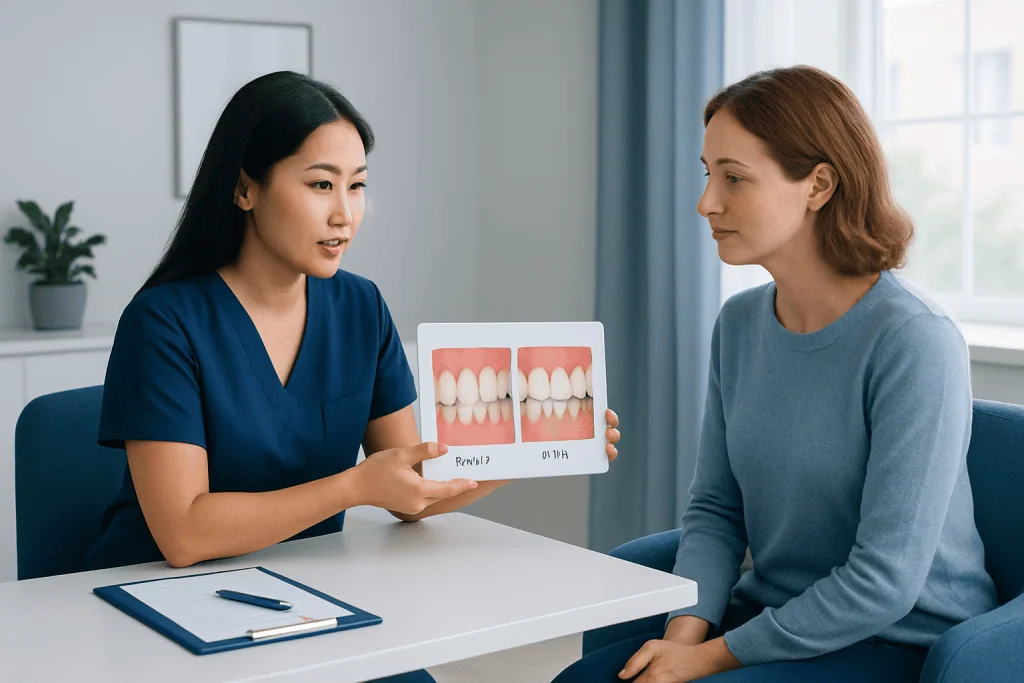
A dental bridge may be considered for a person with one or more missing teeth who has healthy supporting teeth or suitably placed dental implants. The surrounding gums and bone should be stable, and the person should be able to maintain regular oral hygiene around the bridge.
Before treatment, the dentist checks for tooth decay, gum inflammation, gum disease, cracks, infection and bite issues. Supporting teeth must be strong enough to carry the planned bridge. If they have extensive damage or poor long-term prognosis, another approach may be safer.
People who grind or clench their teeth may still be candidates, but they may need a protective night guard and careful bridge design. Smoking, untreated gum disease, uncontrolled diabetes and inconsistent dental care can raise the chance of complications and should be addressed where possible.
Alternatives may include a removable partial denture, an implant-supported restoration or leaving a space in selected circumstances. A dentist can explain the advantages and limitations of each option, including whether dental implant treatment may be appropriate.
The Dental Bridge Procedure: Step by Step
The process begins with a consultation, oral examination and dental X-rays or other imaging when needed. The dentist evaluates the missing-tooth area, measures the bite and discusses the desired tooth shade and shape. Existing decay, gum disease or infection is generally treated before a final bridge is made.
For a conventional bridge, the supporting teeth are carefully prepared to create space for crowns. Local anaesthesia is commonly used for comfort. The dentist then takes a digital scan or impression, which is used by a dental laboratory or in-office system to create the bridge.
A temporary bridge may be placed while the final restoration is being made. This protects prepared teeth and helps maintain appearance and function. Temporary bridges require gentle brushing and careful eating because they are not as strong as the final restoration.
At the fitting visit, the dentist checks the bridge’s colour, contour, contact points and bite. Once the fit is satisfactory, it is cemented or otherwise secured. A follow-up may be arranged to review gum health, comfort and cleaning technique.
Recovery Timeline and Realistic Before-and-After Examples
Recovery is usually uneventful. For the first day or two after tooth preparation or the final fitting, you may notice mild sensitivity to hot, cold or pressure. The gums may also feel tender, particularly if they were shaped or had been irritated around the treatment area. These symptoms commonly improve with time.
During the first week, softer foods and chewing on the other side of the mouth may feel more comfortable if there is sensitivity. It is sensible to avoid very sticky foods, hard sweets and biting directly into hard foods with a new bridge until it feels settled. Normal eating can usually resume gradually as comfort returns.
A realistic front-tooth example is a person with a single visible gap whose after result shows improved smile continuity and speech confidence. Minor differences in translucency or colour can remain because natural teeth change shade over time while the bridge material does not respond to whitening in the same way.
A realistic back-tooth example is a person who can chew more evenly after replacing a missing molar. The bridge may improve function, but it still requires deliberate cleaning underneath and around its edges. Successful results are measured by comfort, function, gum health and a natural overall appearance—not only by a photograph.
Benefits, Risks and Long-Term Care
Potential benefits of a dental bridge include restoring the look of a complete smile, improving chewing ability, supporting clearer speech in some cases and helping prevent nearby teeth from drifting. A bridge is fixed in place, so it does not need to be removed for cleaning like a removable denture.
Possible risks include temporary sensitivity, irritation of the gums, fracture or loosening of the bridge, and decay around the edges of supporting crowns. If supporting teeth develop decay, infection or gum disease, the bridge may need repair or replacement. An improperly adjusted bite can cause discomfort or put excess force on teeth and jaw muscles.
Day-to-day care matters more than anything else here. Brush twice daily with fluoride toothpaste, and clean under the pontic with an interdental brush, floss threader, super floss or a water-cleaning device your dental team recommends. Regular professional cleanings allow the dentist to monitor the bridge and the supporting teeth.
Bridges can last for many years, but their lifespan varies. Oral hygiene, gum health, diet, bite forces, grinding habits and attendance at dental reviews all affect durability. A dentist can advise when a bridge requires polishing, adjustment, repair or replacement.
When to Seek Medical Care
Contact a dentist promptly if there is persistent or worsening pain, swelling of the gums or face, fever, pus, a bad taste that does not go away, or a bridge that feels loose or cracked. These signs may indicate an infection, damage to the bridge or a problem with a supporting tooth.
A dental review is also important if chewing causes sharp pain, the bite suddenly feels different, food repeatedly becomes trapped around the bridge, or bleeding gums continue despite careful cleaning. Early assessment can often prevent a minor concern from becoming more complex.
Urgent medical or dental assessment is needed for significant facial swelling, trouble swallowing, breathing difficulty or rapidly spreading infection symptoms. These are uncommon but should not be managed at home.
At Acibadem International, our dental specialists work together across JCI-accredited hospitals to assess and treat bridge-related problems for patients travelling from abroad, including a full look at the surrounding teeth, gums and bite.
Frequently asked questions
How natural does a dental bridge look after treatment?
A carefully designed bridge can look very natural, especially when its shade, shape and surface character are matched to nearby teeth. Natural teeth vary in colour and translucency, so the goal is usually a harmonious smile rather than an identical match under every type of light.
How long does it take to get used to a new dental bridge?
Many people adapt within several days to a few weeks. The bridge may initially feel different to the tongue or during chewing, but persistent pressure, pain or a high bite should be checked by a dentist.
Can a dental bridge be whitened?
Most bridge materials do not whiten with bleaching products in the same way as natural enamel. If tooth whitening is being considered, it is often best discussed before the final shade of a new bridge is selected.
Will a dental bridge affect speech?
A bridge can improve speech when a missing front tooth has affected pronunciation. There can be a brief adjustment period, particularly with front-tooth bridges, but speech usually becomes more natural as the mouth adapts.
Does getting a dental bridge hurt?
The tooth preparation stage is generally performed with local anaesthesia, so pain should be controlled during the procedure. Mild sensitivity or gum tenderness afterward is possible, and the dental team can advise on safe ways to manage discomfort.
How should a dental bridge be cleaned?
The bridge should be brushed twice daily, including along the gumline and around the supporting crowns. Cleaning beneath the replacement tooth with an interdental brush, floss threader or another dentist-recommended aid is important to reduce plaque and protect the gums.
This article is for general information only and is not a substitute for professional medical advice. Please consult a qualified doctor about your individual situation.
Dental Bridge in Turkey — costs, top hospitals & a free quote
7 JCI-accredited hospitals · board-certified surgeons · reply within 24h
Add us as a Preferred Source to see more of our trusted health content across Google Search, AI Overviews and Discover.

Medically reviewed by the Acıbadem International Medical Board — August 24, 2026
See our medical review board →
Update history
- PublishedAugust 21, 2026
- Medical review approvedAugust 24, 2026
- Last content updateAugust 24, 2026
References2
- Dental Bridges — my.clevelandclinic.org
- Tooth Loss and Replacement — medlineplus.gov
Dental & Oral Health
Full-scope dental care from implants and aesthetics to oral and maxillofacial surgery.
151 specialists in this unitOral & Dental Health Specialists at Acibadem





More from the Health Library

Cyanosis Turns Skin Bluish When Blood Lacks Oxygen or Flow

Cervicitis: Symptoms, Causes, and Treatment Options

Vulva Surgery Removes Abnormal Tissue While Sparing Function

Treating Period Pain: NSAIDs, Hormones and Self-Care

PSARP Repairs Anorectal Malformations in Stages