Dermatologist Recommended Shampoo for Hair Loss — Explained by Medical Evidence, Not Myths

Most shampoos cleanse the scalp and improve hair appearance but do not reliably reverse true hair loss. Medicated shampoos may be helpful when dandruff, seborrheic dermatitis, or scalp inflammation contributes to shedding.
Key Takeaways
- Most shampoos cleanse the scalp and improve hair appearance but do not reliably reverse true hair loss.
- Medicated shampoos may be helpful when dandruff, seborrheic dermatitis, or scalp inflammation contributes to shedding.
- Ketoconazole-containing shampoo may be recommended for some people with dandruff or androgenetic hair loss, but evidence for hair regrowth is limited.
- Gentle cleansing and avoiding irritants can reduce breakage and protect an already sensitive scalp.
- Sudden, patchy, painful, or rapidly worsening hair loss should be evaluated by a qualified clinician.
A dermatologist recommended shampoo for hair loss is usually one chosen to treat a specific scalp concern, such as dandruff, inflammation, buildup, or hair breakage—not a shampoo proven to regrow hair on its own. Persistent shedding or visible thinning deserves medical assessment because effective treatment depends on identifying the underlying cause.
What Dermatologists Mean by a Shampoo for Hair Loss
A dermatologist recommended shampoo for hair loss is not necessarily a product that makes new hair grow. In most cases, shampoo has limited contact time with the scalp and is rinsed away, so it cannot deliver the same results as treatments designed to remain on the skin. Dermatologists more often recommend shampoo as one part of a wider plan: keeping the scalp clean, reducing inflammation, managing dandruff, minimizing hair breakage, and making thinning hair easier to handle.
The most appropriate shampoo depends on why hair is falling out. Pattern hair loss, temporary shedding after illness or stress, thyroid disease, nutritional deficiencies, tight hairstyles, scalp psoriasis, fungal infection, and autoimmune conditions can all affect hair differently. A product that helps one scalp problem may be unnecessary or irritating for another.
People should be cautious about claims that a shampoo “blocks DHT,” “reactivates follicles,” or guarantees regrowth. Cosmetic shampoos may improve hair texture, shine, and fullness, which can make thinning less noticeable, but these changes are different from increasing the number or diameter of growing hairs. A clinician can help distinguish hair shedding from breakage and identify options with stronger medical evidence.
Which Shampoo Ingredients May Be Useful
For people with dandruff, itching, flaking, or seborrheic dermatitis, a medicated anti-dandruff shampoo can be useful. Depending on the product and local availability, active ingredients may include ketoconazole, selenium sulfide, zinc pyrithione, salicylic acid, coal tar, or antifungal agents. By reducing scale, yeast overgrowth, and inflammation, these shampoos can create a healthier scalp environment and may reduce shedding associated with scalp irritation.
Ketoconazole shampoo is sometimes recommended in people who have both dandruff and androgenetic, or pattern, hair loss. Small studies suggest it may have a supportive role, but it should not be viewed as a stand-alone hair-regrowth treatment. It is generally used to manage a scalp condition, with frequency and duration guided by the product instructions or a dermatologist’s advice.
For a dry, easily irritated, or color-treated scalp, a gentle fragrance-free shampoo may be the better choice. Look for products that cleanse without leaving the scalp tight, burning, or itchy. Conditioner is usually applied mainly to the hair lengths and ends, where it can reduce friction and breakage; it does not need to be heavily worked into the scalp unless advised for a specific reason.
- Anti-dandruff shampoo: useful when flaking, itch, or oily scale is present.
- Gentle shampoo: useful for frequent washing, sensitive skin, or fragile hair.
- Clarifying shampoo: may help occasional buildup, but frequent use can be drying.
- Volumizing shampoo: can improve cosmetic fullness but does not treat follicle-related hair loss.
What Shampoo Cannot Treat on Its Own

Many common forms of hair loss begin below the surface of the scalp, at the hair follicle or within the body’s hormonal, immune, or nutritional systems. Shampoo cannot correct low iron stores, thyroid disorders, medication-related shedding, postpartum changes, autoimmune alopecia, or inherited sensitivity of follicles to hormones. It is therefore important not to delay assessment while trying multiple over-the-counter products.
Androgenetic alopecia is the most common cause of gradual thinning in adults. It often causes a widening part or diffuse thinning over the crown in women, and recession or thinning at the temples and crown in men. Clinicians may discuss treatments such as topical minoxidil, prescription medicines for selected patients, low-level light therapy, or procedural options, depending on the person’s health, goals, and diagnosis.
Some people experience telogen effluvium, a temporary increase in shedding that can occur several months after fever, surgery, childbirth, major stress, rapid weight loss, or illness. The hair often recovers once the trigger resolves, although a clinician may check for ongoing contributors. In this situation, a gentle shampoo can protect the hair shaft, but it does not change the hair-growth cycle directly.
How to Choose and Use Shampoo Safely
The best shampoo is one that matches the scalp’s needs and can be used consistently without irritation. People with an oily scalp or dandruff may need to wash more frequently than those with very dry or tightly curled hair. Washing itself does not cause hair loss; hairs that shed during shampooing were typically already in the resting phase and ready to release.
When using a medicated shampoo, it should be applied to the scalp rather than only the hair lengths. The label may recommend leaving it in place briefly before rinsing. Using more than directed or combining several strong scalp products can cause dryness, redness, or contact dermatitis, which may worsen discomfort and breakage.
It is sensible to stop a product and seek advice if it causes persistent burning, rash, swelling, marked itching, or increased flaking. “Natural” ingredients are not automatically gentler: essential oils, fragrances, botanical extracts, and certain preservatives can trigger allergic reactions in susceptible people. Patch testing may be appropriate for someone with a history of cosmetic allergies.
A simple routine is often preferable to frequent product changes. This may include regular cleansing, conditioner on the hair lengths, gentle detangling with a wide-tooth comb, and limiting excessive heat. A dermatologist can recommend a specific medicated shampoo when there are signs of a diagnosed scalp disorder.
Hair Care Habits That Help Reduce Breakage
Hair loss and hair breakage can look similar, but they are not the same. Hair loss involves strands shedding from the root, sometimes with a small club-shaped bulb at one end. Breakage occurs along the shaft and is more likely to produce shorter, uneven hairs, frizz, and split ends. Shampoo cannot repair a broken hair shaft, but a gentle routine can help prevent additional damage.
Helpful habits include avoiding very tight ponytails, braids, extensions, or head coverings that pull repeatedly on the same areas of the scalp. Frequent chemical straightening, bleaching, and high-heat styling can also weaken the hair shaft. If styling is needed, lower heat settings, heat protectant products, and less frequent chemical processing may be beneficial.
A balanced eating pattern that provides adequate protein, iron, zinc, and essential vitamins supports normal hair growth. However, supplements are not automatically helpful and can occasionally be harmful in excess. For example, too much vitamin A or selenium may contribute to hair loss. Testing and targeted supplementation should be guided by a healthcare professional when deficiency is suspected.
When to Seek Medical Care
Medical evaluation is recommended when hair loss is sudden, rapidly worsening, patchy, or accompanied by scalp pain, redness, scaling, pus-filled bumps, or scarring. These features can point to conditions that need timely treatment to protect hair follicles. Children with hair loss, and adults with a new patch of missing hair, should also be assessed rather than relying on shampoo alone.
A person should consider seeing a doctor if shedding continues for more than a few months, if the part is becoming wider, if hairline recession is progressing, or if hair loss causes significant worry. A clinician may ask about recent illness, childbirth, stress, diet, family history, medications, menstrual changes, and hair-care practices. Examination of the scalp and hair pattern often provides important clues.
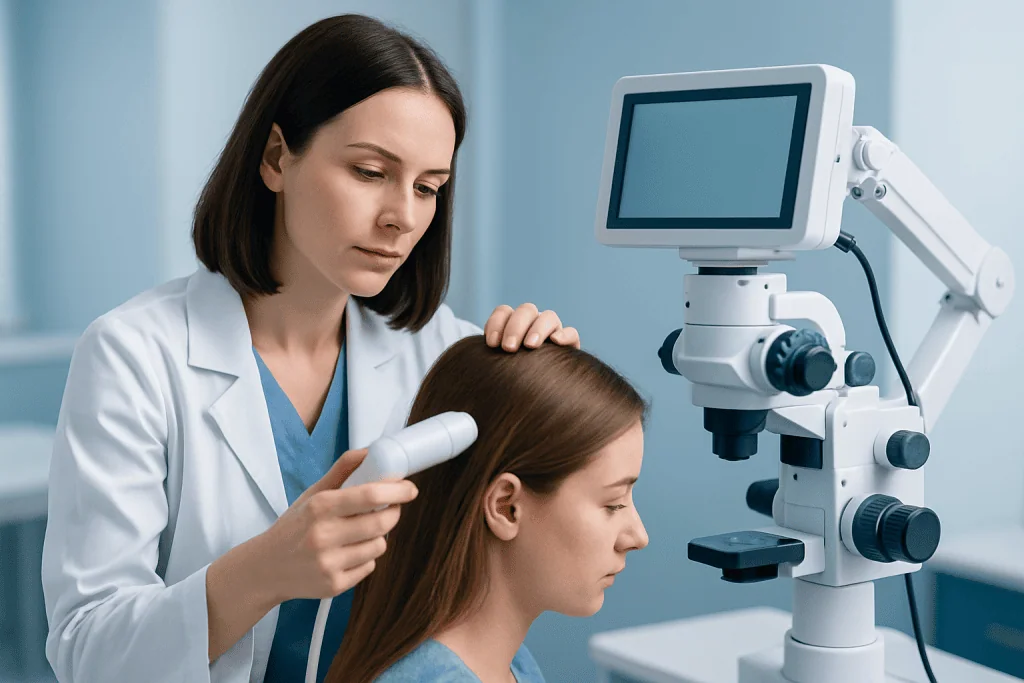
Tests are not needed for everyone, but a doctor may recommend blood tests when there are symptoms or risk factors for anemia, thyroid disease, nutritional deficiency, hormonal changes, or another medical condition. In uncertain cases, a dermatologist may examine hairs with magnification or perform other focused tests. Acibadem International’s multidisciplinary specialists and JCI-accredited hospitals assess hair and scalp concerns for international patients when further evaluation is needed.
A Practical Evidence-Based Approach
Rather than searching for one universal “best” shampoo, people can begin by identifying the main concern: flakes and itch, scalp sensitivity, hair breakage, or progressive thinning. An anti-dandruff shampoo may be appropriate for visible scale, while a gentle cleansing routine may suit a dry or reactive scalp. Volumizing products can improve appearance, but they should be understood as cosmetic support.
For established pattern thinning, the most useful next step is often a medical consultation about evidence-based options rather than switching shampoos repeatedly. Topical treatments may take several months to show whether they are helping, and treatment plans should be individualized for age, sex, pregnancy status, medical history, and the cause of hair loss.
Photographs taken in consistent lighting and with the same parting can help track change over time more accurately than day-to-day observation. This can also help a clinician determine whether there is true progression. With a correct diagnosis and a scalp routine that is comfortable and sustainable, many people can manage hair concerns more confidently.
Frequently asked questions
What is the best dermatologist recommended shampoo for hair loss?
There is no single best shampoo for every type of hair loss. Dermatologists commonly recommend a medicated anti-dandruff shampoo when flaking or seborrheic dermatitis is present, or a gentle shampoo when the scalp is sensitive or hair is breaking. The right choice depends on the cause of the shedding or thinning.
Can ketoconazole shampoo regrow hair?
Ketoconazole shampoo is mainly used to control dandruff and seborrheic dermatitis. It may have a supportive role for some people with pattern hair loss, but evidence that it regrows hair by itself is limited. A dermatologist may recommend it alongside other treatments when appropriate.
Does washing hair every day cause hair loss?
No, regular washing does not cause follicles to stop growing hair. It may make naturally shed hairs more noticeable because loose hairs are removed during cleansing. The ideal washing frequency depends on scalp oiliness, hair type, styling practices, and any scalp condition.
Are biotin shampoos effective for thinning hair?
Biotin in shampoo is unlikely to correct hair loss because it is rinsed off and does not treat the underlying cause. True biotin deficiency is uncommon, and biotin supplements are not routinely needed unless deficiency is confirmed or strongly suspected. A clinician can advise whether testing is appropriate.
How long should a person try a shampoo before deciding whether it helps?
A shampoo may improve itch, flakes, oiliness, or hair manageability within several weeks, depending on the product and condition. Meaningful hair regrowth usually cannot be judged from shampoo use alone. If thinning continues or worsens, medical assessment is more useful than prolonged product trial and error.
When is hair loss an emergency?
Hair loss is rarely an emergency, but prompt medical care is important for sudden patchy loss, scalp pain, swelling, infection signs, or areas that look shiny or scarred. These symptoms may indicate an inflammatory, infectious, or scarring condition. Early assessment can help guide treatment and protect remaining hair.
References
- American Academy of Dermatology
- National Institute of Arthritis and Musculoskeletal and Skin Diseases
- Mayo Clinic
- British Association of Dermatologists
- Cleveland Clinic
This article is for general information only and is not a substitute for professional medical advice. Please consult a qualified doctor about your individual situation.
Hair transplant in Turkey — costs, graft counts & a free assessment
JCI-accredited · board-certified surgeons · reply within 24h
Add us as a Preferred Source to see more of our trusted health content across Google Search, AI Overviews and Discover.