Desmoid Treatment: How It Works, Results and What to Expect

Desmoid tumors are non-cancerous but can be locally invasive and sometimes difficult to manage. Active surveillance is often appropriate when a tumor is stable and not causing significant symptoms.
Key Takeaways
- Desmoid tumors are non-cancerous but can be locally invasive and sometimes difficult to manage.
- Active surveillance is often appropriate when a tumor is stable and not causing significant symptoms.
- Medication and local treatments can help control tumors that grow, cause pain or threaten important structures.
- Surgery is selected carefully because removing a tumor may affect nearby tissues and recurrence can occur.
- A multidisciplinary team helps match treatment to the tumor’s behavior, location, symptoms and personal priorities.
Desmoid treatment is individualized because these tumors do not spread to distant organs but can grow into nearby tissues and affect function or comfort. Many people can begin with careful monitoring, while growing or symptomatic tumors may need medication, surgery, ablation or radiation-based treatment.
Overview: How desmoid treatment works
Desmoid treatment aims to control the tumor, protect nearby organs and body function, and relieve symptoms while avoiding unnecessary treatment. A desmoid tumor, also called desmoid-type fibromatosis, grows from connective tissue cells. It does not metastasize, meaning it does not spread to distant parts of the body, but it may grow into muscles, nerves, blood vessels or organs close to where it began.
Management is not the same for every person. Current desmoid treatment guidelines support an individualized approach: some tumors can be watched safely with scheduled scans, while others need medical treatment or a local procedure. The choice depends on growth over time, pain, the tumor’s location and size, risk to important structures, and the person’s daily activities and preferences.
Care is usually planned by specialists from surgical oncology, medical oncology, radiology, pathology, radiation oncology and other fields relevant to the tumor’s location. This collaborative approach is especially important for tumors in the abdominal wall, abdomen, limbs, chest wall, head and neck.
How fast does a desmoid tumor grow?
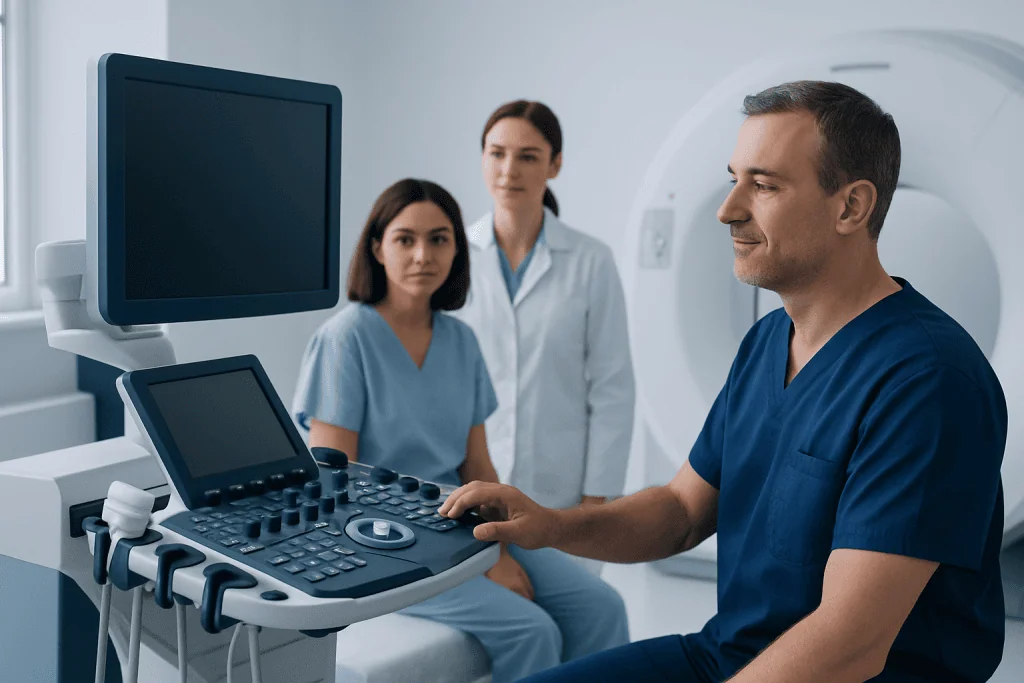
Desmoid tumors have variable growth patterns. Some remain unchanged for years, some grow slowly, and some grow more noticeably over months. A tumor can also stabilize or occasionally shrink without active treatment. For this reason, one scan alone does not always show how the tumor will behave in the future.
Doctors usually assess growth by comparing MRI or CT scans taken at planned intervals. Symptoms matter as much as imaging: a small tumor near a nerve, joint, bowel or other sensitive structure may cause significant problems, while a larger tumor elsewhere may cause little discomfort.
Rapidly increasing pain, a new change in function, or symptoms such as weakness, numbness, bowel obstruction symptoms, or difficulty breathing warrant prompt medical review. These changes do not necessarily mean the tumor has become cancerous, but they may indicate a need to reassess the treatment plan.
Who may need treatment and how is a plan chosen?
Active surveillance, also called watchful waiting, may be suitable for a newly diagnosed desmoid tumor that is not causing major symptoms or threatening body function. This involves clinical appointments and repeat imaging, commonly MRI when appropriate, so the care team can identify meaningful change early. Monitoring is an active management choice, not an absence of care.
Treatment desmoid tumor may be recommended when there is persistent progression on scans, significant pain, reduced movement, pressure on nerves or organs, or an increasing risk of complications. A biopsy and expert pathology review are often important before treatment begins, because several other soft-tissue conditions can resemble a desmoid tumor on imaging.
Individual factors also guide candidacy for each option. These include the tumor’s exact relationship to surrounding tissues, prior treatments, age, general health, pregnancy considerations, family history and whether the person has a condition such as familial adenomatous polyposis. The expected effect of treatment on function and quality of life is central to decision-making.
- Stable, low-symptom tumors may be monitored with imaging.
- Growing or symptomatic tumors may be treated first with medication.
- Selected, accessible tumors may be considered for surgery or image-guided local treatment.
- Complex cases may require more than one specialty and a staged plan.
Desmoid medical treatment and local procedures
Desmoid medical treatment can include systemic medicines that work throughout the body to slow growth or reduce tumor activity. Depending on the clinical situation, an oncology team may discuss targeted medicines, anti-inflammatory approaches, chemotherapy-based regimens, or other systemic options. The most suitable desmoid medication depends on the tumor’s behavior, other health conditions, possible side effects and personal treatment goals.
Medication is generally given over time with regular follow-up visits, blood tests when required, symptom assessment and repeat imaging. Response does not always mean the tumor disappears completely. In many cases, a successful result is stable disease, reduced tumor size, less pain, improved mobility or lower risk of harm to nearby structures.
Local therapies may be considered when a defined tumor is causing symptoms and can be approached safely. Options may include surgery, image-guided thermal ablation in selected situations, or radiation therapy in carefully chosen cases. The benefits and longer-term effects of each approach need close consideration because desmoid tumors can involve healthy tissue around them.
For people whose treatment includes an operation, desmoid tumor surgery may be discussed after multidisciplinary review. The goal is not simply to remove tissue, but to achieve useful local control while preserving function whenever possible.
What happens during surgery or another local procedure?
Before a local procedure, the team reviews imaging in detail to map the tumor and its relationship to muscles, nerves, blood vessels and organs. Pre-treatment planning may include a biopsy review, anesthesia assessment, laboratory tests and consultations with reconstructive, orthopedic, vascular, gastrointestinal or other surgeons when the location requires additional expertise.
During surgery, the surgeon removes the tumor when it can be done with an acceptable effect on function. Reconstruction may be needed if removal affects the abdominal wall, a limb or another structure. Not every tumor should be removed completely if doing so would create substantial disability; alternative medical or local treatments may offer a better balance of control and safety.
Image-guided procedures are usually performed by interventional specialists using ultrasound or CT guidance. A probe is positioned within the tumor to apply a controlled treatment effect. Radiation therapy, when chosen, is delivered in planned sessions and is designed to target the tumor while limiting exposure to surrounding tissue.
After any procedure, the pathology result, symptoms and follow-up scans guide the next steps. Further treatment is not automatically required; some people continue with planned observation after local therapy.
Recovery timeline, benefits and possible risks
Recovery differs widely according to the treatment used and the tumor’s location. After a minor image-guided procedure, a person may return to lighter activities relatively soon, though soreness and fatigue can occur. Recovery after surgery may take weeks or longer, particularly when a large area, abdominal wall, joint or limb is involved. Rehabilitation may help restore strength, movement and confidence with daily activities.
Systemic medication does not have a single recovery timeline because it is often ongoing. Follow-up focuses on managing side effects, monitoring blood tests where needed, and checking whether symptoms and imaging findings are improving or stable. People should report new or troubling effects to their treatment team rather than stopping prescribed medicine on their own.
The potential benefit of treatment is improved local control, relief of pain or pressure symptoms, preservation of function, and avoidance of complications. Risks vary by option and can include medication side effects, wound problems, infection, stiffness, nerve or vessel injury, treatment-related fatigue, and recurrence or regrowth. A specialist can explain the likely benefits and risks for the individual tumor.
Supportive care is also valuable. Pain management, physiotherapy, occupational therapy, nutrition advice and emotional support can be integrated into care at any stage, including during active surveillance.
What is the success rate of desmoid tumor treatment?
There is no single success rate for desmoid tumor treatment because desmoid tumors differ greatly in location, growth behavior, symptoms and response to therapy. Studies also define success differently: some measure shrinkage, while others measure control of growth, symptom relief, ability to avoid surgery or preservation of function.
A good outcome may be a tumor that remains stable without intervention, a reduction in pain despite little change in size, or durable local control after a procedure. Some tumors respond to medication gradually, and imaging changes can take time. Conversely, a tumor may recur or progress after surgery or other treatment, which is why ongoing follow-up remains important.
The care team can give the most meaningful outlook after reviewing pathology, scans, location and treatment history. Asking about the goal of a proposed treatment, how response will be measured, and what alternatives are available can help a person take part in informed decisions.
Can a desmoid tumor turn cancerous? What is the outlook?
Desmoid tumors do not turn into cancer and do not spread to distant organs like malignant cancers can. They are considered benign in this respect. However, they can still be serious when they grow into nearby tissues or affect structures such as the bowel, nerves, blood vessels or muscles.
The average life expectancy for someone with a desmoid tumor is generally close to that of the overall population, especially when the tumor can be monitored or controlled. Outlook depends mainly on local effects rather than spread to other organs. Rarely, a tumor in a difficult location can cause significant complications, so ongoing specialist follow-up is important.
People may benefit from care at a center familiar with complex soft-tissue tumors. Acibadem International’s multidisciplinary specialists and JCI-accredited hospitals evaluate and treat desmoid tumors for international patients, with treatment planning based on the individual’s clinical needs.
When to seek medical care
A person should arrange medical evaluation for a new or enlarging lump, persistent localized pain, restricted movement, unexplained pressure symptoms or a mass that changes over time. Assessment is particularly important when a lump is deep, firm, growing, larger than expected, or located near the abdomen, a joint, the chest wall, head or neck.
Urgent medical attention is appropriate for severe or worsening abdominal pain, persistent vomiting, inability to pass stool or gas, sudden weakness, significant numbness, loss of bladder or bowel control, breathing difficulty, or symptoms of infection after a procedure. These symptoms have many possible causes, but they should not be ignored.
People already diagnosed with a desmoid tumor should attend planned imaging and follow-up appointments, even if they feel well. They should contact their care team sooner if pain increases, new symptoms develop, or they notice a meaningful change in the affected area.
Frequently asked questions
What is the first-line desmoid treatment?
For many people, the first approach is active surveillance with regular examinations and imaging. If the tumor is growing, painful or affecting function, treatment may include medication or a carefully selected local procedure. The best first step depends on the tumor’s location and behavior.
Is surgery always needed for a desmoid tumor?
No. Surgery is no longer considered the automatic first treatment for every desmoid tumor. Because these tumors may recur and surgery can affect function, doctors often consider monitoring or medication first when these options are appropriate.
How long does desmoid medication take to work?
The time to response varies by medicine and by tumor. Some people notice symptom improvement before there is a clear change on imaging, while others need several months of monitoring. The treating team uses scans, symptoms and side-effect checks to assess benefit.
Can desmoid tumors come back after treatment?
Yes, a desmoid tumor can regrow or progress after surgery, medication or another local therapy. Recurrence risk differs by tumor location and treatment approach. Regular follow-up allows the care team to identify changes and adjust management when needed.
Are desmoid tumors hereditary?
Most desmoid tumors are not inherited. Some can be associated with familial adenomatous polyposis, an inherited condition linked to changes in the APC gene. A doctor may recommend genetic counseling or assessment when personal or family history suggests this possibility.
What imaging is used to monitor a desmoid tumor?
MRI is commonly used for tumors in soft tissues because it provides detailed images of muscles and nearby structures. CT may be used for some abdominal tumors or when MRI is not suitable. The imaging schedule is tailored to the tumor’s location, symptoms and recent behavior.
References
- Desmoid Tumor Research Foundation
- National Cancer Institute
- European Society for Medical Oncology
- National Comprehensive Cancer Network
- Orphanet
This article is for general information only and is not a substitute for professional medical advice. Please consult a qualified doctor about your individual situation.
Oncology care in Turkey — second opinion and treatment plan
JCI-accredited · board-certified surgeons · reply within 24h
Add us as a Preferred Source to see more of our trusted health content across Google Search, AI Overviews and Discover.

More from the Health Library


Related Specialists

Assoc. Prof. Dr. Emre Bozkurt
General Surgery
Dr. Mustafa Demir
Ophthalmology
Prof. Dr. Mehmet Karadağ
Pulmonary Medicine
Assoc. Prof. Dr. Baki Erdem
Gynecology & Obstetrics