Determine Body Fat Index: A Complete Medical Overview

Body fat index usually refers to an estimate of body fat percentage or body composition, not one universal medical test. BMI can be useful for screening, but it does not directly measure body fat or show where fat is stored.
Key Takeaways
- Body fat index usually refers to an estimate of body fat percentage or body composition, not one universal medical test.
- BMI can be useful for screening, but it does not directly measure body fat or show where fat is stored.
- Waist measurement and body fat distribution are important because excess abdominal fat is more strongly linked with health risks.
- Home scales and handheld devices can be helpful for trends, but professional methods are usually more accurate.
- A body fat result should be interpreted together with medical history, lifestyle, and other metabolic risk factors.
To determine body fat index, clinicians usually estimate body fat percentage or overall body composition using measurements such as waist size, skinfolds, bioelectrical impedance, or imaging-based tests. The most useful result is not just a single number, but how that estimate fits with age, sex, muscle mass, waist size, and overall health.
Overview: What It Means to Determine Body Fat Index
To determine body fat index, a person usually needs an estimate of how much of the body is fat compared with lean tissue such as muscle, bone, and organs. In everyday use, people may say “body fat index” when they mean body fat percentage, body composition, or sometimes a screening tool such as body mass index. These are related concepts, but they are not the same thing.
Body fat percentage aims to show the proportion of total body weight that comes from fat. Body composition goes a step further by looking at fat mass and lean mass together. This matters because two people can have the same body weight or BMI but very different amounts of muscle and body fat.
Determining body fat can be helpful for people who want a clearer view of their health than body weight alone can provide. It may support weight-management planning, athletic training, nutrition counseling, and evaluation of risks linked to excess body fat, especially around the abdomen.
No single body fat number can define health for everyone. Age, sex, genetics, hormonal status, fitness level, and medical conditions all affect body composition. For that reason, clinicians usually interpret body fat estimates alongside waist circumference, blood pressure, blood sugar, cholesterol, and other factors rather than using one measurement in isolation.
Why Body Fat Matters More Than Weight Alone
Body weight is easy to measure, but it does not show what that weight is made of. Muscle is denser than fat, so a physically active person may weigh more without having excess body fat. On the other hand, someone with a “normal” weight may still have a higher proportion of body fat and lower muscle mass.
The location of body fat also matters. Fat stored around the abdomen, sometimes called central or visceral fat, is more closely associated with insulin resistance, heart disease risk, fatty liver, and other metabolic concerns than fat stored mainly under the skin. This is one reason a waist measurement can be very useful when trying to determine body fat index in a practical clinical setting.
Body fat assessment may be particularly relevant for people living with obesity, unexplained weight changes, reduced muscle mass, endocrine conditions, or a family history of diabetes and cardiovascular disease. It can also help guide realistic goals during structured weight-loss treatment planning or supervised lifestyle programs.
Still, body fat should not be viewed as a label or judgment. It is simply one health indicator. The goal is to understand body composition in a balanced way and to use that information to support long-term health, strength, mobility, and metabolic well-being.
Common Ways to Measure Body Fat

There are several methods used to estimate body fat, and each has strengths and limitations. The simplest approaches include body measurements such as waist circumference, hip circumference, and skinfold thickness. These can be useful in clinics, fitness settings, and at home when done carefully, although accuracy depends on proper technique.
Bioelectrical impedance analysis, often built into smart scales or handheld devices, estimates body composition by passing a very small electrical current through the body. Because water, muscle, and fat conduct electricity differently, the device can generate a body fat estimate. Hydration level, meal timing, exercise, and menstrual cycle can affect the result, so readings are best used to follow trends rather than as a final diagnosis.
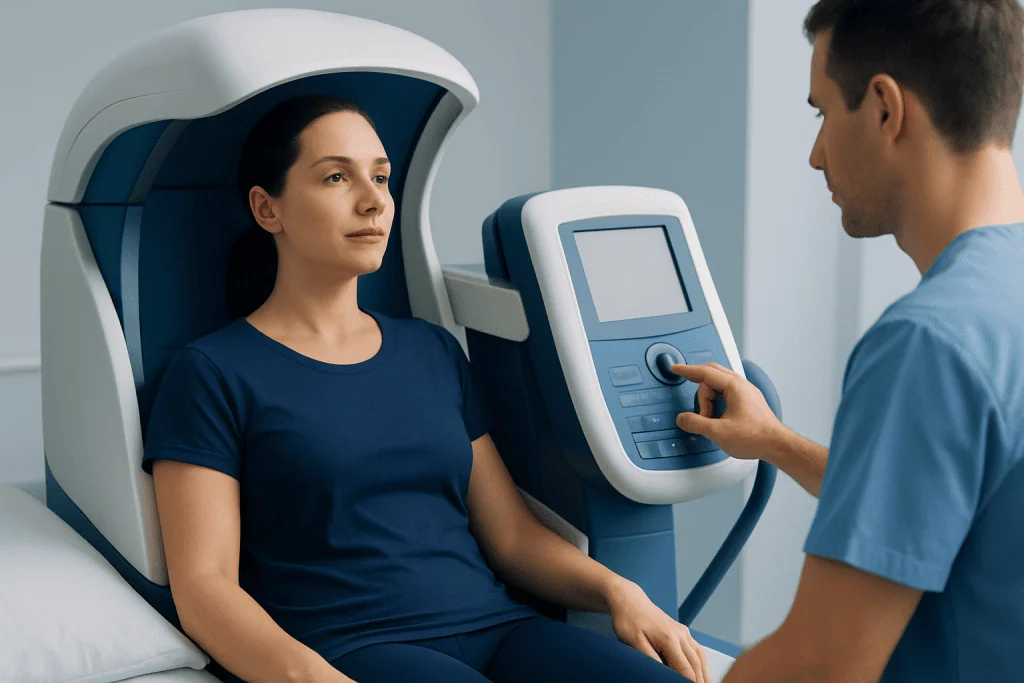
More advanced methods include dual-energy X-ray absorptiometry, air displacement plethysmography, hydrostatic weighing, and certain imaging-based assessments. These can provide more detailed body composition information and may be used when a more precise analysis is needed. Some people may undergo body composition assessment as part of broader evaluation for metabolic health or a preventive health check-up.
In routine practice, doctors often combine several tools instead of relying on a single test. A body fat estimate may be reviewed together with BMI, waist circumference, laboratory tests, and clinical examination. This approach gives a more complete picture of health than any one number alone.
Body Fat Percentage, BMI, and Other Indexes
Many people searching how to determine body fat index are actually trying to understand the difference between body fat percentage and BMI. BMI is calculated from height and weight. It is widely used because it is simple and can help identify people who may be at higher risk of weight-related illness. However, it does not directly measure body fat, muscle mass, or fat distribution.
Body fat percentage tries to answer a different question: how much of the body is fat tissue? This can be more informative in athletes, older adults, and people whose muscle mass is above or below average. Someone with a high BMI may have substantial muscle, while someone with a lower BMI may still have excess body fat in the abdomen.
Other practical indexes can also support interpretation. Waist circumference gives important information about abdominal fat. Waist-to-height ratio may also be used in some settings. These measures can help identify people who may benefit from further evaluation for conditions such as obesity or metabolic syndrome.
Because each method measures something slightly different, the most useful approach is usually to look at patterns rather than trying to find one perfect index. For example, a stable body fat estimate, decreasing waist size, improving fitness, and healthier blood test results may matter more than a small change in body weight alone.
What Affects Body Fat Results and How to Interpret Them
Body fat results can vary based on age, sex, ethnicity, hormonal changes, physical activity, and fluid balance. Women naturally tend to have a higher essential fat range than men, and body composition commonly changes with aging as muscle mass declines and fat mass increases. This is why comparison with broad, individualized reference ranges is more helpful than comparing results with another person.
Day-to-day conditions can also change the reading, especially with home devices. Dehydration, recent exercise, alcohol intake, a large meal, or the time of day can all influence bioelectrical impedance results. For the most consistent tracking, measurements should be taken under similar conditions each time.
Interpretation should focus on health context. A result that suggests high body fat may prompt review of eating patterns, physical activity, sleep, medications, thyroid health, or signs of insulin resistance. A result that suggests very low body fat may also deserve attention if it is linked with fatigue, menstrual changes, low energy intake, or disordered eating.
When body fat is assessed in a medical setting, the doctor may also consider whether symptoms suggest related problems such as diabetes or cardiovascular risk factors. In some cases, additional testing or referral to specialists in nutrition, endocrinology, or metabolic health may be recommended.
How Doctors Use Body Fat Information in Care Planning
Doctors do not usually treat a body fat percentage by itself. Instead, they use body composition information to guide practical next steps. This may include setting weight-management goals, improving muscle mass through resistance exercise, adjusting nutrition strategies, or checking for conditions that affect metabolism.
For some people, the priority is reducing abdominal fat and improving metabolic markers rather than achieving a specific scale weight. For others, especially older adults or people recovering from illness, preserving or rebuilding lean muscle may be equally important. This is one reason body composition can be more clinically meaningful than weight alone.
Treatment planning may include structured exercise, dietary counseling, sleep improvement, behavioral support, and management of related medical conditions. If excess weight is significant and linked with health problems, clinicians may also discuss medical therapies or specialized interventions, including surgical treatment for obesity when appropriate.
Near the end of the care pathway, ongoing monitoring helps show whether the plan is working. Repeating the same measurement method over time is usually more helpful than switching between multiple devices. In international centers such as Acibadem International, multidisciplinary specialists in JCI-accredited hospitals evaluate body composition and related metabolic concerns as part of coordinated patient care.
Self-Care, Prevention, and Healthy Tracking
A healthy approach to body fat focuses on habits rather than quick fixes. Regular physical activity, balanced nutrition, adequate sleep, stress management, and avoidance of tobacco all support healthier body composition over time. Strength training is especially helpful because it can build or preserve muscle while reducing fat mass when combined with appropriate lifestyle changes.
Tracking should be realistic and not overly frequent. Daily body fat readings often create confusion because normal fluid shifts can change the result. Many people do better by measuring every few weeks under similar conditions and paying attention to broader trends, energy level, physical function, waist measurement, and laboratory results.
Self-care should also avoid extreme dieting or unproven supplements. Rapid weight-loss plans may reduce water and muscle rather than body fat, making results less meaningful and sometimes less healthy. Sustainable changes are usually safer and more effective in the long term.
If home measurements are causing anxiety or seem inconsistent, a clinician or registered dietitian can help interpret them. Professional guidance may be especially useful for adolescents, athletes, pregnant individuals, older adults, and people with chronic diseases or a history of eating disorders.
When to Seek Medical Care
Medical care is worth seeking if body fat concerns are accompanied by symptoms such as rapid weight gain, unexplained weight loss, unusual fatigue, shortness of breath with routine activity, swelling, menstrual changes, or signs of high blood sugar. A doctor should also assess people who have a strong family history of diabetes, heart disease, or severe obesity, especially if waist size is increasing.
Professional evaluation can help if body fat readings seem inconsistent with appearance, fitness, or symptoms. This may happen when there is fluid retention, significant muscle loss, endocrine disease, or limitations in the measuring method. A clinician can decide whether additional assessment, blood tests, or body composition testing is appropriate.
Children and teenagers should not follow adult body fat goals without medical guidance. Growing bodies change quickly, and age-specific interpretation is important. Pregnant individuals and people with implanted medical devices should also ask a healthcare professional which body composition methods are suitable.
Urgent care is needed for symptoms such as chest pain, severe breathing difficulty, fainting, or sudden neurologic symptoms, as these are not routine body composition issues. For non-urgent concerns, a primary care doctor, endocrinologist, or nutrition specialist can help determine the safest and most useful next steps.
Frequently asked questions
What is the best way to determine body fat index?
There is no single best method for everyone. In routine care, doctors often combine BMI, waist measurement, and a body fat estimate such as bioelectrical impedance or another body composition test. The best choice depends on the person’s age, health status, goals, and how precise the result needs to be.
Is BMI the same as body fat percentage?
No. BMI uses height and weight to estimate whether body size falls into a certain range, but it does not directly measure fat. Body fat percentage is a separate estimate that tries to show how much of the body is made up of fat tissue.
Are home body fat scales accurate?
Home scales can be useful for following trends, but their readings can vary with hydration, meals, exercise, and time of day. They are usually less accurate than professional methods. Using the same device under similar conditions each time makes the results more meaningful.
Why can two people with the same weight have different body fat results?
Body weight does not show how much is muscle, fat, bone, or water. One person may have more muscle and less fat, while another may have less muscle and more fat at the same weight. This is why body composition adds useful information beyond the scale.
What body fat level is considered healthy?
Healthy ranges vary by sex, age, and individual circumstances. A result should be interpreted in context rather than judged by a single universal cutoff. A healthcare professional can explain whether a reading is appropriate for a specific person.
Can body fat be reduced without losing much weight?
Yes. This can happen when a person gains muscle and loses fat at the same time, especially with strength training and nutrition changes. In that situation, waist size, fitness, and body composition may improve even if the scale changes only a little.
References
- World Health Organization
- Centers for Disease Control and Prevention
- National Institutes of Health
- American Heart Association
- Academy of Nutrition and Dietetics
This article is for general information only and is not a substitute for professional medical advice. Please consult a qualified doctor about your individual situation.
Medical weight-loss options in Turkey — costs & eligibility
JCI-accredited · board-certified surgeons · reply within 24h
Add us as a Preferred Source to see more of our trusted health content across Google Search, AI Overviews and Discover.
Check your numbers in seconds
BMI, calories, due date, blood pressure and 30+ more clinical calculators — free, instant, doctor-reviewed ranges.

More from the Health Library

Sugar Free Peanut Butter: What Patients Need to Know

Corpus Callosum: What Patients Need to Know

Haart: An Evidence-Based Guide for Patients

Blue hands: A Complete Medical Guide for Patients

Cardio Is for What — Explained by Medical Evidence, Not Myths