Dexmedetomidine: A Complete Medical Overview

Dexmedetomidine is used in hospitals for sedation in intensive care and during selected procedures. It is not a general over-the-counter sleep aid and should only be given under medical supervision.
Key Takeaways
- Dexmedetomidine is used in hospitals for sedation in intensive care and during selected procedures.
- It is not a general over-the-counter sleep aid and should only be given under medical supervision.
- The medicine may lower heart rate and blood pressure, so monitoring is essential.
- It can reduce anxiety and sedation needs and may help some patients remain more easily arousable.
- Use is individualized based on age, medical condition, procedure type, and other medicines.
Dexmedetomidine is a prescription sedative used in hospitals to help patients stay calm, comfortable, and cooperative during intensive care or certain procedures. It works differently from many other sedatives because it can provide sedation with relatively less effect on breathing, but it still requires close monitoring by trained clinicians.
Overview: what dexmedetomidine is and why it is used
Dexmedetomidine is a prescription medicine used mainly in hospitals for sedation. In simple terms, it helps a patient feel calm, sleepy, and comfortable without producing the same pattern of deep sedation seen with some other medications. Doctors often choose it when they want a patient to remain sedated but still potentially responsive to voice or gentle stimulation.
This medication is commonly used in intensive care units and during certain diagnostic or therapeutic procedures. It may be given to support comfort during mechanical ventilation, minor procedures, or closely monitored care. Depending on the situation, it may be used alone or alongside pain relief medicines and other supportive treatments.
One reason dexmedetomidine receives attention is that it can provide a more natural-feeling, cooperative form of sedation for some patients. However, that does not mean it is risk-free. Because it can affect heart rate, blood pressure, and alertness, it is administered by trained professionals who can monitor the patient continuously and adjust treatment as needed.
How dexmedetomidine works in the body
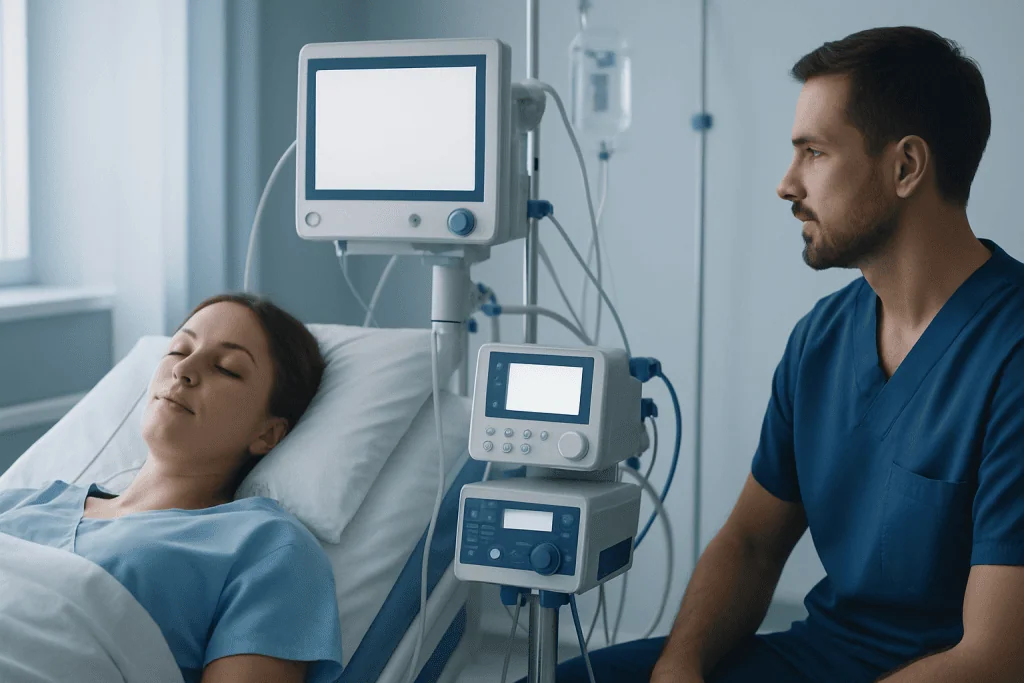
Dexmedetomidine works by stimulating alpha-2 adrenergic receptors in the brain and nervous system. This reduces the release of certain signaling chemicals involved in wakefulness and stress responses. As a result, the patient may become calmer, less anxious, and more sedated.
Its effects are distinct from those of many common sedatives. In clinical practice, dexmedetomidine is often described as producing a lighter, more rousable sedation. Some patients can rest comfortably yet still wake up enough to follow simple instructions, which can be useful during closely supervised procedures or in critical care settings.
The medicine may also have pain-sparing properties, meaning it can reduce how much additional pain medicine is needed in some cases. Even so, it is not usually considered a complete substitute for pain treatment. If a patient has a painful condition or procedure, clinicians may combine dexmedetomidine with other therapies as part of a broader care plan.
Common medical uses of dexmedetomidine

Dexmedetomidine is most often used for sedation in the intensive care unit. For example, it may be given to a patient who is on a ventilator or who needs close observation after major illness or surgery. In these situations, the goal is not simply to make the patient sleep, but to improve comfort, reduce distress, and support safe care.
It may also be used during selected procedures that require the patient to be calm but not necessarily fully unconscious. Examples can include some imaging studies, endoscopic procedures, or minor interventions performed with monitored anesthesia care. For procedure planning, doctors may also consider broader services such as anesthesia and reanimation when deciding which sedative approach is safest and most appropriate.
In some settings, clinicians may choose dexmedetomidine for patients at risk of agitation, confusion, or difficulty tolerating the intensive care environment. This does not mean it is suitable for every person. The ideal sedative depends on the patient’s breathing status, circulation, level of pain, neurological condition, and the type of procedure or illness being treated.
Because sedation choices are often linked to a patient’s overall medical problem, dexmedetomidine may be part of care for people being treated in units such as intensive care or for those recovering from a serious condition like stroke. The decision is individualized and made by the treating team.
Benefits, side effects, and possible risks
A commonly discussed benefit of dexmedetomidine is that it may cause less respiratory depression than some other sedatives. In everyday language, this means it may be less likely to suppress breathing to the same degree. That said, breathing can still become unsafe depending on the patient’s condition, the dose used, and whether other sedating medicines are given at the same time.
Common side effects include low heart rate, low blood pressure, dry mouth, and sleepiness. In some situations, blood pressure can rise briefly, especially at the start of treatment, before later falling. Patients may also experience dizziness, nausea, or changes in alertness as the medicine takes effect or wears off.
More serious concerns include marked slowing of the heart, significant drops in blood pressure, or excessive sedation. These risks are more relevant in people who are older, dehydrated, have pre-existing heart rhythm problems, or are taking other drugs that also slow the heart or lower blood pressure. For this reason, hospital staff usually monitor the heart rhythm, oxygen levels, blood pressure, and level of consciousness throughout treatment.
Like many sedatives, dexmedetomidine can interact with other medications, including opioids, anesthetics, and some blood pressure or heart medicines. Patients should not receive it casually or outside an appropriate medical environment. Safe use depends on professional assessment, monitoring equipment, and a clear plan for ongoing observation.
Who may need extra caution before receiving it
Dexmedetomidine is not automatically the best choice for every patient. Extra caution may be needed in people with low blood pressure, a very slow heart rate, conduction abnormalities in the heart, severe dehydration, advanced liver problems, or complex neurological conditions. The treating team weighs these factors against the benefits of sedation.
Age also matters. Older adults can be more sensitive to sedative effects and circulatory changes. Children may receive dexmedetomidine in specialized settings, but the decision depends on the child’s age, weight, medical problem, and the expertise of the clinical team.
Pregnancy, breastfeeding, and chronic medical conditions require individualized review. Patients should tell their clinicians about all medicines they take, including sleep aids, anti-anxiety drugs, pain medicines, herbal products, and alcohol use. These details help reduce the risk of oversedation or unwanted drug interactions.
In people with complex brain or nerve conditions, sedation planning may overlap with assessment by services such as neurology. This is especially important when the goal is to maintain comfort while still allowing reliable neurological checks.
How doctors monitor and manage dexmedetomidine treatment
Dexmedetomidine is given in a controlled healthcare setting, usually through an intravenous line. The dose is adjusted carefully based on the patient’s response, the purpose of sedation, and any side effects that appear. Rather than using a one-size-fits-all approach, clinicians aim for the lightest effective level of sedation.
Monitoring typically includes regular checks of blood pressure, heart rate, breathing, oxygen levels, and level of wakefulness. In many patients, this is enough to make timely changes if the medicine is too strong or not strong enough. If blood pressure falls or the heart rate slows too much, the infusion may be reduced or stopped, and other supportive steps can be taken.
Doctors also review the broader picture: pain control, fluid balance, infection, sleep disruption, and any signs of delirium or worsening illness. Sedation is only one part of care. For some patients, restlessness is caused not by anxiety alone but by pain, low oxygen, withdrawal, or a medical complication that needs direct treatment.
This careful, team-based approach is especially important in critical illness or after major procedures. Near the end of treatment, clinicians usually taper or discontinue sedation according to the patient’s condition and care goals. If there are signs of an underlying problem such as severe infection or evolving neurological symptoms, the focus shifts to diagnosing and treating that cause promptly.
What patients and families should know during recovery
For patients and families, it can be helpful to understand that sedation is not the same as pain relief and not the same as general anesthesia. A person receiving dexmedetomidine may appear sleepy, speak less, or drift in and out of wakefulness, yet still hear voices or respond at times. This can be normal in a monitored setting.
After the medicine is reduced or stopped, recovery time can vary. Some people become alert fairly quickly, while others remain tired or groggy for longer depending on their illness, age, liver function, and the other medicines they received. The healthcare team will decide when it is safe to eat, drink, move, or leave a monitored area.
Family members should tell staff if the patient seems unusually difficult to wake, confused in a new way, short of breath, or faint. These symptoms do not always mean the medication is the cause, but they deserve attention. In the hospital, staff can assess whether the issue is due to sedation, pain medicine, low oxygen, infection, or another complication.
At centers caring for international patients, coordinated teams may help guide this process from critical care through recovery. Acibadem International’s multidisciplinary specialists and JCI-accredited hospitals diagnose and treat patients who need monitored sedation and related hospital care.
When to seek medical care
Because dexmedetomidine is generally used in medical settings, most immediate problems are recognized by healthcare professionals while the patient is being monitored. If a person has recently received sedative medication and later develops unusual sleepiness, fainting, severe weakness, trouble breathing, chest discomfort, or a noticeable slowing of the pulse, urgent medical assessment is appropriate.
Patients discharged after a procedure should follow all instructions about supervision, activity, eating, drinking, and other medicines. They should contact a clinician if they develop persistent confusion, repeated vomiting, worsening dizziness, or symptoms that do not improve as expected.
A prompt review is also important if there are signs of the underlying illness getting worse, such as fever, increasing pain, new neurological symptoms, or severe agitation. In these cases, the concern may be the medical condition rather than the sedative itself. If symptoms are severe or sudden, emergency care should be sought without delay.
- Seek urgent help for trouble breathing, collapse, or severe drowsiness that is hard to reverse.
- Contact a doctor for ongoing confusion, faintness, or a very slow heartbeat sensation.
- Always discuss medication questions with a qualified clinician rather than changing prescribed drugs independently.
Frequently asked questions
What is dexmedetomidine used for?
Dexmedetomidine is used mainly in hospitals for sedation during intensive care and selected procedures. It helps patients feel calm and comfortable while allowing close monitoring by trained clinicians.
Is dexmedetomidine the same as general anesthesia?
No. Dexmedetomidine is a sedative, not the same as full general anesthesia. Depending on the dose and setting, a patient may remain more easily arousable than they would be under deep anesthesia.
Does dexmedetomidine affect breathing?
It may have less effect on breathing than some other sedatives, which is one reason clinicians may choose it in certain situations. However, it can still contribute to unsafe sedation, especially when combined with other medicines, so monitoring remains essential.
What are the most common side effects of dexmedetomidine?
Common side effects include low heart rate, low blood pressure, dry mouth, and sleepiness. Some patients may also feel dizzy or nauseated, and the healthcare team watches closely for stronger-than-expected effects.
Can dexmedetomidine be used outside the hospital?
In most cases, it is intended for controlled medical settings where heart rate, blood pressure, breathing, and alertness can be monitored. It is not an over-the-counter sleep medicine or a routine home treatment.
Who should be especially careful with dexmedetomidine?
People with a very slow heart rate, low blood pressure, heart rhythm problems, dehydration, or significant liver disease may need extra caution. Older adults and those taking other sedatives or heart medicines also require careful review.
This article is for general information only and is not a substitute for professional medical advice. Please consult a qualified doctor about your individual situation.
Explore treatments in Turkey — costs, top hospitals & a free quote
JCI-accredited · board-certified surgeons · reply within 24h
Add us as a Preferred Source to see more of our trusted health content across Google Search, AI Overviews and Discover.
Check your numbers in seconds
BMI, calories, due date, blood pressure and 30+ more clinical calculators — free, instant, doctor-reviewed ranges.

More from the Health Library

Extra Virgin Olive Oil Cold Pressed: A Complete Medical Overview

Eyelids: An Evidence-Based Guide for Patients

New Epipen: An Evidence-Based Guide for Patients

Head Tumors Signs: What Patients Need to Know

Pg Woman: A Complete Medical Overview