Dextrocardia: A Complete Medical Overview

Dextrocardia means the heart is located toward the right side of the chest. It is usually present from birth and may occur alone or with other congenital conditions.
Key Takeaways
- Dextrocardia means the heart is located toward the right side of the chest.
- It is usually present from birth and may occur alone or with other congenital conditions.
- Symptoms depend on whether other heart, lung, or abdominal organ abnormalities are present.
- Diagnosis often involves imaging tests such as chest X-ray, echocardiogram, CT, or MRI.
- Treatment ranges from no treatment at all to surgery or ongoing cardiology care, depending on the cause and associated problems.
Dextrocardia is a condition in which the heart is positioned on the right side of the chest instead of the left. Some people have no symptoms and need only monitoring, while others have associated heart or organ abnormalities that require specialized care.
Overview of dextrocardia
Dextrocardia is a congenital condition in which the heart points toward the right side of the chest rather than the left. In some people, this is an isolated anatomical difference and does not cause major health problems. In others, it appears together with structural heart defects or changes in the position of other organs, which can affect overall health and treatment needs.
A helpful way to understand dextrocardia is to separate heart position from heart function. The heart may sit on the right side yet still pump normally. However, if the heart formed differently during fetal development, blood flow, oxygen levels, or the function of heart valves and chambers may also be affected.
Dextrocardia can occur with normal placement of the abdominal organs, or as part of a broader mirror-image arrangement called situs inversus. Some people also have more complex organ-position disorders, sometimes called heterotaxy, in which the placement of organs is not simply mirrored and may be associated with significant congenital abnormalities.
Because the condition varies so much from one person to another, care is individualized. Some cases are found incidentally during imaging for another reason, while others are detected before birth or in infancy because of symptoms such as cyanosis, breathing difficulties, or poor feeding.
Types and related conditions
Doctors often describe dextrocardia by looking at whether it occurs by itself or with other anatomical differences. Isolated dextrocardia means the heart is on the right side but major organs may otherwise be in their usual places, and the heart may be structurally normal. In these cases, a person may live without symptoms and may only learn about the condition during routine testing.
Another form is dextrocardia with situs inversus, where organs in the chest and abdomen are arranged as a mirror image of the usual pattern. This may involve the stomach, liver, spleen, and intestines as well as the heart. Some individuals with this arrangement remain healthy, although doctors still evaluate them carefully for hidden congenital differences.
More complex cases are linked to congenital heart disease or heterotaxy syndromes. These may involve abnormal connections of blood vessels, defects in the heart walls, valve abnormalities, or problems involving the spleen, intestines, or lungs. In this setting, dextrocardia is one feature of a larger developmental condition rather than a standalone finding.
When symptoms or test findings suggest associated heart abnormalities, doctors may investigate for congenital heart disease or other structural differences. Recognizing the exact pattern is important because it guides long-term monitoring, treatment decisions, and family counseling.
Symptoms and possible complications

Dextrocardia itself does not always cause symptoms. Many people feel well and have normal exercise tolerance, especially when the heart is structurally normal. In such cases, the condition may be discovered during a physical exam, an electrocardiogram, or imaging done for another reason.
When symptoms do occur, they are usually related to associated heart or organ abnormalities. Infants may have bluish skin or lips, rapid breathing, poor feeding, difficulty gaining weight, repeated chest infections, or unusual tiredness. Older children and adults may notice shortness of breath, fatigue, palpitations, dizziness, reduced stamina, or chest discomfort.
Some people with dextrocardia and situs inversus also have problems with the tiny hair-like structures called cilia that help clear mucus from the airways. This can lead to chronic sinus infections, recurrent bronchitis, ear infections, or a long-term cough. In these cases, the broader condition may overlap with disorders affecting the lungs and sinuses.
Possible complications depend on the underlying anatomy. They may include heart rhythm problems, low oxygen levels, heart failure, recurrent respiratory infections, or complications related to abnormal intestinal positioning. That is why even an apparently simple finding of a right-sided heart usually deserves a careful medical evaluation.
Causes and risk factors
Dextrocardia develops before birth, during the early formation of the heart and other organs. In the embryo, the heart tube normally loops in a way that places the heart on the left side. When this process occurs differently, the heart may end up directed toward the right side. This is not caused by anything a child or parent did after birth.
In many cases, the exact cause is not known. Genetic factors may play a role, and dextrocardia can sometimes occur as part of an inherited syndrome or a broader pattern of congenital abnormalities. Family history may increase suspicion, but many affected people have no known relatives with the condition.
Risk factors are best understood in a general congenital sense rather than as a single cause. These may include certain genetic changes, syndromic conditions, or developmental disturbances affecting left-right body patterning during pregnancy. Still, many pregnancies involving dextrocardia have no clearly identifiable risk factor.
It is also important to distinguish true dextrocardia from dextroposition. In dextroposition, the heart is pushed to the right by another issue in the chest, such as lung volume loss or diaphragmatic abnormalities, rather than having formed on the right side. This distinction matters because the evaluation and treatment approach can be different.
How dextrocardia is diagnosed
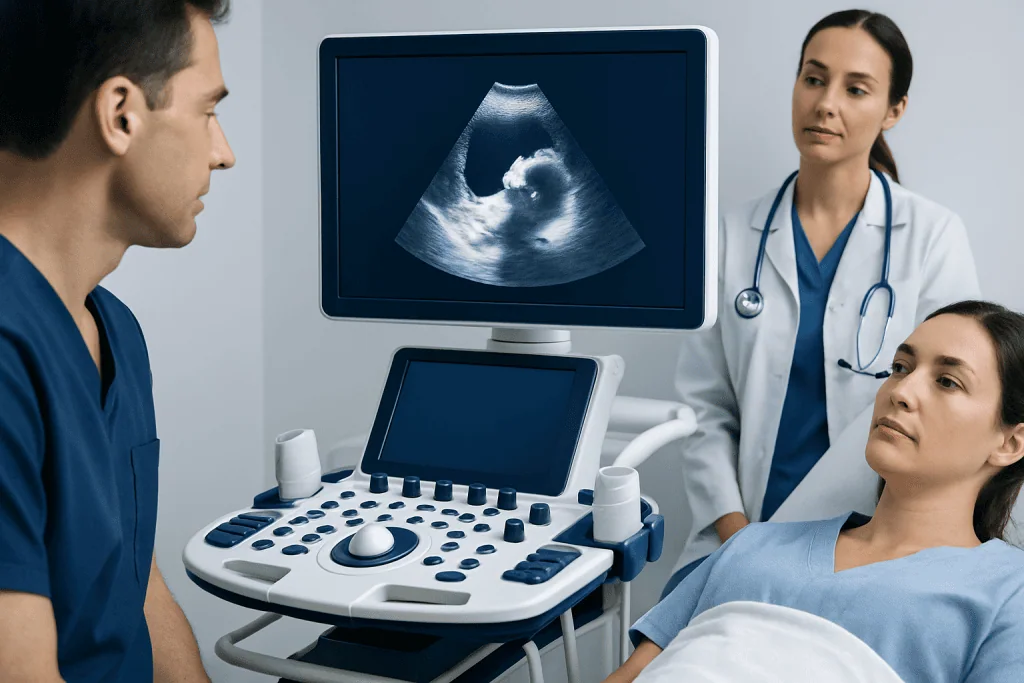
Dextrocardia may be suspected during a routine physical exam if the heartbeat is heard most clearly on the right side of the chest. It can also be identified before birth on prenatal ultrasound, or after birth during assessment for symptoms such as cyanosis, poor feeding, or recurrent infections. In adults, it is sometimes found incidentally during tests done for another reason.
Diagnosis usually starts with imaging. A chest X-ray can show that the heart silhouette lies on the right. An echocardiogram is especially important because it shows heart structure, blood flow, chamber size, and valve function. This helps doctors determine whether the heart is simply right-sided or whether there are additional congenital abnormalities.
Other tests may include an electrocardiogram, CT scan, or MRI to define anatomy in more detail. When doctors need a close assessment of the heart chambers, vessels, or associated defects, they may use advanced cardiac MRI or other specialized imaging. If rhythm symptoms are present, ambulatory monitoring may also be recommended.
Because organ placement can vary beyond the heart, doctors may also examine the abdomen and lungs. This may involve abdominal ultrasound, CT, or other studies to check the liver, spleen, stomach, and intestines. A complete diagnosis gives a full picture of heart position, organ arrangement, and any related structural or functional problems.
Treatment options and long-term care
Treatment for dextrocardia depends entirely on whether there are associated abnormalities. If the heart is structurally normal and the person has no symptoms, treatment may not be necessary. Instead, a cardiologist may recommend periodic follow-up to confirm that heart function remains stable and to document the anatomy clearly for future medical care.
When dextrocardia is linked to congenital heart defects, treatment focuses on the specific problem. This may include medications to support heart function, procedures to improve blood flow, or surgery to repair structural defects. Some children need early intervention, while others are monitored and treated later depending on symptoms and the severity of the abnormality.
Imaging and interventional planning are especially important in complex cases. For certain associated defects, a care team may consider pediatric cardiac surgery or other specialized cardiac procedures. Adults with repaired congenital defects may also need lifelong surveillance by clinicians experienced in congenital cardiology.
If recurrent respiratory infections, sinus disease, or ciliary problems are present, treatment may include airway clearance strategies and support from respiratory or ENT specialists. In more complex anatomy involving multiple organs, coordinated care across specialties is often needed. Acibadem International’s multidisciplinary specialists in JCI-accredited hospitals diagnose and treat dextrocardia and related congenital conditions for international patients.
Living with dextrocardia: self-care and medical follow-up
For many people, living with dextrocardia means staying informed and keeping regular medical records rather than making major lifestyle changes. It is helpful to know the exact diagnosis, including whether there is situs inversus, a repaired or unrepaired heart defect, or any other organ involvement. This information can be important in emergencies and before any surgery or new treatment.
Routine follow-up may include clinical exams, echocardiograms, or other tests depending on age and associated conditions. Parents of children with dextrocardia should keep track of feeding, growth, exercise tolerance, and respiratory infections, and share any concerns promptly with the child’s doctor. Adults should also mention the condition before ECGs, procedures, or pregnancy planning, since anatomy can affect interpretation and care.
General heart-healthy habits remain important. These include regular physical activity that matches the doctor’s advice, balanced nutrition, avoiding tobacco, keeping vaccinations up to date, and managing other health conditions such as high blood pressure if present. People with associated congenital defects may receive more specific guidance about exercise, medications, or preventive care.
Some individuals benefit from specialist follow-up in centers experienced in pediatric cardiology or adult congenital heart care. Long-term outcomes are often good when anatomy is well understood and any associated problems are identified and treated appropriately.
When to seek medical care
Medical review is appropriate whenever dextrocardia is newly suspected or discovered. Even if a person feels well, a clinician should confirm whether the heart is structurally normal and whether other organs are positioned typically. A proper evaluation can prevent confusion later and help identify any hidden conditions that might need monitoring.
Parents should seek prompt medical attention if an infant has bluish skin, fast breathing, poor feeding, unusual sleepiness, sweating during feeds, or difficulty gaining weight. Older children and adults should be assessed for chest pain, fainting, palpitations, shortness of breath, reduced exercise tolerance, or repeated respiratory infections. These symptoms do not always mean a serious problem, but they warrant professional evaluation.
Urgent care is especially important if symptoms appear suddenly or worsen quickly. Severe breathing difficulty, significant cyanosis, collapse, or signs of poor circulation need emergency assessment. If dextrocardia has already been diagnosed, new symptoms should still be discussed with a doctor rather than assuming they are unrelated.
People planning surgery, pregnancy, or treatment for another heart condition may also need a specialist review. In some cases, doctors evaluate whether related issues such as arrhythmia or other congenital differences are present so that care can be tailored safely.
Frequently asked questions
Is dextrocardia dangerous?
Dextrocardia is not always dangerous. Some people have a right-sided heart with otherwise normal anatomy and live without symptoms. The main concern is whether there are associated heart defects or other organ abnormalities that need treatment or monitoring.
Can someone live a normal life with dextrocardia?
Yes, many people with dextrocardia can live a normal life, especially if the condition is isolated and heart function is normal. Regular follow-up may still be recommended to confirm that no related problems develop or were missed earlier.
Is dextrocardia the same as situs inversus?
No. Dextrocardia refers specifically to the heart being on the right side of the chest. Situs inversus means a mirror-image arrangement of several organs, and dextrocardia may occur as one part of that pattern.
How is dextrocardia found?
It may be detected before birth on prenatal ultrasound or later with a physical exam, chest X-ray, echocardiogram, CT, or MRI. Sometimes it is found incidentally during testing for another reason. Further evaluation is usually needed to check for related heart or organ differences.
Does dextrocardia require surgery?
Not always. Surgery is not needed when the heart is structurally normal and the person has no complications. If dextrocardia is associated with congenital heart defects or other anatomical problems, treatment may include surgery or other specialized procedures.
Can dextrocardia be inherited?
It can sometimes be linked to genetic factors or inherited syndromes, but not every case runs in families. Many people with dextrocardia have no known family history. A doctor may suggest genetic evaluation if there are other congenital abnormalities or a strong family pattern.
This article is for general information only and is not a substitute for professional medical advice. Please consult a qualified doctor about your individual situation.
Explore treatments in Turkey — costs, top hospitals & a free quote
JCI-accredited · board-certified surgeons · reply within 24h
Add us as a Preferred Source to see more of our trusted health content across Google Search, AI Overviews and Discover.

More from the Health Library

What is andropause? A Doctor-Reviewed Answer

Mid Back Discomfort Left Side: An Evidence-Based Guide for Patients

Exposed Roots Teeth — Explained by Medical Evidence, Not Myths

Emotional Detachment: A Complete Medical Overview

I Macaroni: What Patients Need to Know