Digital Rectal Exam: What Patients Need to Know

A digital rectal exam is usually quick and may feel uncomfortable or create pressure, but it should not cause significant pain. Clinicians may use a DRE to assess rectal bleeding, bowel changes, anal symptoms, pelvic pain or prostate-related concerns.
Key Takeaways
- A digital rectal exam is usually quick and may feel uncomfortable or create pressure, but it should not cause significant pain.
- Clinicians may use a DRE to assess rectal bleeding, bowel changes, anal symptoms, pelvic pain or prostate-related concerns.
- A DRE is only one part of an evaluation and does not replace tests such as stool testing, imaging, colonoscopy or prostate-specific antigen testing when these are needed.
- Patients can ask why the examination is recommended, request a chaperone and tell the clinician if they feel pain or want the examination to stop.
- New or persistent rectal bleeding, black stools, unexplained weight loss, severe pain or major changes in bowel habits should be medically assessed.
A digital rectal exam, often called a DRE, is a short examination in which a clinician gently inserts a gloved, lubricated finger into the rectum. It can provide useful information about rectal symptoms, pelvic-floor function, stool, bleeding and, in some people, the prostate gland.
Digital Rectal Exam: An Overview
A digital rectal exam is a brief physical examination of the lower rectum and anus. “Digital” refers to a finger, not electronic technology. During the examination, a qualified clinician inserts one lubricated, gloved finger into the rectum to feel for changes that cannot be seen from the outside.
The examination may be recommended for symptoms such as rectal bleeding, pain, constipation, a new bowel-habit change, a sensation of incomplete emptying, or a lump near the anus. In people with a prostate, it may also help the clinician assess the size, surface and tenderness of the prostate gland.
A DRE can offer helpful clinical clues, but it does not diagnose every condition and does not screen for all bowel or prostate diseases on its own. The findings are interpreted alongside a person’s symptoms, medical history and, where appropriate, laboratory tests, imaging or endoscopic examinations.
Why a Clinician May Recommend It
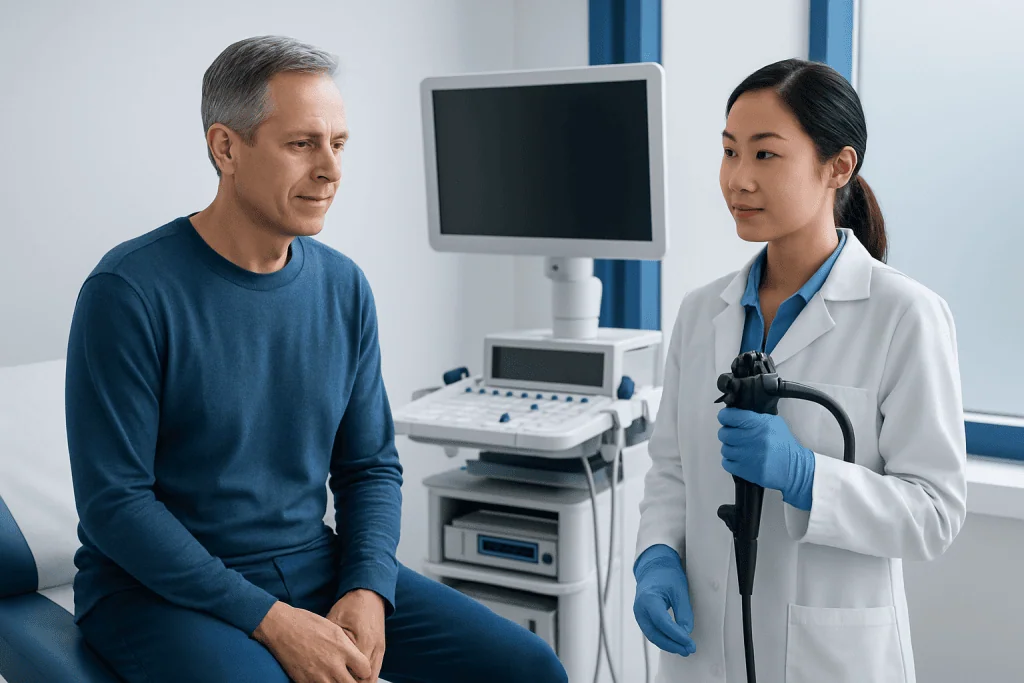
Clinicians use a digital rectal exam because the rectum, anal canal and nearby pelvic structures are difficult to assess externally. Feeling these areas may help identify tenderness, swelling, fissures, hemorrhoids, a rectal mass, impacted stool, or changes in muscle tone. An external inspection is often performed first.
For people with a prostate, a DRE may be part of an assessment for urinary symptoms such as a weak stream, frequent urination, difficulty starting urination or pelvic discomfort. The clinician can feel the back portion of the prostate through the rectal wall. A prostate that feels enlarged, tender, firm or irregular may require further evaluation, although these findings do not by themselves confirm a particular diagnosis.
A DRE may also be used in urgent or inpatient care to check for stool color, blood, severe constipation or reduced rectal tone after certain neurological symptoms or injuries. The reason for the examination should be explained beforehand, and patients can ask how the result may affect next steps in their care.
What Happens During a Digital Rectal Exam
The clinician should explain the purpose of the examination, describe what it involves and obtain permission before proceeding. A chaperone may be offered or present according to the setting and local practice. Patients can request a chaperone, ask questions, or say that they would prefer to pause or stop at any time.
The examination is commonly done while the patient lies on their side with knees comfortably bent, although other positions may be used depending on the clinical situation. The clinician examines the area around the anus, puts on a glove, applies lubricant and gently inserts one finger. They may ask the patient to bear down briefly, which can help relax the muscles.
The internal part usually lasts less than a minute. The clinician may feel around the rectal wall and, if relevant, assess the prostate. After removing the finger, they may check the glove for stool color or visible blood. The patient can clean up, dress and discuss the findings immediately afterward.
Most people describe pressure, fullness or mild discomfort rather than pain. It is important to tell the clinician straight away if there is sharp pain, marked tenderness, dizziness or distress. This enables the examination to be adjusted or stopped and helps guide the clinical assessment.
What the Examination Can and Cannot Show
A digital rectal exam can sometimes detect problems in the lower rectum or anal area, including hemorrhoids, fissures, inflammation, abscesses, low rectal masses or hard stool. It may also identify tenderness that suggests an inflammatory or infectious process. However, not all rectal conditions are within reach of a finger examination.
For prostate assessment, a DRE can identify some changes in the part of the gland that is accessible through the rectum. It cannot reliably measure the entire prostate or rule out prostate cancer. If there are concerning symptoms or findings, a clinician may recommend a prostate-specific antigen blood test, urine testing, imaging or referral to a urology specialist.
Similarly, a normal DRE does not rule out colorectal cancer, inflammatory bowel disease or bleeding from higher in the digestive tract. Depending on the concern, further testing may include blood tests, stool tests, anoscopy, sigmoidoscopy, colonoscopy or imaging. For example, persistent bleeding or an ongoing change in bowel habits may need assessment for conditions such as colorectal cancer.
The value of a DRE lies in combining a simple examination with the full clinical picture. A clinician will explain whether the result is reassuring, uncertain or suggests a need for additional tests.
Preparation, Comfort and Safety
Most people do not need special preparation for a digital rectal exam. It may be helpful to use the toilet beforehand if possible, but an enema or bowel preparation is generally not required unless the clinician gives specific instructions. Patients should mention any recent rectal surgery, severe anal pain, active bleeding, bowel disease, use of blood-thinning medicines or relevant infections.
Privacy, dignity and communication are essential parts of the examination. A patient may ask for the examination to be explained step by step, request a clinician of a particular gender where feasible, have a support person or chaperone present according to policy, or ask the clinician to stop. These requests are reasonable and should be respected.
Complications from a routine DRE are uncommon. Mild discomfort or brief spotting can occur, especially when hemorrhoids, a fissure or inflammation is present. The clinician may defer or modify the examination if there is severe pain, significant active bleeding, recent surgery, serious rectal injury or another reason it may not be appropriate at that moment.
If a person feels anxious, slow breathing and relaxing the buttock and pelvic muscles may help. Being open about embarrassment or fear can also help the care team provide a more comfortable, respectful experience.
Understanding Results and Possible Next Steps
Results may be described as normal, or they may note findings such as tenderness, blood, hard stool, hemorrhoids, altered muscle tone or a change in the prostate. A finding does not always mean a serious illness. For instance, an enlarged prostate can occur with benign prostatic enlargement, while rectal bleeding may have several possible causes.
If constipation and hard stool are the main concerns, the clinician may discuss hydration, fiber intake, physical activity, a review of medicines and safe options for bowel management. If hemorrhoids or fissures are suspected, treatment may focus on reducing straining and relieving symptoms. Ongoing or recurrent symptoms should not be attributed to hemorrhoids without appropriate evaluation.
Further testing is selected based on the individual situation. A person with urinary symptoms may need urine tests and urological assessment, while someone with bleeding, anemia or bowel changes may need digestive investigations. Some patients may be referred for colonoscopy when the clinician needs to examine the inside of the colon and rectum more fully.
Acibadem International’s multidisciplinary specialists and JCI-accredited hospitals can assess rectal, digestive and prostate-related symptoms for international patients, using appropriate examinations and follow-up testing when needed.
When to Seek Medical Care
A routine appointment is appropriate for rectal bleeding that recurs, a new lump near the anus, persistent itching or pain, constipation that does not improve, a continuing change in stool shape or frequency, or urinary symptoms that affect daily life. These symptoms are common and often have treatable causes, but an examination can help clarify the reason.
More prompt medical advice is important for black, tar-like stools; a larger amount of rectal bleeding; unexplained weight loss; ongoing abdominal pain; unusual fatigue; fever with rectal pain; or a change in bowel habits that persists for several weeks. People with a personal or family history of colorectal cancer, polyps or inflammatory bowel disease should discuss new symptoms with a clinician without delay.
Urgent assessment is needed for severe or worsening abdominal pain, heavy bleeding, fainting, confusion, inability to pass stool or gas with abdominal swelling, or severe rectal pain with fever. These symptoms may require timely evaluation and should not be managed with self-care alone.
A digital rectal exam is one possible part of that evaluation. The clinician will decide whether it is useful and whether other tests or specialist care are more appropriate.
Frequently asked questions
Does a digital rectal exam hurt?
A digital rectal exam commonly causes a brief feeling of pressure, fullness or mild discomfort. It should not cause severe pain. Patients should tell the clinician immediately if they feel pain, as this can be clinically important and the examination can be paused or stopped.
How long does a digital rectal exam take?
The internal portion of the examination usually takes less than a minute. The overall appointment may take longer because the clinician will discuss symptoms, medical history, consent and any recommended next steps. There is usually no recovery time after a routine DRE.
Is a digital rectal exam necessary for prostate screening?
A DRE may be used as part of an assessment of prostate symptoms or prostate health, but it is not a stand-alone screening test. Decisions about prostate cancer screening often involve a discussion of age, risk factors and PSA blood testing. A clinician can advise which approach is suitable for the individual.
Can a digital rectal exam detect colon cancer?
A DRE may detect some abnormalities in the lower rectum, but it cannot examine most of the colon and cannot rule out colorectal cancer. If symptoms or screening history suggest a concern, further tests such as stool testing or colonoscopy may be recommended. A normal DRE should not delay follow-up for persistent warning symptoms.
Do patients need to prepare or fast before a DRE?
In most cases, no fasting or special bowel preparation is needed. Using the toilet before the appointment may help a person feel more comfortable, but it is not essential. The clinician will provide specific instructions if the DRE is being done alongside another procedure that requires preparation.
Can a patient refuse a digital rectal exam?
Yes. A patient has the right to understand why an examination is being recommended and to give or decline consent. They may also request a chaperone, ask questions or stop the examination at any point. The clinician can discuss alternative approaches and explain any limits of not performing the exam.
References
- National Institute of Diabetes and Digestive and Kidney Diseases
- American Cancer Society
- American Urological Association
- Mayo Clinic
- National Health Service
This article is for general information only and is not a substitute for professional medical advice. Please consult a qualified doctor about your individual situation.
Persistent digestive symptoms? Get evaluated in Turkey
JCI-accredited · board-certified surgeons · reply within 24h
Add us as a Preferred Source to see more of our trusted health content across Google Search, AI Overviews and Discover.

More from the Health Library



Related Specialists

Dr. Mehmethan Turan
Pulmonary Medicine
Fzt. Semih Kızıltan
Physical Medicine & Rehabilitation
Prof. Dr. Yaşar Ünlü
Otorhinolaryngology
Dr. Mehmet Can Şahin
Inpatient Clinic Physicians