Dislocation: What Patients Need to Know

A dislocation happens when a joint’s bones move out of alignment. Common signs include severe pain, swelling, visible deformity, and limited movement.
Key Takeaways
- A dislocation happens when a joint’s bones move out of alignment.
- Common signs include severe pain, swelling, visible deformity, and limited movement.
- Dislocations should not be forced back into place outside medical care.
- Treatment may include reduction, immobilization, pain control, and rehabilitation.
- Early diagnosis can help prevent nerve, blood vessel, cartilage, or ligament injury.
Dislocation is a joint injury in which the bones are pushed out of their normal position. It usually causes sudden pain, swelling, and difficulty moving the joint, and it should be assessed promptly to reduce the risk of lasting damage.
Overview: What a Dislocation Means
A dislocation is a joint injury in which one or more bones are forced out of their normal position. It most often happens after a fall, sports injury, collision, or sudden twisting movement. In some people, a dislocation can also occur more easily because of joint laxity, previous injury, or an underlying connective tissue problem.
Any joint can be affected, but dislocations are especially common in the shoulder, finger, kneecap, elbow, jaw, and hip. Some injuries are complete dislocations, while others are partial dislocations, sometimes called subluxations. Even when the joint seems to move back on its own, nearby tissues such as ligaments, tendons, cartilage, nerves, and blood vessels may still be injured.
Because a dislocation can look similar to a fracture or severe sprain, proper medical assessment is important. Imaging is often needed to confirm what happened and to guide treatment. Prompt care can help relieve pain, restore alignment, and lower the chance of repeat instability or long-term joint problems.
Symptoms and Signs of a Dislocation

The symptoms of a dislocation usually begin suddenly, right after the injury. Pain is often immediate and can be intense, especially when the person tries to move the joint. Swelling and bruising may develop quickly, and the area can become tender to the touch.
Many people notice that the joint looks different from usual. It may appear visibly out of place, misshapen, or stuck in an unusual position. Movement is often limited, and bearing weight may be difficult if the injury involves the hip, knee, ankle, or foot.
Possible symptoms include:
- Severe joint pain
- Swelling or bruising
- Visible deformity or abnormal position
- Difficulty moving the joint
- A feeling that the joint is unstable or “slipped out”
- Numbness, tingling, or weakness if a nerve is affected
If there is numbness, cool skin, pale color, or absent pulse below the injury, urgent evaluation is especially important because blood flow or nerve function may be affected.
Causes and Risk Factors
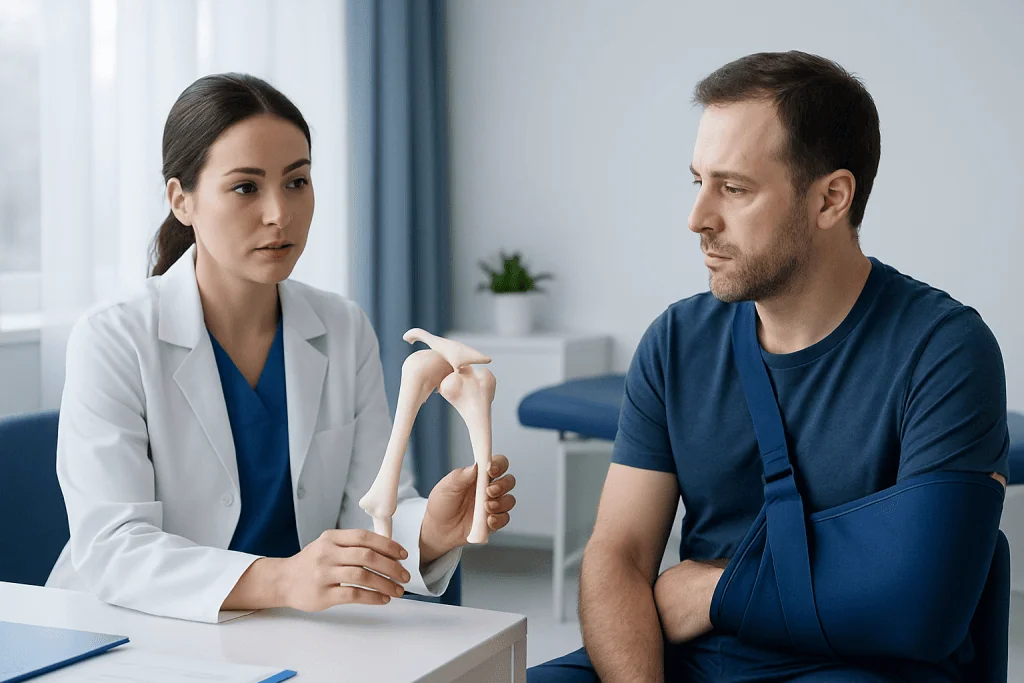
Dislocations are usually caused by trauma. Falls onto an outstretched arm are a common reason for a dislocated shoulder, while contact sports, cycling accidents, and vehicle collisions can affect many different joints. Fingers can dislocate during ball sports, and the kneecap may shift out of place during twisting or pivoting activities.
Certain factors increase the risk. A person who has had a previous dislocation may be more likely to have another one, especially if the supporting ligaments were stretched or torn. Some people are born with looser joints, while others have conditions that affect connective tissue and make joints less stable.
Risk may also rise with weak surrounding muscles, poor balance, high-impact activity, or inadequate protective equipment. In older adults, falls are a common trigger because bone and soft-tissue strength may decrease over time. In children, growth and high activity levels can also contribute, but a doctor should evaluate the injury carefully to look for associated fractures or growth-plate injury.
How Doctors Diagnose a Dislocation
Diagnosis begins with a physical examination and a clear history of how the injury happened. The doctor checks the joint’s position, swelling, skin condition, and range of motion. Just as importantly, they assess circulation, sensation, and muscle strength below the injured area to look for nerve or blood vessel involvement.
X-rays are commonly used to confirm the dislocation and to see whether a fracture is present. This matters because a broken bone can change the safest treatment approach. In some cases, repeat X-rays are taken after the joint is put back in place to confirm proper alignment.
Some patients need additional imaging, especially if there is concern about cartilage, tendon, or ligament damage. In selected cases, the doctor may recommend MRI imaging to evaluate soft tissues more closely, or CT scanning to define complex bone injury around the joint. These tests help guide decisions about immobilization, rehabilitation, or surgery.
Treatment Options and What Recovery Involves
The first goal of treatment is to return the joint to its normal position, a procedure called reduction. This should be performed by a trained healthcare professional. Trying to force the joint back at home can worsen damage to bone, cartilage, nerves, or blood vessels. Before and after reduction, the team checks circulation and nerve function carefully.
After the joint is realigned, treatment often includes rest, immobilization with a sling, splint, brace, or other support, and pain relief measures. Ice and elevation may help reduce swelling in the early phase. The exact plan depends on which joint was injured, whether the dislocation was simple or associated with fracture, and whether the joint remains stable after reduction.
Rehabilitation is an important part of recovery. Once it is safe to begin moving again, guided exercises can help restore flexibility, strength, and joint control. Some people benefit from physical therapy and rehabilitation, especially after shoulder, kneecap, or elbow dislocations. A doctor may also discuss surgery if there is repeated instability, major ligament injury, trapped tissue inside the joint, or a fracture that needs repair.
Healing time varies. Small joints such as fingers may recover relatively quickly, while larger joints or injuries involving torn ligaments can take longer. Following instructions about immobilization, activity limits, and rehabilitation helps reduce the risk of stiffness and repeat dislocation.
Prevention and Self-care After an Injury
Not every dislocation can be prevented, but some steps can lower risk. Strengthening the muscles around vulnerable joints can improve stability, especially after a previous injury. Warm-up routines, balance training, and sport-specific technique can also help protect joints during physical activity.
Protective gear matters in many sports. Supportive footwear, braces when recommended, and safe training practices may reduce the chance of awkward falls or twisting injuries. For older adults, fall-prevention measures such as home safety adjustments, vision checks, and exercise to improve balance can be valuable.
At home, self-care after a diagnosed dislocation should follow medical advice. The person may be advised to rest the joint, use ice for short periods, keep the area elevated, and avoid return to sports or heavy use until cleared. It is important not to remove braces or slings early or restart activity too soon, as this can make the joint unstable again.
If a joint seems to slip repeatedly, catches, locks, or remains weak after recovery, follow-up assessment is sensible. In some cases, recurrent dislocation may be linked to ligament injury or another joint problem that needs more specific treatment, such as care used for ACL injury when knee instability is part of the picture.
When to Seek Medical Care
A person should seek medical care promptly if a joint looks deformed, cannot be moved normally, or is very painful after an injury. Even if the joint seems to have gone back into place, persistent swelling, weakness, or instability still deserves evaluation. A dislocation can occur together with a fracture or soft-tissue damage that is not obvious without imaging.
Urgent care is especially important if there is numbness, tingling, increasing swelling, a cold or pale limb, or severe pain that does not improve. These signs can suggest pressure on nerves or reduced blood flow. Open wounds near the joint also require prompt assessment.
Emergency help may be needed after high-impact trauma, suspected hip dislocation, or injuries in which the person cannot bear weight or has other serious symptoms. Near the end of recovery, medical review is also useful if the joint keeps slipping, movement remains very limited, or pain continues beyond the expected healing period. Acibadem International’s multidisciplinary specialists in JCI-accredited hospitals evaluate and treat joint injuries for international patients when expert orthopedic care is needed.
Frequently asked questions
What is the difference between a dislocation and a sprain?
A dislocation means the bones of a joint have moved out of their normal alignment. A sprain is an injury to the ligaments that support a joint, without the joint necessarily coming out of place. Both can cause pain and swelling, so an exam and imaging may be needed to tell them apart.
Can a dislocation heal on its own?
A dislocation should not be assumed to heal correctly without medical care. Even if the joint seems to slip back, there may still be damage to ligaments, cartilage, nerves, or blood vessels. Professional assessment helps confirm alignment and identify associated injuries.
Should someone try to pop a dislocated joint back in?
No. Trying to force a joint back into place can worsen injury and may damage surrounding tissues. The safest approach is to support the joint, avoid movement, and seek urgent medical care.
How long does recovery from a dislocation usually take?
Recovery time depends on the joint involved and whether there are related injuries such as ligament tears or fractures. Some minor joint dislocations improve over a few weeks, while larger joints may take longer and need rehabilitation. A doctor can give a more accurate estimate after imaging and examination.
Are some joints more likely to dislocate again?
Yes. The shoulder, kneecap, fingers, and some other joints can be prone to recurrent instability, especially after a previous dislocation. Risk may be higher in younger active people or when ligaments were stretched or torn. Strengthening and rehabilitation can help reduce repeat episodes.
When is surgery needed for a dislocation?
Surgery is not needed for every dislocation, but it may be recommended if the joint remains unstable, dislocates repeatedly, or has associated fractures or major soft-tissue injury. It may also be considered if tissue is trapped in the joint or if normal alignment cannot be maintained. The decision depends on the joint, the person’s activity level, and imaging findings.
This article is for general information only and is not a substitute for professional medical advice. Please consult a qualified doctor about your individual situation.
Joint and spine care in Turkey — expert assessment & treatment
JCI-accredited · board-certified surgeons · reply within 24h
Add us as a Preferred Source to see more of our trusted health content across Google Search, AI Overviews and Discover.

More from the Health Library

Abilify — Explained by Medical Evidence, Not Myths

Antrum — Explained by Medical Evidence, Not Myths

Antiseptic for Cat Scratch — Explained by Medical Evidence, Not Myths

Albino White Person: What Patients Need to Know

DVT Stockings: A Complete Medical Overview