Distal Interphalangeal: What Patients Need to Know

The distal interphalangeal joint is the last joint near the tip of a finger or toe. Pain or swelling in this joint is often linked to arthritis, overuse, or injury.
Key Takeaways
- The distal interphalangeal joint is the last joint near the tip of a finger or toe.
- Pain or swelling in this joint is often linked to arthritis, overuse, or injury.
- Diagnosis usually depends on symptoms, physical examination, and sometimes imaging such as X-rays.
- Treatment may include rest, splinting, medication, hand therapy, injections, or surgery in selected cases.
- Prompt medical assessment is important after sudden injury, deformity, severe swelling, or signs of infection.
Distal interphalangeal refers to the small joint closest to the tip of a finger or toe. When this joint becomes painful, swollen, stiff, or deformed, common reasons include osteoarthritis, psoriatic arthritis, injury, and tendon or ligament problems.
Overview: what distal interphalangeal means
The term distal interphalangeal describes the small hinge joint nearest the tip of a finger or toe. In the hand, this is often called the DIP joint. It helps with fine movements such as pinching, typing, buttoning clothing, gripping small objects, and stabilizing the fingertip during daily tasks.
Patients usually search this term because they have pain, swelling, stiffness, a bump, or a change in finger shape near the nail end of the finger. In many cases, the problem is related to wear-and-tear arthritis, an inflammatory arthritis, or an injury affecting the joint surface, ligaments, or extensor tendon.
The distal interphalangeal joint is small, but symptoms here can be surprisingly disruptive. Even mild stiffness may affect writing, opening containers, using a phone, or playing an instrument. Understanding the structure of this joint helps explain why treatment ranges from simple self-care to specialist evaluation.
How the joint works and why problems happen
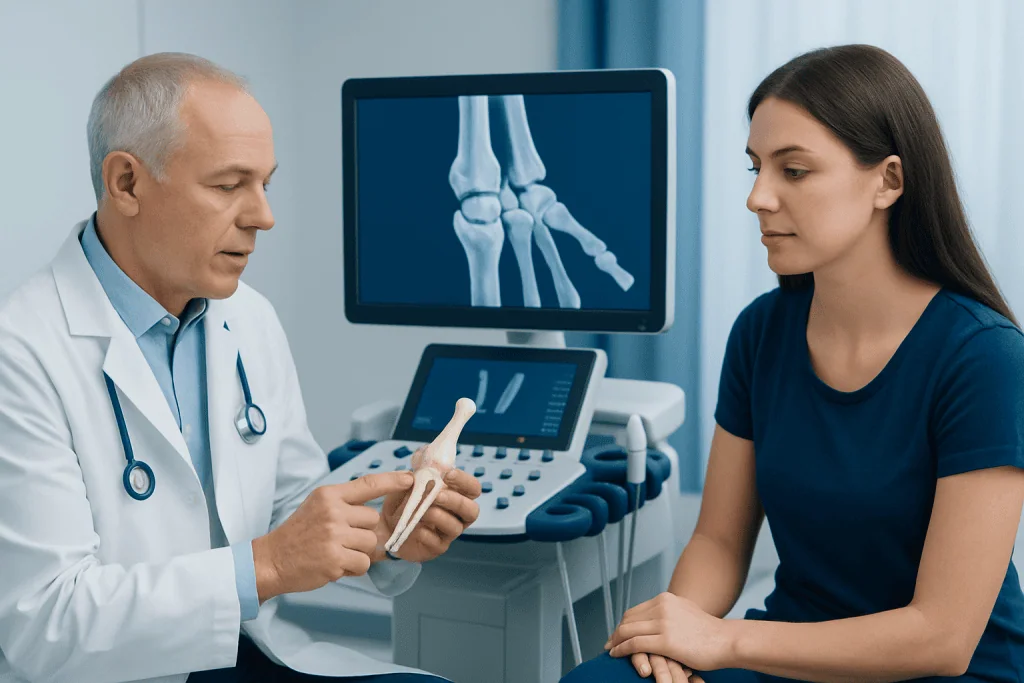
Each distal interphalangeal joint is formed where two small bones meet. Smooth cartilage covers the bone ends so they can glide with minimal friction, while ligaments stabilize the joint and the tendons help bend and straighten the fingertip. Because the joint is used frequently and bears repeated force during gripping and pinching, it can develop irritation or damage over time.
Problems may start in different tissues. Cartilage breakdown can lead to osteoarthritis. Inflammation in the joint lining can occur with autoimmune conditions such as psoriatic arthritis. A sudden blow, twist, or jamming injury can damage bone, cartilage, or tendon. Repetitive activities may also strain the tissues around the joint.
The appearance of the joint can offer clues. Bony enlargement may suggest osteoarthritis, while a drooping fingertip can point to a tendon injury such as mallet finger. Warmth, redness, marked tenderness, or skin changes may suggest a more active inflammatory process and should be assessed by a clinician.
Symptoms patients may notice

Symptoms vary depending on the cause, but the most common complaint is pain at the end joint of a finger. Some people feel pain only when gripping or pressing on the fingertip, while others notice aching even at rest. Morning stiffness, reduced motion, swelling, and tenderness are also common.
Visible changes may develop over time. The joint may look enlarged, crooked, or knobby. In osteoarthritis, hard bony bumps called Heberden nodes can form near the DIP joint. In inflammatory arthritis, swelling may be softer and accompanied by warmth or involvement of several joints.
Patients should watch for functional symptoms as well as pain. Examples include difficulty straightening the fingertip, weakness in pinch grip, a fingertip that suddenly droops, clicking, or instability. Nails and nearby skin can also change in psoriatic disease, and numbness or color change may point to a separate circulation or nerve problem.
- Pain near the fingertip joint
- Stiffness, especially after rest
- Swelling or visible enlargement
- Reduced ability to bend or straighten the joint
- Deformity after injury or over time
- Tenderness, warmth, or redness
Common causes and risk factors
Osteoarthritis is one of the most common causes of distal interphalangeal symptoms, especially with aging. Over time, cartilage thins and the body may form extra bone around the joint. This can lead to pain, stiffness, and a lumpy appearance. Family history, prior injury, repetitive hand use, and age may increase risk.
Inflammatory arthritis is another important cause. Rheumatoid arthritis less commonly targets the DIP joints than other hand joints, but psoriatic arthritis often does. People may notice swelling of entire fingers, nail pitting, skin psoriasis, or pain in other joints. A clinician may consider blood tests and imaging if this is suspected.
Injuries are also frequent. A jammed finger can cause a sprain, fracture, dislocation, or tendon damage. A classic example is mallet finger, in which the extensor tendon at the DIP joint is injured, making the fingertip bend downward. Repetitive strain from sports, manual work, or frequent gripping may worsen symptoms even without a major accident.
Less common causes include infection, gout, mucous cysts near the nail, and other forms of inflammatory joint disease. Infection is less common but more urgent, especially if there is increasing redness, severe pain, drainage, fever, or pain after a bite, puncture, or skin break.
How doctors diagnose distal interphalangeal problems
Diagnosis begins with a careful history. The doctor may ask when symptoms started, whether there was an injury, which activities make the pain worse, whether more than one joint is involved, and whether there are related symptoms such as psoriasis, fever, or morning stiffness lasting a long time. These details help narrow the likely cause.
A physical examination looks at alignment, swelling, tenderness, joint motion, tendon function, grip, and fingertip stability. The clinician may compare both hands and check nearby joints. Nail changes, skin plaques, and patterns of swelling can provide useful clues to inflammatory disease.
X-rays are commonly used when arthritis, fracture, or deformity is suspected. They can show joint space narrowing, bone spurs, fractures, or dislocation. Ultrasound or MRI may be helpful when soft-tissue injury is suspected, especially tendon or ligament damage. Blood tests are sometimes ordered if inflammatory arthritis, gout, or infection is possible.
When symptoms are persistent or the diagnosis is uncertain, referral to a hand specialist, orthopedic specialist, or rheumatologist may be appropriate. If broader joint disease is suspected, evaluation for conditions such as arthritis can help guide long-term treatment.
Treatment options
Treatment depends on the underlying cause, symptom severity, and how much function is affected. For mild pain related to overuse or early osteoarthritis, doctors often recommend activity adjustment, rest, ice after aggravating activity, and short-term use of medication if appropriate for the individual. Some patients benefit from splints that protect the DIP joint during healing or flare-ups.
Hand therapy can be useful for stiffness, weakness, and recovery after injury. Guided exercises may help maintain motion while avoiding further strain. If an acute tendon injury or unstable fracture is present, prompt splinting and specialist assessment are important because timing can affect healing and long-term function.
Medication may include topical or oral anti-inflammatory treatment when suitable, and inflammatory arthritis may require disease-specific medicines prescribed by a specialist. In selected cases, corticosteroid injection may be considered, though its use depends on the joint involved and the cause of symptoms. Some patients with advanced joint damage, persistent deformity, or severe pain may be evaluated for orthopedic surgery.
When symptoms are tied to autoimmune disease, treatment focuses not only on the painful joint but also on controlling whole-body inflammation. Patients with more complex hand problems may also be referred to physical therapy and rehabilitation to support function and recovery.
Self-care, joint protection, and prevention
Not every distal interphalangeal problem can be prevented, but simple habits can reduce strain and support hand health. Using larger grips, avoiding prolonged forceful pinching, taking regular breaks from repetitive tasks, and wearing protective equipment during sports or manual work may help lower stress on the joints.
During a mild flare, temporary rest and cold packs may ease pain and swelling. Gentle movement, once comfortable, can help prevent stiffness. It is usually best to avoid repeatedly forcing a stiff or painful fingertip joint, because this can increase irritation rather than improve mobility.
General health matters too. Managing inflammatory conditions, maintaining a healthy body weight, and stopping smoking can support joint health overall. Patients should avoid self-diagnosing a persistent swollen or deformed joint, because conditions that look similar can require very different treatments.
If care is needed, multidisciplinary specialists at Acibadem International and its JCI-accredited hospitals evaluate hand and joint conditions for international patients, including advanced imaging, rheumatology assessment, and hand surgery when appropriate.
When to seek medical care
Medical care is advisable if distal interphalangeal pain lasts more than a few days, keeps returning, limits normal use of the hand, or is associated with visible deformity. Evaluation is also important when several joints are affected, symptoms are worse in the morning for a prolonged period, or there are skin and nail changes that may suggest psoriatic disease.
Urgent assessment is needed after a significant injury, especially if the fingertip cannot straighten, the joint looks dislocated, there is severe swelling, or a fracture is possible. Infection also needs prompt attention. Warning signs include redness that is spreading, warmth, pus, fever, intense throbbing pain, or pain after a bite, puncture, or cut near the joint.
Early evaluation can help protect movement and reduce the chance of long-term stiffness or deformity. A qualified doctor can identify whether the issue is mainly arthritis, tendon injury, fracture, inflammation, or another cause, and then recommend the most appropriate treatment.
Frequently asked questions
What does distal interphalangeal mean?
Distal interphalangeal refers to the joint closest to the tip of a finger or toe. In the hand, it is often called the DIP joint and helps the fingertip bend and straighten.
Why does my distal interphalangeal joint hurt?
Pain in this joint can come from osteoarthritis, inflammatory arthritis, tendon injury, sprain, fracture, overuse, or less commonly infection or gout. The pattern of symptoms, any history of injury, and examination findings help determine the cause.
Is distal interphalangeal pain always arthritis?
No. Arthritis is common, but not every painful DIP joint is caused by arthritis. Tendon injuries such as mallet finger, ligament sprains, fractures, and cysts near the joint can produce similar symptoms.
Can a distal interphalangeal injury heal without surgery?
Many DIP joint problems improve with non-surgical care such as splinting, rest, hand therapy, and medication. Surgery is usually reserved for selected cases, including unstable fractures, persistent deformity, severe arthritis, or symptoms that do not improve with conservative treatment.
What is the difference between osteoarthritis and psoriatic arthritis in this joint?
Osteoarthritis usually causes gradual pain, stiffness, and hard bony enlargement over time. Psoriatic arthritis may cause swelling, warmth, tenderness, nail changes, skin psoriasis, and inflammation in other joints or tendons.
When should someone see a doctor for a DIP joint problem?
A doctor should assess symptoms that are persistent, recurrent, worsening, or interfering with hand function. Prompt care is especially important after injury, if the fingertip suddenly droops, if the joint looks deformed, or if there are signs of infection such as redness, pus, or fever.
This article is for general information only and is not a substitute for professional medical advice. Please consult a qualified doctor about your individual situation.
Joint and spine care in Turkey — expert assessment & treatment
JCI-accredited · board-certified surgeons · reply within 24h
Add us as a Preferred Source to see more of our trusted health content across Google Search, AI Overviews and Discover.

More from the Health Library

Aloe Vera for That Burn: What Patients Need to Know

Air Fryer Grilled Cheese — Explained by Medical Evidence, Not Myths

Geranium Oil: Uses, Safety, and Skin Risks

Dysphonia: An Evidence-Based Guide for Patients

Tophi disease: Symptoms, Causes, and Treatment — Complete Patient Guide