Does Cancer Show Up in Blood Work?

Routine blood tests may show changes that suggest a possible cancer, but they are not enough to confirm it. Some cancers affect blood counts, liver function, kidney function, or inflammation markers.
Key Takeaways
- Routine blood tests may show changes that suggest a possible cancer, but they are not enough to confirm it.
- Some cancers affect blood counts, liver function, kidney function, or inflammation markers.
- Tumor markers can help in selected situations, but they are not reliable as a general cancer screening tool.
- A biopsy is often needed to confirm whether cancer is present and what type it is.
- Abnormal blood work has many possible causes, including infection, inflammation, medication effects, and non-cancerous conditions.
Blood work can sometimes raise suspicion for cancer, but it usually cannot diagnose cancer on its own. Doctors use blood tests together with symptoms, physical examination, imaging, and often a biopsy to make an accurate diagnosis.
Overview: Can blood work detect cancer?
Many people wonder, does cancer show up in blood work? The short answer is that it can sometimes leave clues, but blood tests alone usually do not provide a definite diagnosis. A doctor may notice unusual findings in routine tests and then recommend further evaluation to understand the cause.
Blood work can reveal changes in red blood cells, white blood cells, platelets, electrolytes, proteins, and organ function. Some cancers directly affect the blood and bone marrow, while others influence the body in less specific ways. These changes may lead a doctor to investigate conditions such as leukemia or other illnesses, but they are not proof of cancer by themselves.
This is why blood work is considered one part of a larger diagnostic picture. Doctors also consider a person’s age, symptoms, medical history, family history, physical examination, and results from imaging studies or tissue sampling. When needed, tests such as a biopsy help confirm whether abnormal findings are cancer-related.
What blood tests may suggest cancer?
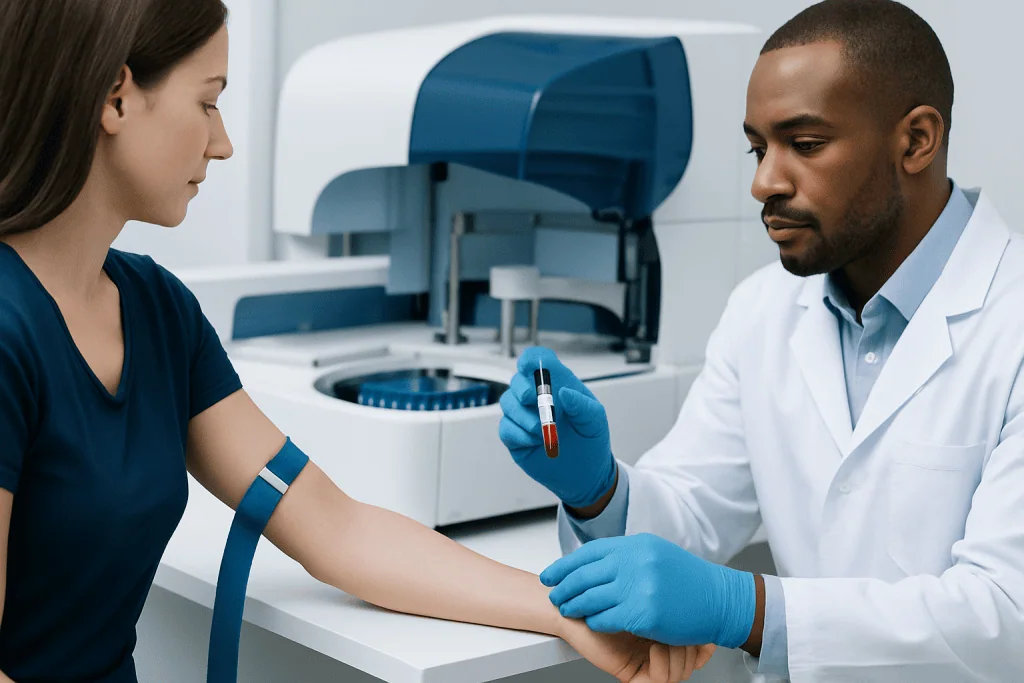
Several common blood tests can show patterns that sometimes point toward cancer. One of the most familiar is the complete blood count, or CBC. This test measures red blood cells, white blood cells, and platelets, and it may reveal anemia, unusually high or low white blood cell counts, or platelet abnormalities.
Blood chemistry tests can also provide useful information. They measure substances linked to liver function, kidney function, calcium balance, proteins, and other body systems. Some cancers can affect these results, especially if they involve the liver, bones, kidneys, or bone marrow, but non-cancerous conditions can cause similar changes.
Examples of blood tests doctors may use include:
- Complete blood count (CBC): may show anemia, infection-like patterns, or abnormal blood cell production
- Comprehensive metabolic panel: can reveal liver or kidney abnormalities
- Lactate dehydrogenase (LDH): may be elevated in some cancers and other conditions
- Inflammation markers: such as ESR or CRP, which can rise for many reasons
- Tumor markers: special blood tests that may support diagnosis or follow-up in selected cancers
These tests are helpful because they guide next steps, not because they can answer every question. A single abnormal result rarely means cancer is present.
Which cancers are more likely to affect blood work?

Cancers of the blood and bone marrow are the most likely to show up directly in blood tests. Leukemia, lymphoma, and multiple myeloma may cause noticeable changes in blood cell counts or proteins. In some cases, these abnormalities are found when a person is being tested for tiredness, infection, bruising, or unexplained weight loss.
Solid tumors, such as cancers of the lung, colon, breast, pancreas, or liver, may also affect blood work, but often in less specific ways. For example, a tumor may cause anemia through bleeding, change liver tests if it affects the liver, or raise calcium levels if bone is involved. However, these findings can also occur with many non-cancerous problems.
Some cancers produce substances that can be measured in blood, called tumor markers. These may be useful in certain settings, especially after a cancer diagnosis has already been made. Even then, doctors usually interpret tumor markers alongside scans and clinical findings, rather than relying on them alone.
Why blood tests alone cannot confirm cancer
Although blood work can be very informative, it is rarely specific enough to diagnose cancer by itself. Many abnormal results have common explanations such as infection, inflammation, nutritional deficiency, autoimmune disease, liver disease, medication side effects, or benign growths. That is why doctors avoid making conclusions based on blood work alone.
Tumor markers are a good example of this limitation. Some markers can be elevated in people without cancer, while some people with cancer may have normal marker levels. Because of this, tumor marker testing is not suitable as a general screening tool for most healthy adults without symptoms.
To confirm a diagnosis, doctors often use imaging and tissue sampling. Depending on the situation, they may recommend MRI, ultrasound, CT imaging, endoscopy, or another test to locate an abnormal area. A biopsy then allows a pathologist to examine cells under a microscope and identify whether cancer is present and what type it is.
How doctors investigate abnormal blood work
If blood results are abnormal, the next step depends on the pattern and the person’s symptoms. Sometimes the safest approach is to repeat the test because temporary changes can happen with dehydration, recent illness, menstruation, stress, or laboratory variation. Persistent abnormalities usually need a more detailed assessment.
A doctor may ask about fatigue, fever, night sweats, swollen lymph nodes, bleeding, bowel changes, appetite loss, smoking history, family history of cancer, and other relevant symptoms. They may also perform a physical examination and order more specific tests, such as iron studies, vitamin levels, infection screening, or hormonal tests, before deciding whether cancer needs to be ruled out.
When there is stronger suspicion, imaging or specialist referral may follow. Depending on the concern, doctors may use PET-CT or other scans to look for suspicious areas, or they may refer the patient to a hematologist or oncologist. This step-by-step approach helps avoid unnecessary alarm while still investigating important signs carefully.
Common warning signs that deserve medical attention
Blood work is only one part of cancer detection, and symptoms often matter just as much. A person should speak with a doctor if they have signs that are persistent, worsening, or unexplained. Most symptoms are caused by conditions other than cancer, but they are still worth checking.
Symptoms that may prompt evaluation include:
- Unexplained weight loss
- Fatigue that does not improve with rest
- Persistent fever or night sweats
- New or unusual bleeding or bruising
- A lump, swollen lymph node, or persistent swelling
- Changes in bowel or bladder habits
- Ongoing cough, hoarseness, or shortness of breath
- Pain that persists without a clear reason
Having one or more of these symptoms does not mean a person has cancer. It means a medical review is sensible, especially if blood tests are also abnormal or there is a strong family history of cancer.
Screening, prevention, and when to see a doctor
Because blood work cannot detect every cancer, routine screening remains important. Depending on age, sex, family history, and risk factors, a doctor may recommend screening tests such as mammography, cervical screening, colon cancer screening, low-dose CT for selected smokers, or skin checks. These methods are often more effective than blood work alone for finding certain cancers early.
Healthy lifestyle choices can also lower overall cancer risk. Not smoking, limiting alcohol, protecting skin from excess sun, staying physically active, maintaining a healthy weight, and following recommended vaccinations and screenings all play a role in prevention. It is also useful to keep regular medical appointments and discuss any family history of cancer with a qualified clinician.
A person should see a doctor if they have concerning symptoms, repeated abnormal blood work, or questions about whether further testing is needed. In complex cases, coordinated care from specialists can be helpful. Acibadem International’s multidisciplinary specialists in JCI-accredited hospitals diagnose and treat cancer for international patients, using blood tests, imaging, and tissue diagnosis as part of a complete evaluation.
Frequently asked questions
Can a routine blood test detect cancer early?
A routine blood test can sometimes show changes that make a doctor look more closely, but it usually cannot detect cancer early on its own. Many early cancers cause no blood abnormalities, so recommended screening tests remain very important.
What blood test is most commonly linked with cancer detection?
The complete blood count, or CBC, is one of the most commonly used tests because it can reveal abnormal red cells, white cells, or platelets. Even so, these changes are not specific to cancer and can happen with many other conditions.
Do normal blood test results rule out cancer?
No, normal blood work does not completely rule out cancer. Some cancers do not affect blood results, especially in earlier stages, which is why symptoms, screening, imaging, and biopsy may still be needed.
Are tumor markers reliable for diagnosing cancer?
Tumor markers can be useful in selected situations, but they are not reliable enough to diagnose most cancers by themselves. Levels may rise in non-cancerous conditions, and some people with cancer have normal results.
If blood work is abnormal, does that mean cancer is likely?
Not necessarily. Abnormal blood work is common and may be caused by infection, inflammation, vitamin deficiency, medication effects, or other non-cancerous problems. A doctor looks at the full clinical picture before deciding what further testing is appropriate.
What usually confirms a cancer diagnosis?
A biopsy is often the test that confirms cancer because it allows doctors to examine tissue or cells directly. Imaging tests can help find and define suspicious areas, but tissue diagnosis is usually needed to identify the exact type of cancer.
References
- World Health Organization
- American Cancer Society
- National Cancer Institute
- Centers for Disease Control and Prevention
- National Health Service
This article is for general information only and is not a substitute for professional medical advice. Please consult a qualified doctor about your individual situation.
Oncology care in Turkey — second opinion and treatment plan
JCI-accredited · board-certified surgeons · reply within 24h
Add us as a Preferred Source to see more of our trusted health content across Google Search, AI Overviews and Discover.

More from the Health Library



Related Specialists

Dt. Yasemin Çakmakçı
Oral & Dental Health
Aylin Kurt
Pediatric Rehabilitation
Dr. Göker Utku Değer
Orthopedic Surgery & Traumatology
Asst. Prof. Dr. Sibel Yıldırım Moral
Otorhinolaryngology