Does Dandruff Cause Hair Loss? The Real Link and How to Break It

Dandruff alone usually does not cause permanent hair loss. Scratching, irritation, and inflammation can lead to temporary increased shedding.
Key Takeaways
- Dandruff alone usually does not cause permanent hair loss.
- Scratching, irritation, and inflammation can lead to temporary increased shedding.
- Conditions such as seborrheic dermatitis, psoriasis, fungal infection, or androgenetic hair loss may coexist with dandruff-like flaking.
- Treating the scalp problem early often helps reduce itching, flakes, and related shedding.
- Medical review is important if hair loss is patchy, rapid, painful, or associated with redness or scaling.
Does dandruff cause hair loss? In most cases, dandruff does not directly cause permanent hair loss, but it can contribute to temporary shedding through scalp inflammation, intense itching, and repeated scratching. The key is to identify whether simple dandruff is present or whether another scalp condition is affecting hair growth.
Overview: The Real Link Between Dandruff and Hair Loss
For most people, dandruff does not directly damage the hair follicle or cause permanent baldness. However, dandruff can be linked to increased hair shedding when the scalp becomes inflamed, very itchy, or repeatedly scratched. In that sense, the connection is usually indirect rather than a simple cause-and-effect problem.
Dandruff commonly refers to visible flakes from the scalp, often related to irritation, excess oil, and sensitivity to a natural scalp yeast called Malassezia. When the scalp barrier is disrupted, itching and discomfort may follow. Frequent rubbing or scratching can weaken hair strands, increase breakage, and disturb the normal hair cycle, making shedding more noticeable.
Another important point is that not every flaky scalp is simple dandruff. Some people actually have seborrheic dermatitis, scalp psoriasis, eczema, or a fungal infection. Others may notice dandruff at the same time as a separate hair-loss condition such as hair loss caused by genetics, stress, hormonal changes, or nutritional factors. This overlap can make dandruff seem like the main reason for thinning when another issue is also involved.
What Symptoms Can Happen Alongside Dandruff?
Dandruff usually causes white or yellowish flakes on the scalp and sometimes on the shoulders. The scalp may feel itchy, mildly irritated, or oily. Some people notice periods when symptoms worsen, especially during stress, cold weather, or when hair products build up on the scalp.
If hair shedding happens at the same time, it often appears as more hair on the pillow, in the shower, or on a brush. This type of shedding is usually diffuse, meaning it happens across the scalp rather than in one sharply defined area. Hair may also seem thinner simply because scaling and irritation make the scalp more visible.
Symptoms that suggest a condition beyond ordinary dandruff include:
- Marked redness or tenderness of the scalp
- Greasy yellow scales or thick crusting
- Patchy hair loss or broken hairs
- Pain, burning, or pus-filled bumps
- Rash affecting the face, ears, eyebrows, or body
These features can point toward seborrheic dermatitis, psoriasis, folliculitis, fungal infection, or another inflammatory scalp disorder. When this happens, professional assessment is helpful because the treatment may differ from routine anti-dandruff care.
Why Dandruff May Be Associated With Shedding

The most common reason dandruff seems to cause hair loss is scratching. Repeated scratching can irritate the scalp further and place mechanical stress on hair shafts. Some hairs may break before they reach their usual length, while others may enter a temporary resting phase and shed more easily.
Inflammation is another factor. A persistently irritated scalp may create a less supportive environment for healthy hair growth. This does not usually destroy follicles, but it can contribute to short-term shedding until the inflammation settles. Once the scalp improves, hair often returns to its usual pattern over time.
Sometimes dandruff and hair loss happen together without one directly causing the other. For example, a person with inherited thinning may also develop dandruff, making the overall hair change more noticeable. In these situations, it is important to look for concurrent conditions such as alopecia, telogen effluvium, iron deficiency, thyroid disease, or medication-related shedding.
Less often, severe untreated scalp disease can interfere more significantly with hair growth. This is why prolonged symptoms, thick scaling, or visible thinning should not be ignored. Early treatment can protect scalp comfort and help reduce preventable shedding.
Common Conditions That Can Be Mistaken for Dandruff
A flaky scalp does not always mean classic dandruff. Seborrheic dermatitis is one of the most common look-alikes. It often causes greasy scales, redness, and itch, and it may affect the eyebrows, sides of the nose, beard area, and behind the ears as well as the scalp. Because inflammation is usually stronger, temporary shedding can be more noticeable than with mild dandruff alone.
Scalp psoriasis can also cause thick, silvery scales and clearly defined patches. Eczema may produce dryness, irritation, and sensitivity to hair products. Fungal infection of the scalp, especially when there are broken hairs or patchy hair loss, is another important possibility. Each of these problems needs a different management approach.
Hair loss itself can come from several separate causes. Genetic pattern thinning, sudden stress-related shedding, traction from tight hairstyles, and certain medical conditions may all be involved. A doctor may also consider whether a person could benefit from evaluation for longer-term restoration options such as hair transplant when stable pattern hair loss is present and scalp disease is under control.
Because scalp symptoms can overlap, self-diagnosis is not always reliable. If standard dandruff shampoos do not help after a reasonable trial, or if scalp discomfort is significant, a dermatology assessment is often the most useful next step.
How Doctors Diagnose the Cause
Diagnosis usually begins with a careful history and scalp examination. A doctor will ask how long the flaking has been present, whether the scalp is itchy or painful, whether hair loss is diffuse or patchy, and if there have been recent stressors, illnesses, medication changes, or dietary issues. Hair styling habits and use of oils, dyes, or chemical treatments may also be relevant.
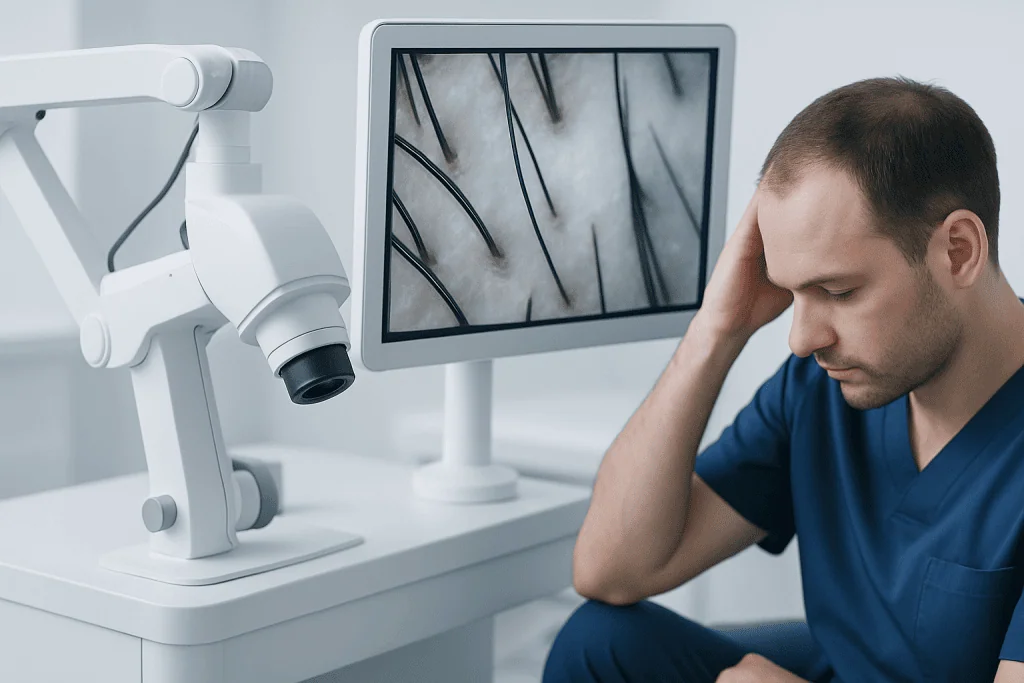
During the examination, the doctor looks at the type of scale, the amount of redness, the pattern of hair thinning, and whether there are broken hairs, pustules, or scarring. These clues often help distinguish dandruff from seborrheic dermatitis, psoriasis, fungal infection, or pattern hair loss. In some cases, a dermatoscope may be used to examine the scalp more closely.
If another cause of shedding is suspected, further tests may be recommended. These can include blood tests for iron status, thyroid function, vitamin deficiencies, or hormonal issues when appropriate. When infection is a concern, a sample of scale or hair may be tested. Rarely, a scalp biopsy is used if the diagnosis remains unclear.
The goal of diagnosis is not only to confirm dandruff, but also to identify anything that may be driving excess shedding. Once the main cause is clear, treatment can be tailored more effectively.
Treatment Options and What Usually Helps
Treatment depends on the underlying condition. For uncomplicated dandruff, doctors often recommend medicated shampoos containing ingredients that reduce yeast overgrowth, scaling, or inflammation. Examples may include antifungal, keratolytic, or anti-inflammatory formulations. These products work best when used consistently and left on the scalp for the instructed amount of time before rinsing.
If the scalp is more inflamed, a doctor may prescribe additional treatments such as topical anti-inflammatory solutions or other scalp medicines. When a fungal infection, psoriasis, or eczema is present, treatment is directed at that condition rather than dandruff alone. As scalp inflammation improves, related shedding often gradually decreases.
It also helps to protect the hair itself. Gentle cleansing, avoiding aggressive scratching, and reducing harsh heat or chemical exposure can limit breakage while the scalp heals. People with ongoing thinning from genetic causes may need a separate hair-loss plan in addition to dandruff treatment. Depending on the diagnosis, this may include PRP treatment or medical therapies discussed with a qualified specialist.
For international patients who need coordinated evaluation, Acibadem International’s multidisciplinary specialists in JCI-accredited hospitals diagnose and treat scalp disorders and hair loss, including options such as hair loss treatment when clinically appropriate.
Prevention and Self-Care for a Healthier Scalp
Good scalp care can reduce both flakes and irritation. Regular shampooing at a frequency that suits the hair and scalp type helps remove excess oil and scale. People with dandruff often do better when they do not let oil, sweat, and product residue build up for long periods. If a medicated shampoo is recommended, following the instructions consistently is more important than using many products at once.
Scratching should be avoided as much as possible, even when the scalp feels itchy. Keeping nails short, washing after sweating, and using gentle hair care products can help minimize irritation. Tight hairstyles and harsh treatments may worsen breakage, so a simpler routine is often better during a flare.
General health also matters. Stress management, balanced nutrition, and adequate sleep support the hair cycle and scalp barrier. Although these steps do not cure dandruff on their own, they may reduce triggers that make symptoms more noticeable.
If flakes keep returning despite good self-care, that does not mean the problem is serious, but it does mean the diagnosis may need to be reviewed. Persistent symptoms are often manageable once the exact scalp condition is identified.
When to Seek Medical Care
Medical advice is recommended if dandruff is severe, does not improve with over-the-counter treatment, or keeps returning quickly. A doctor should also assess scalp symptoms if there is marked redness, swelling, pain, crusting, or signs of infection. These features suggest that more than simple dandruff may be present.
Hair loss should be evaluated if it is sudden, patchy, rapidly worsening, or associated with scalp tenderness or broken hairs. This is especially important for children, people with immune-related conditions, or anyone who has eyebrow, eyelash, or body-hair changes as well. Early assessment can help prevent complications and reduce anxiety.
Many cases turn out to be treatable and temporary. Getting the right diagnosis is often the most important step toward controlling flakes, calming the scalp, and supporting healthier hair growth.
Frequently asked questions
Does dandruff cause permanent hair loss?
Usually no. Dandruff itself typically does not permanently damage hair follicles. Any hair shedding linked to dandruff is more often temporary and related to inflammation, scratching, or an overlapping scalp condition.
Can scratching a dandruff scalp make hair fall out?
Yes, repeated scratching can worsen irritation and increase breakage or shedding. It may also inflame the scalp further, which can make hair loss seem more noticeable. Reducing itch and treating the scalp problem usually helps.
How can someone tell if it is dandruff or something more serious?
Mild dandruff usually causes flakes and itch without major redness or pain. If there are thick scales, patchy hair loss, broken hairs, tenderness, rash beyond the scalp, or no improvement with anti-dandruff shampoos, another condition may be involved. A dermatologist can help confirm the cause.
Will hair grow back after dandruff is treated?
If shedding is due to irritation or inflammation from dandruff, hair often returns to its usual growth pattern after the scalp improves. Hair regrowth can take time because hair cycles are slow. If thinning continues, a doctor should check for other causes.
What shampoo ingredients are commonly used for dandruff?
Doctors often recommend shampoos with antifungal, keratolytic, or anti-inflammatory ingredients, depending on the scalp problem. The best choice varies from person to person. It is important to use the product as directed and give it enough time to work.
When should someone see a doctor for dandruff and hair loss?
Medical review is a good idea if symptoms are severe, persistent, painful, or associated with sudden or patchy hair loss. It is also important to seek care if there is crusting, pus, or signs of infection. Early diagnosis can make treatment more effective.
References
- American Academy of Dermatology
- National Health Service
- Mayo Clinic
- National Institute of Arthritis and Musculoskeletal and Skin Diseases
- British Association of Dermatologists
This article is for general information only and is not a substitute for professional medical advice. Please consult a qualified doctor about your individual situation.
Dandruff in Turkey — costs, top hospitals & a free quote
JCI-accredited · board-certified surgeons · reply within 24h
Add us as a Preferred Source to see more of our trusted health content across Google Search, AI Overviews and Discover.