Does Neurology Do Sleep Studies? When a Sleep Problem Needs a Neurologist
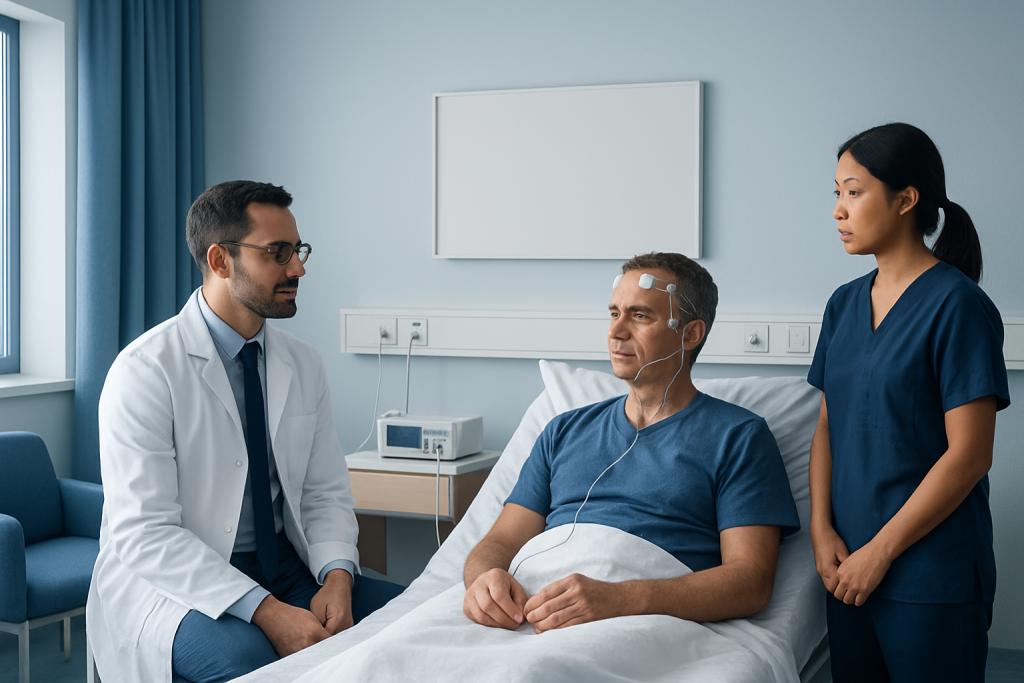
Sleep studies are often used to evaluate sleep disorders, and neurologists may interpret them when symptoms suggest a neurological cause. A sleep neurologist commonly assesses conditions such as narcolepsy, restless legs syndrome, REM sleep behavior disorder, nocturnal seizures, and some breathing-related sleep problems.
Key Takeaways
- Sleep studies are often used to evaluate sleep disorders, and neurologists may interpret them when symptoms suggest a neurological cause.
- A sleep neurologist commonly assesses conditions such as narcolepsy, restless legs syndrome, REM sleep behavior disorder, nocturnal seizures, and some breathing-related sleep problems.
- Warning signs include unusual movements during sleep, sudden sleep attacks, vivid dream enactment, unexplained daytime sleepiness, and suspected nighttime seizures.
- Diagnosis may involve an overnight sleep study, daytime nap testing, brain wave monitoring, and a careful review of medical history and medications.
- Treatment depends on the cause and may include sleep habits, medicines, breathing support devices, or care from a multidisciplinary sleep team.
Yes, neurology can be involved in sleep studies, especially when a sleep problem may be related to the brain, nerves, breathing control, seizures, or movement during sleep. A neurologist with sleep medicine expertise helps diagnose complex sleep disorders and guides treatment when symptoms go beyond simple poor sleep.
Overview: Do neurologists do sleep studies?
Yes. Neurologists can play an important role in sleep studies, particularly when a sleep problem may involve the brain, spinal cord, nerves, muscle activity, or the body’s control of sleep and wakefulness. While many sleep studies are ordered by sleep medicine doctors from different backgrounds, a neurologist is often involved when symptoms suggest a neurological sleep disorder.
A sleep study, also called polysomnography, records body functions during sleep. It may measure brain waves, eye movements, muscle activity, heart rhythm, breathing, oxygen levels, and leg movements. Because these signals include brain and nerve activity, neurologists are well placed to evaluate disorders that affect sleep structure, nighttime behaviors, or daytime alertness.
Neurology is especially relevant when a person has unexplained excessive sleepiness, unusual movements during sleep, dream enactment, suspected seizures at night, or symptoms suggesting disorders such as narcolepsy or restless legs syndrome. In these situations, the question is not only whether a person is sleeping poorly, but why the nervous system may be involved.
In practice, sleep care is often multidisciplinary. A person may be assessed by a neurologist, pulmonologist, ENT specialist, psychiatrist, or other clinician depending on the symptoms. When the pattern points toward a complex neurological sleep condition, a sleep neurologist can help connect the findings of the sleep study with the person’s wider neurological and medical health.
What kinds of sleep problems may need a neurologist?
Not every sleep problem requires neurological care. Common issues such as short-term insomnia related to stress, shift work, or lifestyle factors may first be managed by a primary care doctor or general sleep specialist. However, some symptoms suggest that a sleep problem may be linked to the nervous system and deserve a more specialized evaluation.
Neurologists often assess sleep disorders that affect movement, behavior, alertness, or brain activity during sleep. These include narcolepsy, restless legs syndrome, periodic limb movement disorder, REM sleep behavior disorder, parasomnias, and sleep-related epilepsy. They may also help evaluate complex cases of sleep apnea when daytime sleepiness or nighttime events are not fully explained by breathing problems alone.
Examples of symptoms that may prompt referral include falling asleep suddenly during the day, weakness triggered by strong emotions, acting out dreams, repetitive leg jerks at night, confusion on waking, or episodes that look like seizures during sleep. Chronic headaches on waking, severe daytime fatigue despite enough time in bed, and unexplained concentration problems can also raise concern.
- Frequent unusual movements or behaviors during sleep
- Suspected seizures, blackouts, or episodes of nighttime confusion
- Persistent excessive daytime sleepiness
- Loud snoring with pauses in breathing, especially if symptoms remain complex
- An uncomfortable urge to move the legs, especially at night
- Dream enactment or injury during sleep
How a neurological sleep study works

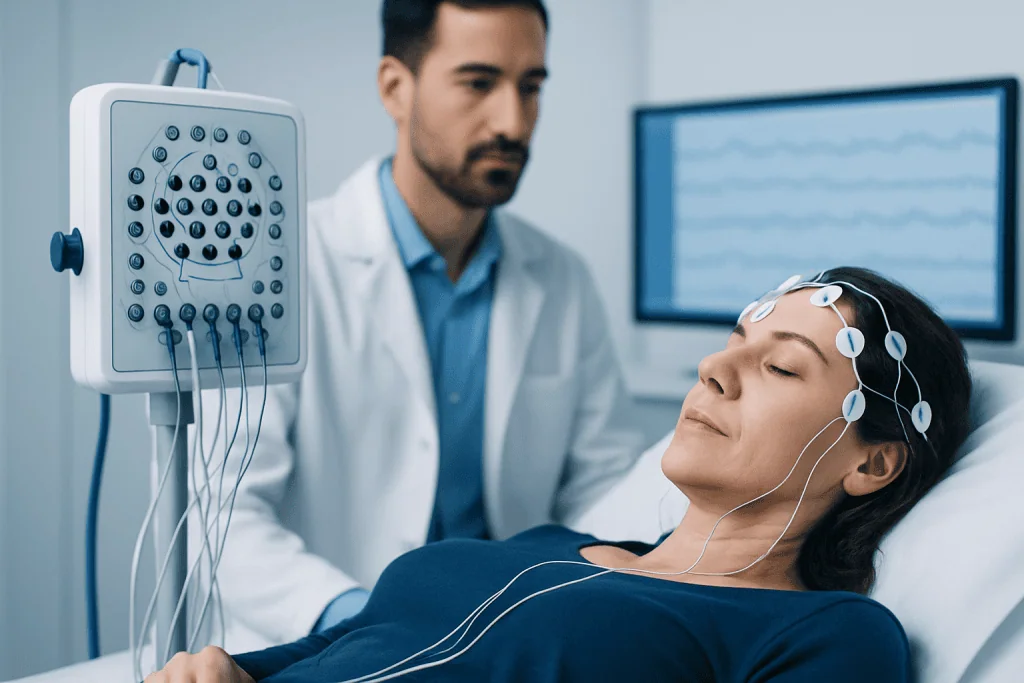
The most common test is overnight polysomnography. During this study, sensors are placed on the scalp, face, chest, limbs, and finger to monitor body functions while the person sleeps. The test is painless, although sleeping in a lab can feel unfamiliar at first. The goal is to understand what happens across different sleep stages and whether any breathing, movement, or brain activity abnormalities are present.
For neurological sleep concerns, brain wave recording is especially important. Electroencephalography, or EEG, helps show whether a person is moving through normal sleep stages and whether there are unusual patterns that could suggest seizures or other disturbances. Additional muscle recordings may help detect jerking, dream enactment, or loss of normal muscle paralysis during REM sleep.
Some people also need a multiple sleep latency test, or MSLT, the day after an overnight sleep study. This daytime nap test measures how quickly a person falls asleep and whether REM sleep appears too soon. It is commonly used when narcolepsy or other central disorders of hypersomnolence are suspected.
In selected cases, doctors may recommend actigraphy, home sleep apnea testing, extended EEG monitoring, or imaging studies if another neurological condition is suspected. A sleep neurologist decides which tests are appropriate based on symptoms, medical history, medications, and previous findings.
Conditions neurologists commonly diagnose through sleep evaluation
One major group includes central disorders of hypersomnolence, such as narcolepsy and idiopathic hypersomnia. These conditions cause excessive daytime sleepiness that is not simply due to too little sleep. People may struggle to stay awake during quiet activities, have vivid dream-like experiences while falling asleep or waking, or feel sudden muscle weakness triggered by laughter or emotion.
Another important group includes movement-related sleep disorders. Restless legs syndrome causes an uncomfortable urge to move the legs, usually worse at night and relieved by movement. Periodic limb movement disorder involves repetitive leg jerks during sleep that can fragment rest. A neurologist may also evaluate REM sleep behavior disorder, in which a person physically acts out dreams because the normal muscle relaxation of REM sleep is impaired.
Neurologists are also involved when events during sleep may represent seizures rather than parasomnias. Distinguishing between these can be difficult because both can involve movements, sounds, or confusion. EEG findings, timing within the night, witness descriptions, and video recording during a sleep study can all help clarify the diagnosis.
Some sleep-related symptoms can be part of broader neurological disease. For example, REM sleep behavior disorder may occur with certain neurodegenerative conditions, and disturbed sleep can accompany epilepsy, migraine, neuropathy, or movement disorders. In more complex cases, a person may benefit from coordinated evaluation that includes neurology care and formal sleep laboratory testing.
Diagnosis: what to expect at the appointment
A neurological sleep evaluation usually begins with a detailed conversation. The doctor asks about bedtime habits, snoring, movements, daytime sleepiness, medication use, caffeine and alcohol intake, shift work, and mental health symptoms. A bed partner’s observations can be very helpful, especially if the person is not aware of what happens during sleep.
The clinician will also review past medical history, including headaches, seizures, stroke, Parkinsonian symptoms, iron deficiency, breathing disorders, anxiety, depression, and previous sleep test results. A neurological examination may be done to assess strength, sensation, coordination, reflexes, balance, and cognition if relevant to the symptoms.
Keeping a sleep diary for one to two weeks may help show patterns in sleep timing and daytime functioning. In some cases, questionnaires are used to measure daytime sleepiness or screen for conditions such as sleep apnea and restless legs syndrome. If nighttime events are brief or unusual, a home video recorded by a family member can sometimes provide useful clues for the doctor, as long as it is done safely and respectfully.
The diagnosis often depends on combining symptoms with test results rather than relying on one finding alone. This is why specialist review matters in complex cases. A sleep neurologist looks at the whole picture to determine whether the problem is due to sleep deprivation, breathing disturbance, a movement disorder, a seizure disorder, medication effects, or another neurological condition.
Treatment options for neurological sleep disorders
Treatment depends on the specific diagnosis. For some people, improving sleep habits, reducing sleep deprivation, and managing triggers such as alcohol or irregular schedules can make a meaningful difference. Good sleep hygiene often supports other treatments, but it is usually not enough on its own when a true neurological sleep disorder is present.
Medications may be used to improve alertness, reduce abnormal movements, calm nighttime behaviors, or treat underlying conditions such as restless legs syndrome or epilepsy. If symptoms are related to breathing disruption during sleep, treatment may include weight management, positional strategies, oral devices, or sleep apnea treatment such as positive airway pressure support. The best approach depends on the cause and on the person’s age, general health, and symptom severity.
Safety is an important part of treatment. People who act out dreams may need to remove sharp objects from the bedroom, pad nearby furniture, or adjust the sleep environment to prevent injury. If there is excessive daytime sleepiness, the doctor may advise temporary caution with driving, working at heights, or operating machinery until the condition is controlled.
Some sleep problems overlap with structural airway issues, and selected patients may also need evaluation by ENT specialists or other disciplines. Near the end of the care pathway, patients may benefit from coordinated follow-up; Acibadem International’s multidisciplinary specialists and JCI-accredited hospitals diagnose and treat sleep-related neurological conditions for international patients when advanced assessment is needed.
Self-care, prevention, and when to seek medical advice
Not all neurological sleep disorders can be prevented, but healthy routines can reduce strain on the sleep-wake system. Helpful steps include keeping a regular sleep schedule, limiting alcohol close to bedtime, reviewing medicines with a doctor if they affect sleep, staying physically active, and managing stress. If snoring, nasal blockage, or weight changes are contributing to poor sleep, addressing these factors can also help.
People should seek medical advice if poor sleep lasts for weeks, daytime sleepiness affects work or safety, or family members notice loud snoring, pauses in breathing, unusual behaviors, or shaking during sleep. New symptoms such as sudden sleep attacks, weakness triggered by emotion, vivid dream enactment, or sleep-related injury deserve prompt attention.
Urgent assessment is especially important if nighttime events involve loss of awareness, possible seizures, severe breathing pauses, chest symptoms, or injury. Children, older adults, and people with neurological disease may need earlier evaluation because sleep problems can look different in these groups and may affect memory, mood, and daily function more strongly.
The reassuring news is that many sleep disorders can be identified and managed once the right tests are done. A neurological sleep evaluation helps clarify whether the problem lies in breathing, movement, brain activity, or sleep regulation, allowing treatment to be more targeted and effective.
Frequently asked questions
Do neurologists perform sleep studies themselves?
Neurologists may order, supervise, or interpret sleep studies, especially when symptoms suggest a neurological sleep disorder. The overnight test is usually carried out in a sleep lab by trained technologists, while the specialist reviews the results and links them to the person’s symptoms.
What is the difference between a sleep doctor and a neurologist for sleep problems?
Sleep medicine includes specialists from different fields, such as neurology, pulmonology, and ENT. A neurologist is particularly helpful when sleep symptoms may involve brain activity, seizures, movement disorders, narcolepsy, or unusual behaviors during sleep.
Can a neurologist diagnose sleep apnea?
Yes, a neurologist with sleep medicine expertise can help diagnose sleep apnea, especially in complex cases or when neurological symptoms are also present. However, sleep apnea is often managed by a multidisciplinary team, and treatment may also involve respiratory or ENT specialists.
When should someone see a neurologist for sleep problems?
A neurological evaluation may be useful if there is excessive daytime sleepiness, suspected seizures during sleep, acting out dreams, sudden muscle weakness with emotions, or repeated unusual movements at night. It is also reasonable when standard sleep care has not explained persistent symptoms.
What should someone expect during an overnight sleep study?
Small sensors are placed on the scalp and body to monitor sleep stages, breathing, oxygen, heart rhythm, and movement. The test is painless, and although sleeping in a lab can feel different, it provides valuable information about what happens during the night.
Are home sleep tests enough for neurological sleep problems?
Home sleep tests can be useful for selected people with suspected obstructive sleep apnea, but they do not capture the full range of information needed for many neurological sleep disorders. Problems such as narcolepsy, nighttime seizures, REM sleep behavior disorder, and complex parasomnias usually need more detailed in-lab testing.
References
- American Academy of Sleep Medicine
- National Institute of Neurological Disorders and Stroke
- National Heart, Lung, and Blood Institute
- Mayo Clinic
- Cleveland Clinic
This article is for general information only and is not a substitute for professional medical advice. Please consult a qualified doctor about your individual situation.
Joint and spine care in Turkey — expert assessment & treatment
JCI-accredited · board-certified surgeons · reply within 24h
Add us as a Preferred Source to see more of our trusted health content across Google Search, AI Overviews and Discover.