Does Quest Accept Walk-Ins? How Lab Check-In Works and When You May Need an Appointment

Some Quest locations may accept walk-ins, but policies can vary by site and by day. Appointments often help shorten wait times and may be required for certain tests.
Key Takeaways
- Some Quest locations may accept walk-ins, but policies can vary by site and by day.
- Appointments often help shorten wait times and may be required for certain tests.
- Patients should bring identification, insurance details if applicable, and the correct lab order or test request.
- Preparation instructions such as fasting can be just as important as choosing a walk-in or appointment.
- It is wise to confirm hours, accepted tests, and check-in options before arriving.
Quest walk-ins may be available at certain locations, but they are not guaranteed and often depend on the test type, staffing, and same-day demand. Understanding how lab check-in works can help patients prepare, reduce delays, and know when scheduling an appointment is the better option.
Overview: Can Patients Walk In for a Lab Test?
Many patients wonder whether Quest walk-ins are accepted or whether an appointment is always needed. In practice, the answer is often yes for some locations and situations, but not always. Walk-in availability can depend on the individual patient service center, the day’s schedule, staffing levels, and the type of test being requested.
Some routine blood and urine tests may be possible on a walk-in basis when the site has open capacity. However, certain collections, timed tests, pediatric draws, specialty tests, or tests that require specific handling may be easier to complete with a scheduled visit. For this reason, making an appointment is often the more predictable option, especially for patients with time constraints.
Lab services are part of the broader field of diagnostic medicine. Accurate preparation, identification, and timing help ensure useful results. Whether a person chooses a walk-in visit or a booked time slot, checking instructions in advance can help prevent repeat visits and unnecessary delays.
How Lab Check-In Usually Works
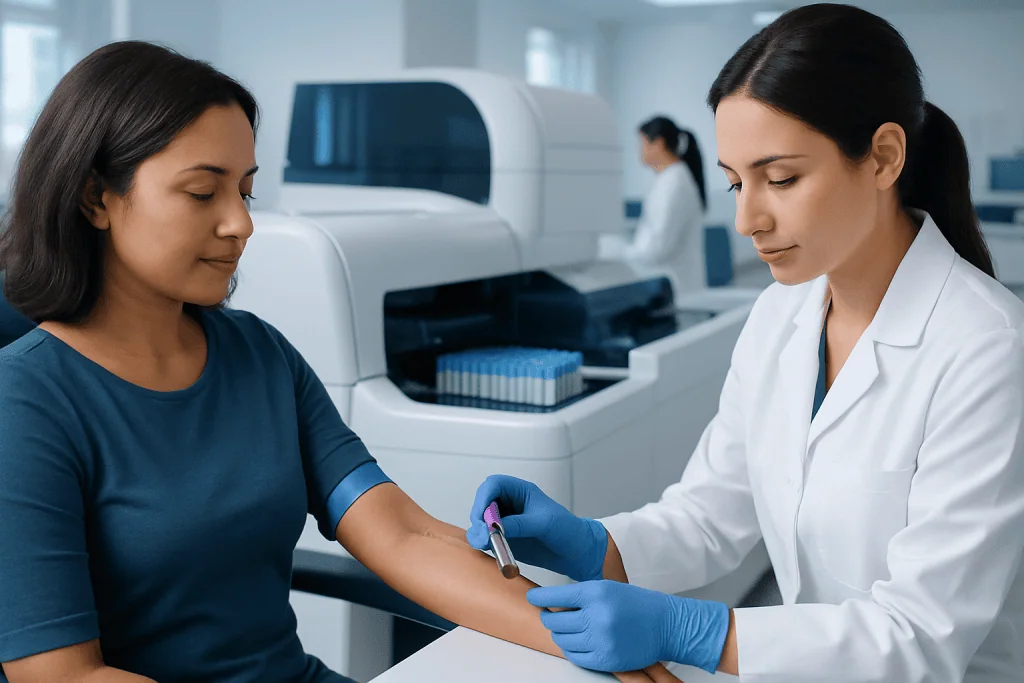
At most outpatient laboratory locations, check-in starts when the patient arrives and confirms the reason for the visit. This may happen through a front desk, a self-service kiosk, or a mobile check-in process, depending on the location. Patients are commonly asked to provide a photo ID, insurance information if relevant, and the lab order from their doctor or care team.
After check-in, the patient may wait until a phlebotomist or other trained staff member is available. Wait times can vary widely. Someone with a scheduled appointment may still wait briefly, but walk-in patients may wait longer if the location is busy or if appointments are being prioritized.
Before the sample is collected, staff usually verify the patient’s name, date of birth, and the tests ordered. This safety step helps reduce errors. In blood testing, samples are labeled immediately and handled according to the specific test requirements, such as refrigeration, timing, or transport conditions.
Patients who are unsure about test preparation should ask before the sample is taken. Fasting, hydration, medication timing, and the hour of collection can affect some results. If instructions were not followed, staff may advise rescheduling so the test can be performed under the right conditions.
When an Appointment May Be the Better Choice

An appointment can be especially helpful for patients who want a more predictable visit. Parents bringing a child, older adults who prefer less standing and waiting, people with busy work schedules, and patients who feel anxious about blood draws often benefit from planning ahead. A scheduled time may make the experience smoother and less stressful.
Appointments may also be important for tests that require special timing or coordination. These can include glucose tolerance testing, employer or school-related screenings, specialty collections, or tests that need to be processed within a strict time window. Some locations may limit these services to scheduled visits only.
If a patient has fainted during a previous blood draw, takes blood thinners, has difficult veins, or needs several tests at once, an appointment can provide more structure and time for safe collection. In some cases, patients who are managing complex health conditions may also need coordinated diagnostic follow-up, such as check-up and diagnostic evaluations arranged through a physician.
Booking ahead is also sensible during busy seasons, holidays, early mornings, or after weekends, when patient volume may be higher. Even when walk-ins are technically accepted, same-day demand can affect how quickly someone is seen.
What to Bring and How to Prepare
Bringing the correct documents can make the visit more efficient. Most patients should have a government-issued ID, their insurance card if they are using insurance, and a valid test order if the lab test was requested by a clinician. If the order was sent electronically, it is still often helpful to have the ordering doctor’s name and contact details available.
Preparation matters because many common lab tests have specific instructions. Some blood tests require fasting for a certain period, while others are best collected at a particular time of day. Urine, stool, or saliva tests may have separate collection rules. If instructions are unclear, the patient should confirm them with the ordering clinician or laboratory before the visit.
Hydration can sometimes make blood collection easier, unless the patient has been told to restrict fluids. Wearing sleeves that can be rolled up comfortably may also help. Patients who are nervous about needles may find it useful to mention this at check-in so staff can support them appropriately.
- Bring photo identification and any required paperwork.
- Check whether fasting or other preparation is needed.
- Confirm the location’s opening hours and accepted test types.
- Allow extra time if attending as a walk-in.
Reasons a Walk-In Visit Might Not Work
Even when a location accepts walk-ins, there are several reasons a patient may not be seen immediately or may need to return another day. High patient volume is one common reason. If the schedule is already full with appointments, staff may have limited space to add same-day walk-in visits safely.
Another reason is test-specific requirements. Some tests need special equipment, strict timing, or handling that may not be available at every site or at every hour. A patient may also be turned away if the order is incomplete, if identification cannot be verified, or if preparation requirements such as fasting were not followed.
Operational issues can also affect availability. Temporary staffing shortages, shortened hours, weather disruptions, or local policy changes may alter whether walk-ins are accepted on a given day. Because of this, confirming details before leaving home can save time and frustration.
Patients should also remember that not every health concern is suitable for a routine outpatient lab visit. Symptoms such as chest pain, severe shortness of breath, heavy bleeding, confusion, or signs of a severe allergic reaction need urgent medical assessment rather than a standard laboratory queue.
Understanding Test Types and Follow-Up
Laboratory testing can support diagnosis, screening, treatment monitoring, and general health assessment. Common tests include blood counts, cholesterol levels, blood sugar measurements, thyroid function, vitamin levels, urine analysis, and infection-related testing. The meaning of a result depends on the patient’s symptoms, medical history, medications, and the reason the test was ordered.
Results are usually reviewed by the ordering clinician, who explains what is normal, what may need repeating, and whether further evaluation is needed. A single abnormal result does not always mean disease is present. Sometimes values are temporarily affected by dehydration, recent illness, exercise, medications, or collection timing.
In some cases, lab testing is only one step in a larger diagnostic process. A doctor may combine blood work with imaging, physical examination, and specialist review. Depending on the clinical situation, further evaluation may include MRI or CT scan studies to clarify the cause of symptoms.
Patients who receive unexpected results should avoid self-diagnosing from numbers alone. The safest next step is to discuss the findings with a qualified clinician who can interpret them in context and recommend any needed follow-up.
Tips for a Smoother Lab Visit
A little planning can make the visit easier, whether it is a walk-in or an appointment. Choosing a less busy time of day, reviewing the test instructions the night before, and having documents ready can reduce delays. Patients who need language support or assistance with mobility may wish to call ahead to ask what help is available.
It can also help to eat normally after the test if fasting was required, unless a clinician has advised otherwise. Patients who tend to feel lightheaded during blood draws may prefer to sit quietly for a few minutes afterward and drink water if permitted. If bruising develops, it is usually minor and improves on its own, but persistent pain or swelling should be reported.
For patients seeking broader diagnostic care, multidisciplinary medical centers can coordinate laboratory testing with specialist review and imaging when needed. Acibadem International’s multidisciplinary specialists and JCI-accredited hospitals diagnose and treat conditions for international patients, including integrated diagnostic assessments when clinically appropriate.
When to Contact a Doctor
A doctor should be contacted if the patient is unsure which test is needed, whether fasting is required, or whether a medication should be taken before the sample is collected. It is also important to ask for guidance if symptoms are changing quickly or if the person feels too unwell to wait for routine outpatient testing.
After a lab visit, medical advice should be sought if there is ongoing bleeding from the puncture site, significant swelling, increasing redness, fever, or worsening dizziness. These issues are uncommon, but they deserve attention when they do not settle promptly.
Most importantly, laboratory testing should support, not replace, clinical care. A patient with concerning symptoms should not delay evaluation simply to wait for a convenient walk-in slot. Prompt assessment by a qualified healthcare professional is the safest approach when symptoms are severe, persistent, or unexplained.
Frequently asked questions
Does Quest always accept walk-ins?
Not always. Some locations may accept walk-ins, but availability can depend on the site, the day’s schedule, staffing, and the type of test needed. Checking the specific location in advance is the most reliable approach.
Is an appointment better than walking in for lab work?
For many patients, yes. An appointment can reduce waiting time and may be necessary for certain specialty or timed tests. It is often the easier option for people with limited time or specific preparation needs.
What should a patient bring to a lab visit?
Patients are usually asked to bring photo identification, insurance information if applicable, and the test order from their doctor or clinic. If the order was sent electronically, it is still helpful to know the ordering clinician’s details.
Can a patient be turned away even if walk-ins are allowed?
Yes. This can happen if the location is already full, if the test requires a scheduled slot, if the order is incomplete, or if preparation instructions were not followed. Calling ahead may help avoid an unnecessary trip.
Do all lab tests require fasting?
No. Some tests require fasting, while many do not. Because instructions vary by test, patients should confirm preparation requirements with the ordering clinician or the laboratory before arriving.
What if a patient feels faint during a blood draw?
Patients should tell the staff before the sample is taken, especially if they have fainted before. Trained staff can often adjust positioning and monitor the patient more closely to make the experience safer and more comfortable.
This article is for general information only and is not a substitute for professional medical advice. Please consult a qualified doctor about your individual situation.
Explore treatments in Turkey — costs, top hospitals & a free quote
JCI-accredited · board-certified surgeons · reply within 24h
Add us as a Preferred Source to see more of our trusted health content across Google Search, AI Overviews and Discover.

More from the Health Library

Transcranial Doppler Ultrasound: How It Evaluates Brain Blood Flow

What Is a Diagnostic Mammogram After an Abnormal Screening?

How to Choose a Good Imaging Center: Quality, Reporting, and Patient Safety

Neuroimmunology Testing: MRI, Spinal Fluid, and Antibody Tests Explained

Diagnosis Explained: How Doctors Combine Symptoms, Exams, Labs, and Imaging