Drooping Eyelid and Weak Eye Movements: Could It Be a Nerve Problem?

A drooping eyelid with weak eye movements may involve a cranial nerve, the eye muscles, or the neuromuscular junction. Common symptoms include double vision, eyelid drooping, trouble looking in certain directions, and eye strain.
Key Takeaways
- A drooping eyelid with weak eye movements may involve a cranial nerve, the eye muscles, or the neuromuscular junction.
- Common symptoms include double vision, eyelid drooping, trouble looking in certain directions, and eye strain.
- Some causes need urgent attention, especially if symptoms begin suddenly or occur with headache, pupil changes, or other neurological symptoms.
- Diagnosis may involve an eye exam, neurological exam, blood tests, and imaging such as MRI or CT.
- Treatment depends on the cause and may include medicines, monitoring, surgery, or management of an underlying disease.
Drooping of one eyelid together with weak or limited eye movements can point to a problem affecting the nerves, muscles, or brain pathways that control the eyes. While some causes are temporary or treatable, prompt medical assessment is important to protect vision and general health.
Overview
Drooping of the upper eyelid is called ptosis. When ptosis happens together with weak, slow, or limited eye movements, it can suggest a problem in the system that controls the muscles around the eye. This system includes the eye muscles themselves, the nerves that activate them, the connection between nerve and muscle, and the parts of the brain that coordinate movement.
People may notice that one eye does not open fully, that the eyes do not move together, or that double vision develops when looking in certain directions. Sometimes symptoms appear gradually, but in other cases they begin suddenly. A new combination of ptosis and abnormal eye movements should not be ignored, because it can occasionally reflect a condition that needs urgent treatment.
Neuroophthalmology specialists help evaluate these symptoms by combining knowledge of the eyes, brain, and nerves. The main goal is to find the cause, determine whether it is urgent, and start the most appropriate treatment. Many causes are manageable once the diagnosis is clear.
Symptoms and Signs
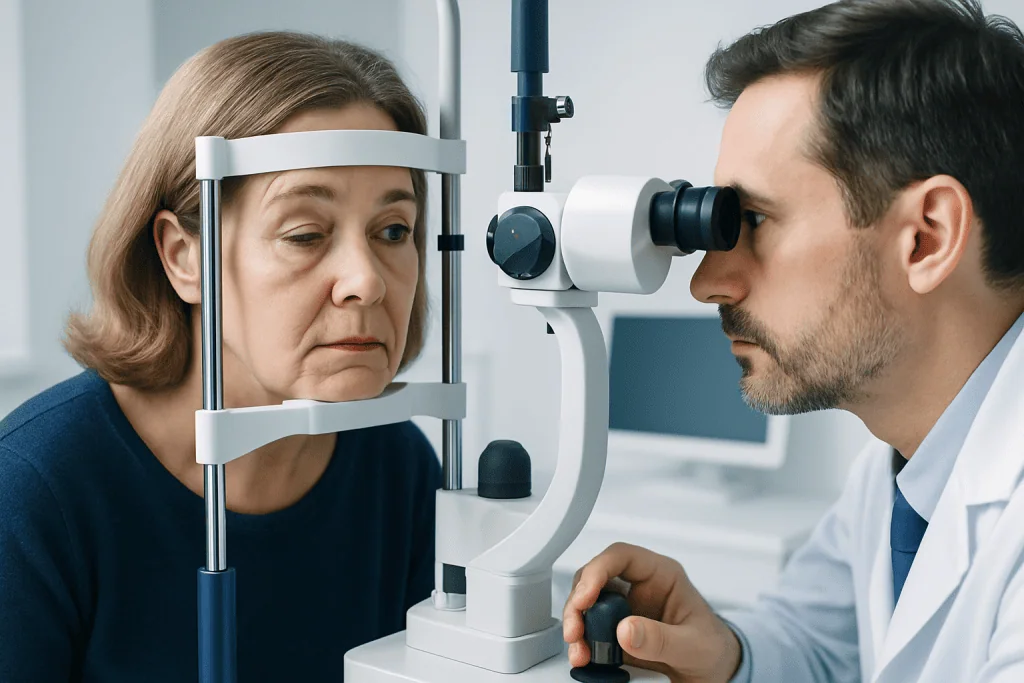
The most obvious symptom is a drooping upper eyelid, which may affect one eye or, less commonly, both. Some people notice that the droop becomes worse later in the day, after reading, or when they are tired. Others are more aware of eye movement problems, such as difficulty looking up, down, inward, or outward.
Double vision is a common associated symptom. It may be constant or only happen in certain gaze positions. Some people tilt or turn their head to reduce the double vision, and children may adopt unusual head postures for the same reason.
Other symptoms can vary depending on the cause. These may include blurred vision, eye pain, headache, a larger or smaller pupil, light sensitivity, facial weakness, or general muscle fatigue. In conditions such as myasthenia gravis, eyelid drooping and double vision may fluctuate during the day.
- Drooping of one or both upper eyelids
- Double vision
- Difficulty moving the eye in one or more directions
- Eye strain or trouble focusing
- Head tilt to compensate for misalignment
- Pupil changes, pain, or headache in some cases
Possible Causes and Risk Factors

Several medical problems can lead to drooping eyelid and weak eye movements. One important group is cranial nerve palsies. The third, fourth, and sixth cranial nerves control different eye muscles. If one of these nerves is affected by reduced blood flow, inflammation, compression, trauma, or a brain lesion, the eye may not move normally and the eyelid may droop. A third nerve palsy can also affect the pupil, which may be an important sign of urgency.
Another major cause is disease at the neuromuscular junction, where the nerve signal passes to the muscle. Myasthenia gravis is a well-known example and can produce fluctuating ptosis and variable eye muscle weakness. The eye muscles themselves can also be affected by thyroid eye disease, inflammation, inherited muscle disorders, or age-related changes.
Less commonly, symptoms may come from problems in the brainstem or areas of the brain that coordinate eye movement. A stroke, demyelinating disease, tumor, or infection can interfere with these pathways. Risk factors depend on the cause but may include diabetes, high blood pressure, vascular disease, autoimmune disorders, thyroid disease, smoking, prior trauma, or a history of neurological disease such as multiple sclerosis.
Some cases are congenital, meaning present from birth, while others develop later in life. In children, prompt assessment is especially important because constant eyelid drooping or eye misalignment can affect visual development.
How Doctors Diagnose the Cause
Diagnosis begins with a careful history. The doctor will ask when the symptoms started, whether they came on suddenly or gradually, whether they fluctuate, and whether there is pain, headache, trauma, infection, or weakness elsewhere in the body. Details about diabetes, thyroid disease, autoimmune conditions, and medications can also be relevant.
A full eye and neurological examination is usually needed. This may include checking visual acuity, eyelid position, pupil size and reaction, eye alignment, eye movements in all directions, and whether symptoms worsen with fatigue. The specialist may also look for signs of thyroid eye disease, facial weakness, or abnormalities in other cranial nerves.
Further testing depends on what the examination suggests. Blood tests may be used to look for autoimmune markers, thyroid problems, infection, or metabolic causes. Imaging such as MRI or a CT scan may be needed if a nerve palsy, aneurysm, tumor, stroke, or inflammation is suspected. In selected cases, doctors may request nerve conduction studies, antibody testing for myasthenia gravis, or vascular imaging.
The purpose of testing is not simply to name the problem, but to separate urgent causes from less urgent ones and to guide treatment safely. Because the possible causes are diverse, self-diagnosis is often unreliable.
Treatment Options
Treatment depends entirely on the underlying cause. If symptoms come from a small blood vessel problem affecting a cranial nerve, doctors may focus on controlling risk factors such as diabetes, blood pressure, and cholesterol while monitoring recovery. If there is inflammation, infection, or an autoimmune disorder, treatment may include medicines aimed at the specific disease.
When myasthenia gravis is responsible, care may involve medications that improve nerve-muscle communication or treatments that calm the immune system. If thyroid eye disease limits eye movement, management may include lubrication, control of thyroid status, and in selected cases orbital decompression surgery or strabismus-related procedures. Persistent eyelid drooping from selected causes may sometimes be improved with ptosis surgery.
Double vision can sometimes be relieved with temporary measures such as patching one eye or using prism lenses. If eye alignment remains stable after the underlying condition is treated or has recovered as much as expected, some people benefit from strabismus surgery to improve alignment and reduce double vision.
Treatment plans are individualized. In some cases the safest approach is observation with repeat examinations, while in others urgent hospitalization or specialist treatment is needed. Near the end of the diagnostic process, a multidisciplinary neuroophthalmology team may coordinate care with neurology, endocrinology, radiology, or neurosurgery. Acibadem International’s multidisciplinary specialists and JCI-accredited hospitals diagnose and treat these conditions for international patients.
Self-care, Monitoring, and Prevention
There is no single way to prevent all causes of drooping eyelid and weak eye movements, because the symptom can arise from many different conditions. Still, managing general health can reduce the risk of some nerve-related problems. Good control of blood pressure, diabetes, and cholesterol supports blood vessel health and may lower the risk of certain cranial nerve palsies.
People with fluctuating symptoms should keep track of when they are worse, whether fatigue plays a role, and whether there are triggers such as prolonged reading or illness. This information can help the doctor identify patterns that suggest a neuromuscular condition. Rest breaks, good lighting, and temporary use of an eye patch for double vision may improve comfort until treatment is arranged.
Eye protection and general safety also matter. Double vision can interfere with depth perception, increasing the risk of falls or accidents. Driving, climbing, or operating machinery may be unsafe until the cause is evaluated and symptoms are controlled. Children with a droopy eyelid or misaligned eyes should be assessed promptly to avoid effects on visual development.
When to See a Doctor
Any new drooping eyelid with weak eye movements should be assessed by a qualified doctor, especially if it comes on suddenly. The combination can point to a neurological or vascular problem that needs prompt evaluation. Even when symptoms seem mild, an examination is important because some serious causes are not obvious at first.
Urgent medical attention is needed if the drooping eyelid or double vision is accompanied by a severe headache, eye pain, a new unequal pupil, facial numbness, weakness in an arm or leg, trouble speaking, dizziness, or confusion. These features can suggest conditions such as aneurysm, stroke, or a serious nerve disorder.
People should also seek care if symptoms are getting worse, if both eyelids are involved, if swallowing or breathing becomes difficult, or if a child develops ptosis or abnormal eye movements. Early diagnosis often makes treatment more effective and can help prevent complications.
Frequently asked questions
Is a drooping eyelid always caused by aging?
No. Aging can contribute to some forms of eyelid drooping, but ptosis with weak eye movements or double vision raises concern for a nerve, muscle, or brain-related problem. That combination should be evaluated by a doctor rather than assumed to be age-related.
Can stress cause drooping eyelid and weak eye movements?
Stress itself is not usually the direct cause of true weakness of eye movements. However, fatigue and stress can make some underlying conditions, especially myasthenia gravis, more noticeable. Persistent or new symptoms still need medical assessment.
When is this symptom an emergency?
It is urgent if symptoms start suddenly or are accompanied by severe headache, eye pain, pupil changes, facial or body weakness, speech difficulty, or confusion. These warning signs can suggest a serious neurological or vascular problem. Emergency care is also important if swallowing or breathing becomes difficult.
Will the drooping eyelid and eye weakness go away on their own?
Sometimes they improve, but this depends on the cause. Some cranial nerve palsies recover gradually, while other conditions need specific treatment to prevent ongoing symptoms or complications. A doctor can advise what to expect after the cause is identified.
What kind of doctor treats this problem?
An ophthalmologist, neuroophthalmologist, or neurologist may be involved in diagnosis and treatment. In some cases, endocrinologists, neurosurgeons, or other specialists are also needed. The right team depends on whether the problem comes from the eyelid, eye muscles, nerves, or brain.
Can children develop drooping eyelid and weak eye movements?
Yes. These symptoms can occur in children because of congenital conditions, nerve problems, muscle disorders, or other causes. Early evaluation is important because persistent eyelid drooping or eye misalignment can affect visual development.
References
- American Academy of Ophthalmology
- National Eye Institute
- National Institute of Neurological Disorders and Stroke
- Mayo Clinic
- Merck Manual Professional Edition
This article is for general information only and is not a substitute for professional medical advice. Please consult a qualified doctor about your individual situation.
Explore treatments in Turkey — costs, top hospitals & a free quote
JCI-accredited · board-certified surgeons · reply within 24h
Add us as a Preferred Source to see more of our trusted health content across Google Search, AI Overviews and Discover.
Check your numbers in seconds
BMI, calories, due date, blood pressure and 30+ more clinical calculators — free, instant, doctor-reviewed ranges.