Duchenne Muscular Dystrophy Gene Therapy: How It Works, Results and What to Expect

Gene therapy for Duchenne uses a modified viral vector to carry micro-dystrophin genetic material into muscle cells. Eligibility depends on factors such as age, walking ability, genetic findings, liver health, heart function and immune status.
Key Takeaways
- Gene therapy for Duchenne uses a modified viral vector to carry micro-dystrophin genetic material into muscle cells.
- Eligibility depends on factors such as age, walking ability, genetic findings, liver health, heart function and immune status.
- Treatment is given by intravenous infusion, usually with corticosteroid treatment and close monitoring before and after infusion.
- Potential benefits include improved or preserved motor function, while important risks include liver injury, immune reactions, low platelet counts and heart-related complications.
- Duchenne remains a progressive condition, so gene therapy is combined with ongoing cardiac, respiratory, rehabilitation and orthopedic care.
Duchenne muscular dystrophy gene therapy is a one-time intravenous treatment designed to deliver genetic instructions for making a shortened form of dystrophin, a protein missing or severely reduced in Duchenne. It may help eligible patients preserve muscle function, but it is not a cure and requires careful specialist assessment and long-term follow-up.
Overview: what Duchenne muscular dystrophy gene therapy does
Duchenne muscular dystrophy gene therapy is an emerging treatment approach for Duchenne muscular dystrophy (DMD), a genetic condition that causes progressive muscle weakness. It aims to provide muscle cells with instructions to make micro-dystrophin, a shortened but functional version of dystrophin. Dystrophin helps stabilize muscle fibers during movement.
In eligible patients, gene therapy may support muscle function and slow functional decline compared with what might otherwise be expected. However, responses can vary, research is continuing, and treatment does not remove the underlying genetic change from every cell. It is therefore one part of lifelong, multidisciplinary DMD care rather than a replacement for established therapies and monitoring.
DMD affects skeletal muscles and can also affect the heart and breathing muscles. Families benefit from care coordinated by neuromuscular specialists alongside cardiology, pulmonology, rehabilitation, orthopedics, genetics and psychosocial support teams.
How does Duchenne muscular dystrophy gene therapy work?
Most current DMD gene therapies use an adeno-associated virus (AAV) vector. The vector is modified so that it cannot cause the viral illness associated with naturally occurring viruses. It acts as a delivery vehicle, carrying a DNA sequence for micro-dystrophin into cells after it is given through a vein.
The full dystrophin gene is too large to fit inside commonly used AAV vectors. For this reason, the delivered gene contains instructions for micro-dystrophin, a smaller engineered form of the protein. Muscle cells use these instructions to produce micro-dystrophin, which may improve the stability of muscle cell membranes.
The genetic material generally remains outside the cell’s chromosomes rather than being inserted into them. The therapy is intended to reach skeletal muscle and may also reach heart muscle. Because the immune system can react to the vector, repeat dosing may not be possible with currently available approaches, and follow-up remains important.
What causes Duchenne?
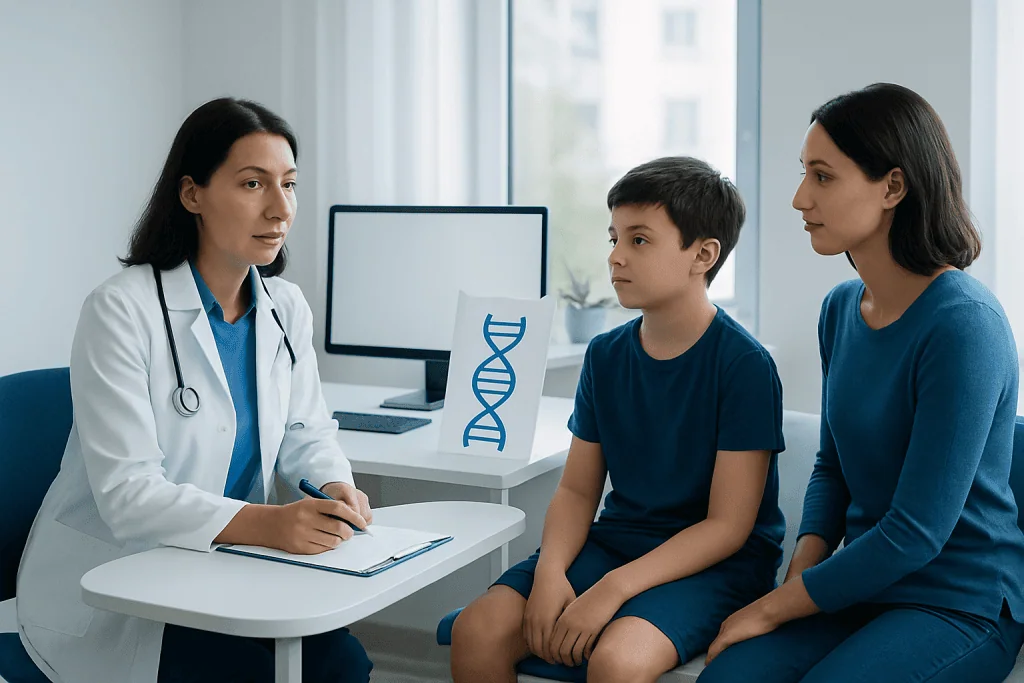
Duchenne is caused by a disease-causing change in the DMD gene, which contains the instructions for making dystrophin. When little or no working dystrophin is produced, muscle fibers are more vulnerable to damage during ordinary activity. Over time, damaged muscle is replaced partly by fat and connective tissue, contributing to weakness and loss of function.
DMD is inherited in an X-linked pattern. It most often affects boys because they usually have one X chromosome, but girls and women who carry a DMD gene variant may also have symptoms or heart involvement. Some cases are inherited from a carrier parent, while others arise from a new genetic change.
Genetic testing confirms the diagnosis and identifies the specific DMD variant. This information is important for family counseling and may guide eligibility for certain treatments. A genetics professional can discuss inheritance, carrier testing and reproductive options in a supportive, individualized way.
Who may be a candidate for gene therapy?
Candidacy for Duchenne muscular dystrophy gene therapy is determined by the regulatory approval and clinical guidance that apply in the country of treatment. It may depend on a person’s age, DMD diagnosis, mutation results, mobility, body size, previous treatments and the presence of antibodies against the particular AAV vector used.
Specialists also assess liver health, platelet count, kidney function, heart function and respiratory status. Gene therapy can place stress on the immune system and liver, so pre-existing medical concerns may change the balance of potential benefit and risk. A person with an active infection or certain laboratory abnormalities may need treatment delayed or may not be eligible.
Families should ask whether the available evidence applies to their child or adult family member, especially if the person is non-ambulatory, has advanced heart or lung involvement, or falls outside the groups studied in clinical trials. Shared decision-making should include practical follow-up requirements as well as medical considerations.
- Confirmation of DMD with appropriate genetic testing
- Screening for antibodies to the planned viral vector
- Blood tests, including liver tests and platelet counts
- Cardiac assessment, often including electrocardiography and echocardiography
- Review of steroid treatment, medicines, vaccination plans and infection risk
What happens during the procedure and recovery?
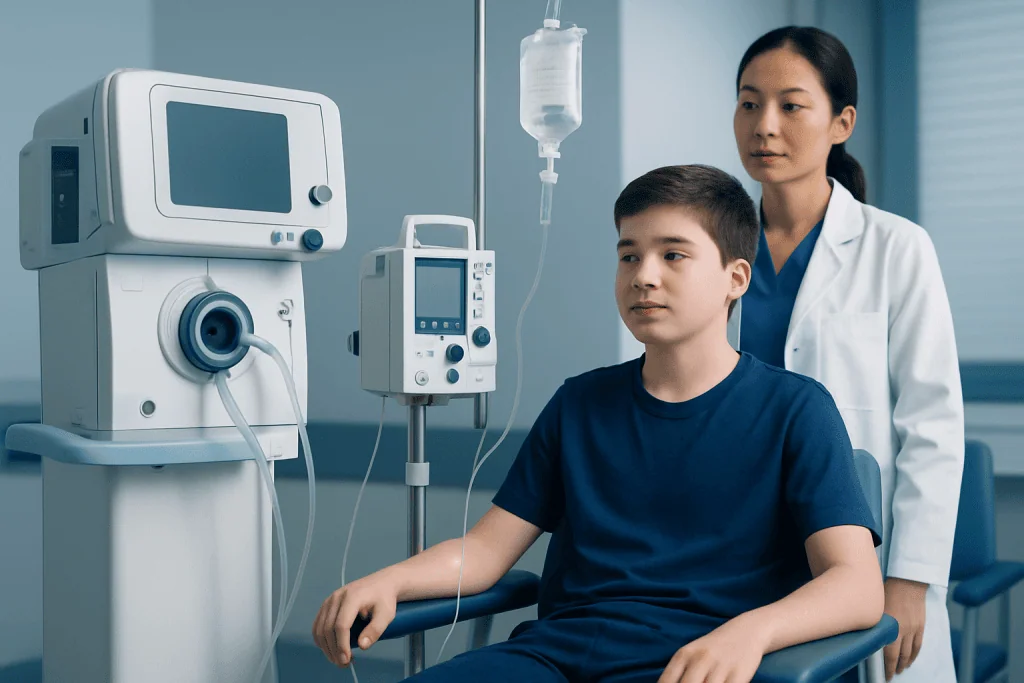
Gene therapy is usually administered as a one-time intravenous infusion in a hospital or specialist infusion setting. Before treatment, the clinical team reviews screening results, baseline strength or function assessments, medicines and safety monitoring plans. Corticosteroids are commonly used before and after infusion to reduce the risk of immune-related reactions, with the exact regimen set by the treating team.
On infusion day, the patient receives the therapy through an intravenous line while clinicians monitor vital signs and observe for reactions. The infusion itself is generally completed within hours, but the overall visit may be longer because of preparation and observation. Some patients may require admission or extended observation based on their individual risk profile.
During the first days and weeks, blood tests are performed frequently to monitor liver enzymes, platelets and other markers of inflammation or organ function. Recovery does not involve rehabilitation from surgery, but existing physiotherapy, stretching, mobility support and cardiopulmonary care usually continue. Any changes in strength or function are assessed over months rather than immediately after the infusion.
Benefits, limitations and possible risks
The intended benefit of micro-dystrophin gene therapy is increased production of a dystrophin-like protein in muscle, with the goal of helping preserve function. Clinical studies have shown micro-dystrophin expression and have reported functional outcomes in selected groups, but results differ among individuals and long-term durability is still being studied.
Gene therapy does not cure Duchenne, restore muscle that has already been lost, or eliminate the need for ongoing treatment. Corticosteroids, heart-protective medicines when indicated, respiratory surveillance, rehabilitation, nutrition support and management of contractures or scoliosis remain central to care.
Important potential complications include elevated liver enzymes or serious liver injury, immune-mediated muscle inflammation, low platelet counts, fever, nausea, vomiting and infusion reactions. In rare cases, serious heart-related or blood-related complications may occur. Clinicians give families clear instructions about laboratory monitoring and symptoms that need urgent assessment.
The medical team weighs these risks against the potential benefits for each patient. It is important to discuss the evidence for the specific product being considered, uncertainty about long-term effects, whether prior antibodies affect eligibility and what ongoing care will be required after treatment.
Can Duchenne be cured?
There is currently no cure for Duchenne muscular dystrophy. Gene therapy is designed to address a key biological cause of the condition by helping cells make micro-dystrophin, but it does not fully replace the normal dystrophin gene throughout the body or reverse all established muscle damage.
Even so, treatment options for DMD have expanded. Care may include corticosteroids, mutation-specific medicines for some genetic variants, medicines to protect the heart, assisted ventilation when needed, physiotherapy, stretching, orthopedic management and assistive technology. These measures can support function, comfort, participation and quality of life.
Regular assessment at a neuromuscular center helps ensure that treatment remains appropriate as needs change. New studies continue to evaluate ways to improve gene delivery, durability and safety, as well as other genetic and disease-modifying approaches.
What is the life expectancy of Duchenne? Is Duchenne a terminal illness?
Life expectancy in Duchenne varies widely. In the past, serious heart or breathing complications often occurred earlier in adulthood, but advances in respiratory support, cardiac medicines, corticosteroids, mobility care and multidisciplinary follow-up have improved outcomes. Many people with DMD now live into adulthood, and some live longer, although individual outlook depends on disease severity and access to comprehensive care.
Duchenne is a serious, progressive and life-limiting condition. The term terminal illness can feel imprecise and distressing because DMD progresses at different rates and people can live meaningful lives for many years with appropriate support. A specialist can provide a more personal outlook based on heart, lung, muscle and functional assessments.
Planning for long-term care should focus not only on medical surveillance but also education, independence, accessibility, mental wellbeing and family support. Palliative care may be introduced alongside active treatment when helpful; it focuses on symptom relief, quality of life and support for the patient and family.
When to seek medical care
Parents or caregivers should arrange medical assessment if a child has delayed motor milestones, frequent falls, difficulty running or climbing stairs, trouble rising from the floor, calf enlargement, a waddling gait or unexplained muscle weakness. Early evaluation can help identify DMD or another neuromuscular condition and allows timely referral for genetic testing and specialist support.
A person with known DMD should seek urgent medical advice for breathing difficulty, bluish lips or skin, chest pain, fainting, palpitations, severe weakness, reduced urine output, persistent vomiting, marked abdominal pain, yellowing of the skin or eyes, or unusual bruising or bleeding. These symptoms may have many causes, but they need prompt assessment, especially after gene therapy.
Acibadem International’s multidisciplinary specialists and JCI-accredited hospitals can support diagnosis and management planning for international patients with DMD, including evaluation of treatment eligibility and coordinated long-term follow-up.
Frequently asked questions
Is Duchenne muscular dystrophy gene therapy a one-time treatment?
Available micro-dystrophin gene therapies are generally designed to be given as a one-time intravenous infusion. Because the body may develop antibodies to the viral vector, repeat treatment with the same type of vector may not be feasible. Long-term follow-up is still needed to monitor safety and function.
Does gene therapy replace steroid treatment for Duchenne?
Not necessarily. Corticosteroids remain an important part of DMD care for many people, and they may also be used around gene therapy to reduce immune-related risks. Any change to steroid treatment should be made only with guidance from the neuromuscular team.
How long does it take to see results after DMD gene therapy?
Gene expression begins after the infusion, but changes in motor function are assessed over months rather than days. The amount and duration of benefit can vary among patients. Regular standardized assessments help clinicians track function over time.
Can adults with Duchenne receive gene therapy?
Eligibility depends on the approved indication in the relevant country and on individual medical factors. Evidence may be more limited for some adult or non-ambulatory populations than for the groups included in clinical trials. A neuromuscular specialist can review whether a particular treatment is appropriate.
What tests are needed before Duchenne gene therapy?
Evaluation commonly includes confirmation of the DMD genetic diagnosis, blood tests, screening for antibodies to the viral vector and checks of liver, heart and respiratory health. The exact tests depend on the treatment under consideration and local clinical protocols. Results are reviewed to reduce avoidable risk.
Can gene therapy reverse loss of walking ability in Duchenne?
Gene therapy is not expected to restore muscle that has already been extensively damaged or reliably reverse established loss of walking ability. Its goal is generally to support or preserve function. Rehabilitation, assistive devices and treatment of heart and lung complications remain important at every stage of DMD.
References
- Centers for Disease Control and Prevention
- Muscular Dystrophy Association
- National Institute of Neurological Disorders and Stroke
- U.S. Food and Drug Administration
- World Health Organization
This article is for general information only and is not a substitute for professional medical advice. Please consult a qualified doctor about your individual situation.
Explore treatments in Turkey — costs, top hospitals & a free quote
JCI-accredited · board-certified surgeons · reply within 24h
Add us as a Preferred Source to see more of our trusted health content across Google Search, AI Overviews and Discover.