Earache when i burp: Symptoms, Causes, and Treatment — Complete Patient Guide

Ear pain during burping is commonly linked to pressure changes affecting the middle ear. Eustachian tube dysfunction, congestion, TMJ problems, reflux, and infections are possible causes.
Key Takeaways
- Ear pain during burping is commonly linked to pressure changes affecting the middle ear.
- Eustachian tube dysfunction, congestion, TMJ problems, reflux, and infections are possible causes.
- Short-lived mild discomfort may improve with swallowing, hydration, and treating nasal congestion if present.
- Persistent pain, hearing loss, fever, drainage, or dizziness should prompt medical evaluation.
- Diagnosis often depends on a symptom review and examination of the ear, nose, throat, and jaw.
Earache when burping is usually related to pressure changes in the ear and throat, often involving the Eustachian tube that helps balance pressure behind the eardrum. In some people, jaw strain, reflux, sinus congestion, or an ear infection may also contribute, so persistent or severe symptoms should be assessed by a doctor.
Overview: why an ear can hurt during burping
Earache when burping is a symptom rather than a disease. In many cases, the discomfort happens because burping changes pressure in the throat and upper airway, and that pressure can briefly affect the small passage connecting the middle ear to the back of the nose, called the Eustachian tube. If that tube is irritated, blocked, or not working smoothly, even a normal burp may trigger ear pressure or pain.
The sensation may feel sharp, dull, popping, clogged, or like pressure deep in the ear. Some people notice it only occasionally, while others feel it every time they burp, yawn, or swallow. The symptom may affect one ear or both, and it can happen with or without hearing changes.
Although pressure-related causes are common, ear pain during burping does not always come directly from the ear. Pain can be referred from nearby structures such as the jaw joint, throat, sinuses, or upper digestive tract. That is why a careful medical evaluation may look beyond the ear itself.
How the ear, throat, and pressure are connected
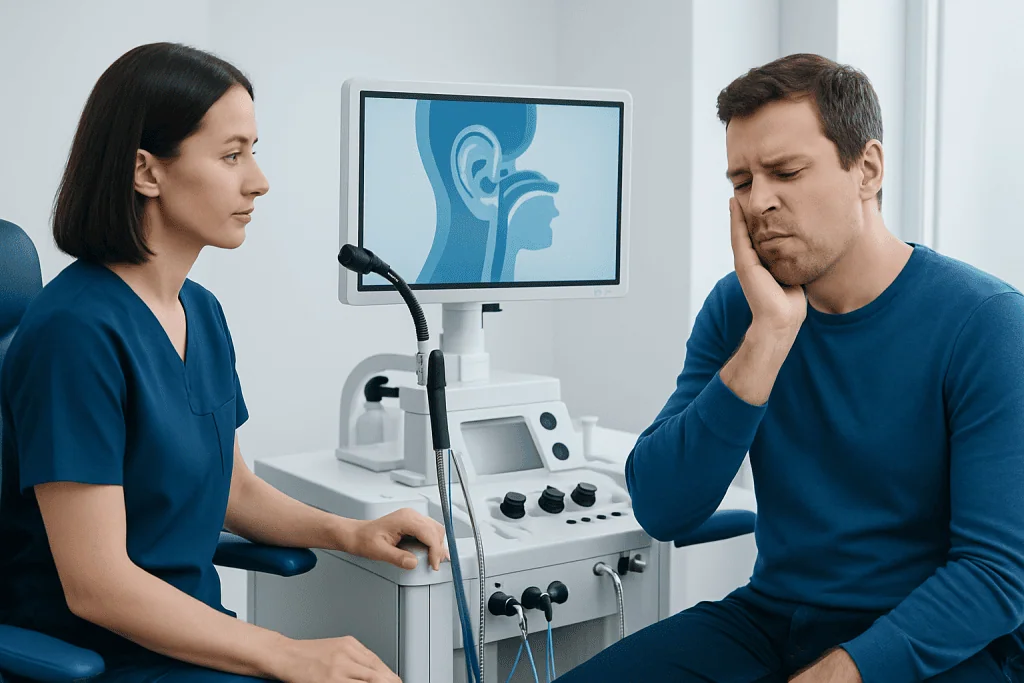
The middle ear is an air-filled space behind the eardrum. To hear comfortably, pressure inside this space must stay balanced with outside air pressure. The Eustachian tube opens briefly during swallowing, yawning, and other movements to help equalize that pressure and drain fluid.
Burping changes pressure in the upper digestive tract and throat. In a healthy system, these changes usually pass unnoticed. But if the Eustachian tube is swollen from a cold, allergies, sinus irritation, or inflammation, pressure may not equalize well, and the person may feel pain, fullness, or clicking in the ear.
Nearby structures can also be involved. The jaw joint sits close to the ear canal, so clenching or temporomandibular joint strain can create pain that seems to come from the ear. Likewise, irritation in the throat or upper esophagus, such as with acid reflux, may contribute to discomfort that becomes noticeable during burping.
Common symptoms that may occur with earache when burping

The main symptom is pain or discomfort in or around the ear that appears during or just after a burp. Some people describe a brief stabbing sensation, while others feel pressure, blockage, popping, or a pulling feeling. The discomfort may last only seconds or continue for longer if the underlying issue remains.
Associated symptoms can help point to the cause. Nasal congestion, sinus pressure, muffled hearing, or a popping ear often suggest pressure imbalance or Eustachian tube dysfunction. Jaw soreness, facial tension, or pain when chewing may suggest a temporomandibular joint problem. Heartburn, sour taste, throat clearing, or a burning feeling may suggest reflux.
Symptoms that deserve extra attention include ear discharge, significant hearing loss, fever, severe dizziness, ringing that is new or worsening, or pain that keeps returning. If these are present, a doctor may look for conditions such as ear infection or a more significant ENT problem.
- Pressure or fullness in the ear
- Popping or clicking sensations
- Muffled hearing
- Jaw pain or tenderness
- Nasal stuffiness or allergy symptoms
- Sore throat, reflux, or burning behind the breastbone
Possible causes and risk factors
The most common explanation is Eustachian tube dysfunction. This happens when the tube does not open or drain properly, often because of a cold, allergies, sinus inflammation, recent upper respiratory infection, or changes in surrounding tissues. The ear then becomes more sensitive to pressure shifts from swallowing, yawning, or burping.
Middle ear infection or fluid behind the eardrum can also make the ear painful when pressure changes. In adults, ear pain may also be referred from the jaw, especially in people who clench their teeth, grind at night, chew gum frequently, or have a history of temporomandibular joint disorder. Reflux may irritate the throat and tissues near the Eustachian tube opening, which can contribute to discomfort in some people.
Less commonly, structural problems in the nose or throat, dental issues, enlarged tonsils, smoking-related irritation, or chronic sinus disease can play a role. Risk may be higher in people with seasonal allergies, repeated colds, chronic congestion, frequent air travel, untreated reflux, or known jaw problems. Persistent symptoms may overlap with sinusitis or other ENT conditions.
How doctors diagnose the cause
Diagnosis begins with a detailed symptom history. A doctor will usually ask when the pain started, whether it happens only with burping or also with swallowing and yawning, whether it affects one ear or both, and whether there are related symptoms such as fever, hearing changes, nasal congestion, jaw clicking, or heartburn.
The examination often includes the ear, nose, throat, and jaw. The doctor may look at the eardrum for redness, fluid, retraction, or signs of infection. They may also examine the nasal passages and throat, feel the jaw joint, and ask about tenderness or movement-related pain. In some cases, hearing tests or tympanometry may be used to check how well pressure is being regulated in the middle ear.
If symptoms suggest a digestive source, the clinician may ask about reflux triggers, late-night meals, or chronic throat irritation. If symptoms are frequent or complicated, referral to an ENT specialist may be appropriate for more detailed evaluation, sometimes including nasal endoscopy or additional testing. Depending on findings, care may involve ENT evaluation and treatment to clarify the underlying cause.
Treatment options and what may help
Treatment depends on the cause. If earache when burping is related to congestion or Eustachian tube dysfunction, doctors may recommend measures that reduce nasal and throat inflammation, such as saline nasal rinses, allergy management, or other symptom-directed treatments. If there is an infection, treatment is guided by the type and severity of the infection.
When jaw strain is contributing, treatment may focus on reducing pressure on the temporomandibular joint. This can include avoiding gum chewing, eating softer foods for a period, managing teeth grinding, and using supportive dental or jaw-care strategies if advised by a clinician. If reflux appears to be involved, lifestyle changes and medical treatment may help calm irritation in the throat and upper digestive tract.
People should avoid inserting cotton swabs or other objects into the ear, as this can worsen irritation. Self-treatment should also not delay assessment if symptoms are severe or persistent. In selected cases, specialist care may include evaluation for ear surgery when there is a structural ear problem, or assessment through gastroenterology care if reflux or upper digestive symptoms are a major part of the picture.
Self-care and prevention
Mild symptoms may improve with simple supportive care. Staying well hydrated, swallowing regularly, and treating allergy or cold symptoms early may help the Eustachian tube work more normally. Some people find that avoiding very forceful burping reduces discomfort, especially during periods of congestion.
Prevention also depends on the trigger. If jaw tension seems related, it may help to reduce clenching, limit gum chewing, and pay attention to stress-related muscle tightening. If reflux is part of the pattern, avoiding large late meals and known trigger foods may reduce episodes of throat irritation and burping-related discomfort.
General ear care matters as well. Avoid smoking and secondhand smoke exposure, which can irritate the nose and throat and affect ear function. Seek treatment for recurring allergies, frequent sinus symptoms, or repeated ear pressure problems rather than waiting for the discomfort to become chronic.
When to seek medical care
Medical advice is recommended if earache when burping keeps happening, is getting worse, or does not improve after a short period of self-care. It is also important to seek evaluation if the symptom is paired with muffled hearing, persistent fullness, ringing, fever, sinus symptoms that do not settle, jaw locking, or significant reflux symptoms.
Prompt assessment is especially important if there is ear discharge, severe pain, sudden hearing loss, marked dizziness, facial weakness, or swelling around the ear. These symptoms are not typical of simple pressure changes and may need urgent attention. A qualified doctor can identify whether the pain is coming from the ear, jaw, throat, or digestive tract and advise the safest next steps.
For people seeking specialist assessment, Acibadem International’s multidisciplinary specialists and JCI-accredited hospitals evaluate and treat ENT, digestive, and related conditions in international patients.
Frequently asked questions
Is it normal for my ear to hurt when I burp?
It can happen occasionally, especially if there is temporary congestion or pressure imbalance in the Eustachian tube. However, repeated or painful episodes are not something to ignore, particularly if there are other symptoms such as hearing changes, fever, or jaw pain.
Can burping cause an ear infection?
Burping itself does not usually cause an ear infection. It may simply make existing pressure, inflammation, or infection more noticeable by changing pressure in the throat and middle ear area.
Could acid reflux make my ear hurt when I burp?
Yes, reflux can sometimes contribute indirectly. Irritation in the throat and near the Eustachian tube opening may make pressure changes during burping more uncomfortable, especially if heartburn, throat clearing, or a sour taste are also present.
Can TMJ problems feel like ear pain when I burp?
Yes. The jaw joint is located close to the ear, and TMJ irritation can cause referred pain that seems to come from the ear. This is more likely if there is jaw clicking, clenching, facial tension, or pain with chewing.
What can I try at home for mild ear pain during burping?
Hydration, rest, and management of nasal congestion or allergies may help if pressure imbalance is the issue. It is also reasonable to avoid forceful burping, gum chewing, and anything that worsens jaw strain. If symptoms continue, a doctor should assess the cause.
When should I worry about earache when I burp?
A person should seek medical care if the pain is persistent, severe, or accompanied by hearing loss, fever, drainage, dizziness, or swelling. Sudden hearing loss or severe vertigo should be treated as urgent symptoms.
References
- American Academy of Otolaryngology–Head and Neck Surgery
- National Institute on Deafness and Other Communication Disorders
- Merck Manual Professional Edition
- Mayo Clinic
- National Health Service
This article is for general information only and is not a substitute for professional medical advice. Please consult a qualified doctor about your individual situation.
Persistent digestive symptoms? Get evaluated in Turkey
JCI-accredited · board-certified surgeons · reply within 24h
Add us as a Preferred Source to see more of our trusted health content across Google Search, AI Overviews and Discover.

More from the Health Library



Related Specialists

Prof. Dr. Banu Lebe
Pathology
Prof. Dr. Mehmet Aytaç Yüksel
Gynecology & Obstetrics
Asst. Prof. Dr. Emel Uğur
Audiology
Prof. Dr. Ayşe Sesin Kocagöz
Clinical Laboratory