Early Cancer Screening Los Angeles: How It Works, Results and What to Expect

Cancer screening is designed for people without symptoms and is tailored to age, family history, lifestyle and previous test results. Common screening programs include breast, cervical, colorectal, lung and, for some people, prostate cancer screening.
Key Takeaways
- Cancer screening is designed for people without symptoms and is tailored to age, family history, lifestyle and previous test results.
- Common screening programs include breast, cervical, colorectal, lung and, for some people, prostate cancer screening.
- An abnormal screening result does not necessarily mean cancer; further imaging, laboratory tests or a biopsy may be needed.
- Results may be available within days or weeks, depending on the test and whether additional review is required.
- People with warning symptoms should seek medical care promptly rather than waiting for a routine screening appointment.
Early cancer screening in Los Angeles involves evidence-based tests chosen according to a person’s age, sex, medical history and individual risk factors. Screening can find some cancers at an earlier, more treatable stage, but it does not diagnose every cancer or replace medical assessment of new symptoms.
Early Cancer Screening Los Angeles: How It Works
Early cancer screening Los Angeles refers to preventive testing intended to identify certain cancers, or changes that may become cancer, before a person develops symptoms. A clinician reviews the individual’s age, sex assigned at birth, personal and family history, tobacco exposure, genetic background, previous results and overall health to recommend the most appropriate tests. Screening is not one single procedure and is not necessary for every cancer.
The main purpose is to detect disease at a stage when treatment may be simpler and outcomes may be better. Established screening methods include mammography for breast cancer, cervical screening with HPV testing and/or cytology, stool testing or colonoscopy for colorectal cancer, and low-dose CT scanning for people at high risk of lung cancer. Some patients may also discuss prostate cancer screening with a clinician.
It is important to distinguish screening from diagnostic care. Screening is performed when a person feels well and has no concerning symptoms. If someone has unexplained bleeding, a new lump, persistent cough, unintended weight loss, worsening pain or another ongoing symptom, clinicians may arrange diagnostic testing instead of, or in addition to, routine screening.
Who May Be a Candidate for Cancer Screening?
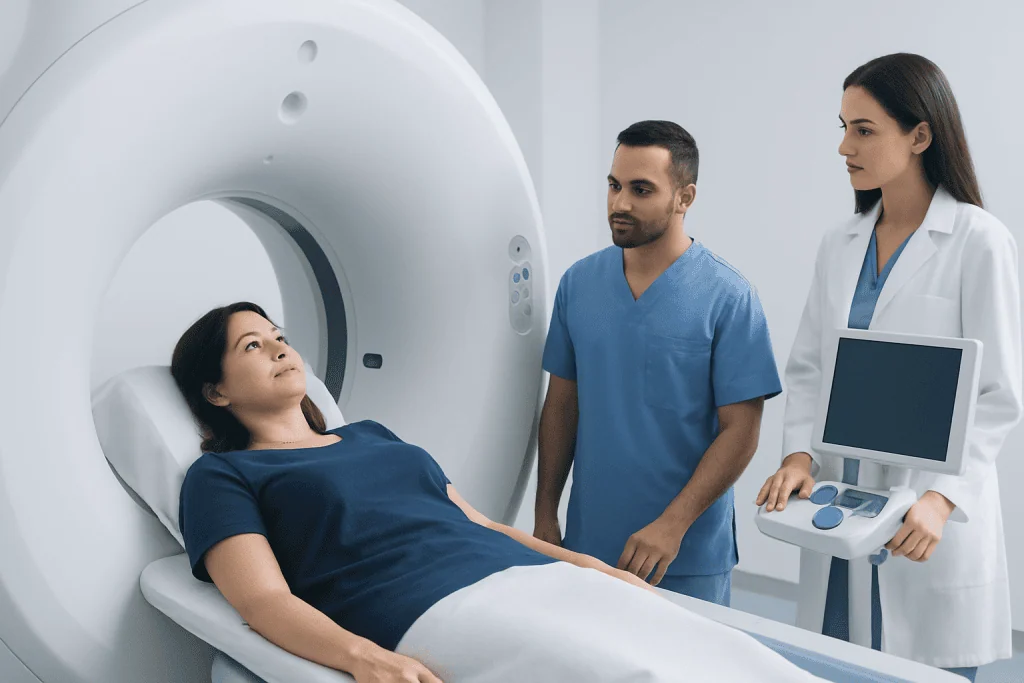
Eligibility depends on the cancer type and national or local clinical guidance. For example, breast and colorectal screening are commonly recommended from certain ages onward, while cervical screening applies to people with a cervix within specified age ranges. Lung cancer screening is generally reserved for adults with a substantial history of cigarette smoking who meet age and smoking-exposure criteria.
A personal history of cancer, a close relative with cancer at a younger age, a known inherited cancer syndrome, prior chest radiation or certain long-term medical conditions can change the screening plan. In these situations, earlier testing, more frequent surveillance or specialist genetic counseling may be appropriate. A clinician can explain whether a standard schedule or an individualized pathway is safer and more useful.
Not every available test is recommended for every healthy person. Broad tumor-marker blood tests, whole-body scans and multi-cancer blood tests may have limitations, including false-positive findings, uncertain follow-up pathways and the possibility of detecting changes that would never cause harm. Decisions should be based on evidence, potential benefits, possible harms and the person’s preferences.
How Does an Early Cancer Detection Test Work?

An early cancer detection test looks for physical changes, abnormal cells, traces of blood, viruses associated with cancer, or imaging findings that could suggest cancer or a precancerous condition. The method depends on the organ being screened. A mammogram uses low-dose X-rays to examine breast tissue, while cervical screening collects cells or tests for high-risk types of human papillomavirus (HPV).
For colorectal cancer, a home stool test may look for hidden blood or certain DNA changes. A positive stool test usually needs follow-up with colonoscopy, which allows a doctor to inspect the colon and remove some polyps during the same procedure. Low-dose CT lung screening produces detailed images of the lungs and is different from a standard chest X-ray.
Screening tests estimate risk rather than providing an immediate diagnosis in most cases. If a result is abnormal, the care team may recommend repeat testing, targeted imaging, endoscopy, a specialist consultation or a biopsy. A biopsy examines a tissue sample and is often the test that confirms or rules out cancer.
The Screening Appointment: Step by Step
The process usually begins with a medical history and risk assessment. The clinician asks about current symptoms, previous cancers, medication use, family history and lifestyle factors such as tobacco use. This discussion helps ensure that the selected screening test is suitable and that symptoms needing diagnostic assessment are not overlooked.
Preparation varies by procedure. Mammography generally requires little preparation. Cervical screening is performed in a clinic and takes only a few minutes, although some people experience brief pressure or discomfort. Stool-based colorectal screening is completed at home, whereas colonoscopy requires dietary preparation and, commonly, sedation. Low-dose CT screening is quick and painless, usually without injections or special preparation.
After the test, images or samples are reviewed by appropriately trained professionals. Results are communicated with guidance about the next step. A normal result means no concerning finding was detected at that time, but it does not eliminate all future cancer risk. Continuing screening at the recommended interval remains important.
How Long Does It Take to Get Results Back From Cancer Screening?
Timing varies by test, laboratory workflow and whether a specialist needs to review images or samples. Some screening results may be available within a few days, while others can take one to two weeks or longer. Cervical samples and stool tests often require laboratory processing, while mammography and CT scans require formal interpretation by a radiologist.
If a result needs further review, this does not automatically indicate cancer. Additional comparison with previous scans, repeat imaging or a follow-up appointment may be needed to clarify a finding. Clinics should explain how results will be provided and whom to contact if a person has not received them within the expected timeframe.
Results are commonly described as normal, inconclusive, abnormal but likely benign, or requiring further investigation. When follow-up is advised, arranging it promptly is the most useful next step. Clear communication can help patients understand what the result means and avoid drawing conclusions before the assessment is complete.
Benefits, Limitations and Possible Risks
The potential benefit of screening is finding eligible cancers earlier, sometimes before symptoms arise. Screening can also identify precancerous changes, such as certain cervical abnormalities or colon polyps, that may be treated before cancer develops. It supports preventive care when it is matched carefully to a person’s risk.
However, screening has limits. A false-positive result may lead to anxiety and additional tests even though cancer is not present. A false-negative result can occur when a test misses a cancer. Screening may also find slow-growing abnormalities that might never have caused symptoms, which can expose a person to unnecessary follow-up or treatment.
Physical risks differ by test. Mammography and CT use low levels of radiation; colonoscopy has uncommon but important risks such as bleeding or bowel perforation; and biopsies can cause pain, bruising or infection. Clinicians weigh these considerations against likely benefit before recommending testing.
- Continue recommended screening even after a normal result.
- Ask what a positive or inconclusive result means before testing.
- Tell the care team about prior images or test results, which may help interpretation.
- Seek diagnostic care for symptoms rather than relying on a future screening date.
Would Cancer Show Up on Routine Bloodwork?
Routine bloodwork can sometimes reveal changes that need investigation, such as anemia, abnormal liver tests or unusual blood cell counts. These changes are not specific to cancer and are more often caused by other conditions. Normal routine blood tests also cannot rule out most cancers.
Some tumor-marker tests are useful for monitoring selected cancers after diagnosis or alongside other clinical information. In general, they are not reliable stand-alone screening tests for cancer in people at average risk because levels can be affected by non-cancerous conditions and some cancers do not raise the marker level.
If bloodwork is abnormal, a clinician considers the full clinical picture and may recommend repeat tests, imaging or referral to a specialist. Screening methods proven for particular cancers remain more informative than routine bloodwork alone for most asymptomatic people.
What Is the 62 Day Rule for Cancer?
The “62 day rule” is a referral and treatment timing target used within the United Kingdom’s National Health Service. It generally refers to a goal of starting first cancer treatment within 62 days after an urgent suspected-cancer referral. It is not a medical rule that determines whether someone has cancer, and it is not a universal standard for care in Los Angeles or the United States.
In any healthcare setting, the appropriate timeline depends on the type of finding, its urgency and the tests required to reach an accurate diagnosis. Concerning symptoms or an abnormal screening result should be assessed without unnecessary delay, but careful evaluation is also essential to avoid incorrect diagnosis or treatment.
Patients can support timely care by attending scheduled appointments, sharing prior records and asking who will coordinate follow-up. If symptoms worsen while waiting, they should contact the treating clinic or seek urgent medical advice as appropriate.
When to Seek Medical Care
Routine screening is not a substitute for medical evaluation of persistent or unexplained changes. A person should contact a doctor if they notice a new breast or testicular lump, blood in stool or urine, abnormal vaginal bleeding, ongoing changes in bowel habits, a persistent cough, coughing up blood, trouble swallowing, an unexplained lump, unexplained weight loss or unusual fatigue that does not improve.
These symptoms have many possible causes and do not necessarily mean cancer. Nevertheless, early assessment helps a clinician determine whether testing is needed. Urgent medical attention is appropriate for severe symptoms such as significant bleeding, severe shortness of breath, chest pain or sudden neurological symptoms.
For international patients seeking coordinated evaluation, Acibadem International’s multidisciplinary specialists and JCI-accredited hospitals provide diagnostic assessment and cancer care planning. A qualified healthcare professional can help determine which screening, diagnostic or follow-up approach is appropriate for the individual.
Frequently asked questions
Is early cancer screening recommended for everyone?
No. Screening recommendations vary according to the cancer type, age, sex, personal history, family history and risk factors such as smoking. A clinician can help determine which evidence-based tests are appropriate and when they should begin.
Does an abnormal cancer screening result mean cancer?
No. Abnormal or positive screening results can be caused by benign changes, infection, inflammation or technical factors. Further testing may be needed to clarify the finding, and only a diagnostic evaluation can confirm cancer.
Can cancer screening prevent cancer?
Some screening can help prevent certain cancers by finding and treating precancerous changes. For example, cervical screening can identify precancerous cell changes, and colonoscopy can detect and remove polyps. Other screening tests primarily aim to find cancer earlier rather than prevent it.
How often should cancer screening be done?
The recommended interval depends on the test and the individual’s risk. Some tests are done yearly, while others may be repeated every few years or at longer intervals after a normal result. A healthcare professional can provide a schedule based on current guidance and personal circumstances.
Are multi-cancer blood tests a replacement for standard screening?
No. Multi-cancer blood tests are an evolving area of medicine, but they do not replace established screening such as mammography, cervical screening, colorectal screening or lung CT screening for eligible people. Their potential benefits and limitations should be discussed with a clinician.
What should a person bring to a cancer screening appointment?
It is helpful to bring information about family cancer history, previous screening reports, relevant imaging and a current medication list. Sharing prior results can help clinicians compare changes over time and avoid unnecessary repeat testing.
References
- American Cancer Society
- United States Preventive Services Task Force
- Centers for Disease Control and Prevention
- National Cancer Institute
- World Health Organization
This article is for general information only and is not a substitute for professional medical advice. Please consult a qualified doctor about your individual situation.
Oncology care in Turkey — second opinion and treatment plan
JCI-accredited · board-certified surgeons · reply within 24h
Add us as a Preferred Source to see more of our trusted health content across Google Search, AI Overviews and Discover.

More from the Health Library



Related Specialists

Prof. Dr. Denizhan Dizdar
Otorhinolaryngology
Prof. Dr. Deniz Tuna Edizer
Ear Nose & Throat
Dr. Tuğçe Baykara
Gynecology & Obstetrics
Dr. Ayla Oktay
Pediatric Cardiology