Easy Abdominal Workouts: An Evidence-Based Guide for Patients

The abdominal muscles work with the back, pelvis, diaphragm and hips to stabilize the trunk. Beginner-friendly core training should prioritize comfortable movement, steady breathing and correct alignment.
Key Takeaways
- The abdominal muscles work with the back, pelvis, diaphragm and hips to stabilize the trunk.
- Beginner-friendly core training should prioritize comfortable movement, steady breathing and correct alignment.
- Exercises such as pelvic tilts, heel slides, bridges and modified planks can be adapted to many fitness levels.
- Abdominal exercise strengthens muscles but cannot target fat loss from the stomach alone.
- People with pain, a recent operation, pregnancy-related concerns or a hernia should seek individualized clinical advice before starting.
Easy abdominal workouts are low-impact core exercises that emphasize control, breathing and gradual progression rather than high repetitions or intense strain. A well-rounded routine can support posture, everyday movement and physical function, but it does not specifically remove abdominal fat.
What are easy abdominal workouts?
Easy abdominal workouts are accessible exercises designed to strengthen the core without requiring equipment, jumping or advanced fitness skills. The core includes more than the visible abdominal muscles: it also includes deeper abdominal muscles, muscles of the lower back, the diaphragm, the pelvic floor and muscles around the hips. These structures work together to help stabilize the body during standing, walking, lifting and reaching.
For most beginners, the safest approach is to start with slow movements that maintain a neutral, comfortable spine. Easy abdominal workouts are not meant to cause neck strain, sharp back pain or breath-holding. A person should be able to move with control and stop before fatigue causes their form to deteriorate.
Core exercise can improve muscular endurance and support daily function. However, abdominal exercises alone do not selectively burn fat around the waist. Changes in body composition usually depend on a combination of overall physical activity, eating patterns, sleep, stress management and individual health factors.
How to prepare for a safe core session

A brief preparation period can make abdominal exercise more comfortable and effective. Choosing a clear area, supportive footwear when standing exercises are included, and a mat or firm carpet for floor movements may help. Loose, comfortable clothing allows the hips and rib cage to move freely.
Before beginning, a person can spend a few minutes walking slowly, marching in place or gently moving the shoulders, hips and spine. The goal is not intense stretching; it is to increase circulation and notice how the body feels that day. Anyone who feels unwell, dizzy or unusually short of breath should postpone exercise and seek advice if symptoms persist.
Breathing is an important part of core control. During effort, it is generally helpful to breathe out gently rather than hold the breath. The lower abdomen can be lightly engaged as though preparing for a cough, while the rib cage and shoulders remain relaxed. Forcefully pulling the stomach inward or straining to flatten it is unnecessary.
- Start with a level that feels manageable, even if that means only a few repetitions.
- Move slowly enough to avoid swinging or using momentum.
- Keep the neck long and shoulders away from the ears.
- Stop an exercise if it causes sharp, radiating or worsening pain.
A simple easy abdominal workout routine
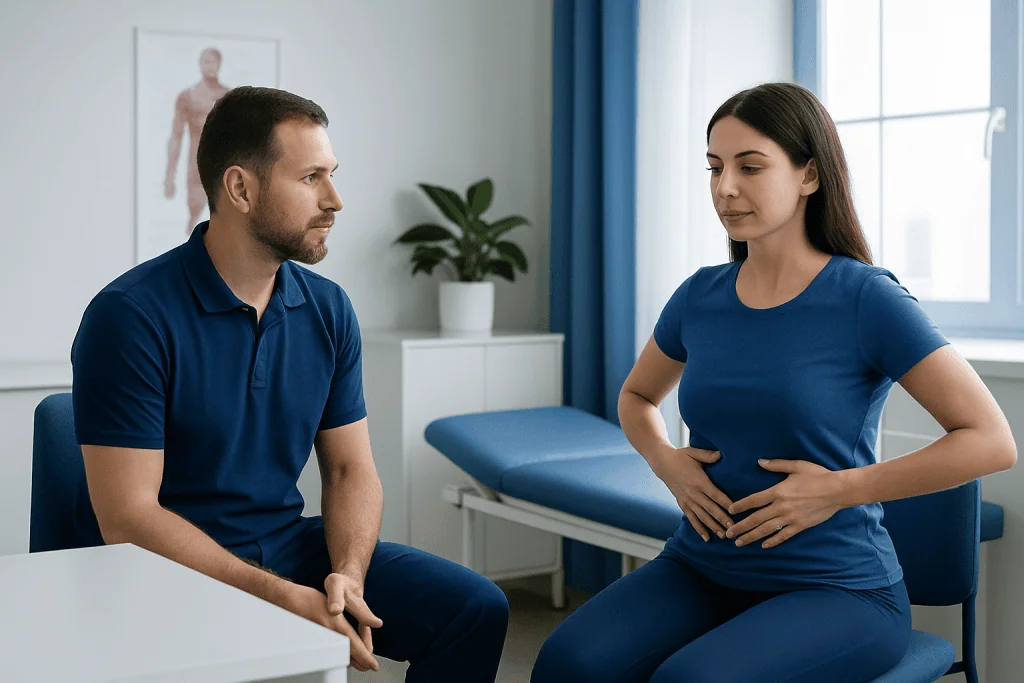
This routine can be completed two or three times weekly on nonconsecutive days, with rest as needed. A person new to exercise may begin with one set of each movement and gradually add repetitions or a second set when the exercises feel comfortable. Quality of movement is more valuable than doing a high number of repetitions.
Pelvic tilts: Lie on the back with knees bent and feet on the floor. Gently tighten the lower abdominal muscles and tilt the pelvis so the lower back moves comfortably toward the floor, then return to a relaxed neutral position. This can help a beginner learn pelvic and lower abdominal control without lifting the head or shoulders.
Heel slides: In the same position, lightly engage the abdomen and slowly slide one heel away from the body, keeping the pelvis steady. Slide it back and alternate sides. If the lower back arches markedly or discomfort develops, shorten the sliding distance. This exercise challenges the deeper core muscles while the spine remains supported.
Glute bridges: Lie on the back with knees bent, press through the feet and gently lift the hips until the body is in a comfortable line from shoulders to knees. Pause briefly, then lower slowly. Bridges work the gluteal muscles and can support coordination between the hips, pelvis and trunk.
Modified plank: Begin on the forearms and knees, with elbows beneath the shoulders. Create a straight, comfortable line from the head through the knees, gently engaging the abdomen without holding the breath. Hold briefly, then rest. A wall plank is an even gentler option: place forearms or hands on a wall, step the feet back slightly and maintain a stable trunk.
Progressing without overloading the body
Progress should be gradual. A person may first increase consistency, then improve control, and only later increase the length of a hold, range of motion or number of repetitions. For example, a modified plank can begin with a short hold and advance in small increments only when breathing and alignment remain easy to maintain.
It is often useful to include movements that train the whole body, not only the front of the abdomen. Walking, sit-to-stand practice, light resistance training and mobility work can all complement core strengthening. Functional core control is usually developed through varied movement rather than through repeated sit-ups alone.
Traditional crunches and sit-ups are not essential for a strong core. They may be appropriate for some people, but they can irritate the neck or lower back when performed with poor technique or too much volume. A qualified physiotherapist, exercise professional or doctor can help modify a program for people who have persistent musculoskeletal symptoms or specific rehabilitation needs.
Recovery matters as well. Mild muscle tiredness after a new activity can be normal, but severe soreness, pain that changes movement, swelling or symptoms that do not settle should not be pushed through. Rest, gentle movement and a slower progression are often more productive than trying to train intensely every day.
Special considerations for back pain, pregnancy and hernia
People with lower back pain may benefit from core exercises, but the correct approach depends on the cause and pattern of symptoms. A routine should not increase pain during exercise or leave the person significantly worse afterward. Persistent or recurrent back symptoms deserve assessment, particularly if they affect sleep, walking, work or normal activities. Information about back pain may help patients understand common causes and evaluation options.
During pregnancy and after childbirth, abdominal exercise needs individualized adjustment. Some movements may be comfortable and appropriate, while others may not be suitable depending on the stage of pregnancy, delivery recovery, pelvic floor symptoms or separation of the abdominal muscles. A clinician or pelvic health physiotherapist can advise on suitable activity and safe progression.
A bulge in the abdomen or groin, pain with coughing or lifting, or a known hernia should be discussed with a healthcare professional before starting strenuous core training. Exercise does not repair a hernia, and high-pressure movements may aggravate symptoms for some people. Patients can learn more about hernia and why individual medical guidance is important.
Following abdominal surgery, including a cesarean delivery or other procedure, recovery instructions from the treating surgical team should take priority. Returning to exercise too quickly may interfere with healing. Rehabilitation can be planned around the person’s procedure, current symptoms and level of function.
Building a sustainable routine
The most effective exercise plan is usually one a person can continue. Scheduling a short core routine after a walk, before a shower or alongside another regular habit may be easier than setting an ambitious goal. Even brief sessions can contribute to strength when performed consistently and alongside broader physical activity.
General health recommendations commonly encourage adults to include muscle-strengthening activity on at least two days each week, while adapting activity to their abilities and medical circumstances. Core exercises can form part of this routine, but they do not replace aerobic activity, balanced nutrition or other strength work involving the legs, back, chest and arms.
For people seeking structured support after an injury, operation or prolonged period of inactivity, physical therapy and rehabilitation may help establish safe goals and movement strategies. Acibadem International’s multidisciplinary specialists and JCI-accredited hospitals also assess and treat relevant musculoskeletal and rehabilitation needs for international patients.
When to seek medical care
Medical advice is appropriate before beginning an abdominal exercise program for anyone with a recent operation, a known hernia, uncontrolled heart or lung disease, significant osteoporosis, neurological symptoms, or a condition that limits exercise tolerance. A doctor can help identify appropriate activity and may recommend assessment by a physiotherapist or other rehabilitation professional.
A person should stop exercising and seek urgent medical care for chest pain, fainting, severe shortness of breath, new weakness, loss of bladder or bowel control, or sudden severe abdominal or back pain. These symptoms are not expected effects of a routine core workout.
Non-urgent assessment is also sensible for abdominal pain that recurs with activity, a new or enlarging bulge, persistent back pain, unexplained weight loss, fever, or pain that does not improve with rest. Early assessment can clarify the cause and support a safe return to activity.
Frequently asked questions
Can beginners do easy abdominal workouts every day?
Some gentle core activation and mobility exercises may be comfortable daily, but muscles also benefit from recovery after strengthening work. For most beginners, two or three focused sessions per week is a reasonable starting point. The schedule should be adjusted if there is excessive soreness, fatigue or pain.
Do abdominal workouts get rid of belly fat?
Abdominal workouts strengthen the muscles of the core, but they do not specifically remove fat from the stomach area. Fat loss occurs through overall energy balance and is influenced by physical activity, nutrition, sleep, stress and genetics. A balanced fitness routine is more effective than relying on ab exercises alone.
Which abdominal exercise is easiest for someone with no fitness experience?
Pelvic tilts and gentle heel slides are often useful starting exercises because they can be performed lying down with the spine supported. The movements should feel controlled and should not cause back or neck pain. A clinician or physiotherapist can suggest alternatives when a person has an injury or ongoing symptoms.
Should abdominal exercises cause lower back pain?
No. Mild muscle effort in the abdomen can be expected, but sharp, increasing or persistent lower back pain is a sign to stop and reassess technique or exercise selection. Reducing the range of motion, using a simpler version or seeking professional advice may be helpful.
Are planks better than sit-ups?
Neither exercise is universally better. Planks emphasize whole-trunk stability, while sit-ups involve more spinal flexion and can be uncomfortable for some people. A well-rounded routine may include a variety of movements selected according to comfort, goals and physical condition.
Can people with a hernia do abdominal workouts?
A person with a suspected or diagnosed hernia should speak with a healthcare professional before beginning or progressing core exercise. Some activities that increase abdominal pressure may worsen discomfort or bulging. The safest plan depends on the hernia type, symptoms and treatment recommendations.
References
- World Health Organization
- American College of Sports Medicine
- National Institute of Arthritis and Musculoskeletal and Skin Diseases
- American Physical Therapy Association
- National Health Service
This article is for general information only and is not a substitute for professional medical advice. Please consult a qualified doctor about your individual situation.
Joint and spine care in Turkey — expert assessment & treatment
JCI-accredited · board-certified surgeons · reply within 24h
Add us as a Preferred Source to see more of our trusted health content across Google Search, AI Overviews and Discover.