Echinacea Purpurea: A Complete Medical Overview

Echinacea purpurea is an herbal supplement, not a proven cure for infections. Evidence for preventing or shortening colds is mixed and benefits appear modest at best.
Key Takeaways
- Echinacea purpurea is an herbal supplement, not a proven cure for infections.
- Evidence for preventing or shortening colds is mixed and benefits appear modest at best.
- It can cause side effects, especially stomach upset, rash, or allergic reactions in sensitive people.
- People with autoimmune conditions, allergies to daisy-family plants, pregnancy concerns, or medication use should ask a doctor before taking it.
- High-quality diagnosis and treatment are important if symptoms are severe, prolonged, or not typical of a simple cold.
Echinacea purpurea is a flowering plant commonly sold as an herbal supplement for immune support, especially during colds. Research suggests possible modest benefits for some people, but results are inconsistent, and safety, allergies, and drug interactions should be considered before use.
Overview: What Echinacea Purpurea Is and What It Is Used For
Echinacea purpurea is a species of echinacea, a purple flowering plant in the daisy family. Extracts from its roots, leaves, flowers, or whole plant are used in teas, capsules, tablets, tinctures, and lozenges. It is most often marketed to support the immune system or to help with common cold symptoms.
From a medical perspective, echinacea purpurea is considered a botanical or herbal supplement rather than a standard treatment for infection. That distinction matters because supplements can vary in strength, purity, and ingredients from one product to another. Different preparations may not work in the same way, and studies on one form cannot always be applied to another.
People often ask whether echinacea purpurea truly works. The short answer is that research is mixed: some studies suggest it may slightly reduce the length or severity of cold symptoms in certain adults, while others show little or no benefit. It should not replace medical care for serious illness, bacterial infections, breathing difficulty, or persistent fever.
How Echinacea Purpurea May Work in the Body
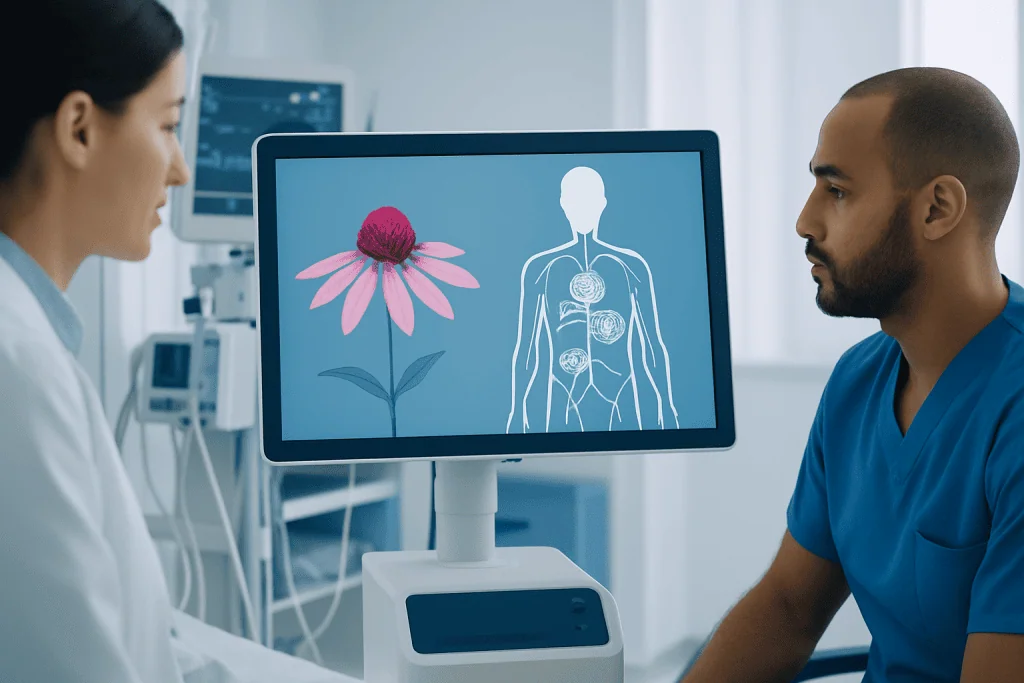
Echinacea contains many natural compounds, including alkamides, caffeic acid derivatives, polysaccharides, and flavonoids. Researchers believe some of these substances may influence immune signaling and inflammatory responses. In laboratory studies, these effects can appear promising, but laboratory findings do not always translate into clear clinical benefits in real life.
One reason the evidence remains uncertain is that “echinacea” is not a single standardized medicine. Different species, plant parts, extraction methods, and doses can produce different products. As a result, one echinacea purpurea supplement may not be comparable to another, even if the label looks similar.
It is also important to keep expectations realistic. If echinacea purpurea helps, the effect is usually described as supportive rather than dramatic. It is not known to prevent influenza, COVID-19, pneumonia, or other serious infections, and it should not be used as a substitute for vaccination, rest, hydration, or doctor-recommended treatment.
Potential Benefits and What the Evidence Says

The most common reason people use echinacea purpurea is for the common cold. Some clinical studies suggest it may modestly shorten the duration of cold symptoms or slightly reduce symptom severity when taken early. However, other studies have not found meaningful benefit, so major medical organizations generally describe the evidence as limited or inconsistent.
There is less evidence for other uses, such as preventing infections, improving general immunity, or treating sinus symptoms, sore throat, or recurrent respiratory illnesses. A person with persistent cough, fever, facial pain, or significant congestion may need medical evaluation for conditions such as sinusitis or another illness rather than relying only on supplements.
For patients, the practical message is balanced: echinacea purpurea may be reasonable for some adults who want to try an herbal option for mild cold symptoms, but it should not be expected to work for everyone. It is best seen as an optional supportive measure, not a replacement for evidence-based care.
- Possible use: mild, early cold symptoms in otherwise healthy adults
- Uncertain use: routine prevention of colds or “boosting immunity” in general
- Not a substitute for: medical assessment, antiviral therapy when indicated, or treatment of bacterial infection
Side Effects, Allergies, and Drug Interactions
Many people tolerate echinacea purpurea without major problems, but side effects can occur. The most commonly reported are nausea, stomach discomfort, diarrhea, unpleasant taste, dizziness, or headache. Skin rash and itching may also occur, particularly in people with plant allergies.
Allergic reactions are one of the main safety concerns. Echinacea belongs to the Asteraceae or daisy family, which includes ragweed, chrysanthemums, marigolds, and daisies. People who are allergic to these plants may have a higher risk of reacting to echinacea. Rarely, severe allergic reactions can happen and require urgent medical care.
Drug interactions are another reason to be cautious. Echinacea purpurea may affect how the body processes some medications, and it may not be appropriate for people taking immunosuppressive medicines, certain liver-metabolized drugs, or complex treatment plans. Anyone receiving care for chronic conditions should check with a doctor or pharmacist before starting it, especially if they are being treated for immune-related disease or are under specialist care such as allergy treatment.
Who Should Be Cautious or Avoid It
Echinacea purpurea is not automatically safe for everyone simply because it is plant-based. People with autoimmune diseases, organ transplants, significant liver disease, or those using medications that suppress the immune system should seek medical advice before taking it. In these situations, an immune-active supplement may be unsuitable or may complicate ongoing treatment.
Pregnant or breastfeeding individuals should also ask a qualified clinician before use, because safety data are not as robust as they are for standard medications. The same is true for children, especially younger children, in whom side effects and dosing concerns deserve extra caution.
People with repeated respiratory symptoms may need a clearer diagnosis rather than repeated self-treatment. What seems like a recurring cold could sometimes relate to allergies, asthma, reflux, or infections that need evaluation, including bronchitis in some cases. If symptoms are frequent, severe, or unusual, it is safer to investigate the cause than to continue supplements without guidance.
How to Choose and Use Echinacea Purpurea Safely
If a person decides to use echinacea purpurea, product quality matters. Supplements are not regulated in the same way as prescription drugs, so labels may differ in potency and purity. Choosing a product from a reputable manufacturer with clear ingredient listing and third-party quality testing can reduce, though not eliminate, uncertainty.
It is wise to follow the product directions and avoid combining multiple cold remedies without checking ingredients. Some people unknowingly take echinacea in more than one product at the same time. Keeping the supplement list simple makes it easier to notice side effects and avoid duplication.
Echinacea purpurea should be used thoughtfully rather than continuously without review. If there is no noticeable benefit, or if symptoms worsen, medical advice is appropriate. For people with prolonged nasal blockage, sleep problems from congestion, or structural nasal concerns, treatment may need to focus on the underlying issue rather than supplements, and care such as septoplasty or sinusitis treatment may be discussed when clinically relevant.
When to Seek Medical Care
Most mild cold symptoms improve with rest, fluids, and time, whether or not echinacea purpurea is used. However, medical care is important if symptoms are severe, if breathing becomes difficult, if fever is high or persistent, or if there is chest pain, confusion, dehydration, or symptoms lasting longer than expected.
A doctor should also be consulted if a person develops wheezing, facial swelling, widespread rash, or other signs of a possible allergic reaction after taking echinacea. Immediate urgent care is needed for trouble breathing, swelling of the lips or throat, or faintness.
Recurring infections, recurrent sore throats, or repeated antibiotic use also deserve proper assessment. Evaluation may include a physical examination, review of medicines and allergies, and testing when needed to identify whether symptoms are due to viral infection, allergies, sinus disease, asthma, or another condition. Near the end of the care journey, some patients may choose a center with coordinated specialty care; Acibadem International’s multidisciplinary specialists and JCI-accredited hospitals diagnose and treat related ear, nose, throat, allergy, and respiratory conditions for international patients.
Frequently asked questions
What is echinacea purpurea commonly used for?
Echinacea purpurea is most commonly used as an herbal supplement for common cold symptoms and general immune support. It is not a proven treatment for serious infections, and its benefits appear to be modest and variable.
Does echinacea purpurea help prevent colds?
Research results are mixed. Some studies suggest a small benefit, while others show little or no effect, so it cannot be relied on as a dependable way to prevent colds.
Can echinacea purpurea cause side effects?
Yes. Possible side effects include stomach upset, nausea, diarrhea, headache, dizziness, rash, and allergic reactions. People with ragweed or daisy-family allergies should be especially cautious.
Who should avoid echinacea purpurea?
People with autoimmune diseases, transplant history, known allergies to daisy-family plants, or those taking immunosuppressive or other interacting medicines should ask a doctor before using it. Pregnant or breastfeeding individuals and children also need professional guidance.
Is echinacea purpurea safe to take with other medicines?
Not always. It may interact with some medications, including drugs affected by liver metabolism or treatments that change immune function, so a pharmacist or doctor should review it before use.
When should someone see a doctor instead of self-treating with echinacea?
Medical care is important for high or persistent fever, shortness of breath, chest pain, dehydration, symptoms that keep worsening, or illness lasting longer than expected. A doctor should also be contacted if a person develops a rash, swelling, or any sign of an allergic reaction after taking echinacea.
This article is for general information only and is not a substitute for professional medical advice. Please consult a qualified doctor about your individual situation.
Explore treatments in Turkey — costs, top hospitals & a free quote
JCI-accredited · board-certified surgeons · reply within 24h
Add us as a Preferred Source to see more of our trusted health content across Google Search, AI Overviews and Discover.

More from the Health Library

Definition for Homophobic: An Evidence-Based Guide for Patients

Shrimp Cholesterol: An Evidence-Based Guide for Patients

Recovery After Gallstones Operation — Explained by Medical Evidence, Not Myths

Metacarpal Bones: What Patients Need to Know

Vilazodone — Explained by Medical Evidence, Not Myths