Endometrial Cancer Surgery: Procedure, Recovery and Results

Surgery for endometrial cancer usually involves hysterectomy and often removal of the fallopian tubes and ovaries. Minimally invasive surgery can support a shorter hospital stay and recovery when it is clinically appropriate.
Key Takeaways
- Surgery for endometrial cancer usually involves hysterectomy and often removal of the fallopian tubes and ovaries.
- Minimally invasive surgery can support a shorter hospital stay and recovery when it is clinically appropriate.
- Pathology results from the operation guide staging and decisions about radiation, chemotherapy, hormone therapy or other treatments.
- Recovery varies by surgical approach, overall health and whether additional treatment is needed.
- New vaginal bleeding after menopause, unusual bleeding before menopause or persistent pelvic symptoms should be assessed by a clinician.
Endometrial cancer surgery is commonly the main treatment for cancer confined to the uterus and is also important for determining its stage. Most people have a hysterectomy with additional staging procedures, followed by an individualized recovery and, when needed, further treatment.
Overview: what endometrial cancer surgery involves
Endometrial cancer surgery usually removes the uterus, which is called a hysterectomy, to take out the cancer and establish how far it has spread. In many cases, the surgeon also removes both fallopian tubes and ovaries, a procedure called bilateral salpingo-oophorectomy, and assesses lymph nodes or uses sentinel lymph-node mapping to check for microscopic spread.
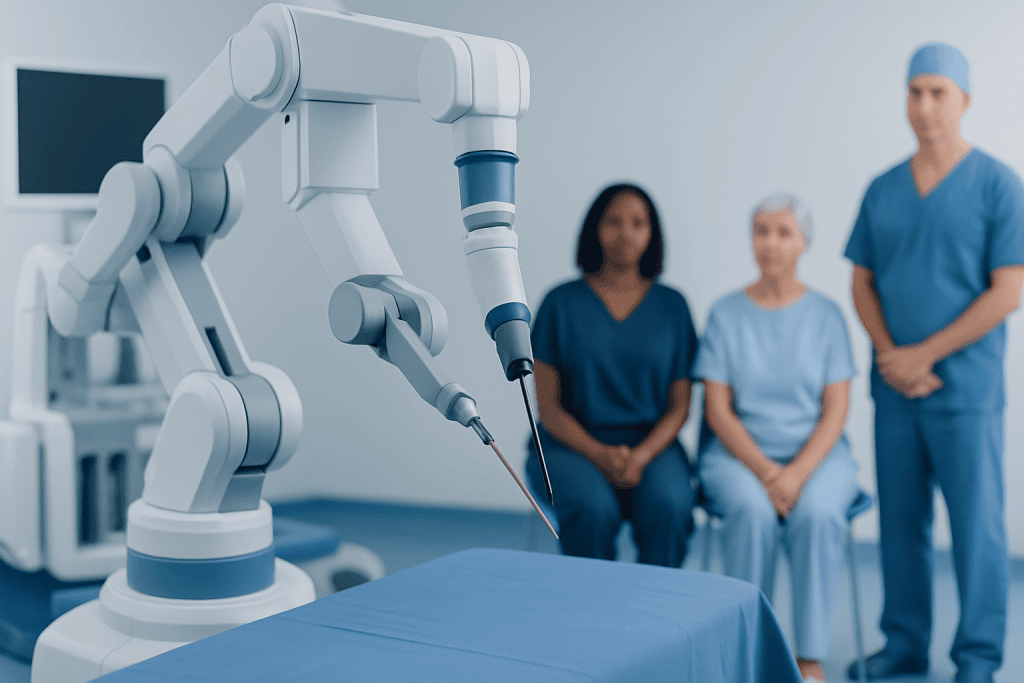
The operation is often the first and most important treatment for endometrial cancer. It can be performed through minimally invasive keyhole surgery, robot-assisted surgery, vaginal surgery in selected situations, or an open abdominal incision when this offers the safest or most complete approach. The choice depends on the cancer features, uterine size, previous operations, body anatomy and a person’s general health.
Surgery has two linked purposes: treatment and staging. The tissue removed is examined by a pathologist, who reports the tumor type, grade, depth of invasion into the uterine muscle, lymph-node findings and other features. These details help the multidisciplinary team decide whether surgery alone is sufficient or whether additional treatment may reduce the chance of recurrence.
Who may be a candidate for surgery?
Most people with newly diagnosed endometrial cancer are considered for surgery, especially when the cancer appears limited to the uterus. Before an operation, the care team reviews biopsy findings, imaging when needed, medical history, medications and fitness for anesthesia. Conditions such as heart, lung or blood-clotting problems may require optimization before surgery.
Some people may need treatment other than, or before, surgery. This can include people whose cancer has spread extensively, those who are not well enough for an operation, or those with a rare tumor type requiring a different treatment sequence. Radiation therapy, systemic therapy, hormone therapy or a combination may be discussed in these settings.
Fertility-sparing treatment may be an option only for carefully selected people with early, low-grade endometrioid cancer who wish to preserve fertility. This approach generally uses progestin-based treatment with close monitoring and is not the same as standard surgical care. A gynecologic oncologist can explain whether it is medically appropriate and when definitive hysterectomy should be considered.
How is endometrial cancer surgery performed?

Before surgery, the team explains the planned procedure, anesthesia, expected hospital stay and recovery needs. Blood tests, imaging or other assessments may be arranged. People are commonly advised to review all medicines and supplements in advance, particularly blood thinners, diabetes medicines and treatments that affect immunity.
During the operation, the surgeon removes the uterus and cervix. For many postmenopausal people and for those with cancer, the fallopian tubes and ovaries are removed at the same time. Depending on the tumor’s risk features, the surgeon may inject a tracer near the cervix to identify sentinel lymph nodes, remove selected nodes, or perform a more extensive node assessment when indicated.
Minimally invasive approaches use several small incisions and a camera, while open surgery uses a larger abdominal incision. The operation may also include inspection of the abdomen and pelvis, washings in selected cases, or removal of additional tissue if cancer is suspected outside the uterus. The final surgical plan can occasionally change during the procedure if unexpected findings are identified.
Pathology analysis is central to the process. It confirms the exact diagnosis and stage, including whether the cancer is confined to the uterus or involves the cervix, lymph nodes or other organs. This information is reviewed after surgery to create a tailored follow-up and treatment plan.
Endometrial cancer surgery recovery time and aftercare
Endometrial cancer surgery recovery time depends mainly on the surgical approach. After minimally invasive surgery, many people go home the same day or after a short stay and resume light daily activities over the following weeks. Recovery after an open abdominal hysterectomy generally takes longer, often several weeks before more usual activity feels comfortable.
In the first days, tiredness, mild abdominal discomfort, changes in bowel habits, light vaginal spotting and temporary shoulder discomfort after laparoscopic surgery can occur. The team provides individualized advice about pain relief, incision care, walking, showering, driving, lifting, return to work and sexual activity. Gentle movement and regular short walks can help circulation, bowel function and strength during recovery.
Endometrial cancer recovery after hysterectomy also has emotional and practical aspects. Some people feel relieved after treatment, while others experience uncertainty as they await pathology results or adapt to changes in body image, sexual wellbeing or surgical menopause. Support from family, specialist nurses, counseling services and cancer support groups can be valuable.
Contact the surgical team promptly for fever, worsening pain, heavy vaginal bleeding, increasing redness or discharge from an incision, persistent vomiting, calf swelling, chest pain, shortness of breath or difficulty passing urine. These symptoms do not always indicate a serious problem, but they need timely medical assessment.
Benefits, risks and results after surgery
The main benefit of surgery is removal of visible cancer from the uterus, with accurate staging to guide further care. For many early-stage cancers, surgery may be the only treatment needed. Where pathology suggests a higher risk of recurrence, adjuvant radiation therapy, chemotherapy, hormone therapy, immunotherapy or targeted treatment may be recommended according to the tumor type and molecular test results.
As with any major operation, risks include bleeding, infection, blood clots, reactions to anesthesia and injury to nearby structures such as the bladder, bowel, ureters or blood vessels. Lymph-node procedures can occasionally contribute to leg swelling called lymphedema. The surgical team takes steps to lower risks, including preventive measures for blood clots and careful planning around existing medical conditions.
The phrase “endometrial cancer recovery rate” can be misleading because recovery from an operation and long-term cancer outcomes are different measures. Surgical recovery reflects healing, function and quality of life, while cancer outlook depends on stage, grade, histologic type, molecular features, lymph-node status, response to treatment and general health. The treating team can place an individual pathology report in context without making assumptions from a single feature.
Follow-up commonly includes regular clinical reviews, discussion of new symptoms and support for long-term health. Imaging and blood tests are not always routinely needed for every person; their use is based on symptoms, cancer risk and treatment history.
What are the characteristics of stage 2 endometrial cancer?
Stage 2 endometrial cancer means that the cancer has spread from the lining of the uterus into the connective tissue of the cervix, but it has not spread beyond the uterus. It is different from cancer limited to the uterine body and different from disease involving pelvic tissues, lymph nodes or distant organs.
Treatment commonly includes hysterectomy, removal of the fallopian tubes and ovaries, and appropriate assessment of lymph nodes. After surgery, the pathology report helps determine whether additional treatment is advisable. Radiation therapy may be considered for some people, and chemotherapy or other systemic treatment may be recommended when there are higher-risk features.
Stage describes where cancer is found; it does not fully describe how the cancer is likely to behave. Tumor grade, cell type and molecular characteristics add important information. A gynecologic oncology team can explain how these factors work together and what they mean for treatment planning.
How fast does grade 3 endometrial cancer spread?
Grade 3 endometrial cancer has cells that look more abnormal under the microscope and generally behaves more aggressively than grade 1 or grade 2 disease. However, grade alone cannot predict exactly how fast cancer will grow or spread in one person. Some grade 3 cancers are found while still confined to the uterus, while others require broader assessment and treatment.
Prompt evaluation and treatment planning are important, but it is also important not to assume that grade 3 automatically means widespread disease. Imaging, surgical findings, pathology, tumor subtype and molecular testing all contribute to a clearer picture. The team uses these results to decide whether surgery, radiation, chemotherapy or combined treatment is most appropriate.
People with a diagnosis of high-grade cancer may find the waiting period difficult. Asking for a clear timeline, understanding the purpose of each test and bringing a trusted person to appointments can make the process more manageable. The care team should explain which symptoms require urgent contact while treatment is being arranged.
What is the average life expectancy for someone with recurrent endometrial cancer?
There is no single average life expectancy that accurately applies to everyone with recurrent endometrial cancer. Outcomes vary considerably according to where the cancer has returned, how long after original treatment it recurred, the tumor’s type and molecular profile, prior treatments, overall health and response to the next treatment.
A recurrence limited to a local area may sometimes be treated with surgery, radiation or both. More widespread recurrence is commonly treated with systemic options, which may include chemotherapy, hormone therapy, immunotherapy or targeted medicines depending on the cancer’s features. Some people achieve meaningful disease control for extended periods, while others need treatment focused mainly on symptom relief and quality of life.
Rather than relying on a broad population estimate, a person’s oncologist can discuss the specific situation, available treatment goals and what may be expected over time. Palliative care can be introduced alongside cancer treatment at any stage to support symptoms, emotional wellbeing and daily functioning; it is not limited to end-of-life care.
What has been your journey with endometrial cancer?
This question is often asked in support communities, but each endometrial cancer journey is personal. It may begin with abnormal bleeding, a biopsy and imaging, then move through surgery, pathology results, further treatment when needed and regular follow-up. Experiences can differ greatly even among people with the same stage.
It can help to keep a written record of symptoms, test results, questions and medicines, and to ask the team for copies of the pathology and treatment summaries. Practical support with transport, meals, work responsibilities and caregiving can also make surgery recovery easier. Emotional responses may change over time, and professional counseling or peer support may be helpful.
Acibadem International’s multidisciplinary specialists and JCI-accredited hospitals support international patients through diagnosis, surgical planning and follow-up for endometrial cancer. Decisions should always be made with a qualified oncology and gynecology team familiar with the individual’s pathology and health needs.
When to seek medical care
Unexpected vaginal bleeding should be assessed, particularly any bleeding after menopause. Before menopause, medical review is important for bleeding between periods, unusually heavy or prolonged periods, or bleeding that is new and persistent. These symptoms are common and often have non-cancer causes, but evaluation helps identify the reason.
Seek timely review for persistent pelvic pain or pressure, unexplained watery or blood-stained vaginal discharge, pain during sex, or unexplained weight loss and fatigue. After endometrial cancer surgery, urgent medical advice is needed for symptoms that may suggest infection, a blood clot or another postoperative complication, such as chest pain, breathing difficulty, fever or increasing wound pain.
Regular follow-up after treatment is important, and new vaginal bleeding, pelvic symptoms, persistent cough, unexplained pain or other concerning changes should be reported rather than waiting for the next scheduled visit. Early communication allows the clinical team to assess symptoms appropriately and provide reassurance or further investigation when needed.
Frequently asked questions
How long does recovery take after endometrial cancer surgery?
Recovery often takes a few weeks after minimally invasive hysterectomy and may take several weeks longer after open abdominal surgery. Fatigue can last beyond the initial wound-healing period. The surgeon’s instructions on activity, lifting, driving and return to work should guide the individual timeline.
Is hysterectomy always needed for endometrial cancer?
Hysterectomy is the standard treatment for most people with endometrial cancer. Rarely, selected people with very early, low-grade disease who want to preserve fertility may consider nonsurgical management with close specialist monitoring. This is not suitable for most cancers.
Are ovaries removed during endometrial cancer surgery?
The ovaries and fallopian tubes are commonly removed with the uterus because they can be affected by cancer or produce hormones that may influence some tumors. In carefully selected younger people, ovarian preservation may be discussed. The decision is individualized by the surgical and oncology team.
Will I need chemotherapy or radiation after surgery?
Not everyone needs further treatment after surgery. The recommendation depends on the final stage, grade, cancer subtype, molecular findings and lymph-node results. The care team reviews these pathology findings before advising on radiation, chemotherapy, hormone therapy or other options.
Can endometrial cancer come back after hysterectomy?
Yes, recurrence is possible, although the risk varies substantially between individuals. Regular follow-up and reporting new symptoms, especially vaginal bleeding, pelvic pain or unexplained persistent changes in health, are important. If recurrence occurs, treatment options depend on where it has returned and prior treatment.
What should I avoid after a hysterectomy for endometrial cancer?
People are usually advised to avoid heavy lifting, strenuous exercise and vaginal intercourse until their surgeon confirms healing is adequate. Smoking should be avoided because it can impair healing and increase complications. Specific restrictions differ according to the type of surgery and any complications, so postoperative instructions should take priority.
References
- American Cancer Society
- National Cancer Institute
- European Society of Gynaecological Oncology
- National Comprehensive Cancer Network
- World Health Organization
This article is for general information only and is not a substitute for professional medical advice. Please consult a qualified doctor about your individual situation.
Endometrial Cancer in Turkey — costs, top hospitals & a free quote
JCI-accredited · board-certified surgeons · reply within 24h
Add us as a Preferred Source to see more of our trusted health content across Google Search, AI Overviews and Discover.

Medical Oncology Department
Medical treatment of cancer with chemotherapy, immunotherapy and targeted therapies under a multidisciplinary tumor board.
60 specialists in this unit