

Endoscopy Explained: When It Is Used for Digestive Symptoms and What Happens

Endoscopy uses a thin flexible tube with a camera to examine parts of the digestive tract. It may be recommended for symptoms such as ongoing heartburn, trouble swallowing, abdominal pain, nausea, bleeding, or unexplained weight loss.
Key Takeaways
- Endoscopy uses a thin flexible tube with a camera to examine parts of the digestive tract.
- It may be recommended for symptoms such as ongoing heartburn, trouble swallowing, abdominal pain, nausea, bleeding, or unexplained weight loss.
- The procedure can help diagnose inflammation, ulcers, polyps, celiac disease, and cancers, and it may also allow biopsies or treatment during the same session.
- Most endoscopies are short, carefully monitored, and done with sedation for comfort.
- Preparation and recovery instructions vary depending on the type of endoscopy and the reason it is being performed.
Endoscopy is a common procedure that lets doctors look inside the digestive tract to diagnose the cause of symptoms and, in some cases, treat problems at the same time. Understanding when it is used and what to expect can help patients feel more prepared and reassured.
Overview: What Endoscopy Means
Endoscopy is a medical procedure that allows a doctor to look inside the body using a thin, flexible tube with a light and camera. In digestive medicine, this tool is used to examine the lining of the esophagus, stomach, small intestine, colon, or rectum, depending on the symptoms and the area that needs to be checked. The images are shown on a screen in real time, helping the doctor assess what may be causing a patient’s symptoms.
When people speak about endoscopy for digestive symptoms, they often mean an upper endoscopy, also called gastroscopy. This examines the esophagus, stomach, and the first part of the small intestine. A related procedure called colonoscopy examines the large intestine. Both are forms of digestive endoscopy, but they are used for different symptoms and require different preparation.
Endoscopy is valuable because it can do more than provide a picture. During the procedure, the doctor may take a small tissue sample, called a biopsy, remove certain growths, stop bleeding, or widen a narrowed area. This means endoscopy often helps both with diagnosis and treatment in one session.
When It Is Used for Digestive Symptoms
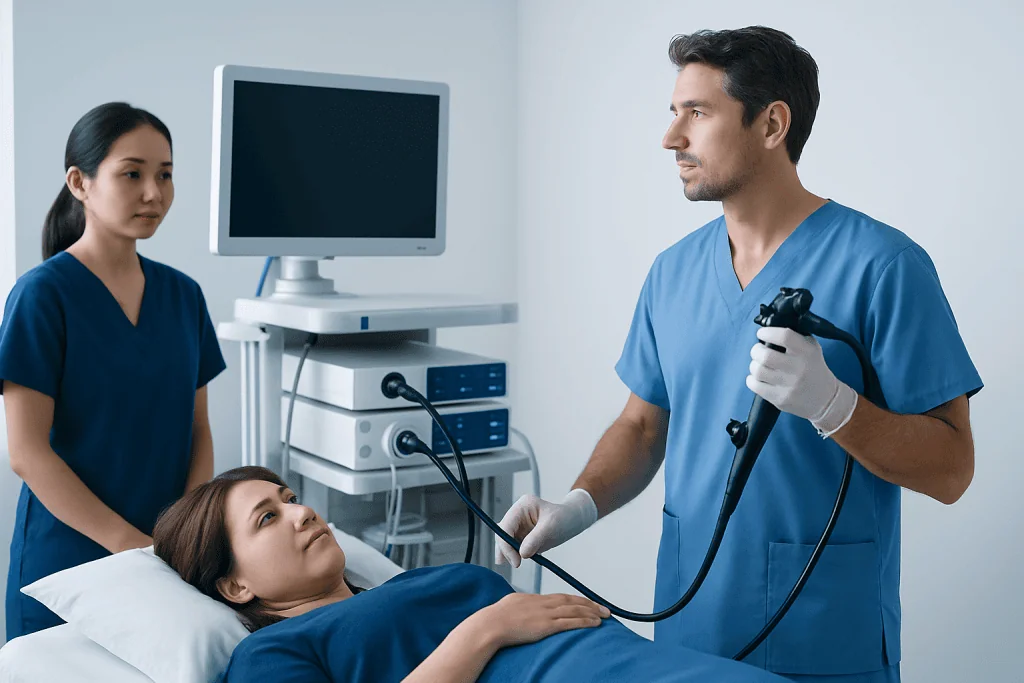
A doctor may recommend endoscopy when digestive symptoms are persistent, unexplained, severe, or associated with warning signs. Common reasons include difficulty swallowing, frequent heartburn, long-lasting nausea or vomiting, upper abdominal pain, bloating that does not improve, black stools, vomiting blood, anemia, or unexplained weight loss. It may also be used when symptoms continue despite treatment or when imaging and lab tests do not fully explain what is happening.
Upper endoscopy is often used to investigate problems such as reflux, ulcers, gastritis, celiac disease, and irritation or narrowing of the esophagus. It can also help detect signs of conditions such as stomach cancer or changes related to long-term acid reflux. Colonoscopy is more commonly used for lower digestive symptoms such as rectal bleeding, chronic diarrhea, changes in bowel habits, or for colorectal cancer screening.
In some cases, endoscopy is used urgently. This may happen if a person has significant digestive bleeding, food stuck in the esophagus, severe pain with swallowing, or an object that has been swallowed. In other cases, the procedure is planned in advance as part of a step-by-step evaluation.
- Ongoing heartburn or chest discomfort related to swallowing
- Trouble swallowing or a feeling that food gets stuck
- Persistent abdominal pain, nausea, or vomiting
- Bleeding symptoms such as black stools or vomiting blood
- Unexplained iron deficiency anemia or weight loss
- Long-term bowel habit changes or screening needs
Types of Digestive Endoscopy and What They Can Show
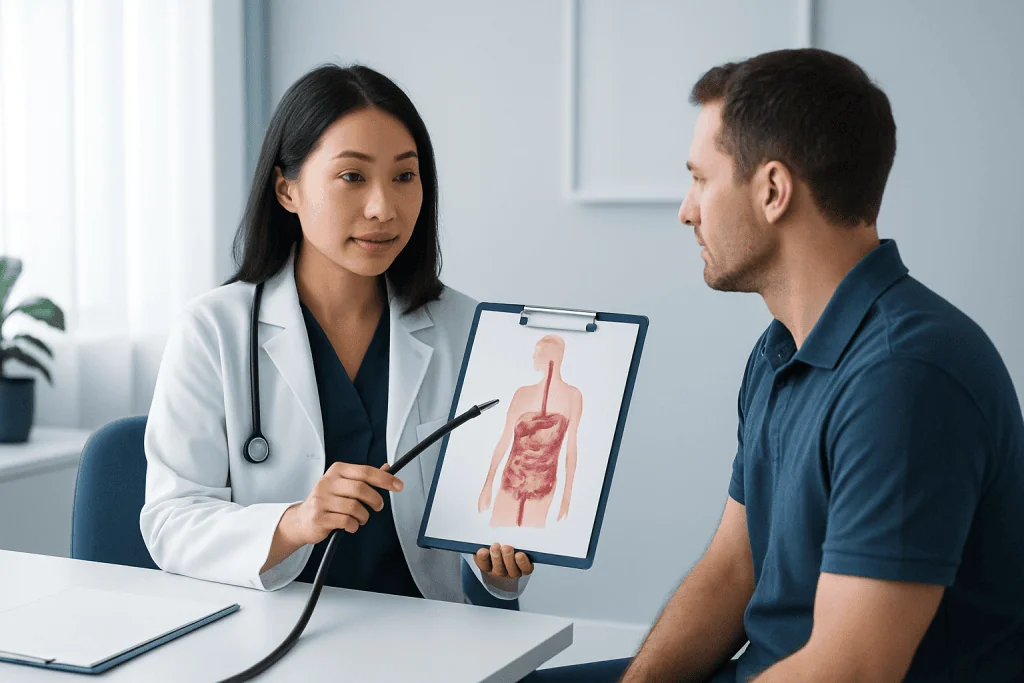
Several types of endoscopy are used in digestive care. Upper endoscopy examines the upper digestive tract. Colonoscopy evaluates the colon and rectum. Sigmoidoscopy looks at the lower part of the colon. In certain situations, special endoscopic techniques may assess the bile ducts, pancreas, or small bowel. The right test depends on the person’s symptoms, age, medical history, and the doctor’s clinical judgment.
These procedures can reveal inflammation, ulcers, infections, narrowing, polyps, and bleeding sources. They may also help identify conditions such as Crohn’s disease or changes caused by chronic reflux or inflammation. A normal endoscopy can also be helpful, because it rules out many important structural causes and may guide the doctor toward other explanations, such as functional digestive disorders.
Biopsies are a common part of endoscopy. A biopsy does not always mean cancer is suspected. Tiny tissue samples are often taken to check for inflammation, celiac disease, infection, microscopic colitis, or other conditions that cannot be confirmed by appearance alone. The biopsy is usually painless because the digestive lining does not feel cutting in the same way skin does.
How to Prepare and What Happens During the Procedure
Preparation depends on the type of endoscopy. For an upper endoscopy, patients are usually asked not to eat or drink for several hours beforehand so the stomach is empty. For a colonoscopy, bowel preparation is needed to clean the colon, often using a prescribed laxative solution and a special diet for a short time before the test. It is important to follow instructions carefully, since poor preparation can make the examination less accurate or require it to be repeated.
Before the procedure, the care team reviews symptoms, allergies, medications, and medical conditions. Patients should tell their doctor about blood thinners, diabetes medications, pacemakers, pregnancy, sleep apnea, or previous reactions to sedation. A consent process explains the benefits, steps, and possible risks so the patient can ask questions and make an informed decision.
During the endoscopy, monitoring equipment is used to check breathing, heart rate, and blood pressure. For upper endoscopy, a mouth guard may be placed and a sedative is often given through a vein to help the patient relax. The endoscope is then guided gently through the mouth into the upper digestive tract. For colonoscopy, the scope is inserted through the rectum after sedation. The camera sends images to a screen while the doctor examines the lining and performs biopsies or treatment if needed.
Some procedures also include therapeutic steps, such as endoscopic mucosal resection for certain abnormal tissue, removal of polyps, or treatment of bleeding. If a narrowed area is found, the doctor may perform endoscopic dilatation to widen it, when appropriate and safe.
What Patients May Feel and What Recovery Is Like
Most patients tolerate endoscopy well, especially when sedation is used. An upper endoscopy is usually brief, and many people remember little or nothing afterward. Some may notice mild throat soreness, temporary bloating, or sleepiness from the sedative. After a colonoscopy, gas or cramping can occur for a short time because air or carbon dioxide is used to help the doctor see the bowel lining more clearly.
Recovery typically takes place in a monitored area until the effects of sedation begin to wear off. Because judgment and reflexes may be reduced for several hours, patients are usually advised not to drive, make important decisions, or return to work the same day unless their doctor says it is safe. Arranging for someone to accompany them home is often required.
The doctor may discuss initial findings shortly after the procedure, but biopsy results usually take longer. This waiting period can feel stressful, yet it is a routine part of the process. Clear communication about follow-up appointments, test results, medicines, and diet after the procedure helps patients know what to expect next.
Benefits, Risks, and Possible Results
The main benefit of endoscopy is that it provides direct visual information and can often answer important questions that symptoms, blood tests, or scans cannot answer on their own. It can confirm or rule out ulcers, inflammation, sources of bleeding, growths, and structural problems. It may also allow treatment at the same time, reducing the need for additional procedures.
Like any medical procedure, endoscopy has possible risks, but serious complications are uncommon when it is performed by trained teams. Risks may include bleeding, infection, a reaction to sedation, or a tear in the digestive tract wall called perforation. The exact risk depends on the type of endoscopy, the patient’s overall health, and whether treatment is performed during the procedure rather than inspection alone.
Results can vary widely. Some patients learn that their symptoms are caused by a treatable condition such as reflux-related inflammation or an ulcer. Others may need more evaluation if the findings are unclear or if symptoms continue despite a normal endoscopy. If advanced care is needed, options may include procedures such as ERCP for bile duct or pancreatic duct problems, or referral to specialists for ongoing digestive management.
When to See a Doctor and Ongoing Care
Digestive symptoms do not always require endoscopy, but certain patterns should prompt medical evaluation. A person should speak with a doctor if symptoms are persistent, worsening, or interfering with eating, sleep, or daily life. Prompt assessment is especially important if there is difficulty swallowing, unexplained weight loss, vomiting, black stools, blood in stool, or signs of anemia such as unusual fatigue or shortness of breath.
After endoscopy, patients should contact their care team if they develop severe abdominal pain, persistent vomiting, fever, chest pain, trouble breathing, large amounts of bleeding, or weakness that seems out of proportion to routine recovery. While mild bloating or throat irritation can be normal, worsening symptoms should be checked.
Long-term care depends on the diagnosis. Some people need medication changes, dietary adjustments, or repeat surveillance endoscopy. Others may be reassured by normal findings and continue symptom management with their doctor. For international patients who need digestive evaluation and treatment, Acibadem International’s multidisciplinary specialists and JCI-accredited hospitals provide diagnosis and care across a range of endoscopic and gastroenterology services.
Frequently asked questions
Is endoscopy painful?
Most people do not find endoscopy painful, especially when sedation is used. They may feel pressure, mild bloating, or temporary throat discomfort, but the care team works to keep the procedure as comfortable as possible.
How long does an endoscopy take?
The procedure itself is often relatively short, commonly around 15 to 30 minutes for an upper endoscopy, though timing varies by purpose and any treatment performed. Preparation and recovery add extra time, so the full visit is usually longer.
Will a biopsy mean cancer is suspected?
Not necessarily. Biopsies are commonly taken during endoscopy to check for inflammation, infection, celiac disease, or other changes that cannot be confirmed by appearance alone. It is a routine part of many examinations.
What is the difference between endoscopy and colonoscopy?
Endoscopy is a broad term for using a camera-equipped scope to look inside the body. In digestive care, upper endoscopy looks at the esophagus, stomach, and first part of the small intestine, while colonoscopy examines the colon and rectum.
Can I eat after an endoscopy?
Many patients can eat again after the procedure once the care team says it is safe, but instructions depend on the type of endoscopy and whether treatment was performed. After sedation, swallowing may need to be fully back to normal before food or drink is allowed.
When is endoscopy urgent?
Urgent endoscopy may be needed for symptoms such as significant digestive bleeding, food stuck in the esophagus, or severe swallowing problems. A doctor decides the timing based on the patient’s symptoms, stability, and test results.
References
- World Health Organization
- National Institute of Diabetes and Digestive and Kidney Diseases
- American Society for Gastrointestinal Endoscopy
- American College of Gastroenterology
- Mayo Clinic
This article is for general information only and is not a substitute for professional medical advice. Please consult a qualified doctor about your individual situation.
Persistent digestive symptoms? Get evaluated in Turkey
JCI-accredited · board-certified surgeons · reply within 24h
Add us as a Preferred Source to see more of our trusted health content across Google Search, AI Overviews and Discover.

More from the Health Library



Related Specialists

Dr. Muhammed Taha Taş
Emergency Service
Dr. Bengü Kasım
Physical Medicine & Rehabilitation
Assoc. Prof. Dr. Nurcan Kızılcık
Anesthesiology
Dr. Ökkeş Baz
Ophthalmology