Epiglottis: What Patients Need to Know

The epiglottis helps protect the airway during swallowing. Problems involving the epiglottis can cause sore throat, trouble swallowing, muffled voice, or breathing difficulty.
Key Takeaways
- The epiglottis helps protect the airway during swallowing.
- Problems involving the epiglottis can cause sore throat, trouble swallowing, muffled voice, or breathing difficulty.
- Epiglottitis is an inflammation of the epiglottis that can become an emergency, especially if breathing is affected.
- Doctors diagnose epiglottis problems with a medical exam and, when appropriate, imaging or endoscopic evaluation.
- Treatment depends on the cause and may include monitoring, medicines, or airway support.
- New or worsening breathing trouble always needs urgent medical attention.
The epiglottis is a small flap of tissue at the base of the tongue that helps direct food and liquids into the esophagus and away from the airway. Most people never notice it, but if the epiglottis becomes inflamed or does not work properly, it can affect swallowing, breathing, and the voice and may require prompt medical care.
What the epiglottis is and why it matters
The epiglottis is a leaf-shaped flap of elastic tissue located behind the tongue and above the voice box. Its main role is simple but essential: it helps protect the airway when a person swallows. During swallowing, the epiglottis folds backward to help guide food and liquid toward the esophagus, reducing the chance that they will enter the windpipe.
Most of the time, a healthy epiglottis works automatically and goes unnoticed. Breathing, speaking, and swallowing depend on careful coordination among the throat muscles, vocal cords, and surrounding structures. If the epiglottis becomes swollen, injured, or less mobile, a person may notice pain, swallowing difficulty, a sensation of blockage, or changes in breathing and voice.
Patients often search for “epiglottis” when they want to understand throat symptoms or read about epiglottitis, an inflammation of this structure. While many throat complaints are caused by common infections or irritation, problems involving the epiglottis deserve careful attention because this small tissue plays such an important role in airway protection.
How the epiglottis works during swallowing and breathing
When a person breathes, air passes through the nose or mouth, down the throat, and into the larynx and windpipe. In this resting state, the epiglottis remains upright, allowing air to move freely. During swallowing, several muscles contract in a coordinated way, the voice box lifts, and the epiglottis tilts backward to help shield the airway.
This movement is only one part of a larger protective process. The vocal cords also close, and the swallowing muscles move food downward. If timing is disrupted, even briefly, food or liquid may “go down the wrong way,” causing coughing or choking. Recurrent swallowing trouble may point to a problem not only with the epiglottis but also with the broader throat and swallowing system.
Because the epiglottis is part of the upper airway, symptoms can overlap with other ear, nose, and throat conditions. Evaluation by an ENT specialist may help distinguish epiglottis-related issues from conditions affecting the tonsils, larynx, or esophagus. In selected cases, doctors may recommend ENT evaluation and treatment to assess persistent throat symptoms in a structured way.
Symptoms that may suggest an epiglottis problem

Symptoms vary depending on whether the issue is inflammation, infection, trauma, irritation, or a swallowing disorder. Some people feel severe throat pain even though the throat may not look very abnormal from the outside. Others notice painful swallowing, drooling, a muffled or hoarse voice, or the feeling that something is stuck in the throat.
Breathing symptoms are especially important. A swollen epiglottis can narrow the upper airway and cause noisy breathing, shortness of breath, or a high-pitched sound called stridor. These symptoms should not be ignored, particularly if they begin suddenly or worsen quickly.
Children and adults can present differently. Children may become anxious, sit leaning forward, and refuse to swallow because of pain. Adults may be better able to describe symptoms, such as severe sore throat, fever, or difficulty handling saliva. Common warning signs include:
- Severe sore throat with painful swallowing
- Drooling or trouble swallowing saliva
- Muffled, weak, or “hot potato” voice
- Noisy breathing or stridor
- Shortness of breath or rapid breathing
- Fever, especially with worsening throat pain
Common causes and risk factors
The best-known epiglottis condition is epiglottitis, which means inflammation of the epiglottis. This may be caused by bacterial infection, viral infection, or, less commonly, fungal infection. In children, vaccination has reduced cases caused by Haemophilus influenzae type b, but epiglottitis can still occur in both children and adults from a range of organisms.
Not all epiglottis problems are infections. Trauma from a medical procedure, a direct injury to the throat, burns from very hot liquids, smoking-related irritation, or exposure to chemicals may also lead to swelling. In some patients, severe acid reflux may irritate nearby throat tissues and contribute to symptoms that need to be distinguished from true epiglottitis.
Certain factors can raise risk or complicate recovery. These include a weakened immune system, diabetes, poor general health, and delayed treatment of significant throat or airway symptoms. Doctors may also consider related throat and voice conditions, especially if symptoms overlap with laryngitis or recurrent swallowing difficulty.
How doctors diagnose epiglottis conditions
Diagnosis starts with listening carefully to symptoms and assessing the airway. If breathing difficulty is present, the medical team focuses first on keeping the patient safe and stable. In someone with suspected significant swelling, unnecessary throat manipulation may be avoided until the airway can be properly monitored.
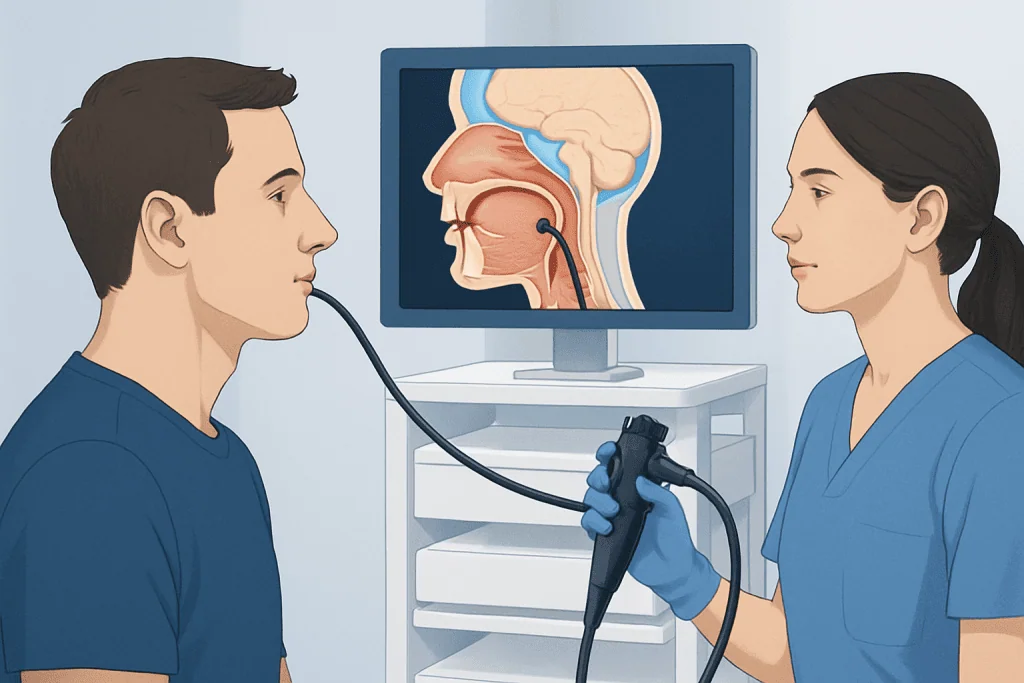
After the initial assessment, doctors may examine the throat using a flexible fiberoptic camera inserted through the nose, a common ENT procedure that allows direct visualization of the larynx and epiglottis. Depending on the situation, blood tests, throat cultures, or imaging such as a neck X-ray or CT scan may be used to look for swelling, infection, or another cause of symptoms.
Swallowing studies may be considered if aspiration or repeated choking episodes are a concern. In some cases, specialists in ENT, infectious diseases, emergency medicine, or intensive care work together. If symptoms suggest a broader upper airway problem, doctors may combine clinical assessment with endoscopic evaluation to better understand what is happening inside the throat.
Treatment options and what recovery may involve
Treatment depends on the cause, severity, and whether the airway is affected. If a patient has mild irritation without breathing compromise, treatment may focus on the underlying cause, such as rest, hydration, and medicines prescribed for infection, inflammation, or reflux. If bacterial epiglottitis is suspected, antibiotics are commonly used. Some patients may also need corticosteroids or other supportive treatments, depending on the clinical picture.
When swelling threatens breathing, treatment becomes urgent. Hospital observation may be needed so the airway can be monitored closely. Oxygen, intravenous fluids, and medications may be given. In more serious cases, doctors may need to secure the airway with a breathing tube or, rarely, a surgical airway procedure. The exact approach depends on age, anatomy, and the degree of obstruction.
Recovery is usually guided by symptom improvement and repeat clinical assessment. Eating and drinking may be limited for a short time if swallowing is painful or unsafe. Once swelling settles, most patients recover well with appropriate care. For patients who have repeated throat symptoms or structural concerns, specialists may recommend further evaluation, and at centers such as Acibadem International, multidisciplinary teams in JCI-accredited hospitals care for international patients with airway and throat conditions, including those needing specialized laryngology care.
Prevention and self-care
Not every epiglottis problem can be prevented, but several practical steps can lower risk. Keeping routine vaccinations up to date is important, especially for children. Good hand hygiene and avoiding close contact with people who have contagious respiratory infections may also reduce the chance of certain infections.
General throat care matters as well. Avoiding smoking and inhaled irritants helps protect delicate upper airway tissues. Drinking liquids at a safe temperature, managing acid reflux if present, and seeking care for persistent swallowing problems can all support throat health. People with chronic medical conditions should also follow their regular care plans, as overall health can affect how the body responds to infection or inflammation.
Self-care is helpful only for mild symptoms. A person should not try to inspect the throat aggressively or force swallowing if there is marked pain, drooling, or breathing difficulty. Rest, hydration, and medical guidance are safer than home remedies when the airway might be involved.
When to seek medical care
Prompt medical attention is important if a person has severe sore throat with trouble swallowing, especially when symptoms seem more intense than a routine cold. Fever, drooling, muffled voice, or pain that worsens quickly should also be evaluated by a clinician.
Emergency care is needed right away for any breathing difficulty, noisy breathing, bluish lips, inability to swallow saliva, or signs of distress. Children who appear frightened, lean forward to breathe, or suddenly refuse fluids need urgent assessment. These signs do not always mean a dangerous epiglottis problem, but they do mean the airway should be checked without delay.
Even after treatment, follow-up matters if symptoms return, swallowing remains difficult, or the voice does not recover as expected. A qualified doctor can help determine whether the issue is resolving normally or whether another throat, airway, or digestive problem needs attention.
Frequently asked questions
Can a person see their epiglottis in the mirror?
Some people can briefly see the tip of the epiglottis when opening their mouth wide, and this can be a normal anatomical variation. Seeing it does not automatically mean there is a disease. If it is associated with pain, swallowing trouble, or breathing symptoms, a doctor should evaluate it.
Is epiglottitis the same as a sore throat?
No. A sore throat is a symptom that can happen with many common illnesses, while epiglottitis is inflammation of the epiglottis and can be more serious. Epiglottitis may cause severe throat pain, trouble swallowing, muffled voice, and sometimes breathing difficulty.
Can adults get epiglottitis?
Yes, adults can develop epiglottitis even though many people associate it with childhood illness. Symptoms in adults may begin with severe throat pain and difficulty swallowing. Because it can affect the airway, adults with concerning symptoms should seek prompt medical advice.
What does a swollen epiglottis feel like?
People may describe it as intense throat pain, the feeling that something is stuck, trouble swallowing, or needing to spit out saliva because swallowing hurts. Some also notice a muffled voice or noisy breathing. Symptoms can range from mild irritation to urgent airway compromise.
How is an epiglottis problem treated?
Treatment depends on the cause. Doctors may use antibiotics for suspected bacterial infection, medicines to reduce inflammation, fluids, and careful monitoring. If breathing is affected, the airway may need urgent support in a hospital setting.
When is an epiglottis problem an emergency?
It is an emergency when there is shortness of breath, noisy breathing, trouble swallowing saliva, bluish lips, or rapidly worsening symptoms. In children, leaning forward, distress, or refusal to drink can also be warning signs. These symptoms need urgent medical evaluation because the airway may be narrowing.
References
- American Academy of Otolaryngology–Head and Neck Surgery
- Centers for Disease Control and Prevention
- MedlinePlus
- National Health Service
- Merck Manual
This article is for general information only and is not a substitute for professional medical advice. Please consult a qualified doctor about your individual situation.
Explore treatments in Turkey — costs, top hospitals & a free quote
JCI-accredited · board-certified surgeons · reply within 24h
Add us as a Preferred Source to see more of our trusted health content across Google Search, AI Overviews and Discover.

More from the Health Library

26 Weeks: A Complete Medical Overview

Face Brush: A Complete Medical Overview

Platysma — Explained by Medical Evidence, Not Myths

Atypical Depression: What Patients Need to Know

Hand Sanitizer and: What Patients Need to Know