Epilepsy During Sleep: Nocturnal Seizures, Warning Signs, and Diagnosis

Epilepsy during sleep causes seizures that occur during sleep or around falling asleep and waking. Warning signs may include sudden jerking, stiffening, unusual movements, bedwetting, tongue biting, or confusion after waking.
Key Takeaways
- Epilepsy during sleep causes seizures that occur during sleep or around falling asleep and waking.
- Warning signs may include sudden jerking, stiffening, unusual movements, bedwetting, tongue biting, or confusion after waking.
- Diagnosis often depends on a detailed history, witness descriptions, EEG testing, and sometimes overnight video-EEG or sleep studies.
- Treatment may include anti-seizure medication, sleep habit improvements, and safety steps to reduce injury risk.
- Not every unusual nighttime event is a seizure; some parasomnias and movement disorders can look similar.
Epilepsy during sleep refers to seizures that happen mainly or only while a person is asleep. These episodes can be subtle or dramatic, and careful evaluation helps distinguish nocturnal seizures from other sleep-related conditions.
Overview
Epilepsy during sleep means that seizures happen mainly at night, during sleep, or in the moments around falling asleep or waking up. Doctors may also call these events nocturnal seizures or sleep-related seizures. They can occur in children or adults and may be part of a known epilepsy syndrome or the first sign of an underlying seizure disorder.
Because the person is asleep, these seizures are often not recognized right away. A bed partner, parent, or family member may notice sudden stiffening, jerking, unusual sounds, or strange repetitive movements. In some cases, the only clues are waking up confused, feeling very tired, finding blood on the pillow from tongue biting, or noticing unexplained injuries.
Sleep and epilepsy have a close relationship. For some people, certain stages of sleep make seizures more likely, while poor sleep can also lower the seizure threshold. This is one reason why a careful sleep and neurological history is an important part of assessment.
Nocturnal seizures can sometimes be mistaken for nightmares, sleepwalking, night terrors, or other sleep disorders. Distinguishing between these conditions matters because the approach to testing, treatment, and safety can be very different.
Symptoms and Warning Signs
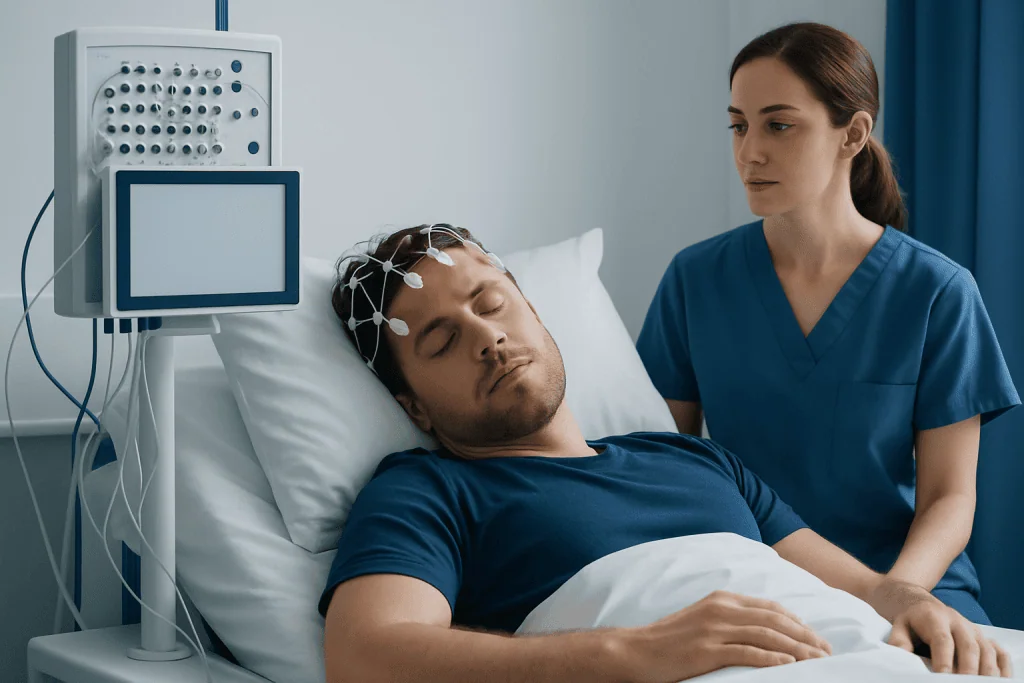
The symptoms of epilepsy during sleep vary widely. Some seizures are brief and subtle, while others are more noticeable. A person may not remember the event itself, so witness descriptions can be especially helpful during medical evaluation.
Possible warning signs and symptoms include:
- sudden body stiffening or rhythmic jerking during sleep
- abrupt awakening with fear, confusion, or a choking sensation
- unusual repetitive movements such as bicycling of the legs, pelvic thrusting, or arm posturing
- staring or unresponsiveness if the person briefly wakes during the event
- crying out, grunting, or making unusual sounds
- tongue biting, especially on the side of the tongue
- bedwetting during a seizure
- falling out of bed or unexplained nighttime injuries
- marked sleepiness, headache, muscle soreness, or confusion after waking
Some people experience auras before a seizure, even at night. An aura is a focal seizure symptom that may feel like sudden fear, a strange smell, tingling, a rising sensation in the stomach, or a sense that something is not right. If it happens as a person is drifting to sleep, it may be remembered the next morning.
Patterns can offer clues. Seizures often happen in a similar way each time, may be brief, and can occur multiple times in one night. By contrast, some parasomnias are more variable and tend to happen at particular points of the sleep cycle. Still, these differences are not always obvious, which is why professional evaluation is important.
Causes and Risk Factors

Epilepsy during sleep is not a single disease but a pattern of seizure timing. Seizures arise from abnormal electrical activity in the brain. In some people, they happen mostly during sleep because of how brain activity changes across sleep stages, particularly during non-rapid eye movement sleep.
There are many possible causes. Some people have a genetic tendency to epilepsy. Others may develop seizures related to previous head injury, stroke, brain infection, developmental brain differences, tumors, or scarring in the brain. In many patients, no single clear cause is found even after testing.
Several factors can make nocturnal seizures more likely or easier to trigger:
- sleep deprivation or irregular sleep schedules
- missing anti-seizure medication doses
- fever or illness in some individuals
- alcohol use or substance exposure
- stress
- other neurological conditions
Certain epilepsy syndromes are especially linked to sleep-related seizures. Seizures arising from the frontal lobe are a well-known example and can produce sudden, complex, sometimes dramatic movements during the night. A neurologist may also consider related conditions such as epilepsy more broadly, or whether symptoms overlap with other causes of disturbed sleep.
How Diagnosis Is Made
Diagnosis begins with a detailed medical history. The doctor will ask what happens during the night, how long episodes last, whether they follow a consistent pattern, and how the person feels afterward. A witness account is very valuable, and videos recorded safely on a phone can sometimes help the care team understand the events more clearly.
Doctors also review the person’s overall health, medication use, sleep habits, past neurological history, and family history of seizures. Because several sleep disorders can mimic nocturnal epilepsy, the evaluation may include questions about snoring, sleepwalking, dream enactment, restless movements, and daytime sleepiness.
Tests commonly used include an electroencephalogram to look for abnormal brain electrical activity and brain imaging such as MRI when needed to search for structural causes. In many cases, standard daytime testing is helpful, but nighttime events may require more targeted evaluation with prolonged or overnight EEG monitoring or video-EEG recording. When the distinction between seizures and other sleep conditions remains unclear, a specialist may recommend a sleep study or a combined sleep-neurology assessment.
Diagnosis can take time because seizures do not always happen during testing, and EEG findings may sometimes be normal between events. Even so, a careful combination of history, examination, witness information, and appropriate testing usually provides the clearest answer.
Conditions That Can Be Mistaken for Nocturnal Seizures
Many nighttime events are not caused by epilepsy. Parasomnias such as sleepwalking, confusional arousals, and night terrors can lead to abrupt movements, vocalization, fear, and confusion. These are more common in children but can also occur in adults.
Other conditions that may resemble seizures include REM sleep behavior disorder, periodic limb movement disorder, fainting around sleep transitions, panic attacks, reflux-related choking, and some psychiatric or functional neurological episodes. In children, benign sleep movements can also create concern even when they are not dangerous.
Doctors look at several clues to tell these conditions apart. Seizures are often short, stereotyped, and repetitive, meaning they look much the same each time. They may cluster during the night and may leave signs such as tongue biting, post-event confusion, or unexplained injury.
Because the difference is not always obvious, it is best not to assume that every strange nighttime movement is a seizure or that every event is harmless. Accurate diagnosis helps avoid unnecessary treatment while making sure genuine epilepsy is not missed. Depending on symptoms, doctors may also assess for related sleep concerns such as sleep apnea if breathing problems or loud snoring are present.
Treatment Options
Treatment depends on the type of seizures, how often they occur, the person’s age and general health, and whether a clear cause is found. For many people, anti-seizure medicines are the main treatment and can reduce or prevent nighttime seizures. The choice of medication is individualized and should be guided by a neurologist.
If tests identify a specific brain cause or seizures remain difficult to control, additional options may be considered. These can include advanced evaluation by an epilepsy center, epilepsy surgery for selected patients, or other therapies designed for seizure control. Treatment planning is usually based on seizure type, EEG findings, imaging results, and the impact on daily life and safety.
Good sleep habits are an important part of care. Since sleep deprivation can trigger seizures in some people, regular sleep timing, taking medication consistently, limiting alcohol when advised, and managing stress may all support better seizure control. Any coexisting sleep disorder should also be treated because it can worsen both sleep quality and seizure risk.
Near the end of the diagnostic and treatment pathway, some patients benefit from care in centers that combine neurology, neurophysiology, sleep medicine, and imaging. Acibadem International’s multidisciplinary specialists and JCI-accredited hospitals provide diagnosis and treatment for international patients with complex sleep-related seizure disorders.
Prevention, Self-Care, and Nighttime Safety
Not all seizures can be prevented, but certain self-care steps may reduce risk and improve safety. The first priority is following the treatment plan carefully. Missing doses of anti-seizure medication is a common reason seizures return, including those that happen at night.
Helpful self-care measures include:
- keeping a regular sleep schedule
- avoiding sleep deprivation
- taking medicines exactly as prescribed
- tracking seizures, possible triggers, and recovery symptoms in a diary
- limiting alcohol or avoiding it if advised by the doctor
- managing stress and seeking support for anxiety or mood symptoms
Nighttime safety matters, especially if seizures are frequent or involve strong movements. Families may consider lowering the bed height, removing sharp objects nearby, using protective bedding when appropriate, and ensuring the sleeping area is as safe as possible. Any safety changes should be practical and not overly restrictive.
It is also helpful for household members to know basic seizure first aid. They should stay calm, protect the person from injury, avoid putting anything in the mouth, and seek emergency help if a seizure is prolonged, repeated without recovery, or linked to breathing difficulty or injury.
When to See a Doctor
A doctor should evaluate unexplained nighttime events, especially if they happen more than once, lead to injury, or leave a person confused, exhausted, or sore after waking. Medical attention is also important if someone wakes with tongue biting, bedwetting, blood on the pillow, or clear witness reports of stiffening or jerking.
Urgent medical care is needed after a first suspected seizure, if a seizure lasts several minutes, if repeated seizures occur without full recovery, or if there is trouble breathing, a serious fall, or pregnancy. New neurological symptoms such as weakness, severe headache, or prolonged confusion also need prompt assessment.
Parents should seek medical advice when a child has repeated unusual nighttime episodes, especially if they are stereotyped, violent, or associated with daytime symptoms. Because many childhood sleep events are not seizures, expert assessment helps clarify the cause while reducing unnecessary worry.
Early diagnosis can make a meaningful difference. It can improve safety, support better sleep, and guide the right treatment plan so that the person and family understand what is happening and what to do next.
Frequently asked questions
Can a person have seizures only during sleep?
Yes. Some people have seizures mainly or exclusively during sleep, especially in certain epilepsy syndromes. Even when seizures happen only at night, they still need proper neurological evaluation and treatment planning.
What are common warning signs of nocturnal seizures?
Common signs include sudden jerking, body stiffening, unusual repetitive movements, crying out, tongue biting, bedwetting, or waking up confused and very tired. Often, a family member or bed partner notices the event before the person does.
How are nocturnal seizures different from night terrors or sleepwalking?
Nocturnal seizures are often brief, repetitive, and similar from one episode to the next. Night terrors and sleepwalking can also involve movement and confusion, but they follow different sleep patterns and may not show the same post-event features such as tongue biting or marked confusion after waking.
Can sleep deprivation trigger epilepsy during sleep?
Yes, lack of sleep can lower the seizure threshold in some people and make nighttime seizures more likely. Keeping a regular sleep schedule is an important part of seizure management.
What tests are used to diagnose epilepsy during sleep?
Doctors often use a careful history, witness descriptions, EEG, and sometimes brain MRI. If events are hard to capture or distinguish from sleep disorders, overnight video-EEG or a sleep study may also be recommended.
Are nocturnal seizures dangerous?
They can sometimes lead to falls, injuries, poor sleep, or missed diagnosis, so they should not be ignored. Many people do well with appropriate treatment and safety planning, but the level of risk varies from person to person.
References
- World Health Organization
- International League Against Epilepsy
- National Institute of Neurological Disorders and Stroke
- American Academy of Sleep Medicine
- Epilepsy Foundation
This article is for general information only and is not a substitute for professional medical advice. Please consult a qualified doctor about your individual situation.
Epilepsy in Turkey — costs, top hospitals & a free quote
JCI-accredited · board-certified surgeons · reply within 24h
Add us as a Preferred Source to see more of our trusted health content across Google Search, AI Overviews and Discover.

Neurology
Diagnosis and treatment of disorders of the brain, spinal cord, nerves and muscles.
51 specialists in this unit