Epilepsy — Explained by Medical Evidence, Not Myths

Epilepsy is defined by repeated unprovoked seizures, not by a single seizure alone. Seizures can look very different from person to person, from brief staring spells to convulsions.
Key Takeaways
- Epilepsy is defined by repeated unprovoked seizures, not by a single seizure alone.
- Seizures can look very different from person to person, from brief staring spells to convulsions.
- Diagnosis usually involves medical history, neurological evaluation, EEG, and brain imaging when needed.
- Treatment may include anti-seizure medicines, surgery, devices, or a specialized diet depending on seizure type and cause.
- Good seizure control often improves with regular medication use, sleep, stress management, and trigger awareness.
- Urgent medical care is needed for prolonged seizures, repeated seizures without recovery, injury, or breathing problems.
Epilepsy is a neurological condition in which a person has repeated unprovoked seizures caused by sudden bursts of abnormal electrical activity in the brain. Many people with epilepsy can achieve good seizure control with accurate diagnosis, appropriate treatment, and practical lifestyle support.
What epilepsy is and what it is not
Epilepsy is a brain disorder that causes a tendency to have repeated, unprovoked seizures. A seizure happens when electrical signals in the brain become temporarily disorganized, leading to changes in movement, awareness, sensation, behavior, or consciousness. In practical terms, epilepsy is not a single symptom or a single disease pattern. It is a group of conditions with different causes, seizure types, and treatment needs.
One common misunderstanding is that every seizure means epilepsy. A person can have a one-time seizure related to fever, low blood sugar, alcohol withdrawal, head injury, infection, or another acute medical problem and not have epilepsy. Epilepsy is usually considered when seizures happen more than once without an immediate reversible cause, or when testing shows a clear ongoing tendency for seizures to recur.
Another myth is that all seizures involve falling and shaking. Some do, but many do not. A seizure may appear as a brief pause in awareness, lip smacking, unusual sensations, sudden stiffening, repetitive movements, or a short period of confusion. Because epilepsy can be subtle, diagnosis often depends on careful history-taking and witness descriptions as much as on tests.
How seizures can appear: symptoms and seizure patterns
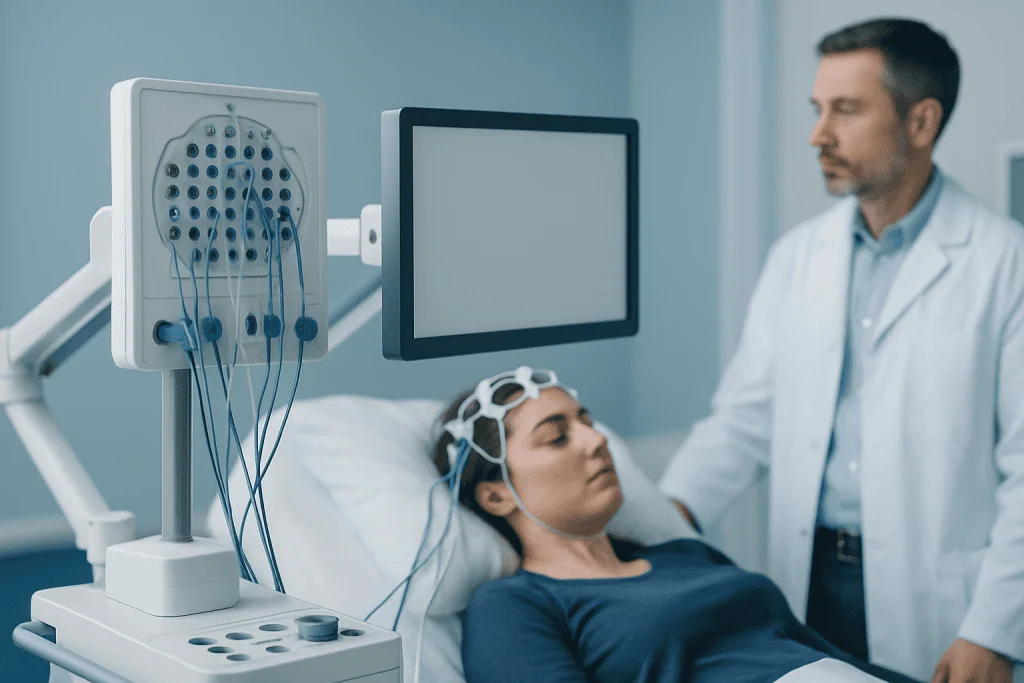
Epilepsy symptoms depend on where in the brain a seizure begins and how far it spreads. Some seizures start in one area of the brain, called focal seizures. Others involve both sides of the brain from the start, called generalized seizures. The same person may have one seizure type or several, and the outward signs can vary from episode to episode.
Possible seizure symptoms include staring, unresponsiveness, sudden confusion, involuntary jerking of an arm or leg, stiffening, loss of awareness, unusual smells or tastes, tingling, sudden fear, repetitive swallowing or picking movements, and convulsions. After a seizure, a person may feel tired, have a headache, be temporarily confused, or need time to speak and think clearly again. This recovery period is sometimes called the post-seizure phase.
Some people notice warning symptoms before certain seizures, often called an aura. An aura may feel like a rising sensation in the stomach, déjà vu, visual changes, a strange smell, or sudden anxiety. Although not everyone experiences this, it can help some people recognize that a seizure is starting and move to a safer place.
- Focal aware seizures: awareness remains intact, but sensations or movements change.
- Focal impaired awareness seizures: awareness is reduced, and automatic behaviors may occur.
- Absence seizures: brief staring spells, more common in children.
- Tonic-clonic seizures: stiffening followed by rhythmic jerking, often with loss of consciousness.
- Myoclonic seizures: very brief shock-like jerks.
- Atonic seizures: sudden loss of muscle tone, which may cause falls.
Why epilepsy happens: causes and risk factors

Epilepsy has many possible causes, and in some people no single cause is found even after careful testing. Known causes include structural changes in the brain, genetic factors, prior stroke, traumatic brain injury, brain tumors, developmental differences, lack of oxygen around birth, infections affecting the brain, and scarring in specific brain regions. Some epilepsy syndromes are more common in childhood, while others begin later in life.
Age can influence the likely cause. In infants and children, epilepsy may be linked to genetic conditions, developmental brain differences, or birth-related injury. In older adults, common causes include stroke, neurodegenerative disease, brain injury, or tumors. A family history of seizures may increase risk in some forms, but epilepsy is not always inherited in a simple way.
Risk factors do not guarantee that epilepsy will develop. They only make it more likely. People with previous serious head trauma, central nervous system infections, or certain underlying neurological conditions may need closer evaluation if seizures occur. In some cases, epilepsy is related to another neurological condition that also requires treatment, such as a brain tumor or complications after stroke.
How epilepsy is diagnosed
Diagnosis begins with a detailed medical history. A doctor will ask what happened before, during, and after the event; how long it lasted; whether there was loss of awareness; and whether anyone witnessed it. Videos recorded by family members, when available and safe to obtain, can be very helpful. The doctor will also review medications, sleep habits, alcohol use, prior illnesses, and family history.
A neurological examination helps assess brain and nerve function. Tests are chosen based on the person’s symptoms and overall health. An electroencephalogram, or EEG, records electrical activity in the brain and can show patterns that support a diagnosis of epilepsy. Brain imaging, especially MRI, may be used to look for structural causes such as scarring, stroke, malformations, or tumors. Blood tests can help identify metabolic or infectious triggers that may have caused a seizure-like event.
Diagnosis is not based on one test result alone. Some people with epilepsy have a normal EEG between seizures, and some seizure-like episodes are caused by conditions other than epilepsy, including fainting, migraine, sleep disorders, movement disorders, or psychological nonepileptic events. In more complex cases, prolonged video-EEG monitoring may be recommended to capture an episode directly and match behavior with brain activity.
Treatment options and long-term seizure control
Treatment depends on seizure type, age, cause, frequency, safety concerns, and personal preferences. For many people, the first treatment is anti-seizure medication. These medicines do not cure epilepsy, but they can reduce or stop seizures by helping stabilize electrical activity in the brain. Choosing the right medication may take time, and regular follow-up is important to balance seizure control with possible side effects.
If seizures continue despite medication, the next step is to re-evaluate the diagnosis, seizure type, and underlying cause. Some people may benefit from epilepsy surgery if seizures start from a specific brain area that can be treated safely. Others may be candidates for device-based therapy or dietary treatment. Depending on the situation, doctors may discuss options such as epilepsy surgery, vagus nerve stimulation, or a ketogenic diet as part of a broader seizure-management plan.
Treatment also includes safety planning and quality-of-life support. This may involve guidance about driving laws, school or workplace adjustments, reproductive health, pregnancy planning, mental health, and injury prevention. When epilepsy is related to another structural brain problem, treatment may overlap with services such as neurosurgery or targeted neurological care. Near the end of the care pathway, some international patients choose evaluation at centers such as Acibadem International, where multidisciplinary specialists in JCI-accredited hospitals diagnose and treat epilepsy using coordinated neurology and neurosurgery expertise.
Daily life, prevention of triggers, and self-care
There is not always a way to prevent epilepsy itself, especially when it is linked to genetics or a past brain injury. However, many people can reduce seizure risk by taking treatment consistently and avoiding common triggers. Missing medication is one of the most frequent reasons seizures return. It is often helpful to use reminders, pill organizers, and regular pharmacy refills to support consistency.
Sleep matters. Sleep deprivation lowers the seizure threshold in some people, making seizures more likely. Stress, heavy alcohol use, recreational drugs, flashing lights in a small subset of patients, and missed meals may also play a role. Keeping a seizure diary can help identify patterns and support more personalized care. The diary may include date, time, symptoms, menstrual cycle information if relevant, sleep, illness, stress, and possible triggers.
Self-care also means making the environment safer. Showering instead of bathing alone, using caution around heights, swimming only with supervision, and discussing driving restrictions with a doctor are practical steps. Families, teachers, and coworkers can learn basic seizure first aid, including protecting the person from injury, turning them onto their side if possible, and avoiding putting anything in the mouth.
When to seek medical care
Medical evaluation is important after a first seizure, even if the person seems to recover fully. A prompt assessment helps determine whether the event was truly a seizure, what may have caused it, and whether treatment is needed. Anyone with recurring episodes of staring, unexplained confusion, sudden falls, or involuntary movements should also be assessed by a qualified doctor, ideally a neurologist.
Urgent medical care is needed if a seizure lasts longer than five minutes, if seizures happen back-to-back without recovery in between, or if the person has trouble breathing, turns blue, is injured, is pregnant, or has diabetes. Emergency help is also important if the event occurs in water or if it is the person’s first known seizure with prolonged confusion afterward.
Follow-up care matters even when seizures are infrequent. Treatment plans may need adjustment over time, especially during childhood growth, pregnancy, older age, or if side effects develop. Seeking care early can improve safety, support independence, and reduce the impact of epilepsy on school, work, and daily life.
Frequently asked questions
Is epilepsy the same as having a seizure?
No. A seizure is a single event caused by a temporary disturbance in brain activity, while epilepsy is a condition marked by a tendency to have repeated unprovoked seizures. A person can have one seizure from a reversible cause and not have epilepsy.
Can epilepsy be cured?
Some people become seizure-free for many years with treatment, and some childhood epilepsy syndromes can resolve over time. Others need long-term management. The outlook depends on the seizure type, cause, and response to treatment.
What should someone do during a seizure?
The main goal is to keep the person safe. Move dangerous objects away, gently turn the person onto their side if possible, and time the seizure. Do not restrain them and do not put anything in their mouth. Call emergency services if the seizure lasts more than five minutes or if there is injury, breathing trouble, or repeated seizures.
Can people with epilepsy drive?
Driving rules vary by country and region, and they often depend on how long a person has been seizure-free. A doctor can explain the local legal requirements and help decide when driving may be safe again. It is important to follow these rules for personal and public safety.
Does epilepsy always cause convulsions?
No. Some seizures are very brief and may only cause staring, confusion, unusual sensations, or automatic movements. Because symptoms can be subtle, epilepsy may sometimes be mistaken for daydreaming, fainting, or another condition until proper evaluation is done.
Can stress or lack of sleep trigger seizures?
Yes, in some people stress and poor sleep can lower the seizure threshold and make seizures more likely. They are not usually the root cause of epilepsy, but they can contribute to breakthrough seizures. Managing sleep, stress, and medication schedules is often an important part of care.
References
- World Health Organization
- Centers for Disease Control and Prevention
- National Institute of Neurological Disorders and Stroke
- International League Against Epilepsy
- Epilepsy Foundation
This article is for general information only and is not a substitute for professional medical advice. Please consult a qualified doctor about your individual situation.
Epilepsy in Turkey — costs, top hospitals & a free quote
JCI-accredited · board-certified surgeons · reply within 24h
Add us as a Preferred Source to see more of our trusted health content across Google Search, AI Overviews and Discover.

Neurology
Diagnosis and treatment of disorders of the brain, spinal cord, nerves and muscles.
51 specialists in this unitMore from the Health Library



Related Specialists

Prof. Dr. Gül Başaran
Medical Oncology
Prof. Dr. Özlem Aydın
Pathology
Dr. Nihal Üstün
Aesthetic Plastic & Reconstructive Surgery
Dr. Ahmet Ali Aktaş
General Surgery