Epilepsy: Seizure Types, Diagnosis, and Treatment Options

Epilepsy is diagnosed when a person has recurrent unprovoked seizures or a high risk of further seizures after one event. Seizures can look very different, from brief staring spells to convulsions, depending on where and how abnormal electrical activity spreads in the brain.
Key Takeaways
- Epilepsy is diagnosed when a person has recurrent unprovoked seizures or a high risk of further seizures after one event.
- Seizures can look very different, from brief staring spells to convulsions, depending on where and how abnormal electrical activity spreads in the brain.
- Diagnosis usually combines a detailed history, witness descriptions, neurological examination, EEG, and brain imaging when appropriate.
- Anti-seizure medicines are the main treatment, while surgery, neurostimulation, and dietary therapy may help selected patients.
- Seizure first aid focuses on keeping the person safe, timing the seizure, and calling emergency help when warning signs occur.
Epilepsy is a common neurological condition in which a person has a tendency to experience repeated seizures. With careful diagnosis and an individualized treatment plan, many people can reduce seizures and live active, fulfilling lives.
Overview
Epilepsy is a disorder of the brain in which a person is predisposed to having seizures. A seizure happens when groups of nerve cells in the brain send abnormal electrical signals at the same time. This can temporarily affect awareness, movement, sensation, behavior, emotions, or memory.
Having one seizure does not always mean a person has epilepsy. Seizures can occur because of fever, low blood sugar, alcohol withdrawal, certain medicines, or an acute illness. Epilepsy is generally considered when seizures are unprovoked and recurrent, or when a doctor determines that the risk of future seizures is high after a first event.
Epilepsy can begin at any age. Some types start in childhood and may improve over time, while others begin in adulthood or later life. The experience is different for every person, so treatment decisions are based on seizure type, cause, age, overall health, lifestyle, and personal goals.
Seizure Types and Symptoms
Seizures are often grouped into focal onset, generalized onset, and unknown onset seizures. Focal seizures start in one area or network on one side of the brain. Generalized seizures involve both sides of the brain from the beginning. If no one sees the start of the event or the information is incomplete, it may initially be classified as unknown onset.
Focal seizures may occur with preserved awareness or impaired awareness. Symptoms may include unusual smells or tastes, a rising feeling in the stomach, sudden fear, tingling, jerking of one part of the body, staring, repetitive movements such as lip smacking, or confusion afterward. Some people have an aura, which is actually a focal seizure that can serve as a warning before a larger seizure.
Generalized seizures include several patterns. Absence seizures can cause brief staring and loss of awareness, often with rapid recovery. Myoclonic seizures cause sudden, brief muscle jerks. Tonic-clonic seizures involve stiffening followed by rhythmic jerking and usually a period of sleepiness or confusion after the event. Other types may cause sudden loss of muscle tone, stiffening, or falls.
Symptoms after a seizure, called the postictal period, are also important. A person may feel tired, confused, have a headache, muscle soreness, or temporary weakness in one part of the body. Describing what happens before, during, and after an episode helps the doctor identify the seizure type and choose the most appropriate treatment.
Causes and Risk Factors

In many people, the exact cause of epilepsy is not found. In others, epilepsy may be related to a structural, genetic, infectious, metabolic, immune, or unknown cause. Identifying the cause can be useful because it may influence treatment choices, prognosis, and whether family members need counseling.
Possible causes and risk factors include previous stroke, traumatic brain injury, brain infections such as meningitis or encephalitis, brain tumors, developmental brain differences, complications around birth, and certain genetic conditions. In older adults, stroke and other vascular brain changes are important causes of new-onset seizures.
Some factors do not cause epilepsy by themselves but can trigger seizures in someone who is susceptible. Common triggers include missed anti-seizure medication, sleep deprivation, heavy alcohol use or withdrawal, illness with fever, stress, dehydration, and, in some people, flashing lights or specific visual patterns. Triggers vary widely, and many seizures occur without a clear trigger.
Keeping a seizure diary can help patients and doctors recognize patterns. The diary may include the date and time of the seizure, sleep, missed medicines, alcohol intake, menstrual cycle timing, stress, illness, and a description of the event. This information supports safer daily planning and more precise treatment adjustments.
Diagnosis
Epilepsy diagnosis begins with a detailed medical history. Because many people do not remember the seizure itself, information from witnesses is very valuable. A video recorded safely on a phone, if available, can help the neurologist distinguish epileptic seizures from fainting, sleep disorders, migraine, movement disorders, panic attacks, or non-epileptic events.
A neurological examination assesses strength, reflexes, sensation, coordination, speech, and cognition. Blood tests may be used to look for treatable triggers or related medical conditions, such as electrolyte imbalance or infection. The doctor may also review current medicines, alcohol or substance use, and family history.
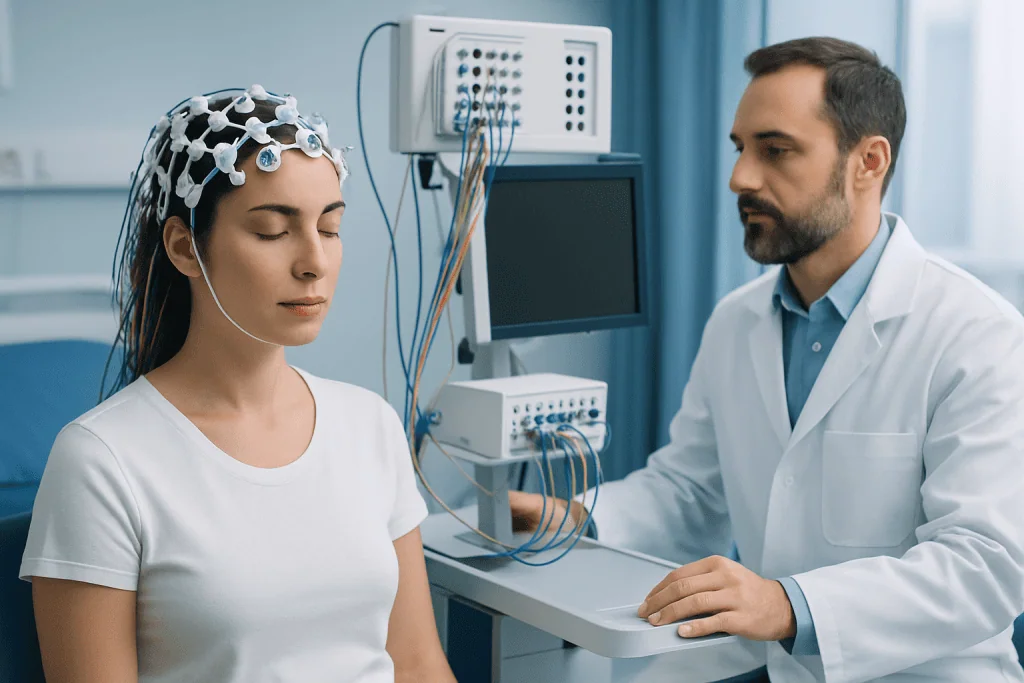
An electroencephalogram, or EEG, records electrical activity from the scalp and can show patterns that support a diagnosis of epilepsy. A normal EEG does not rule out epilepsy, because abnormal activity may not appear during the recording. Some patients need sleep-deprived EEG, prolonged ambulatory EEG, or video-EEG monitoring in a hospital epilepsy unit.
Brain imaging is often recommended, especially after a first unprovoked seizure in adults or when focal seizures are suspected. Magnetic resonance imaging, or MRI, can detect scars, developmental changes, tumors, stroke-related changes, or other structural causes. In selected cases, additional tests such as PET, SPECT, genetic testing, or neuropsychological assessment may help guide treatment planning.
Treatment Options
The main treatment for epilepsy is anti-seizure medication. The choice of medicine depends on seizure type, epilepsy syndrome, age, sex, pregnancy plans, other medical conditions, possible side effects, and interactions with other medicines. Patients should take medication exactly as prescribed and should not stop suddenly unless a doctor advises it, because abrupt withdrawal can increase seizure risk.
Many people achieve good seizure control with one medicine, while others may need a different medicine or a combination. Follow-up visits help the doctor assess seizure control, side effects, blood test needs, mood, sleep, and daily functioning. Treatment goals include reducing seizures, minimizing side effects, and supporting quality of life.
For some people whose seizures continue despite appropriate medicines, further evaluation at an epilepsy center may be recommended. Options may include epilepsy surgery if seizures start from a specific brain area that can be treated safely. Neurostimulation approaches, such as vagus nerve stimulation, responsive neurostimulation, or deep brain stimulation, may be considered in selected patients.
Dietary therapy can help certain patients, especially some children and selected adults with drug-resistant epilepsy. Examples include ketogenic or modified ketogenic diets, which must be supervised by experienced clinicians because they require careful planning and monitoring. Psychological support, rehabilitation, school or workplace adjustments, and education for family members are also important parts of comprehensive epilepsy care.
Prevention, Lifestyle, and Seizure Safety
Not all seizures can be prevented, but daily habits can reduce risk for many people. Taking medicine consistently, getting enough sleep, limiting alcohol, treating illness promptly, and discussing new medications or supplements with a doctor are practical steps. People with photosensitive epilepsy may need advice about screens, lighting, and visual triggers.
Safety planning depends on the person’s seizure type and level of control. A doctor can advise about driving rules, swimming, bathing, working at heights, operating machinery, and sports. Regulations for driving after seizures differ by country and region, so patients should ask their healthcare team about local requirements.
Basic seizure first aid is simple and can prevent injury. Bystanders should stay calm, ease the person to the floor if needed, move sharp objects away, place the person on their side when possible, and time the seizure. They should not hold the person down, put anything in the mouth, or give food, drink, or tablets until the person is fully awake.
Emergency help is needed if a seizure lasts longer than five minutes, repeated seizures occur without recovery, breathing difficulty continues after the seizure, injury occurs, the person is pregnant, the seizure happens in water, or it is the person’s first known seizure. Families, schools, and workplaces can benefit from a written seizure action plan prepared with the healthcare team.
When to See a Doctor
Anyone who has a first seizure should be assessed by a qualified healthcare professional. Urgent evaluation is especially important if the seizure is prolonged, occurs after a head injury, is associated with fever, severe headache, weakness, pregnancy, diabetes, or if the person does not return to their usual state afterward.
People already diagnosed with epilepsy should contact their doctor if seizure frequency changes, new symptoms appear, side effects interfere with daily life, medication is missed repeatedly, or pregnancy is planned. Medication choices may need review before and during pregnancy, as seizure control and fetal safety both require careful specialist guidance.
A neurology or epilepsy specialist can help when the diagnosis is uncertain, seizures continue despite treatment, or advanced testing is needed. Near the end of a diagnostic journey or treatment plan, patients may also seek care at centers with multidisciplinary teams; Acibadem International’s JCI-accredited hospitals provide diagnosis and treatment for epilepsy for international patients through neurology, neurosurgery, imaging, and rehabilitation services.
Frequently asked questions
What is the difference between a seizure and epilepsy?
A seizure is a single episode of abnormal electrical activity in the brain. Epilepsy is a condition in which a person has recurrent unprovoked seizures or a high risk of further seizures. Some seizures are provoked by temporary problems such as fever, low blood sugar, or alcohol withdrawal and may not mean the person has epilepsy.
Can epilepsy be cured?
Some epilepsy syndromes improve or remit over time, especially certain childhood forms. For many people, seizures can be well controlled with medication or other treatments, even if the underlying tendency remains. A neurologist can explain the likely outlook based on the seizure type, cause, EEG, imaging, and response to treatment.
Is epilepsy always visible as shaking or convulsions?
No. Some seizures cause convulsions, but others may look like staring, brief confusion, unusual sensations, sudden jerks, repetitive movements, or a short lapse in awareness. Because symptoms can be subtle, witness descriptions and video recordings can be very helpful for diagnosis.
What tests are used to diagnose epilepsy?
Diagnosis usually includes a careful history, neurological examination, EEG, and sometimes blood tests. Brain MRI is often used to look for structural causes, especially in adults or when focal seizures are suspected. Some patients need prolonged video-EEG monitoring or other specialized tests.
Do all people with epilepsy need lifelong medication?
Not always. Some people may eventually be able to reduce or stop medication under medical supervision if they have been seizure-free for a suitable period and their risk is low. This decision must be individualized, because stopping medication too soon or suddenly can increase the chance of seizures.
What should someone do if they see a person having a seizure?
They should protect the person from injury, place them on their side if possible, loosen tight clothing around the neck, and time the seizure. Nothing should be placed in the person’s mouth, and they should not be restrained. Emergency services should be called if the seizure lasts more than five minutes, repeats, causes injury, or is the first known seizure.
References
- World Health Organization
- International League Against Epilepsy
- National Institute of Neurological Disorders and Stroke
- Epilepsy Foundation
- National Institute for Health and Care Excellence
This article is for general information only and is not a substitute for professional medical advice. Please consult a qualified doctor about your individual situation.
Epilepsy in Turkey — costs, top hospitals & a free quote
JCI-accredited · board-certified surgeons · reply within 24h
Add us as a Preferred Source to see more of our trusted health content across Google Search, AI Overviews and Discover.

Neurology
Diagnosis and treatment of disorders of the brain, spinal cord, nerves and muscles.
51 specialists in this unit