Esophageal Cancer: Swallowing Difficulty, Endoscopy, and Treatment

Progressive difficulty swallowing, especially with weight loss or pain, should be assessed by a doctor. Upper endoscopy with biopsy is the key test used to confirm esophageal cancer.
Key Takeaways
- Progressive difficulty swallowing, especially with weight loss or pain, should be assessed by a doctor.
- Upper endoscopy with biopsy is the key test used to confirm esophageal cancer.
- Treatment depends on the cancer type, stage, location, general health and nutritional status.
- Options may include endoscopic therapy, surgery, chemotherapy, radiation therapy, targeted therapy, immunotherapy or symptom-relieving care.
- Smoking cessation, limiting alcohol, managing reflux and maintaining a healthy weight may help reduce risk.
Esophageal cancer develops in the tube that carries food from the throat to the stomach and may first appear as difficulty swallowing. Early medical evaluation, usually with endoscopy and biopsy, helps guide the safest and most effective treatment plan.
Overview
Esophageal cancer is a disease in which abnormal cells grow in the esophagus, the muscular tube that moves food and liquids from the mouth to the stomach. Because the esophagus is narrow and important for swallowing, a tumor may gradually make eating more difficult. Some people first notice that solid foods feel stuck, while liquids may still pass normally.
There are two main types. Squamous cell carcinoma usually starts in the flat cells lining the upper or middle esophagus. Adenocarcinoma more often develops in the lower esophagus, sometimes in areas affected by long-term acid reflux and Barrett’s esophagus. The distinction matters because risk factors, tumor location and treatment planning can differ.
Many people worry when they hear the word cancer, but evaluation and treatment are increasingly individualized. Doctors use endoscopy, biopsy and imaging tests to understand exactly where the cancer is, how far it has grown and which treatments are most appropriate. Care usually involves a team that may include gastroenterologists, oncologists, surgeons, radiation oncologists, dietitians and specialized nurses.
Symptoms and Warning Signs
The most common symptom of esophageal cancer is dysphagia, meaning difficulty swallowing. It often begins with a sensation that meat, bread or other solid foods are sticking in the chest or throat. Over time, softer foods and liquids may also become harder to swallow if the narrowing increases.
Other symptoms can include unintentional weight loss, chest discomfort or pressure, pain when swallowing, persistent indigestion or heartburn, hoarseness, chronic cough, vomiting, regurgitation of food, hiccups or black stools. These symptoms can also be caused by non-cancer conditions such as reflux, strictures, infections or motility disorders, so a medical evaluation is needed to identify the cause.
Symptoms that become progressively worse are especially important. A person should not wait until eating becomes very limited, because nutrition and strength are important for treatment tolerance and recovery. Early assessment can also help relieve symptoms and reduce anxiety by clarifying what is happening.
Causes and Risk Factors
Esophageal cancer develops when cells in the esophagus acquire genetic changes that allow them to grow in an uncontrolled way. In many cases, no single cause can be identified. However, several factors are known to increase risk, and some are more strongly linked with one cancer type than the other.
Risk factors for esophageal squamous cell carcinoma include tobacco use, heavy alcohol use and long-term irritation of the esophageal lining. Risk factors for adenocarcinoma include chronic gastroesophageal reflux disease, Barrett’s esophagus, obesity and being male. Increasing age also raises the likelihood of developing the disease. A history of previous radiation to the chest or certain rare inherited conditions may also be relevant.
- Tobacco: Smoking or other tobacco exposure can damage cells in the esophagus.
- Alcohol: Heavy alcohol use, particularly together with tobacco, increases risk.
- Long-term reflux: Chronic acid exposure may lead to Barrett’s esophagus in some people.
- Obesity: Excess weight can increase reflux and is linked with adenocarcinoma of the lower esophagus.
- Diet and general health: A balanced diet and treatment of reflux-related symptoms support overall digestive health.
Diagnosis: Endoscopy, Biopsy and Staging
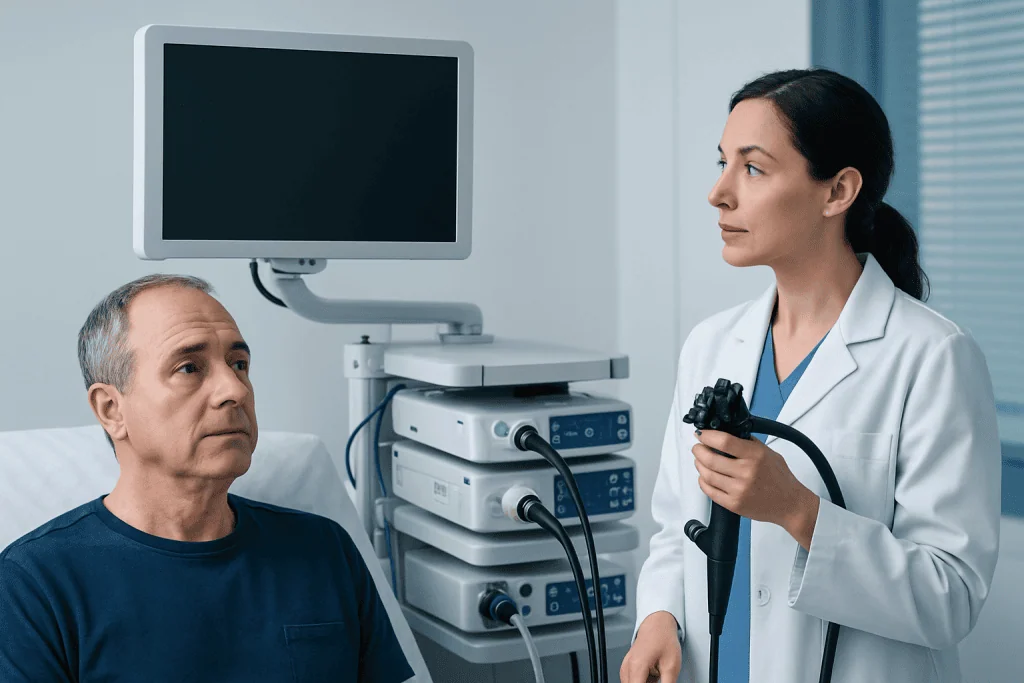
The main test for suspected esophageal cancer is upper gastrointestinal endoscopy. During this procedure, a thin flexible tube with a camera is passed through the mouth to examine the esophagus, stomach and upper small intestine. If an abnormal area is seen, the doctor takes small tissue samples, called biopsies, which are examined under a microscope to confirm whether cancer cells are present.
After a diagnosis is confirmed, staging tests help determine how deeply the tumor has grown and whether it has spread to nearby lymph nodes or other organs. These tests may include endoscopic ultrasound, computed tomography, positron emission tomography, magnetic resonance imaging in selected cases and blood tests to assess general health. Bronchoscopy may be considered if the tumor is high in the esophagus or close to the airway.
Staging is essential because a very early tumor may be treated differently from a tumor that has grown deeper into the esophageal wall or spread beyond it. Doctors also evaluate swallowing ability, nutritional status, heart and lung function, and other medical conditions. This information helps the care team balance cancer control with safety, recovery and quality of life.
Treatment Options
Treatment for esophageal cancer depends on the cancer type, location, stage and the person’s overall health. For very early cancers limited to the inner lining, endoscopic treatments may be possible. These can include endoscopic mucosal resection or endoscopic submucosal dissection to remove abnormal tissue, sometimes combined with treatments that destroy remaining abnormal cells in Barrett’s esophagus.
For cancers that are more advanced but still potentially removable, treatment may involve surgery, chemotherapy, radiation therapy or a combination. Esophagectomy is an operation to remove part or most of the esophagus and reconstruct the food pathway, often using the stomach. In many cases, chemotherapy and radiation are given before surgery to shrink the tumor and treat microscopic disease. Some patients receive definitive chemoradiation without surgery, depending on tumor type, location and medical fitness.
If cancer has spread to distant organs or cannot be safely removed, treatment focuses on controlling the disease, easing swallowing and maintaining quality of life. Options may include systemic chemotherapy, immunotherapy, targeted therapy for tumors with specific markers, radiation for symptom control, esophageal stents, dilation or feeding support. Palliative care can be included at any stage to help manage symptoms, nutrition, pain, fatigue and emotional stress; it is supportive care and can be provided alongside cancer-directed treatment.
Nutrition, Recovery and Self-Care
Nutrition is a central part of esophageal cancer care because swallowing problems can lead to weight loss, dehydration and loss of muscle strength. A dietitian may suggest softer foods, smaller frequent meals, high-protein options and high-calorie drinks when appropriate. Some people need temporary feeding tube support before, during or after treatment, especially if swallowing is severely limited or major surgery is planned.
Self-care does not replace medical treatment, but it can support comfort and resilience. People are often advised to stop smoking, avoid alcohol, manage reflux symptoms as directed, stay as active as their energy allows and report new swallowing or breathing symptoms promptly. After surgery or chemoradiation, gradual recovery is expected, and meal patterns may change because the digestive tract has been altered.
Follow-up visits are important to monitor healing, nutrition, treatment effects and possible recurrence. The schedule varies by stage and treatment plan. Patients should keep a list of medications, symptoms and questions for appointments, and should tell the care team about swallowing changes, persistent vomiting, fever, worsening pain or inability to maintain fluids.
Prevention, Screening and When to See a Doctor
There is no routine screening program for esophageal cancer for the general population in many countries. However, people with Barrett’s esophagus or other high-risk conditions may need periodic endoscopic surveillance as recommended by a gastroenterologist. The goal is to identify precancerous changes or very early cancer when treatment may be less extensive.
Risk reduction focuses on modifiable factors. Avoiding tobacco, limiting or avoiding alcohol, maintaining a healthy weight, eating a varied diet and seeking care for chronic reflux symptoms may help reduce risk. People with long-standing heartburn, especially if symptoms change, should discuss whether evaluation for Barrett’s esophagus is appropriate.
A doctor should be consulted for difficulty swallowing that persists or worsens, food sticking in the chest, unexplained weight loss, painful swallowing, vomiting blood, black stools, persistent hoarseness or chest discomfort with eating. For international patients seeking coordinated evaluation, Acibadem International offers multidisciplinary specialists and JCI-accredited hospitals that diagnose and treat esophageal cancer, including endoscopy, staging and treatment planning. Any treatment decision should be made with a qualified medical team after personal assessment.
Frequently asked questions
Is difficulty swallowing always a sign of esophageal cancer?
No. Difficulty swallowing can be caused by reflux-related narrowing, inflammation, infections, muscle disorders or other non-cancer conditions. However, progressive swallowing difficulty should always be checked by a doctor, especially if it is accompanied by weight loss, pain or vomiting.
How is esophageal cancer confirmed?
Esophageal cancer is confirmed with an upper endoscopy and biopsy. The endoscopy allows the doctor to see the lining of the esophagus, while the biopsy provides tissue that a pathologist examines under a microscope. Imaging tests are then used to stage the cancer and guide treatment.
Can esophageal cancer be treated without surgery?
Yes, some patients are treated without surgery depending on the stage, tumor location, type of cancer and overall health. Very early tumors may be treated with endoscopic techniques, while some larger tumors may be managed with chemotherapy and radiation. Advanced disease may be treated with systemic medicines and symptom-relieving procedures.
What is Barrett's esophagus and why does it matter?
Barrett's esophagus is a change in the lining of the lower esophagus that can occur after long-term acid reflux. Most people with Barrett's esophagus do not develop cancer, but the condition increases the risk of esophageal adenocarcinoma. Doctors may recommend periodic endoscopy to monitor for precancerous changes.
What treatments help when swallowing becomes difficult?
Treatment depends on the cause and stage of the disease. Options may include cancer-directed treatment to shrink the tumor, endoscopic dilation, placement of a stent, radiation for symptom relief or feeding support. A dietitian can also help with food texture, meal timing and nutrition goals.
What should patients ask their care team after diagnosis?
Helpful questions include the exact cancer type, stage, treatment goals, possible side effects and whether surgery, chemotherapy, radiation, immunotherapy or endoscopic treatment is recommended. Patients may also ask about nutrition support, recovery time, clinical trial suitability and follow-up plans. Bringing a family member or written notes can make appointments easier.
References
- World Health Organization
- National Cancer Institute
- American Cancer Society
- European Society for Medical Oncology
- National Comprehensive Cancer Network
This article is for general information only and is not a substitute for professional medical advice. Please consult a qualified doctor about your individual situation.
Esophageal Cancer in Turkey — costs, top hospitals & a free quote
JCI-accredited · board-certified surgeons · reply within 24h
Add us as a Preferred Source to see more of our trusted health content across Google Search, AI Overviews and Discover.

Medical Oncology Department
Medical treatment of cancer with chemotherapy, immunotherapy and targeted therapies under a multidisciplinary tumor board.
60 specialists in this unit