Esophageal Dysmotility: What Patients Need to Know

Esophageal dysmotility refers to abnormal movement of the esophagus rather than a single disease. Common symptoms include trouble swallowing, chest pain, regurgitation, and a sensation of food getting stuck.
Key Takeaways
- Esophageal dysmotility refers to abnormal movement of the esophagus rather than a single disease.
- Common symptoms include trouble swallowing, chest pain, regurgitation, and a sensation of food getting stuck.
- Tests such as endoscopy, barium swallow, and esophageal manometry help identify the cause.
- Treatment depends on the specific motility problem and may include medicines, diet changes, endoscopic therapy, or surgery.
- Persistent swallowing problems should be evaluated by a doctor to rule out blockage, inflammation, or more serious conditions.
Esophageal dysmotility is a problem with how the esophagus contracts and moves food or liquid toward the stomach. It can cause swallowing difficulty, chest discomfort, regurgitation, or the feeling that food is sticking, and diagnosis usually relies on specialized swallowing and motility tests.
Overview: what esophageal dysmotility means
Esophageal dysmotility means the muscles and nerves of the esophagus are not coordinating normally to move food and liquid from the mouth to the stomach. The esophagus usually works in a smooth, wave-like pattern called peristalsis. When this pattern is weak, uncoordinated, or overly forceful, swallowing may become uncomfortable or ineffective.
This term does not describe one single illness. Instead, it is a broad way of describing a group of swallowing movement disorders, including conditions such as achalasia and other esophageal motility disorders. Some people have only mild, occasional symptoms, while others have more persistent problems that affect eating, drinking, and quality of life.
Because symptoms can overlap with acid reflux, esophageal narrowing, or heart-related chest pain, proper diagnosis matters. A careful medical evaluation helps determine whether the issue is truly related to abnormal movement of the esophagus and which treatment is most appropriate.
How the esophagus normally works
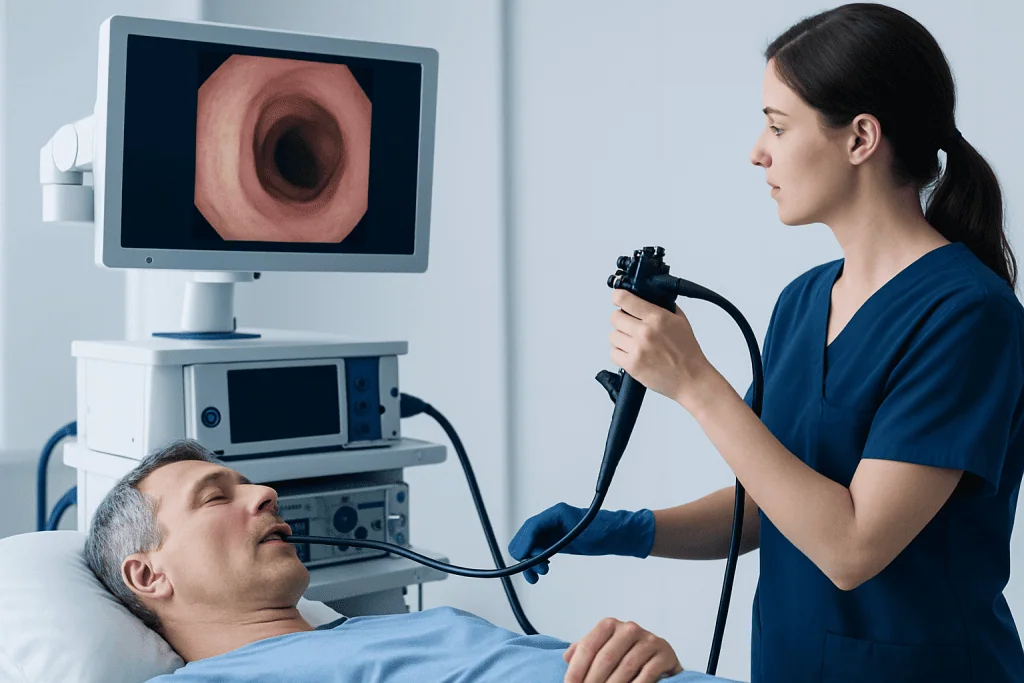
After a person swallows, the esophagus carries food downward through rhythmic muscle contractions. At the lower end of the esophagus, a muscular valve called the lower esophageal sphincter relaxes to let food pass into the stomach. This coordinated sequence depends on healthy muscles, normal nerve signaling, and a clear passageway.
In esophageal dysmotility, one or more parts of this process do not function normally. The contractions may be too weak to push food forward, too strong and painful, or poorly timed. In some disorders, the lower esophageal sphincter may not relax properly, causing food to collect in the esophagus instead of moving into the stomach.
Understanding this basic mechanism helps explain why symptoms can vary. A person with weak contractions may mainly notice slow swallowing, while someone with spasms may have chest pain or intermittent difficulty swallowing both solids and liquids.
Symptoms patients may notice

The most common symptom of esophageal dysmotility is dysphagia, which means difficulty swallowing. Some people describe this as food sticking in the chest, slow passage of meals, or needing extra water to help food go down. Symptoms may occur with solids, liquids, or both, depending on the underlying disorder.
Other possible symptoms include chest discomfort, regurgitation of food or liquid, heartburn-like symptoms, chronic cough, throat clearing, and the sensation of a lump in the throat. If food or liquid comes back up, some people may also experience nighttime coughing or choking.
Symptoms can be intermittent or progressive. They may be triggered by stress, very hot or cold foods, rapid eating, or large bites. However, these symptoms are not specific to dysmotility alone, so testing is often needed to separate motility disorders from gastroesophageal reflux disease or structural problems such as narrowing of the esophagus.
- Difficulty swallowing solids or liquids
- Food feeling stuck after swallowing
- Chest pain not clearly related to the heart
- Regurgitation of undigested food
- Coughing, choking, or aspiration symptoms
- Unintended weight loss in more advanced cases
Causes and risk factors
Esophageal dysmotility can happen for several reasons. In some people, the exact cause is not known. In others, the problem is linked to abnormalities in the nerves or muscles of the esophagus, chronic reflux-related irritation, connective tissue disease, diabetes, prior surgery, or certain medications that can affect smooth muscle function.
Specific disorders have different patterns. Achalasia involves impaired relaxation of the lower esophageal sphincter along with abnormal peristalsis. Distal esophageal spasm and hypercontractile esophagus involve abnormal or overly strong contractions. Ineffective esophageal motility involves weak contractions that may make swallowing less efficient, especially when lying down or eating quickly.
Risk factors can include increasing age, long-standing reflux symptoms, autoimmune or connective tissue disorders, and neurologic conditions that affect swallowing pathways. Even so, esophageal dysmotility can occur in otherwise healthy adults. Since chest pain and swallowing problems may reflect different conditions, it is important not to assume the cause without medical assessment.
How doctors diagnose esophageal dysmotility
Diagnosis starts with a medical history and physical examination. The doctor will ask whether symptoms happen with solids, liquids, or both; whether they are occasional or worsening; and whether there is weight loss, regurgitation, reflux, coughing, or pain. This helps guide the next tests and identify urgent concerns.
Upper endoscopy is commonly used to look for inflammation, narrowing, rings, tumors, or retained food. A barium swallow study can show how contrast moves through the esophagus and may reveal delayed emptying or characteristic patterns of obstruction. These tests are often useful before specialized motility testing.
The most important test for confirming many esophageal motility disorders is esophageal manometry. This test measures the pressure and coordination of the esophageal muscles and the lower esophageal sphincter during swallowing. In selected patients, doctors may also recommend pH monitoring to evaluate acid reflux or consider endoscopy as part of a broader swallowing evaluation.
Because chest pain may sometimes mimic cardiac disease, doctors may also recommend heart evaluation when appropriate. The goal is to identify the precise disorder, since treatment for one motility pattern may not help another.
Treatment options and long-term management
Treatment depends on the exact diagnosis, symptom severity, overall health, and whether reflux or obstruction is also present. Mild cases may improve with eating adjustments and treatment of contributing conditions, while more significant motility disorders may need medication, endoscopic therapy, or surgery.
For some patients, doctors may use medicines that relax or modulate esophageal muscle activity, or medicines that reduce acid exposure when reflux is a contributing problem. If swallowing difficulty is related to structural narrowing or retained food, procedures performed during gastroscopy may help in selected situations. Treatment is individualized, and not every medicine works for every motility pattern.
In achalasia and certain other disorders affecting the lower esophageal sphincter, more targeted treatment may be needed. Options can include pneumatic dilation, botulinum toxin in selected patients, or surgery such as laparoscopic Heller myotomy. The right choice depends on test results, symptom burden, age, and patient preference.
Follow-up is important because symptoms can change over time. Some patients benefit from working with a gastroenterologist, surgeon, nutrition professional, or swallowing specialist. Near the end of the care pathway, some international patients may choose centers such as Acibadem International, where multidisciplinary specialists in JCI-accredited hospitals diagnose and treat esophageal motility disorders.
Self-care, eating strategies, and prevention
There is no single way to prevent every form of esophageal dysmotility, especially when it is related to nerve or muscle dysfunction. Still, practical habits can make swallowing safer and more comfortable. Eating slowly, chewing thoroughly, taking small bites, and drinking sips of water between bites often help reduce symptoms during meals.
Some people feel better when they avoid very dry, tough, or extremely hot or cold foods. Remaining upright for at least a period after eating may reduce regurgitation and reflux symptoms. If reflux is present, weight management, avoiding late meals, and limiting trigger foods may also be useful.
People should not make major diet restrictions without guidance, especially if they are losing weight or avoiding many foods. Persistent symptoms deserve medical review, since self-care measures can support comfort but do not replace diagnosis. Seeking help early may prevent dehydration, nutritional problems, or repeated aspiration.
- Eat smaller, slower meals
- Chew food thoroughly
- Take sips of water with meals if advised
- Stay upright after eating
- Track foods that worsen symptoms
- Seek advice if weight loss or choking occurs
When to seek medical care
Anyone with ongoing difficulty swallowing should arrange a medical evaluation, especially if the problem is getting worse or happens with both solids and liquids. Even when symptoms come and go, repeated episodes can point to a motility disorder that deserves proper testing.
More urgent medical attention is needed if a person cannot swallow saliva, has food stuck that does not pass, develops severe chest pain, vomits blood, has black stools, or shows signs of dehydration. Unexplained weight loss, repeated choking, or frequent coughing during meals also deserve prompt assessment.
It is also important to remember that chest pain is not always from the esophagus. If chest pain is new, severe, associated with shortness of breath, sweating, fainting, or pain spreading to the arm or jaw, emergency assessment is appropriate to rule out a heart problem.
Frequently asked questions
Is esophageal dysmotility the same as acid reflux?
No. Esophageal dysmotility refers to abnormal movement or coordination of the esophageal muscles, while acid reflux is the backflow of stomach contents into the esophagus. The two conditions can occur together, which is why testing is sometimes needed to tell them apart.
Can esophageal dysmotility cause chest pain?
Yes, some motility disorders can cause chest pain or pressure, especially when the esophagus contracts abnormally. However, chest pain can also come from the heart or other causes, so new or severe pain should be assessed promptly.
What is the best test for esophageal dysmotility?
Esophageal manometry is often the key test because it measures how the esophageal muscles and lower sphincter work during swallowing. Doctors may also use endoscopy and a barium swallow to look for structural problems or related conditions.
Is esophageal dysmotility treatable?
In many cases, yes. Treatment depends on the specific motility disorder and may include eating changes, medicines, endoscopic procedures, or surgery. The goal is to improve swallowing, reduce discomfort, and prevent complications.
Can esophageal dysmotility go away on its own?
Some mild symptoms may fluctuate, especially if they are influenced by stress, eating habits, or reflux. But persistent or recurring swallowing problems should not be ignored, because the underlying cause may need targeted treatment.
What foods are easier to eat with swallowing problems?
Many people tolerate softer, moister foods better than dry or tough foods. Small bites, careful chewing, and eating slowly can also help, but the best approach depends on the cause of the swallowing problem and should be discussed with a clinician.
References
- National Institute of Diabetes and Digestive and Kidney Diseases
- American College of Gastroenterology
- National Institute on Deafness and Other Communication Disorders
- Mayo Clinic
- Cleveland Clinic
This article is for general information only and is not a substitute for professional medical advice. Please consult a qualified doctor about your individual situation.
Persistent digestive symptoms? Get evaluated in Turkey
JCI-accredited · board-certified surgeons · reply within 24h
Add us as a Preferred Source to see more of our trusted health content across Google Search, AI Overviews and Discover.