Essential Tremor: Symptoms, Diagnosis, and When Neuromodulation May Help

Essential tremor most often causes shaking of the hands during movement rather than at rest. Symptoms can also affect the head, voice, jaw, or less commonly other body parts.
Key Takeaways
- Essential tremor most often causes shaking of the hands during movement rather than at rest.
- Symptoms can also affect the head, voice, jaw, or less commonly other body parts.
- Diagnosis is mainly clinical and focuses on symptom pattern, medical history, and ruling out other causes of tremor.
- Treatment may include lifestyle changes, occupational strategies, medication, and in some cases procedural therapy.
- Neuromodulation may be considered when tremor remains disabling despite appropriate medical treatment.
Essential tremor is a common movement disorder that causes rhythmic shaking, most often in the hands during action or when holding a posture. Although it is not usually dangerous, it can interfere with daily activities, and a range of treatments may help, including medication and, for selected people, neuromodulation procedures.
Overview of Essential Tremor
Essential tremor is a neurological movement disorder that causes rhythmic, involuntary shaking. It most commonly affects the hands and arms, especially when a person is using them for tasks such as writing, eating, drinking, or holding objects. In many people, the tremor is mild, but in others it can gradually become more noticeable and disruptive over time.
This condition is different from the slight shakiness that can happen temporarily from stress, caffeine, fatigue, or low blood sugar. Essential tremor tends to be ongoing and often follows a consistent pattern. It usually appears during action or while maintaining a posture, rather than when the affected body part is fully at rest.
Although essential tremor is not the same as Parkinson’s disease, the two are sometimes confused because both can involve shaking. Essential tremor is generally considered a separate condition with different typical features, course, and treatment approaches. A careful medical evaluation helps distinguish between them and identify the most appropriate management plan.
Symptoms and How They Affect Daily Life
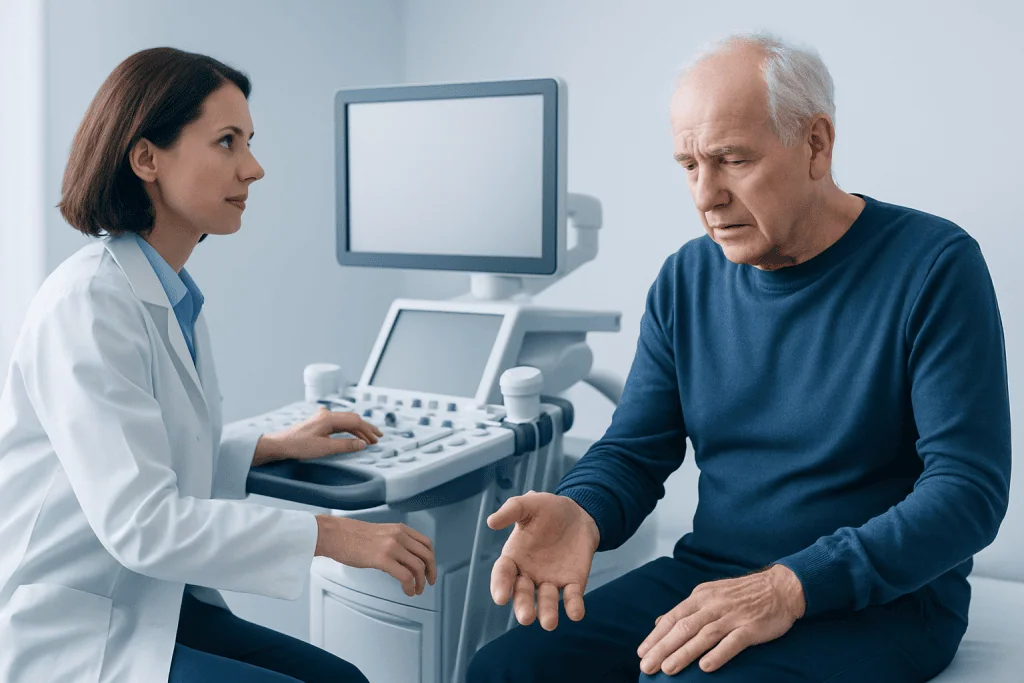
The hallmark symptom of essential tremor is shaking that occurs during movement or while holding a position against gravity. The hands are most often involved, so people may notice difficulty using utensils, pouring liquids, buttoning clothes, applying makeup, typing, or signing documents. The tremor may affect one side more than the other, but it often becomes present in both hands.
Essential tremor can also affect other parts of the body. Some people develop a shaking or nodding movement of the head, a quivering voice, or tremor in the jaw. Less often, the legs or trunk may be involved. Symptoms can vary from day to day and may become more noticeable during emotional stress, fatigue, anxiety, or after stimulants such as caffeine.
For many people, the main burden is not pain but loss of confidence and function in everyday tasks. Activities that require precision can become frustrating, and social situations may feel uncomfortable if others notice the shaking. Even when the tremor is medically benign, its practical and emotional impact can be significant and deserves attention.
- Shaking during writing, eating, drinking, or reaching
- Worsening with stress, tiredness, or stimulants
- Head or voice tremor in some people
- Difficulty with fine motor tasks and social embarrassment
Causes and Risk Factors

The exact cause of essential tremor is not fully understood, but it is thought to involve abnormal signaling within brain circuits that control movement and coordination. These networks may include the cerebellum and related pathways. In many cases, there is a family history, suggesting a genetic contribution.
Essential tremor can occur at different ages. Some people notice symptoms in early adulthood, while others develop tremor later in life. Having a close relative with the condition increases the likelihood of developing it, though not everyone with a family history will be affected.
It is also important to recognize that not every tremor is essential tremor. Shaking can result from medications, thyroid overactivity, alcohol withdrawal, anxiety, metabolic problems, or other neurological conditions. That is why evaluation by a qualified clinician is important, especially when symptoms are new, changing, or accompanied by other neurological signs.
How Essential Tremor Is Diagnosed
There is no single blood test or scan that confirms essential tremor. Diagnosis is usually based on a detailed medical history and neurological examination. The clinician will ask when the shaking happens, which body parts are involved, how long it has been present, whether it runs in the family, and what makes it better or worse.
During the examination, the person may be asked to hold their arms out, draw a spiral, write a sentence, drink from a cup, or perform other simple tasks. These observations help the doctor understand the tremor pattern and look for features that may suggest another diagnosis, such as Parkinson's disease or a different movement disorder.
Tests may be ordered when needed to rule out other causes. Depending on the situation, these can include blood tests to check thyroid function or metabolic problems, medication review, and occasionally imaging or specialized neurological assessment. The aim is not only to name the tremor, but also to identify whether there is an underlying, treatable explanation.
Treatment Options for Essential Tremor
Treatment depends on how much the tremor affects daily life. Mild symptoms may not need medical treatment if they do not interfere with work, self-care, or quality of life. When treatment is needed, the first step often includes practical adjustments such as reducing caffeine, improving sleep, managing stress, and using adaptive tools like weighted utensils or cups with lids.
Medications can help many people reduce tremor severity. Doctors may prescribe certain medicines commonly used for tremor control, choosing them based on overall health, age, other medical conditions, and possible side effects. Occupational therapy may also be useful for learning strategies that make handwriting, eating, dressing, and other daily tasks easier.
If tremor remains disabling despite appropriate medication, procedural options may be considered. One important option is deep brain stimulation, a form of neuromodulation in which implanted electrodes deliver carefully controlled electrical signals to target brain circuits involved in tremor. In selected patients, Gamma Knife radiosurgery or focused ultrasound may also be discussed, depending on the person’s tremor pattern, health status, and local expertise.
Choice of treatment should be individualized. The best approach depends on tremor severity, which side is most affected, whether both hands are involved, how much disability the person experiences, and the balance between expected benefit and procedure-related considerations. A neurologist with experience in movement disorders can help guide these decisions carefully.
When Neuromodulation May Help
Neuromodulation is generally considered when essential tremor causes meaningful disability and standard treatments have not provided enough relief or have caused unacceptable side effects. It is not usually a first-line treatment for mild tremor. Rather, it is an option for people whose symptoms continue to interfere with tasks such as eating, writing, personal care, or professional activities despite appropriate medical care.
Before recommending a procedure, the care team usually confirms the diagnosis, reviews previous medication trials, and assesses overall health, brain imaging if needed, and treatment goals. The discussion also includes which symptoms are most troublesome and whether they are likely to respond. In many centers, this evaluation is performed by a multidisciplinary team including movement disorder neurologists, neurosurgeons, and rehabilitation specialists.
Different procedures work in different ways, and not every option is suitable for every person. Deep brain stimulation is adjustable and can be especially helpful for selected patients with significant functional impairment. Other lesion-based approaches may be considered in certain situations. A specialist can explain the potential benefits, limitations, follow-up needs, and possible risks in clear, individualized terms.
Self-care, Prevention, and Living Well
There is no proven way to prevent essential tremor completely, especially when there is a family tendency. However, many people can reduce symptom impact with practical self-care. Limiting or avoiding caffeine and other stimulants may help if they worsen shakiness. Good sleep, regular meals, hydration, and stress management can also make tremor easier to cope with.
Adaptive techniques are often very helpful. Using heavier pens, wide-grip utensils, travel mugs with lids, voice-to-text tools, or clothing with easier fasteners can reduce frustration. Some people find it easier to support the elbows while eating or writing, or to break tasks into smaller steps when precision is needed.
Emotional well-being matters too. Because tremor can affect confidence in social or work situations, open communication with family, friends, and employers may help reduce misunderstandings. Support from clinicians, therapists, or patient groups can be valuable. Near the end of the care pathway, some people may also seek evaluation at specialized centers such as Acibadem International, where multidisciplinary specialists in JCI-accredited hospitals assess and treat movement disorders for international patients.
When to See a Doctor
A doctor should evaluate tremor that is new, persistent, worsening, or interfering with daily activities. Medical attention is also important if the shaking appears alongside other symptoms such as stiffness, slowed movement, balance problems, weakness, numbness, changes in speech, or difficulty thinking clearly. These features may point to a different condition that needs specific assessment.
People who already know they have essential tremor should arrange follow-up if medication stops helping, side effects become troublesome, or the tremor begins to limit eating, drinking, writing, or work performance. This does not always mean that a procedure is needed, but it may be a good time to review treatment options.
Seeking help early can make management easier and reduce the impact of symptoms on quality of life. A movement disorders specialist can clarify the diagnosis, explain available therapies, and help the person choose a plan that matches their needs and goals.
Frequently asked questions
Is essential tremor the same as Parkinson's disease?
No. Essential tremor and Parkinson's disease are different conditions, although both can involve shaking. Essential tremor usually happens during action or while holding a posture, while Parkinsonian tremor often appears more prominently at rest and may occur with stiffness or slowed movement.
Does essential tremor always get worse over time?
Not always, but it can gradually progress in some people. The rate of change varies widely, and some individuals have mild symptoms for many years. Regular follow-up can help adjust treatment if daily function changes.
Can essential tremor affect parts of the body other than the hands?
Yes. In addition to the hands and arms, essential tremor can affect the head, voice, jaw, and less commonly other body areas. The pattern differs from person to person, which is why an individualized assessment is helpful.
How is essential tremor treated if medication does not help enough?
If symptoms remain disabling despite medication, a specialist may discuss procedural treatments. These can include neuromodulation such as deep brain stimulation or selected noninvasive or lesion-based approaches, depending on the person’s condition and goals.
When should someone consider neuromodulation for essential tremor?
Neuromodulation may be considered when tremor significantly interferes with daily life and standard medical treatment has not provided adequate relief. A movement disorders team usually reviews the diagnosis, previous treatments, and overall health before recommending a procedure.
Can lifestyle changes cure essential tremor?
Lifestyle changes do not cure essential tremor, but they can reduce symptom burden for some people. Better sleep, stress management, limiting caffeine, and using adaptive tools may make everyday tasks easier and improve confidence.
References
- National Institute of Neurological Disorders and Stroke
- National Health Service
- MedlinePlus
- Mayo Clinic
- International Parkinson and Movement Disorder Society
This article is for general information only and is not a substitute for professional medical advice. Please consult a qualified doctor about your individual situation.
Neuromodulation in Turkey — costs, top hospitals & a free quote
JCI-accredited · board-certified surgeons · reply within 24h
Add us as a Preferred Source to see more of our trusted health content across Google Search, AI Overviews and Discover.

Neurology
Diagnosis and treatment of disorders of the brain, spinal cord, nerves and muscles.
51 specialists in this unit