Excitatory: An Evidence-Based Guide for Patients

Excitatory signals make cells more likely to fire or respond. The brain depends on a healthy balance between excitatory and inhibitory activity.
Key Takeaways
- Excitatory signals make cells more likely to fire or respond.
- The brain depends on a healthy balance between excitatory and inhibitory activity.
- Glutamate is the main excitatory neurotransmitter in the brain.
- Too much or too little excitatory activity can contribute to neurological symptoms.
- Excitatory is a descriptive medical term, not a diagnosis by itself.
- New or severe neurological symptoms should be assessed by a qualified doctor.
Excitatory refers to a signal that increases the chance that a nerve, muscle, or other cell will become active. In medicine, the term is most often used to describe how the brain and nervous system balance excitatory and inhibitory activity to support movement, thinking, sensation, and overall body function.
Overview: what “excitatory” means in health
Excitatory means “activating” or “stimulating.” In biology and medicine, the word describes a signal that makes a cell more likely to respond. Most often, clinicians use it when discussing the nervous system, where excitatory signals help nerve cells communicate with one another and with muscles or organs.
This is a normal and necessary part of health. The brain cannot function without excitatory activity. It supports attention, learning, memory, movement, sensation, and many automatic body processes. At the same time, excitatory signaling must be carefully balanced by inhibitory signaling, which helps calm or limit activity when needed.
Because of this, “excitatory” is not an illness on its own. Rather, it is a term used to explain how the brain and body work. When people read about excitatory neurotransmitters, excitatory neurons, or excitatory pathways, they are reading about one half of the body’s important control system. The other half is inhibitory control, and both are essential for normal function.
How excitatory signals work in the nervous system
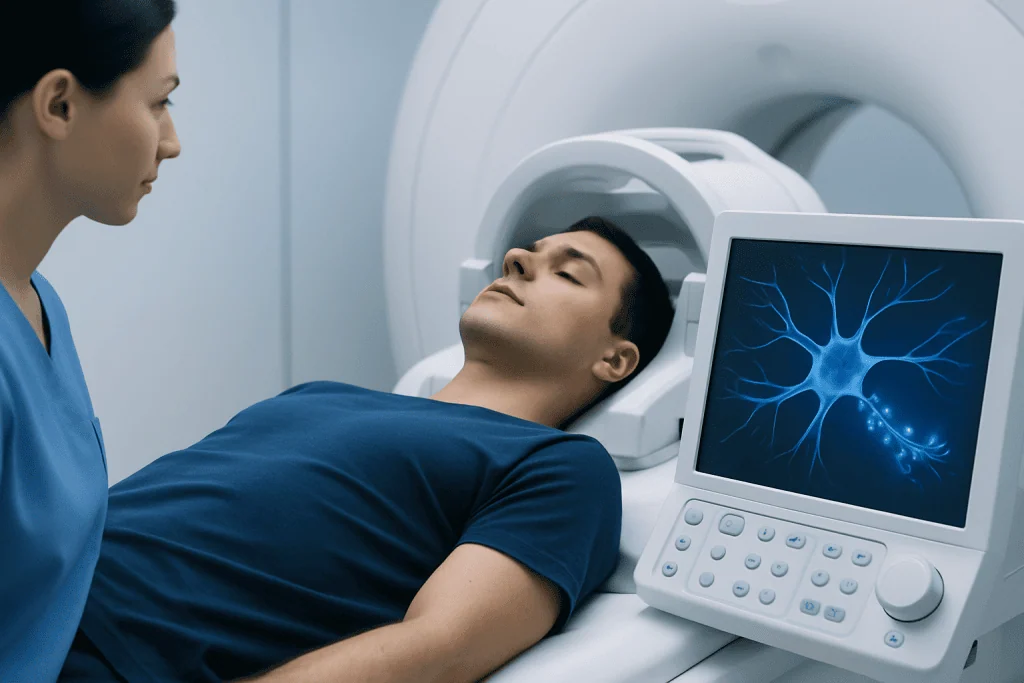
Nerve cells, called neurons, send messages using electrical impulses and chemical messengers. When an excitatory signal reaches a neuron, it increases the likelihood that the neuron will generate its own electrical signal. This message can then travel onward to other neurons, muscles, or glands.
At the connection point between neurons, called a synapse, chemicals known as neurotransmitters carry the message. Some neurotransmitters are mainly excitatory, meaning they tend to stimulate the next cell. Others are mainly inhibitory, meaning they reduce the chance of firing. The brain constantly integrates both kinds of input, often within fractions of a second.
This balance is especially important because too little activity can impair normal function, while too much activity can overload circuits. In practical terms, healthy nervous system function depends not on having more excitation, but on having the right amount in the right place at the right time.
Excitatory signaling is also not limited to the brain. Similar activating signals help control the spinal cord, peripheral nerves, and communication between nerves and muscles. That is why disorders affecting excitatory balance can sometimes cause symptoms involving movement, sensation, thinking, behavior, or muscle activity.
Excitatory vs inhibitory: why the balance matters

The easiest way to understand excitatory and inhibitory signals is to think of them as complementary controls. Excitatory input acts like a “go” signal, while inhibitory input acts like a “slow down” or “stop” signal. Neither is better than the other. The nervous system needs both to produce smooth, coordinated, and appropriate responses.
For example, when a person wants to move an arm, some pathways must activate the right muscles, while others must suppress unnecessary movement. In thought and emotion, the same principle applies: certain brain networks become active while others are quieted. This helps with focus, judgment, memory, and self-control.
If excitatory activity becomes too strong compared with inhibitory control, nerve networks may become overactive. Depending on the area involved, this may contribute to symptoms such as muscle twitching, overstimulation, sensory sensitivity, or seizures. Conditions involving epilepsy are one example where abnormal electrical activity in the brain can occur.
If excitatory signaling is too weak, normal brain and body functions can also suffer. People may have problems with alertness, cognition, or effective nerve-muscle communication. For this reason, healthcare professionals usually focus on restoring balance, not simply increasing or decreasing excitation overall.
Excitatory neurotransmitters and related body chemicals
The main excitatory neurotransmitter in the brain is glutamate. It plays a major role in learning, memory, sensory processing, and many other core functions. Glutamate works by binding to specialized receptors on nerve cells, which can make those cells more likely to fire.
Other chemicals can also have excitatory effects in certain tissues or under certain circumstances. The body uses many signaling molecules, and their effects may vary depending on the receptor involved, the location in the body, and the broader state of the nervous system. For that reason, the word “excitatory” always depends on context.
Doctors and scientists may also discuss excitatory pathways in relation to pain processing, sleep-wake regulation, mood, and movement disorders. In some neurological conditions, altered excitatory signaling is part of the explanation for symptoms, even when it is not the sole cause. That is one reason neurological assessment can involve both symptom review and testing.
Treatment decisions are based on the person’s condition, not on the term alone. In some situations, clinicians may recommend medication review, neurological evaluation, imaging, or other specialized care. When symptoms suggest a disorder of the brain or spinal cord, further assessment may include neurology evaluation or, when appropriate, brain MRI.
When excitatory activity is linked to symptoms or disease
Excitatory activity becomes medically important when it is involved in symptoms or disease processes. This does not mean the body’s excitatory system is “bad.” Instead, it means the normal balance may be disrupted by illness, injury, medications, metabolic changes, or structural problems in the brain or nerves.
Neurological conditions that may involve abnormal excitatory signaling include seizure disorders, some forms of chronic pain, migraine-related processes, and certain movement or neurodevelopmental disorders. Brain injury, stroke, infections, and inflammation can also affect how excitatory and inhibitory networks function. In severe cases, excitotoxicity may occur, a term used when excessive stimulation contributes to cell damage.
Symptoms vary depending on the cause and location. A person might experience episodes of jerking, confusion, changes in awareness, unusual sensations, severe headache, weakness, numbness, or sensitivity to light or sound. Some symptoms are temporary, while others may need prompt assessment.
Because the causes are diverse, self-diagnosing based on the word “excitatory” is rarely helpful. What matters most is the full clinical picture. If symptoms suggest a structural or surgical neurological problem, a specialist may consider advanced assessment or neurosurgical care when appropriate.
How doctors evaluate excitatory-related concerns
Doctors do not usually diagnose “excitatory” as a standalone problem. Instead, they evaluate the symptoms that may reflect abnormal nervous system activity. The first step is a detailed history, including when symptoms started, how long they last, possible triggers, medication use, sleep patterns, alcohol or substance exposure, and any personal or family history of neurological illness.
A physical and neurological examination follows. This may assess strength, reflexes, coordination, sensation, speech, eye movements, and mental status. Depending on the findings, additional tests may help identify the cause. These can include blood tests, electroencephalography (EEG), nerve testing, or imaging studies.
If a seizure disorder is suspected, clinicians may investigate patterns of abnormal electrical activity and review whether episodes fit with seizure events or another condition. In some cases, symptoms that seem neurological may instead relate to sleep problems, metabolic imbalance, infection, medication side effects, or mental health conditions.
The goal of testing is to identify the reason for the imbalance and guide safe treatment. Care is individualized. Near the end of the evaluation pathway, some people may also benefit from multidisciplinary assessment; Acibadem International’s specialists in JCI-accredited hospitals diagnose and treat neurological conditions for international patients when further expert review is needed.
Treatment and management
Treatment depends entirely on the underlying cause. If abnormal excitatory activity is related to a neurological disorder, treatment may aim to stabilize nerve signaling, reduce triggers, or address a structural or metabolic problem. For example, seizure disorders may be treated with anti-seizure medication, while inflammation, infection, or injury requires its own specific approach.
Medication review is often important. Some prescriptions, over-the-counter products, supplements, or substances can affect the nervous system and change the balance between excitation and inhibition. A doctor may adjust or stop a medicine only when it is medically safe to do so. Patients should not change prescribed treatment on their own.
Non-drug measures can also help support nervous system stability. Good sleep, regular meals, hydration, stress management, and avoidance of known personal triggers can reduce symptoms in some conditions. In others, rehabilitation, counseling, or specialist follow-up may be recommended as part of a broader care plan.
When symptoms are caused by a specific disease, treating that disease is the priority rather than treating “excitatory” itself. This is why accurate diagnosis matters. A patient-friendly approach often combines symptom control, trigger reduction, and close follow-up to monitor recovery or long-term management.
Prevention, self-care, and when to seek medical care
There is no single way to “prevent excitatory activity,” because excitatory signaling is a normal part of life. However, people can support healthy nervous system function by getting consistent sleep, managing chronic conditions, limiting excess alcohol, avoiding recreational drugs, taking medications as directed, and seeking care for infections, head injuries, or sudden neurological symptoms.
It may also help to keep a symptom diary if episodes are recurring. Noting timing, triggers, sleep pattern, food intake, stress, menstrual cycle, medications, and associated symptoms can help a doctor recognize patterns. This can be especially useful for intermittent events such as unusual sensations, spells of confusion, or possible seizure-like episodes.
Medical care should be sought promptly for a first seizure, repeated fainting, severe or sudden headache, sudden weakness, trouble speaking, loss of consciousness, chest pain, serious head injury, new confusion, or persistent numbness. Emergency care is important if symptoms are intense, rapidly worsening, or affecting breathing, awareness, or safety.
Non-emergency review is appropriate when a person has ongoing twitching, unexplained sensory symptoms, recurring episodes of altered awareness, or concern about medication side effects. A qualified clinician can determine whether further neurological evaluation is needed and which tests or referrals are most appropriate.
Frequently asked questions
What does excitatory mean in simple terms?
Excitatory means a signal that increases activity in a cell, especially a nerve cell. In the nervous system, it makes the next cell more likely to send a message. This is a normal part of how the brain and body communicate.
Is excitatory a disease?
No. Excitatory is a descriptive medical term, not a diagnosis. Doctors use it to explain how signals work in the brain, nerves, and muscles. Symptoms only become a concern when the balance of signaling is disrupted by an underlying condition.
What is the difference between excitatory and inhibitory?
Excitatory signals increase the chance that a nerve cell will fire, while inhibitory signals decrease that chance. The nervous system needs both types of signals to work smoothly. Health depends on balance, not on one type dominating the other.
What is the main excitatory neurotransmitter?
Glutamate is the main excitatory neurotransmitter in the brain. It is involved in learning, memory, and many everyday brain functions. Although essential, it must be carefully regulated within healthy neural networks.
Can too much excitatory activity cause symptoms?
Yes, in some circumstances it can contribute to symptoms such as overstimulation of nerve circuits, unusual movements, sensory changes, or seizures. However, the symptom pattern depends on the cause and the area of the nervous system involved. A medical evaluation is needed to identify the reason.
When should someone see a doctor about possible excitatory-related symptoms?
A person should seek medical advice for recurring unusual neurological symptoms such as twitching, numbness, brief confusion, or episodes of altered awareness. Emergency care is needed for a first seizure, sudden weakness, severe headache, loss of consciousness, or symptoms suggestive of stroke. Prompt evaluation helps rule out serious causes and guides treatment.
References
- World Health Organization
- National Institute of Neurological Disorders and Stroke
- National Institute of Mental Health
- MedlinePlus
- Merck Manual Consumer Version
This article is for general information only and is not a substitute for professional medical advice. Please consult a qualified doctor about your individual situation.
Explore treatments in Turkey — costs, top hospitals & a free quote
JCI-accredited · board-certified surgeons · reply within 24h
Add us as a Preferred Source to see more of our trusted health content across Google Search, AI Overviews and Discover.

More from the Health Library

Aortic Valve: What Patients Need to Know

Abs Training with Dumbbells: An Evidence-Based Guide for Patients

Polio Vaccine: What Patients Need to Know

Supination: An Evidence-Based Guide for Patients

Pectineus: An Evidence-Based Guide for Patients