Exostosis: Symptoms, Causes, and Treatment Options

Exostosis is an abnormal but usually benign growth of bone on an existing bone. Symptoms vary by location and may include pain, swelling, rubbing, hearing changes, or restricted joint movement.
Key Takeaways
- Exostosis is an abnormal but usually benign growth of bone on an existing bone.
- Symptoms vary by location and may include pain, swelling, rubbing, hearing changes, or restricted joint movement.
- Diagnosis often relies on physical examination and imaging such as X-ray, CT, or MRI.
- Many cases only need monitoring, while painful or complicated exostoses may require surgery.
- A doctor should assess any growing mass, persistent pain, numbness, or change in function.
Exostosis is a noncancerous bony outgrowth that forms on the surface of a bone. Many exostoses cause no symptoms, but some lead to pain, irritation, reduced movement, or nearby nerve and tissue compression, and treatment depends on location, cause, and severity.
Overview
Exostosis is an extra growth of bone that develops on the surface of an existing bone. In most cases, it is benign, meaning it is not cancer. Some people never notice it, while others develop symptoms because the bony growth presses on nearby tissues, affects joint motion, or becomes irritated by shoes, movement, or repeated contact.
The term exostosis is broad and can describe several types of bony outgrowths in different parts of the body. Examples include osteochondroma near long bones, external auditory canal exostosis in the ear, and bony overgrowths in the mouth or foot. Although these conditions share the idea of excess bone formation, their causes, symptoms, and treatment plans can differ.
A practical way to think about exostosis is as a structural problem rather than a disease with one single pattern. Location matters greatly. A small exostosis in one area may cause no trouble at all, while a similar growth near a joint, nerve, tendon, or ear canal may lead to discomfort or loss of function.
Because symptoms overlap with other bone and joint conditions, proper evaluation is important. A specialist may also consider related diagnoses such as osteochondroma or other benign bone lesions before confirming the cause of symptoms.
How Exostosis Can Feel and Where It Appears
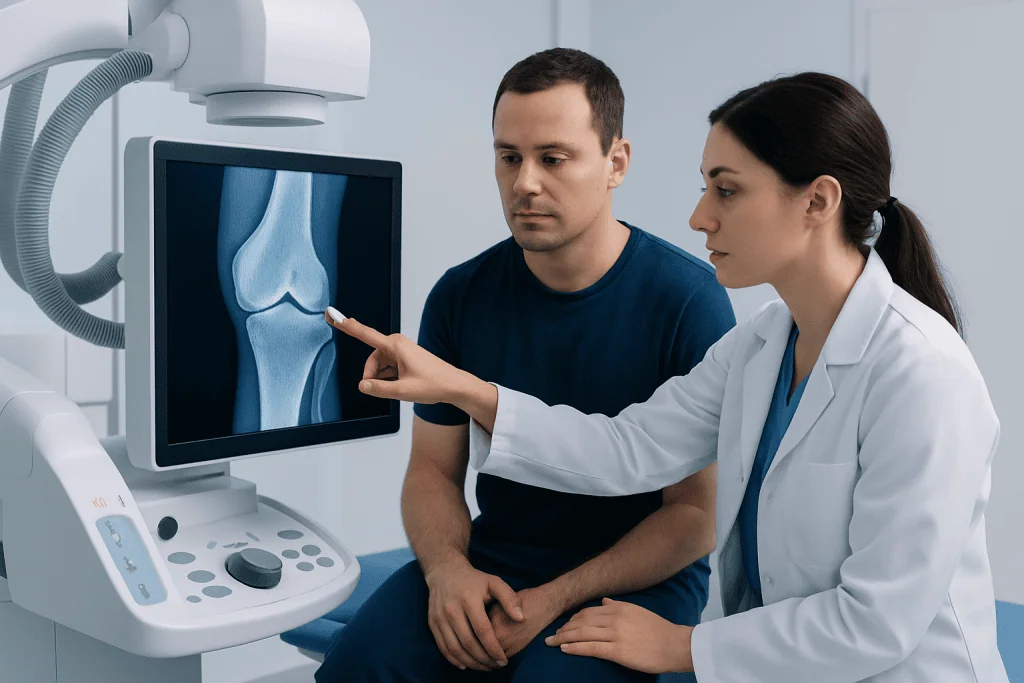
Symptoms of exostosis depend mainly on where the bone growth forms. Many people first notice a firm lump near a bone or joint. Others only become aware of it when it starts causing pain with pressure, movement, or repeated friction from daily activity, sports, footwear, or equipment.
Common symptoms can include:
- A hard, immobile bump near a bone
- Localized pain or tenderness
- Swelling or irritation over the area
- Reduced range of motion in a nearby joint
- Numbness, tingling, or weakness if a nerve is compressed
- Snapping, rubbing, or tendon irritation with movement
Some exostoses have very location-specific symptoms. In the ear canal, they may trap water, increase ear infections, or reduce hearing when the canal narrows. In the mouth, they can interfere with dentures or cause rubbing against soft tissue. In the foot or ankle, they may create pressure points and pain while walking or wearing shoes.
Children and adolescents may be diagnosed when a growth is noticed during bone development, while adults are often diagnosed after pain, overuse symptoms, or incidental imaging findings. Any rapid change in size, new pain at rest, or unexplained loss of function deserves medical review.
Causes and Risk Factors
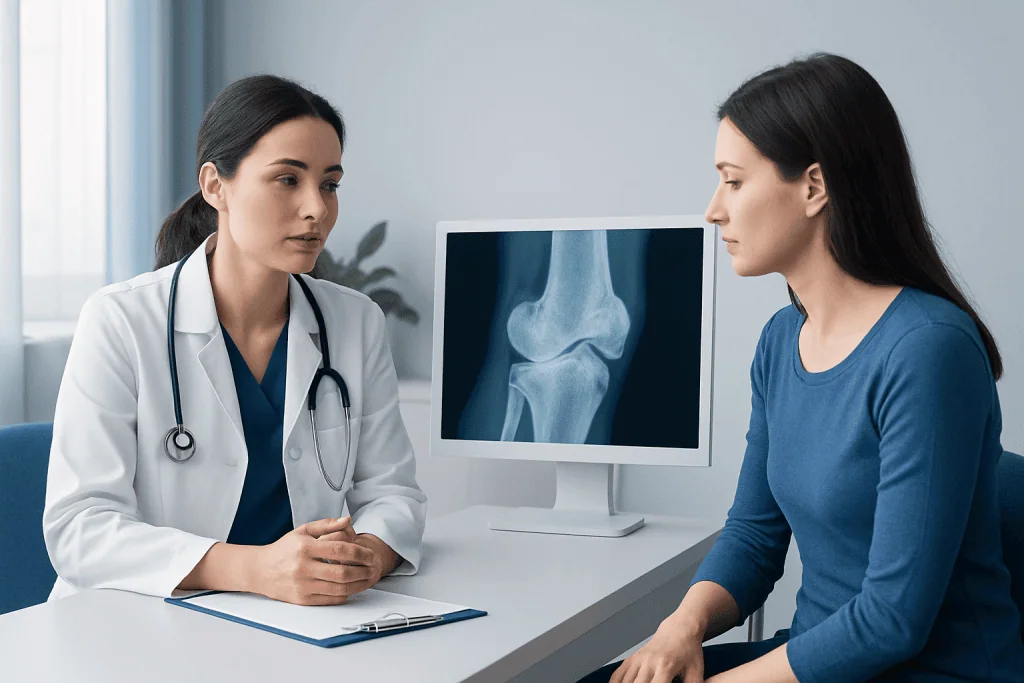
Exostosis can develop for different reasons. Some forms are linked to genetics, while others appear to arise from chronic irritation, repetitive stress, inflammation, or previous injury. The underlying process usually involves abnormal bone formation at a localized site.
One of the best-known causes is osteochondroma, a benign bone tumor-like growth that often develops near the growth plates of long bones during childhood or adolescence. A person may have a single lesion or multiple lesions as part of hereditary multiple exostoses, an inherited condition that causes repeated bone outgrowths.
In other settings, repeated environmental or mechanical stress may play a role. For example, exostoses in the ear canal are associated with repeated cold water or cold wind exposure. Bony prominences on the foot may develop in relation to joint mechanics, prior trauma, arthritis, or chronic pressure. Similar irritation-related changes may be seen elsewhere in the skeleton.
Risk factors vary by type but may include family history, skeletal growth years, repeated cold water exposure, prior fracture or trauma, joint degeneration, and long-term repetitive strain. In some people, no clear cause is identified. A doctor may also assess for associated conditions affecting bone alignment or joint wear, such as osteoarthritis, when symptoms suggest a broader musculoskeletal problem.
How Doctors Diagnose Exostosis
Diagnosis begins with a medical history and physical examination. The clinician asks when the lump or symptoms started, whether the area has changed over time, and what activities make symptoms worse. They will usually examine the size, firmness, tenderness, and relationship of the growth to nearby joints, muscles, nerves, or skin.
Imaging is central to diagnosis. A standard X-ray is often the first test and can show the shape and position of the bony outgrowth. Depending on the location and suspected type, the doctor may also use CT to define bony anatomy in more detail or MRI to evaluate cartilage, soft tissues, tendons, and possible nerve involvement.
Additional tests are not always needed, but they may be recommended if the diagnosis is uncertain or if there are warning signs. For example, persistent pain without clear mechanical explanation, growth after skeletal maturity, or signs of compression may prompt more detailed imaging. In selected cases, biopsy is considered to clarify unusual findings.
Diagnosis also involves deciding whether the exostosis is simply present or actually responsible for symptoms. This distinction helps avoid unnecessary treatment. In many people, the bony growth is an incidental finding, while the real problem may be inflammation, tendon irritation, or another condition that can be managed separately.
Treatment Options
Treatment for exostosis depends on symptoms, location, and the risk of complications. If the growth is small and causes no pain, weakness, or functional limitation, monitoring may be all that is needed. Follow-up may include repeat examination or imaging, especially in growing children or when the lesion is near important structures.
Conservative treatment is often the first step for symptomatic cases. This may include activity modification, better-fitting footwear, padding or protective devices, physical therapy, and pain-relieving or anti-inflammatory medicines when appropriate. If surrounding tendons or joints are irritated, rehabilitation can sometimes improve mechanics and reduce symptoms without surgery.
Surgery may be recommended when exostosis causes persistent pain, repeated irritation, limited movement, recurrent infection, nerve or vessel compression, hearing problems from ear canal narrowing, or significant interference with daily life. The goal is to remove the bony prominence while protecting nearby tissues. Depending on the site, patients may be referred for orthopedic surgery or a more focused procedure such as arthroscopic surgery when the growth affects a joint-related structure.
Recovery varies by location and procedure. Some people return to routine activities relatively quickly, while others need a longer rehabilitation period to restore movement and strength. For patients with complex or inherited forms, coordinated care may involve imaging specialists, orthopedic surgeons, rehabilitation teams, and, when relevant, pediatric orthopedics. Near the end of care planning, some international patients choose centers such as Acibadem International, where multidisciplinary specialists in JCI-accredited hospitals evaluate and treat bone conditions.
Living With Exostosis: Self-care and Prevention
Not all exostoses can be prevented, especially those related to genetics or bone development. Still, self-care can reduce irritation and help manage symptoms. Daily comfort often improves when pressure on the area is minimized and surrounding joints and muscles are kept as flexible and balanced as possible.
Helpful measures may include:
- Wearing supportive, well-fitting shoes if the foot or ankle is affected
- Avoiding repetitive movements that trigger pain
- Using protective padding over prominent areas when advised
- Following prescribed stretching or strengthening exercises
- Keeping follow-up appointments to monitor changes over time
For ear exostosis, prevention focuses on limiting repeated cold water and wind exposure. Depending on a specialist’s advice, ear protection may help lower ongoing irritation. For sports-related or overuse-related bony prominence symptoms elsewhere, technique changes and gradual training progression may reduce strain.
People with hereditary multiple exostoses or recurring bone problems may benefit from periodic specialist review, especially during growth years. Monitoring helps identify changes in alignment, limb function, or nerve compression early, when treatment decisions may be more straightforward.
When to Seek Medical Care
Medical assessment is advisable for any hard lump on a bone that is new, growing, painful, or affecting movement. Even though exostosis is usually benign, a doctor should determine whether the lump truly represents a harmless bone outgrowth or another condition that needs a different approach.
A person should seek medical care sooner if there is persistent pain, numbness, tingling, weakness, repeated ear blockage or infections, trouble wearing shoes, or loss of joint function. Children with visible bone growths should also be evaluated, especially if one side of the body seems to be growing differently or movement becomes limited.
Urgent review is especially important if symptoms change quickly, pain appears at rest or at night, or the area becomes increasingly swollen or inflamed. These findings do not automatically mean a serious problem, but they should not be ignored.
Early evaluation often makes care simpler. It can confirm whether observation is enough or whether imaging, specialist input, or procedures such as advanced bone-related specialty care are needed in a broader diagnostic work-up, although most exostoses do not require this treatment.
Frequently asked questions
Is exostosis cancer?
Exostosis is usually benign, meaning it is not cancer. However, any bone growth that changes quickly, becomes newly painful, or behaves unusually should be assessed by a doctor to confirm the diagnosis.
What is the difference between exostosis and a bone spur?
A bone spur is one common type of bony outgrowth and is often discussed under the broader idea of exostosis. In everyday use, the terms may overlap, but doctors may use more specific names based on location and cause.
Can exostosis go away on its own?
Most exostoses do not disappear on their own. If they are not causing symptoms, they may simply be monitored over time without active treatment.
Does every exostosis need surgery?
No. Surgery is usually considered only when the exostosis causes persistent pain, repeated irritation, nerve compression, reduced function, or other complications. Many people do well with observation and symptom management.
Can children develop exostosis?
Yes. Some forms, especially osteochondroma and hereditary multiple exostoses, often appear during childhood or adolescence. Because bones are still growing, follow-up is important to watch for changes in shape, movement, or limb alignment.
How is exostosis diagnosed?
Doctors diagnose exostosis using a physical examination and imaging, usually starting with an X-ray. CT or MRI may be added if the location is complex or if there is concern about nearby cartilage, nerves, or soft tissues.
References
- American Academy of Orthopaedic Surgeons
- National Institute of Arthritis and Musculoskeletal and Skin Diseases
- National Health Service
- MedlinePlus
- American College of Radiology
This article is for general information only and is not a substitute for professional medical advice. Please consult a qualified doctor about your individual situation.
Joint and spine care in Turkey — expert assessment & treatment
JCI-accredited · board-certified surgeons · reply within 24h
Add us as a Preferred Source to see more of our trusted health content across Google Search, AI Overviews and Discover.