Expressive Aphasia: An Evidence-Based Guide for Patients

Expressive aphasia affects a person's ability to speak, write, or form sentences, but understanding may be partly preserved. Stroke is a common cause, though brain injury, tumors, infections, and neurological diseases can also lead to expressive aphasia.
Key Takeaways
- Expressive aphasia affects a person's ability to speak, write, or form sentences, but understanding may be partly preserved.
- Stroke is a common cause, though brain injury, tumors, infections, and neurological diseases can also lead to expressive aphasia.
- Diagnosis usually involves neurological evaluation, language testing, and brain imaging to find the underlying cause.
- Speech and language therapy is the main treatment, often combined with treatment of the brain condition that caused the aphasia.
- Sudden trouble speaking is a medical emergency because it can be a sign of stroke.
Expressive aphasia is a language disorder that makes it hard to produce spoken or written words, even when a person understands much of what others say. It most often happens after damage to language areas of the brain, and early evaluation plus rehabilitation can improve communication and daily function.
Overview: What expressive aphasia means
Expressive aphasia is a communication disorder in which a person knows what they want to say but has difficulty getting the words out. Speech may become slow, effortful, or limited to short phrases, and writing can be affected in a similar way. Many people with expressive aphasia still understand a good deal of spoken language, although the degree of understanding varies from person to person.
This condition is often called Broca’s aphasia when it is linked to injury in a specific language area of the brain, usually in the dominant hemisphere, most often the left side. However, language is supported by several connected brain networks, so symptoms depend on the exact location and extent of brain damage. For that reason, two people with the same diagnosis may communicate very differently.
Expressive aphasia is not the same as a problem with intelligence, hearing, or motivation. The difficulty lies in language production. A person may become frustrated because their thoughts are intact but words do not come easily. Understanding this distinction can help families communicate more patiently and supportively during recovery.
How expressive aphasia may look in daily life
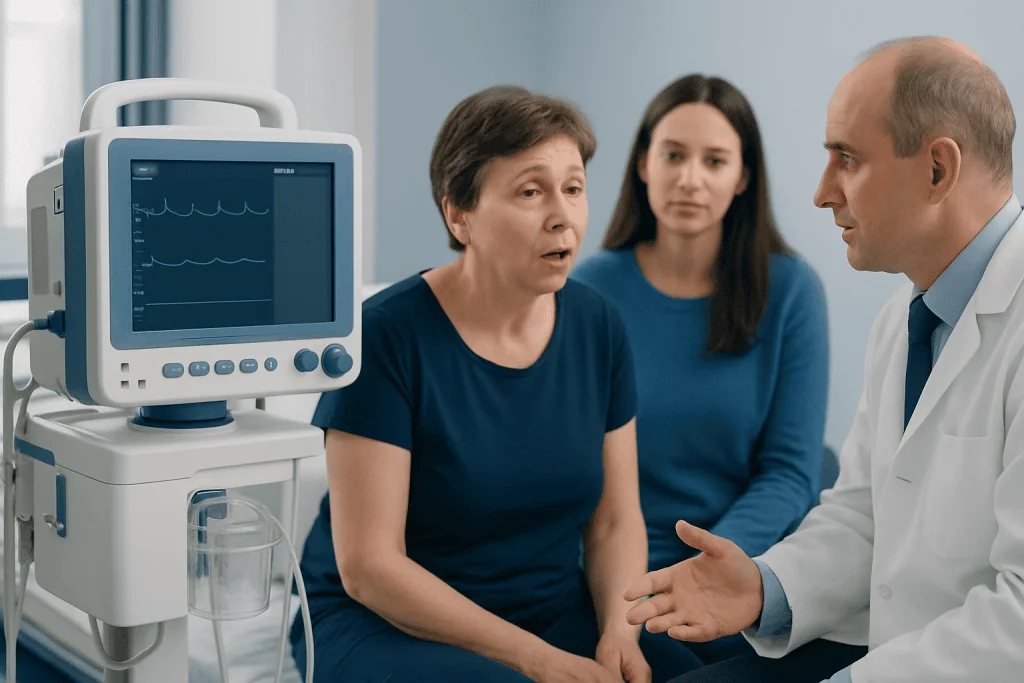
The symptoms of expressive aphasia can range from mild word-finding difficulty to severe limitations in speech. Some people can say only a few words at a time, while others speak in short, simplified sentences and leave out small connecting words. Their speech may sound halting or effortful, but they are often aware of their mistakes and may try repeatedly to correct them.
Common features may include:
- Difficulty finding the right word
- Short or incomplete sentences
- Speech that is slow and labored
- Trouble repeating words or phrases
- Writing problems similar to speaking problems
- Frustration during conversation
Some people with expressive aphasia also have weakness of the face, arm, or leg on one side, especially if the cause is a stroke. Others may have apraxia of speech, a related condition in which the brain has difficulty planning the mouth movements needed for speech. This can make spoken language sound even more effortful.
Daily tasks may be affected in subtle ways. A person may understand a question but struggle to answer, may need extra time to send a text or write an email, or may avoid social situations because communication feels exhausting. These changes can affect work, relationships, and emotional well-being, which is why rehabilitation often includes both language therapy and practical support.
Causes and risk factors

Expressive aphasia happens when the language-producing areas of the brain are damaged. The most common cause is stroke, especially when blood flow is interrupted to the left frontal region or nearby language pathways. Sudden speech difficulty can therefore be a sign of stroke, which needs immediate medical attention.
Other possible causes include traumatic brain injury, brain tumors, brain infections, bleeding in or around the brain, and complications after brain surgery. In some people, language problems develop gradually rather than suddenly. This can happen in certain neurodegenerative conditions that affect language networks over time.
Risk factors depend on the underlying cause. For stroke, they may include high blood pressure, diabetes, high cholesterol, smoking, atrial fibrillation, obesity, and older age. For head injury, falls, traffic accidents, and contact sports may increase risk. Identifying and addressing these factors is an important part of both treatment and prevention.
It is also important to note that expressive aphasia can occur along with other communication or cognitive difficulties. For example, some people also have receptive aphasia, memory problems, or attention changes. A full assessment helps clarify which symptoms are due to language impairment and which may reflect a broader neurological condition.
How doctors diagnose expressive aphasia
Diagnosis starts with a careful medical history and neurological examination. The clinician asks when the symptoms began, whether they appeared suddenly or gradually, and whether there were associated symptoms such as weakness, numbness, confusion, or severe headache. This information helps determine whether the cause may be an emergency such as stroke.
A speech-language pathologist usually performs a detailed language assessment. This may look at speech fluency, naming, repetition, understanding, reading, and writing. The goal is not just to label the type of aphasia, but to identify the person’s strengths and communication needs for treatment planning.
Brain imaging is often essential. CT or MRI scans can show stroke, bleeding, tumor, or other structural causes. In some cases, advanced imaging or vascular studies are used to evaluate blood vessels in the brain. When sudden symptoms suggest stroke, urgent assessment and stroke treatment may be time-sensitive.
Additional tests may be recommended depending on the situation. These can include blood tests, heart rhythm monitoring, or neuropsychological evaluation. If the cause appears related to a mass or other structural lesion, doctors may also discuss further specialty care, including brain tumor treatment when appropriate.
Treatment options and recovery
The most important first step is treating the cause. If expressive aphasia is due to stroke, emergency care focuses on restoring blood flow or managing bleeding when possible. If it results from infection, tumor, seizure, or another condition, treatment is directed toward that problem. Managing the underlying brain condition can prevent further damage and create the best setting for recovery.
Speech and language therapy is the main treatment for expressive aphasia itself. Therapy is tailored to the person’s symptoms and goals. It may include exercises to improve word retrieval, sentence formation, repetition, reading, and writing, as well as strategies for conversation. Many people benefit from practicing high-value everyday phrases, communication notebooks, picture supports, or digital tools.
Recovery varies widely. Some people improve quickly in the weeks after the brain injury, while others continue to make gradual gains over months or longer. Progress depends on factors such as the cause, the amount of brain injury, general health, age, and access to rehabilitation. Early therapy often helps, but improvement can still occur later with consistent practice and support.
Comprehensive rehabilitation may involve neurologists, rehabilitation physicians, speech-language pathologists, occupational therapists, psychologists, and social workers. If aphasia follows a major neurological event, broader neurological rehabilitation can support mobility, independence, and coping in addition to language recovery.
Living with expressive aphasia: self-care and family support
Daily communication often becomes easier when conversations are slowed down and simplified without being childish. It helps to speak in short sentences, ask one question at a time, and allow extra time for a response. Background noise should be reduced when possible. Families are encouraged to maintain normal adult conversation and include the person in decisions, even if communication takes longer.
Useful communication strategies may include:
- Using yes-or-no questions when appropriate
- Offering written choices or pictures
- Encouraging gestures, drawing, or pointing
- Keeping a notebook or phone app for key words
- Practicing short, meaningful phrases daily
- Scheduling important conversations when the person is less tired
Emotional adjustment matters too. People with aphasia may feel embarrassed, isolated, or discouraged, especially when others mistake language difficulty for confusion. Support groups, counseling, and patient education can reduce stress and improve confidence. Loved ones may also need guidance on how to communicate effectively and cope with changing roles.
For international patients who need coordinated assessment and rehabilitation, Acibadem International’s multidisciplinary specialists and JCI-accredited hospitals provide diagnosis and treatment planning for neurological conditions, including language disorders after brain injury or stroke.
When to seek medical care
Sudden trouble speaking, understanding, reading, or writing should be treated as urgent medical care needs. If expressive aphasia begins abruptly, especially with facial drooping, arm weakness, numbness, severe headache, dizziness, or vision changes, emergency services should be contacted right away. These symptoms may indicate stroke, and rapid treatment can reduce brain injury.
Medical evaluation is also important when language problems appear after a head injury, after a seizure, or alongside confusion, fever, or changes in behavior. Even when symptoms seem mild or improve, a professional assessment is still needed to identify the cause and lower the risk of further problems.
If speech difficulties develop gradually over weeks or months, a non-emergency medical appointment is still recommended. Progressive changes in language can point to neurological disease or another brain disorder that should not be ignored. Early assessment gives more options for treatment, planning, and rehabilitation support.
Frequently asked questions
Is expressive aphasia the same as slurred speech?
No. Expressive aphasia is a language problem, meaning a person has trouble producing words or sentences. Slurred speech is usually a motor speech problem, where the muscles used for speaking are weak or poorly coordinated, although both can happen together.
Can a person with expressive aphasia understand what others say?
Many people with expressive aphasia understand much of spoken language, especially simple conversation. However, understanding may not be completely normal, and it can become harder when speech is fast, complex, or given in a noisy setting.
Can expressive aphasia improve over time?
Yes, improvement is possible, especially with treatment and practice. Recovery may happen fastest in the early weeks after brain injury, but meaningful gains can continue over months or longer depending on the cause and severity.
What is the most common cause of expressive aphasia?
Stroke is one of the most common causes, especially when it affects language areas in the left side of the brain. Other causes include traumatic brain injury, tumors, infections, and some neurodegenerative diseases.
What kind of doctor treats expressive aphasia?
Care often involves a team. A neurologist or rehabilitation specialist may diagnose the underlying brain condition, while a speech-language pathologist provides detailed language assessment and therapy.
Can expressive aphasia affect writing as well as speaking?
Yes. Because expressive language includes written expression, many people also have difficulty writing words, sentences, or messages. The pattern often parallels the speech problem, though not always to the same degree.
This article is for general information only and is not a substitute for professional medical advice. Please consult a qualified doctor about your individual situation.
Aphasia in Turkey — costs, top hospitals & a free quote
JCI-accredited · board-certified surgeons · reply within 24h
Add us as a Preferred Source to see more of our trusted health content across Google Search, AI Overviews and Discover.
Check your numbers in seconds
BMI, calories, due date, blood pressure and 30+ more clinical calculators — free, instant, doctor-reviewed ranges.

More from the Health Library

Omphalocele — Explained by Medical Evidence, Not Myths

Talked Too Much: An Evidence-Based Guide for Patients

Perishables: A Complete Medical Overview

Buckle Fracture Wrist — Explained by Medical Evidence, Not Myths

Ipratropium Bromide — Explained by Medical Evidence, Not Myths