Extraocular Implant: An Evidence-Based Patient Guide
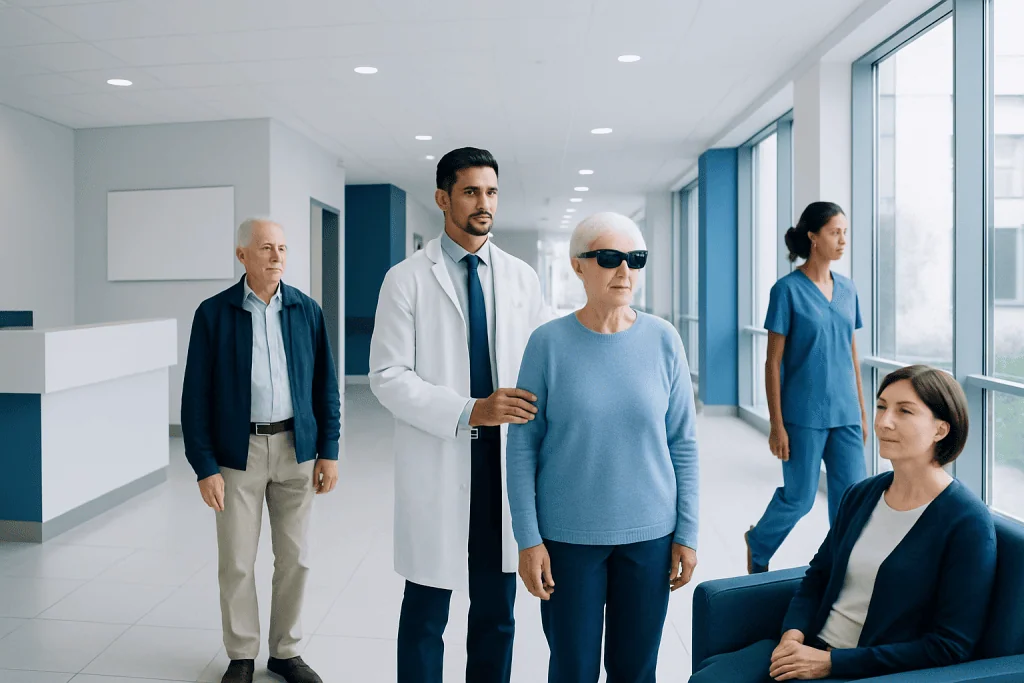
An extraocular implant is usually placed after enucleation or evisceration, not inside the remaining seeing eye. The implant restores socket volume; a separate ocular prosthesis provides the visible appearance of an eye.
Key Takeaways
- An extraocular implant is usually placed after enucleation or evisceration, not inside the remaining seeing eye.
- The implant restores socket volume; a separate ocular prosthesis provides the visible appearance of an eye.
- Implant selection and surgical planning are individualized according to the reason for eye removal, socket anatomy and healing needs.
- Recovery commonly involves temporary swelling, discomfort and follow-up visits before fitting a final prosthetic eye.
- Complications are uncommon but can include infection, implant exposure, movement problems or changes in socket shape.
- New pain, increasing redness, discharge, fever or a displaced conformer should be assessed promptly by an eye care professional.
An extraocular implant is a medical device placed within the eye socket, most often after removal of a severely damaged or diseased eye. It replaces lost volume, supports the tissues around the socket and can help a custom-made artificial eye move more naturally.
Overview: What Is an Extraocular Implant?
An extraocular implant, also called an orbital implant, is a rounded device placed in the eye socket after an eye has been removed or its contents have been removed. It is not a device designed to improve vision in the other eye, and it is not the visible artificial eye. Its main purpose is to replace the natural volume of the eye and help maintain the shape of the socket.
After healing, an ocularist can make a custom ocular prosthesis, sometimes called an artificial eye, which fits over the implant and under the eyelids. Together, the implant and prosthesis can improve facial symmetry and provide a more natural appearance. Depending on the surgical approach and implant type, some movement may be transferred to the prosthesis.
Extraocular implants eye procedures may be considered following serious trauma, painful blindness, severe infection, certain eye cancers or an eye that cannot be preserved safely. The appropriate approach is decided by an ophthalmologist, often an oculoplastic and orbital surgeon, after careful assessment of the underlying condition and the person’s overall health.
How the Implant Works
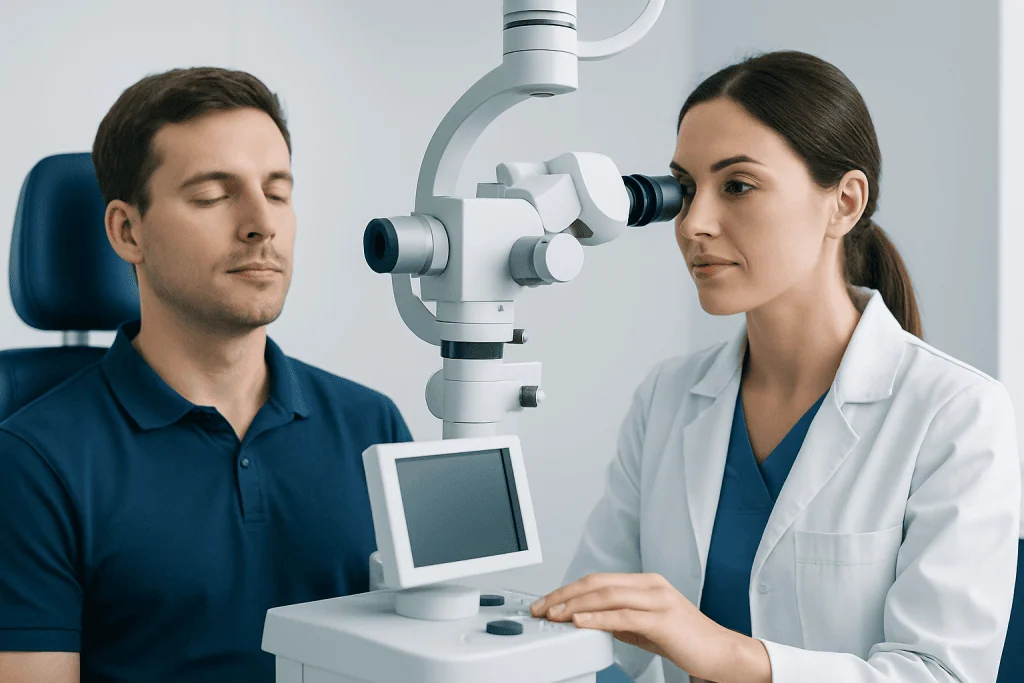
The orbit is the bony space that normally contains the eye, muscles, fat, nerves and blood vessels. When the eye is removed, loss of its volume can lead to a sunken appearance and may affect eyelid position. An extraocular implant fills much of this lost volume and gives the surrounding tissues a stable surface.
Implants may be made of nonporous materials, such as medical-grade silicone, or porous materials that can allow some tissue and blood vessel ingrowth. Each material has potential advantages and limitations. The surgeon considers factors such as socket condition, prior operations, infection risk, expected healing and the need for later procedures when selecting an implant.
During surgery, the muscles that move the eye may be attached directly or indirectly to the implant. This can allow movement from the socket to be transmitted through the prosthesis. Movement varies between individuals and is usually more limited than movement of a natural eye, but it may contribute to a more natural appearance during everyday interactions.
Who May Be a Candidate?

Candidacy depends primarily on whether eye removal is medically necessary or already planned. Enucleation removes the entire eyeball, while evisceration removes the contents of the eye while leaving the outer scleral shell in place. In many cases, an orbital implant can be placed at the same operation; in others, delayed reconstruction may be safer.
A specialist evaluates the cause of eye loss or planned eye removal, the health of the eyelids and socket tissues, prior radiation or surgery, active inflammation or infection, and the person’s healing capacity. If cancer is suspected or confirmed, the surgical plan is coordinated with oncology and pathology teams to prioritize complete and safe treatment of the disease.
Evidence based implantology involves more than choosing a device. Evidence based implant treatment planning and clinical protocols consider the diagnosis, tissue quality, implant size, surgical technique, expected prosthetic fitting and long-term follow-up. A patient should feel comfortable asking why a particular procedure and implant type have been recommended.
- People with a painful blind eye that cannot be managed with other treatment may be evaluated.
- People with severe injury or irreversible infection may need reconstructive planning after urgent care.
- People requiring removal of an eye because of a tumor need a cancer-focused surgical assessment.
- People with an empty or contracted socket after previous surgery may be considered for secondary reconstruction.
What Happens During the Procedure?
The procedure is generally performed in an operating room under general anesthesia, although the exact anesthetic plan depends on the person’s age, medical history and type of surgery. Before surgery, the ophthalmic team reviews imaging when needed, medications, allergies and any health conditions that may affect anesthesia or healing.
In an enucleation procedure, the surgeon removes the eye while preserving as much healthy socket tissue as possible. In evisceration, the contents of the eye are removed while the outer white layer is retained. The selected implant is then placed within the socket, and the eye muscles may be secured to support movement. The tissues are carefully closed over the implant.
A clear temporary shell called a conformer is usually placed beneath the eyelids. It helps preserve the shape of the fornices, the spaces needed to hold a prosthetic eye later. A pressure dressing may be used briefly. The surgical team provides personalized instructions for pain relief, wound care, activity and follow-up.
Once the socket has healed sufficiently, an ocularist takes detailed measurements and creates a custom prosthesis. This fitting is an important part of rehabilitation. The prosthesis is adjusted to sit comfortably, match the fellow eye as closely as practical and allow eyelid movement.
Benefits, Limitations and Possible Risks
The principal benefits of extraocular implants are restoration of orbital volume, support for eyelid and socket anatomy, and a foundation for a custom ocular prosthesis. For many people, these features can reduce the hollowed appearance that may occur after eye removal. Some degree of coordinated prosthesis movement may also be possible.
It is important to have realistic expectations. An implant does not restore vision in the removed eye, and a prosthetic eye does not see. Cosmetic matching and movement can be very good, but they are not identical to a natural eye. Ongoing prosthesis care and occasional adjustment are commonly needed.
All surgery carries risks. With orbital implants, possible complications include bleeding, infection, pain, delayed wound healing, scarring, implant migration, exposure of the implant through the covering tissues, socket contraction and difficulty retaining the prosthesis. Rarely, further surgery may be needed. The underlying cause of eye removal, previous radiation, inflammation and tissue health can influence risk.
Prompt reviews and long-term follow-up help identify problems early. Patients should report persistent or worsening discomfort, recurrent discharge, a visible area of implant, changes in prosthesis fit or new changes around the socket rather than trying to adjust the prosthesis themselves.
Recovery Timeline and Everyday Care
Recovery is individual, but swelling, bruising, tearing and mild to moderate discomfort are common during the first days after surgery. The eyelids may be swollen, and the temporary conformer can feel unusual. Prescribed medicines and cold compresses, when approved by the surgical team, may help manage symptoms.
Initial follow-up is usually arranged soon after surgery to check healing and remove or change dressings when appropriate. Activities may be limited temporarily, especially heavy lifting, strenuous exercise, swimming and situations that could expose the socket to dust or injury. The surgeon gives specific guidance based on the procedure and healing progress.
Final prosthetic fitting is usually delayed until swelling has settled and the socket has healed. This may take several weeks and sometimes longer. After fitting, regular cleaning and professional polishing or adjustment of the prosthesis can support comfort and reduce irritation. The ocularist and ophthalmology team can explain how often these visits are needed.
Protecting the remaining eye is especially important. People with vision in only one eye are often advised to use protective eyewear during sports, work or activities with a risk of flying particles or impact. Routine eye examinations help protect the vision that remains.
When to Seek Medical Care
Urgent medical advice is appropriate after surgery if there is rapidly increasing pain, marked swelling, increasing redness, fever, heavy bleeding, pus-like discharge, sudden difficulty opening the eyelids or a conformer that has fallen out. These symptoms do not always indicate a serious problem, but they should be assessed promptly by the surgical team or an urgent eye care service.
Patients should also arrange a non-urgent review if the prosthesis becomes persistently uncomfortable, repeatedly shifts out of place, causes chronic discharge, or if there is a new visible area of implant. Changes in eyelid position, a gradually deepening socket or a poor cosmetic fit can often be addressed with prosthetic adjustment or reconstructive care.
Before planned eye removal or secondary reconstruction, a consultation with an experienced ophthalmic surgeon can clarify the options, expected recovery and follow-up needs. Acibadem International’s multidisciplinary specialists and JCI-accredited hospitals diagnose and treat eye socket conditions for international patients, with care coordinated around clinical needs and recovery planning.
Frequently asked questions
Is an extraocular implant the same as an artificial eye?
No. The extraocular implant is placed surgically inside the eye socket to restore volume and support the tissues. The visible artificial eye is a custom-made ocular prosthesis that is fitted over the implant after healing.
Does an extraocular implant restore vision?
No. An orbital or extraocular implant does not restore sight in an eye that has been removed. Its role is reconstructive, helping preserve socket shape and supporting a prosthetic eye.
How long does recovery take after an extraocular implant procedure?
Early healing occurs over the first several weeks, although the exact timeline varies with the procedure and individual health. A final prosthetic eye is generally fitted after swelling has reduced and the socket is adequately healed.
Can the implant move with the other eye?
Some movement may be transferred when the eye muscles are attached to or connected with the implant. The degree of movement differs between people and is usually less than that of a natural eye, but it can improve the appearance of the prosthesis.
What is the extraocular implant cost?
Extraocular implant cost varies substantially by country, hospital setting, implant type, surgical complexity, anesthesia, required imaging, prosthetic fitting and follow-up care. A treating center can provide an individualized estimate after evaluating the medical condition and proposed treatment plan.
Can an orbital implant be rejected by the body?
The body does not reject an orbital implant in the same way it can reject a transplanted organ. However, complications such as infection, inflammation, poor healing, migration or implant exposure can occur and may require medical or surgical treatment.
References
- American Academy of Ophthalmology
- American Society of Ophthalmic Plastic and Reconstructive Surgery
- Royal College of Ophthalmologists
- National Eye Institute
This article is for general information only and is not a substitute for professional medical advice. Please consult a qualified doctor about your individual situation.
Explore treatments in Turkey — costs, top hospitals & a free quote
JCI-accredited · board-certified surgeons · reply within 24h
Add us as a Preferred Source to see more of our trusted health content across Google Search, AI Overviews and Discover.