F N H: A Complete Medical Overview

Focal nodular hyperplasia is a benign liver lesion and is not considered a precursor to liver cancer. Most people with F N H have no symptoms, and the finding is often discovered during imaging for another reason.
Key Takeaways
- Focal nodular hyperplasia is a benign liver lesion and is not considered a precursor to liver cancer.
- Most people with F N H have no symptoms, and the finding is often discovered during imaging for another reason.
- MRI with contrast is often the most useful test for distinguishing F N H from other liver lesions.
- Treatment is usually unnecessary unless the diagnosis remains uncertain or symptoms are significant.
- F N H is different from hepatocellular adenoma, another benign liver lesion that may need different follow-up and management.
F N H usually refers to focal nodular hyperplasia, a non-cancerous growth-like area in the liver. It is commonly found incidentally on imaging, rarely causes symptoms, and generally does not require treatment once the diagnosis is confirmed.
What Is F N H?
F N H stands for focal nodular hyperplasia. It is a benign, or non-cancerous, liver lesion made up of normal liver cells arranged differently from the surrounding liver tissue. It is sometimes described as a liver “mass,” but this term does not mean that it is cancerous. In most cases, F N H does not affect how the liver works and does not develop into liver cancer.
Focal nodular hyperplasia is among the more common benign liver lesions. It is seen more often in women, particularly during the reproductive years, although it can occur in people of any sex and at different ages. It is often identified by chance when an ultrasound, CT scan, or MRI is performed for abdominal discomfort, an unrelated health concern, or routine assessment.
A typical F N H lesion has a central area of scar-like tissue with blood vessels branching outward. This appearance can be very helpful on specialized imaging. The lesion is thought to represent a localized response to an unusual blood supply within part of the liver, rather than a true tumor growing independently.
How F N H May Feel: Symptoms and Everyday Impact
Most people with F N H do not have symptoms. Small lesions in particular are unlikely to cause discomfort or any noticeable change in daily life. Liver blood tests are also usually normal because the surrounding liver and the lesion itself generally continue to function normally.
When symptoms occur, they are often nonspecific and may not be directly caused by F N H. Some people report a feeling of fullness, mild pressure, or discomfort in the upper right side of the abdomen, especially when a lesion is large. Nausea, bloating, and tiredness can have many possible causes, so clinicians assess them carefully rather than assuming they are due to an imaging finding.
Rarely, a large lesion may cause persistent pain by stretching the liver capsule or pressing on nearby structures. Sudden severe abdominal pain is not typical of uncomplicated F N H and should be assessed promptly, particularly if it is associated with fainting, fever, vomiting, yellowing of the skin, or a swollen abdomen.
Why F N H Develops and Who May Be Affected

The exact cause of focal nodular hyperplasia is not fully understood. The leading explanation is that it develops around a local vascular abnormality, meaning an area of the liver has an unusual pattern of blood flow. In response, normal liver cells may grow in a localized, organized way, creating the characteristic lesion seen on scans.
F N H is not known to be caused by alcohol use, poor diet, viral hepatitis, or ordinary day-to-day activities. It is also not generally considered an inherited condition. Having F N H does not mean that a person has chronic liver disease, although a clinician may evaluate liver health if imaging or blood tests suggest another concern.
Hormones may influence the size of some lesions, but the relationship is less clear than it is for hepatocellular adenoma. Oral contraceptives, hormone therapy, pregnancy, and other hormone-related factors do not appear to cause classic F N H. Decisions about hormonal medication should therefore be individualized, based on the imaging diagnosis, lesion behavior, and a person’s wider medical needs.
It is important to distinguish F N H from other findings in the liver. These include hemangiomas, cysts, hepatocellular adenomas, inflammatory lesions, and, less commonly, malignant tumors. The meaning of a liver lesion depends on its imaging features, a person’s medical history, and whether there is underlying liver disease.
Confirming the Diagnosis
The evaluation usually begins with a review of symptoms, medications, medical history, and any prior imaging. A doctor may order liver function tests, although normal results do not by themselves confirm F N H. Blood tests can help identify signs of inflammation, impaired liver function, viral hepatitis, or other conditions that may influence the interpretation of a liver lesion.
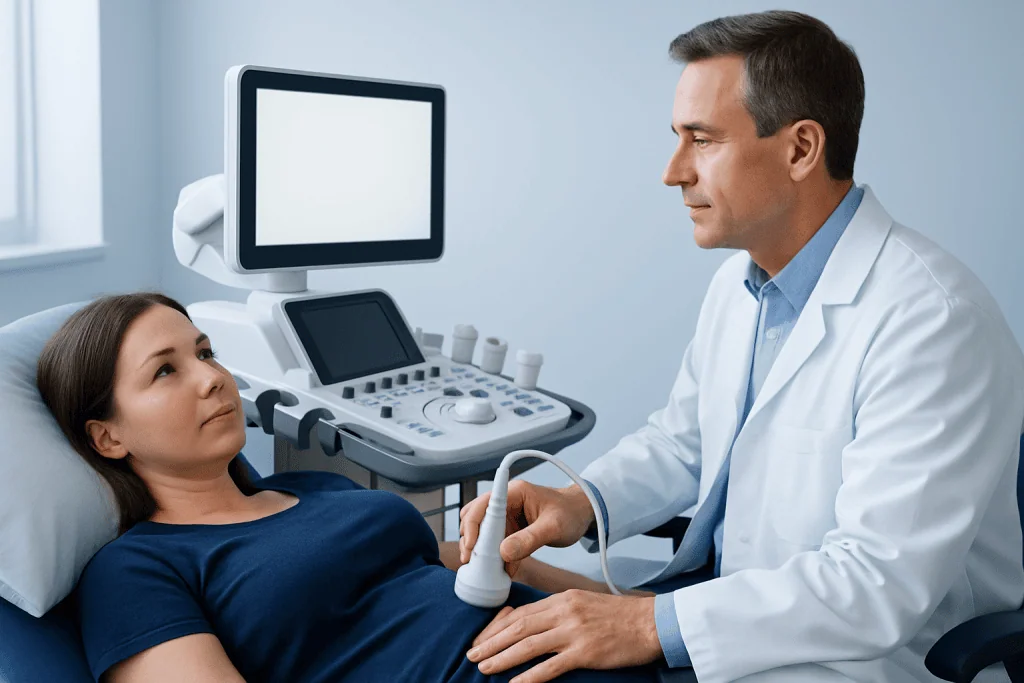
Imaging is the central part of diagnosis. An ultrasound may detect a liver lesion but may not identify its type with certainty. Contrast-enhanced MRI is often the preferred examination because it can show the lesion’s blood-flow pattern and other features that are typical of F N H. Multiphasic CT scanning or contrast-enhanced ultrasound may also be used in selected situations.
When imaging shows classic features, a biopsy is usually not needed. If the appearance is not typical, if the lesion changes unexpectedly, or if a diagnosis such as hepatocellular adenoma cannot be ruled out, a multidisciplinary team may recommend further imaging, review by an experienced radiologist, or occasionally a biopsy. A biopsy involves taking a small tissue sample and is considered only when its result is likely to change care.
Previous scans are valuable because stability over time supports a benign diagnosis. Patients can help by sharing imaging reports and image files from earlier examinations, including scans completed in another country or healthcare system.
Management: Monitoring, Medicines, and Surgery
Once a typical F N H diagnosis is secure, treatment is usually not necessary. F N H has an excellent outlook, does not usually impair liver function, and is not generally believed to become cancerous. Many people need no regular surveillance imaging after a confident diagnosis, although follow-up plans vary according to the lesion’s features, local clinical practice, and the individual’s health history.
A clinician may advise a repeat scan when the original images are inconclusive, the lesion is unusually large, there are symptoms that need clarification, or there is a separate liver condition. Monitoring is intended to confirm the diagnosis and understand the lesion’s behavior, not because F N H is expected to become malignant.
There is no medication that needs to be taken specifically to shrink or cure F N H. Pain management, if needed, focuses on identifying the true cause of pain and using appropriate general measures. It is important not to stop prescribed contraceptive medication, hormone treatment, or other medicines without speaking with the clinician who manages them.
Surgery to remove an F N H lesion is uncommon. It may be considered when significant symptoms are convincingly linked to a large lesion, when imaging and other tests cannot establish a reliable diagnosis, or when there is concern for a different condition that requires treatment. The potential benefit of surgery is carefully balanced against the risks of liver surgery.
Living Well With F N H
People with confirmed F N H can usually continue normal work, exercise, travel, and daily activities. No special diet is required for the lesion itself. A balanced eating pattern, regular physical activity, maintaining a weight appropriate for the individual, and limiting alcohol in line with medical advice can support overall liver health.
Because F N H is often discovered unexpectedly, it can cause understandable worry. Asking for a clear explanation of the imaging findings can be reassuring. Useful questions include whether the lesion has classic F N H features, whether any follow-up scan is recommended, whether there are signs of underlying liver disease, and which symptoms should prompt reassessment.
People should tell their healthcare team about all regular medicines, supplements, and herbal products. This is particularly important if they have other liver conditions or abnormal liver tests. “Liver cleanse” products and unregulated supplements should be approached cautiously, as some can cause liver injury.
For international patients who require further assessment, Acibadem International’s multidisciplinary specialists and JCI-accredited hospitals can evaluate liver lesions using appropriate imaging and specialist review.
When to Seek Medical Care
A person should arrange a medical appointment after a liver lesion is found on imaging, even if they feel well. A clinician can determine whether the finding has the typical appearance of F N H and whether any further tests are appropriate. This is especially important for people with a history of chronic liver disease, hepatitis, cancer, unexplained weight loss, or abnormal liver blood tests.
Medical review should also be sought for persistent or worsening pain in the upper abdomen, ongoing nausea, reduced appetite, increasing abdominal fullness, or symptoms that interfere with normal activities. These symptoms are often caused by conditions other than F N H, but they deserve assessment rather than self-diagnosis.
Urgent medical care is appropriate for sudden severe abdominal pain, fainting, confusion, repeated vomiting, high fever, black stools, vomiting blood, or jaundice. These signs are not typical of uncomplicated F N H and may indicate another condition needing prompt evaluation.
Frequently asked questions
Is F N H cancer?
No. F N H, or focal nodular hyperplasia, is a benign liver lesion and is not considered a form of liver cancer. It also is not generally thought to turn into cancer, particularly when the diagnosis has been clearly established with appropriate imaging.
Can F N H disappear on its own?
F N H may remain stable for years and can sometimes change in size. Complete disappearance is not common, but most lesions do not cause harm even if they remain visible on imaging. The need for follow-up depends on how certain the diagnosis is and the person’s clinical circumstances.
Does F N H need surgery?
Most people do not need surgery for F N H. Surgery is generally reserved for uncommon cases involving substantial symptoms, a very large lesion, or persistent uncertainty about whether the lesion is truly F N H.
Is pregnancy safe with focal nodular hyperplasia?
Pregnancy is usually possible for people with confirmed F N H. Because each person’s situation is different, it is sensible to discuss a known liver lesion with an obstetric clinician and liver specialist before or during pregnancy, particularly if the lesion is large or the diagnosis is not fully certain.
Should someone with F N H stop taking birth control pills?
Stopping oral contraceptives is not routinely required for confirmed F N H. This differs from hepatocellular adenoma, for which hormones can be more clinically important. A person should discuss any change in contraception or hormone therapy with their prescribing clinician.
How is F N H different from a liver adenoma?
Both are benign liver lesions, but they have different features and management considerations. Hepatocellular adenoma can carry risks of bleeding and, in certain circumstances, cancerous change, while F N H usually does not. Accurate imaging interpretation is important because the recommended follow-up may differ.
References
- American College of Gastroenterology
- European Association for the Study of the Liver
- American College of Radiology
- National Institute of Diabetes and Digestive and Kidney Diseases
This article is for general information only and is not a substitute for professional medical advice. Please consult a qualified doctor about your individual situation.
Oncology care in Turkey — second opinion and treatment plan
JCI-accredited · board-certified surgeons · reply within 24h
Add us as a Preferred Source to see more of our trusted health content across Google Search, AI Overviews and Discover.