Face of Black — Explained by Medical Evidence, Not Myths

Face of black is a descriptive phrase, not a recognized medical diagnosis. Most cases involve facial hyperpigmentation, meaning increased skin color in patches or more diffuse darkening.
Key Takeaways
- Face of black is a descriptive phrase, not a recognized medical diagnosis.
- Most cases involve facial hyperpigmentation, meaning increased skin color in patches or more diffuse darkening.
- Common triggers include sun exposure, acne marks, irritation, hormonal changes, and some medications.
- A doctor may diagnose the cause through skin examination, medical history, and sometimes blood tests or imaging.
- Treatment depends on the reason for the discoloration and often includes sun protection and targeted skin care.
- Medical review is important if discoloration appears suddenly, spreads quickly, or comes with other symptoms.
Face of black is not a formal medical term. In most cases, people use it to describe darkening of facial skin, and the cause may range from harmless pigmentation changes to skin inflammation, hormonal factors, sun exposure, or less commonly an underlying medical condition.
Overview: what “face of black” usually means
Face of black is not a medical term used in dermatology or general medicine. People usually use it informally to describe facial skin that looks darker than usual, either all over or in patches. In medical language, this is more often discussed as hyperpigmentation, post-inflammatory pigmentation, melasma, or another form of skin discoloration.
The key point is that darkening of the face is a sign, not a diagnosis by itself. It can happen after acne, eczema, rashes, friction, sun exposure, hormone changes, or contact with irritating products. In some people, deeper skin tones are also more likely to develop visible pigment changes after inflammation or minor injury.
Most causes are not dangerous, but they are not all the same. That is why medical evaluation focuses on the pattern of darkening, how long it has been present, whether it is itchy or painful, what products or medicines are being used, and whether there are other symptoms elsewhere in the body.
What facial discoloration can look like
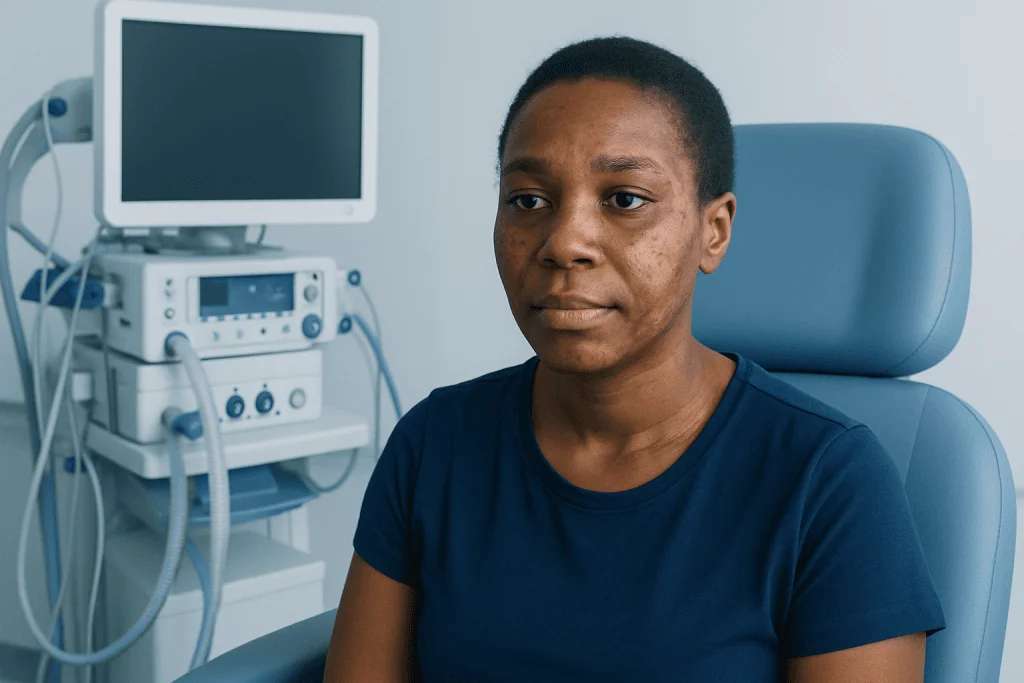
Dark facial discoloration may appear in several ways. Some people notice flat brown, gray-brown, or blackish patches on the cheeks, forehead, around the mouth, or jawline. Others see small dark marks left behind after acne, shaving bumps, burns, or a rash. The color may be subtle in some lights and more obvious in others.
Another common pattern is diffuse darkening, where the whole face seems more deeply pigmented than usual. This can be related to sun exposure, chronic irritation, certain medications, or endocrine conditions in some cases. Sometimes discoloration affects the neck, under-eye area, or skin folds at the same time.
Associated symptoms help narrow the cause. A person may also have:
- itching, burning, or dryness
- recent acne or eczema flare-ups
- redness before the dark marks appeared
- scaling or rough texture
- increased sensitivity after using skin products
- changes in other areas such as the neck or hands
Because different conditions can look similar, self-diagnosis can be misleading. For example, melasma, post-inflammatory hyperpigmentation, contact dermatitis, and some fungal or inflammatory skin disorders may all cause facial darkening but require different care approaches.
Common medical causes and risk factors

The most common explanation for “face of black” is hyperpigmentation. This happens when skin produces or stores more melanin in certain areas. Sunlight is one of the biggest triggers because ultraviolet exposure stimulates pigment production and can make existing spots darker and more persistent.
Post-inflammatory hyperpigmentation is another very frequent cause. It develops after acne, eczema, cuts, burns, insect bites, cosmetic procedures, or skin irritation. In skin of color, this response may be more noticeable and may last longer, even when the original inflammation has already settled. People with acne or sensitive skin often notice this pattern.
Hormonal influences can also play an important role. Melasma commonly affects the face and may be linked to pregnancy, hormonal medications, or natural hormone fluctuations. Friction, heat, and visible light may also contribute. Some endocrine or metabolic conditions can cause darkening as well, particularly if there is pigmentation in skin folds or around the mouth and eyes.
Additional risk factors include:
- frequent sun exposure without broad-spectrum protection
- using harsh exfoliants, bleaching agents, or irritating cosmetics
- certain medicines that increase light sensitivity or affect pigmentation
- shaving irritation or repeated rubbing
- a personal or family tendency toward pigment changes
- medical disorders such as Addison’s disease or insulin resistance-related skin changes in some cases
How doctors find the cause
Diagnosis begins with a careful history and skin examination. A doctor usually asks when the darkening started, whether it followed acne, a rash, pregnancy, a new cosmetic, or time in the sun, and whether there are symptoms such as itching, pain, fatigue, or weight change. They also ask about medications, supplements, shaving habits, and family history of skin conditions.
The pattern and location of pigmentation offer important clues. Symmetrical patches on the cheeks and forehead may suggest melasma, while dark marks where pimples or eczema were present may point to post-inflammatory hyperpigmentation. Velvety darkening in folds such as the neck may suggest acanthosis nigricans, which can be associated with insulin resistance.
Sometimes special tools are used to examine the skin more closely. If an underlying internal cause is suspected, blood tests may be recommended to check hormone levels, blood sugar, thyroid function, or adrenal function. Rarely, a skin biopsy is needed if the appearance is unusual or if another skin disease needs to be ruled out.
The goal of diagnosis is not only cosmetic clarity but medical accuracy. Knowing whether the pigment is caused by sun damage, inflammation, a hormone-related condition, or a systemic illness helps guide safer and more effective treatment.
Treatment options based on the cause
Treatment depends on why the skin has darkened. In many cases, the first step is to remove or control the trigger, such as ongoing acne, eczema, irritation from products, or excessive sun exposure. Once inflammation is reduced, the skin often gradually lightens, though this can take weeks to months.
Doctors may recommend topical treatments that help regulate pigment turnover or calm inflammation. Depending on the diagnosis, these may include prescription creams, non-irritating brightening agents, or treatments for acne and dermatitis. If acne is the source, managing active breakouts is important to prevent new marks, and some patients may benefit from acne treatment. When an inflammatory skin condition is contributing, support from dermatology care may be helpful.
For selected patients, procedures such as chemical peels or laser-based therapies may be considered, but only after proper diagnosis and with caution, especially in darker skin tones where irritation can worsen pigmentation. These treatments are not suitable for everyone and should be chosen by experienced clinicians. If hormone-related or endocrine causes are identified, treatment focuses on the underlying condition as well as the skin changes.
At the end of the care pathway, some people need a broader review by specialists. Acibadem International’s multidisciplinary specialists in JCI-accredited hospitals evaluate skin discoloration and related hormonal or metabolic conditions for international patients when needed.
Daily care, prevention, and what not to do
Sun protection is one of the most effective ways to prevent facial darkening from worsening. Daily use of broad-spectrum sunscreen, along with hats and shade when possible, helps limit UV-related pigment stimulation. Consistency matters because even small repeated exposures can maintain or deepen discoloration over time.
Gentle skin care is also important. A simple routine with a mild cleanser, moisturizer, and products suited to the skin type can reduce irritation. People should avoid harsh scrubs, frequent picking, aggressive exfoliation, and unmonitored use of skin-lightening creams bought online or without medical guidance, as these can damage the skin barrier and lead to more discoloration.
If acne, eczema, or allergic reactions are triggering the problem, early treatment can reduce long-term marks. Prompt management of these conditions often works better than trying to erase pigmentation later. In some cases, evaluation by specialists in endocrinology is useful if facial darkening is accompanied by other signs of a hormonal or metabolic disorder.
Healthy routines such as not smoking, managing chronic conditions, and reviewing medications with a clinician can also help. While home remedies are popular online, they should be approached carefully because acids, lemon juice, toothpaste, and abrasive masks can make pigmentation worse rather than better.
When to seek medical care
Medical advice is important if facial darkening appears suddenly, spreads quickly, or does not improve with gentle skin care and sun protection. A doctor should also assess discoloration that is accompanied by itching, pain, rash, swelling, scaling, or signs of infection. These features may suggest an inflammatory or allergic condition rather than a simple pigment change.
It is also wise to seek care if darkening involves the mouth, eyes, palms, skin folds, or mucous membranes, or if it occurs together with tiredness, dizziness, weight loss, menstrual changes, increased thirst, or other general symptoms. These combinations may indicate an underlying medical issue that needs treatment beyond skin care alone.
People with persistent acne scars, recurrent irritation from cosmetics, or suspected melasma can benefit from early professional guidance. Timely assessment may reduce the risk of longer-lasting pigmentation and can help avoid treatments that are too harsh for the skin.
Frequently asked questions
Is face of black a real medical condition?
No. Face of black is not a formal diagnosis used by doctors. It is usually a non-medical way of describing facial darkening or hyperpigmentation, which can have several different causes.
What is the most common cause of darkening on the face?
Common causes include sun exposure, post-inflammatory hyperpigmentation after acne or eczema, and melasma. Irritating skin products and repeated friction can also contribute. The exact cause depends on the pattern of discoloration and a person’s medical history.
Can facial darkening go away on its own?
Sometimes it can improve gradually, especially if the trigger is removed and the skin is protected from the sun. However, improvement may take weeks or months. Persistent or worsening discoloration should be assessed by a qualified doctor.
Does dark facial discoloration always mean a serious illness?
No, most cases are related to skin-level causes such as inflammation, sun exposure, or hormonal pigmentation. Still, some patterns can be linked to endocrine or metabolic disorders. That is why a medical review is useful when discoloration is widespread, new, or associated with other symptoms.
Can home remedies safely treat face of black?
Not always. Some popular remedies can irritate the skin and make pigmentation worse, especially in sensitive or darker skin tones. Safer care usually includes gentle cleansing, moisturizing, sun protection, and medical advice before using strong lightening products.
Which doctor should evaluate facial darkening?
A dermatologist is often the best first specialist for persistent facial pigmentation. Depending on the findings, they may also recommend assessment by an endocrinologist or another specialist if a hormone or metabolic cause is suspected.
References
- American Academy of Dermatology
- National Institute of Arthritis and Musculoskeletal and Skin Diseases
- National Health Service
- Mayo Clinic
- Cleveland Clinic
This article is for general information only and is not a substitute for professional medical advice. Please consult a qualified doctor about your individual situation.
Explore treatments in Turkey — costs, top hospitals & a free quote
JCI-accredited · board-certified surgeons · reply within 24h
Add us as a Preferred Source to see more of our trusted health content across Google Search, AI Overviews and Discover.

More from the Health Library

Montelukast — Explained by Medical Evidence, Not Myths

Buckle Fracture: A Complete Medical Overview

Lump on Anus — Explained by Medical Evidence, Not Myths

Foot Detox — Explained by Medical Evidence, Not Myths

Egg Intolerance: A Complete Medical Overview