Facelift Risks & Side Effects Explained by Surgeons

Swelling, bruising, tightness and temporary changes in skin sensation are common after a facelift and usually improve gradually. More serious facelift risks are uncommon but can include hematoma, infection, skin injury, scarring, nerve injury and anesthesia-related complications.
Key Takeaways
- Swelling, bruising, tightness and temporary changes in skin sensation are common after a facelift and usually improve gradually.
- More serious facelift risks are uncommon but can include hematoma, infection, skin injury, scarring, nerve injury and anesthesia-related complications.
- Smoking, uncontrolled medical conditions and certain medicines can increase surgical and healing risks.
- Careful surgeon selection, preoperative assessment and following recovery instructions can reduce preventable complications.
- Sudden swelling, worsening pain, breathing difficulty, fever or concerning wound changes need prompt medical assessment.
Facelift risks range from expected, temporary effects such as swelling, bruising and numbness to less common complications including bleeding, infection, wound-healing problems and facial nerve injury. A consultation with a qualified plastic surgeon helps a person understand their individual risk profile, expected recovery and realistic results.
Overview: What Are the Risks of a Facelift?
Facelift risks include expected short-term effects such as bruising, swelling, tightness, mild discomfort and temporary numbness. These changes are part of normal healing for many people and tend to settle over days to weeks, while final contour and scar maturation can continue for several months.
Less common but important complications include a collection of blood under the skin (hematoma), infection, delayed wound healing, noticeable scarring, skin loss, changes in hairline position, facial asymmetry and injury to branches of the facial nerve. General anesthesia or sedation also carries risks that should be assessed before surgery. A facelift is elective surgery, so an informed decision should include a balanced discussion of both possible benefits and limitations.
A facelift, also called rhytidectomy, is designed to address age-related laxity in the lower face and neck. It does not stop future aging, improve every type of wrinkle or replace skin-focused treatments. For a fuller explanation of the operation and planning process, see facelift surgery.
How a Facelift Works and Who May Be a Candidate

A facelift repositions and supports deeper facial tissues, removes or redistributes selected areas of excess skin, and redrapes the skin with the aim of restoring a more rested facial contour. Depending on the person’s concerns, the procedure may focus on the cheeks, jawline, jowls and neck. A surgeon may discuss complementary procedures, but each should be considered separately in terms of benefit, recovery and risk.
Suitable candidates are generally adults in good overall health who have facial or neck skin laxity, realistic expectations and the ability to follow recovery guidance. Skin quality, bone structure, the degree of tissue descent and previous facial procedures can all affect the surgical plan and the result.
A detailed medical review is essential. The surgeon should ask about smoking or nicotine use, diabetes, blood pressure, bleeding disorders, heart or lung disease, prior scars, allergies and all medicines and supplements. Medicines that affect clotting may need special planning with the prescribing clinician; patients should never stop prescribed treatment without medical advice.
What Happens During Facelift Surgery
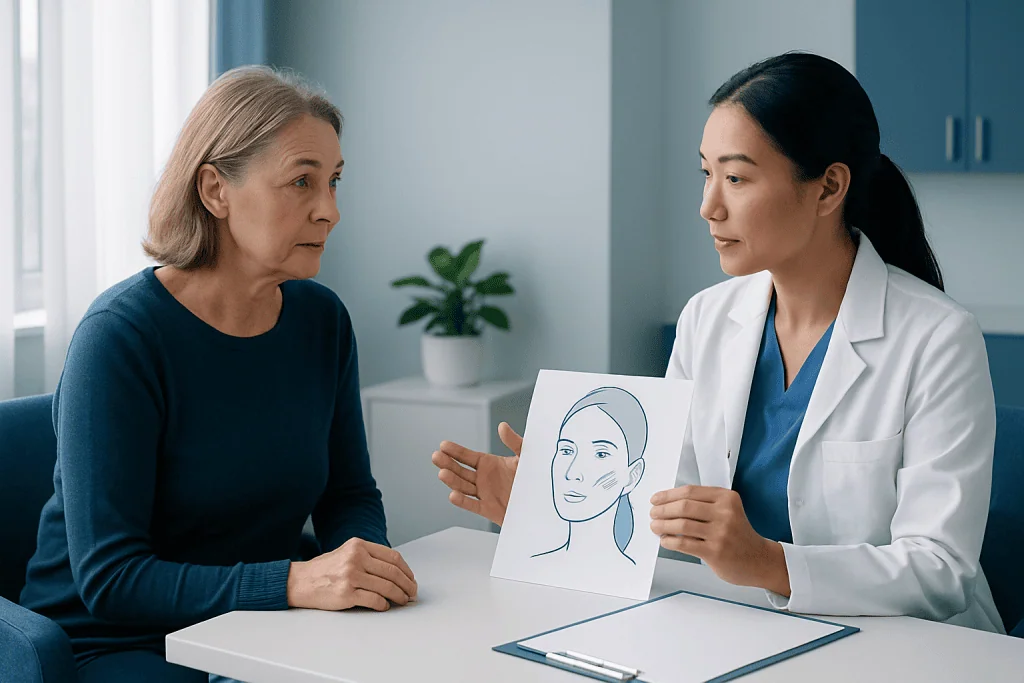
Before surgery, the surgeon reviews goals, examines facial anatomy, discusses incision placement and obtains informed consent. Photographs may be taken for clinical planning. The anesthetic approach varies according to the procedure and patient needs and may involve general anesthesia or intravenous sedation with local anesthetic.
During a typical facelift, carefully placed incisions are made around the ears and may extend into the hair-bearing scalp or beneath the chin when neck work is needed. The surgeon lifts and repositions the underlying support layer, known as the SMAS in many techniques, then removes or adjusts excess skin without creating excessive tension. Incisions are closed with sutures or clips, and dressings may be applied.
Some patients go home the same day, while others may require observation depending on the procedure, anesthesia and medical history. A responsible adult is usually needed to assist during the first night. The surgical team provides individual instructions for wound care, activity, medicines and follow-up appointments.
Expected Side Effects and Recovery Timeline
Immediately after surgery, the face and neck can feel swollen, bruised, firm or tight. Mild to moderate discomfort, temporary numbness around the ears and cheeks, fatigue and limited neck movement are also common. These effects do not necessarily indicate a complication, but they should be monitored and discussed at follow-up visits.
During the first one to two weeks, bruising and swelling usually become more manageable, although they can vary considerably between individuals. Sutures or clips may be removed according to the surgeon’s technique and healing assessment. Many people can resume light daily activities after this early period, but strenuous exercise, bending, heavy lifting and activities that increase blood pressure are usually restricted for longer.
Residual swelling, altered sensation and firmness can take several weeks to improve. Scars normally evolve over months, often becoming flatter and less noticeable with time, though scar behavior differs by skin type, incision healing and individual biology. The surgeon can advise when it is appropriate to return to work, driving, exercise, sun exposure and cosmetic products.
- Keep the head elevated as advised to help limit swelling.
- Attend all postoperative reviews, even if healing appears uncomplicated.
- Protect healing incisions from sun exposure and avoid unapproved scar treatments.
- Do not smoke, vape or use nicotine products during the period recommended by the surgical team.
Potential Facelift Complications and Their Risk Factors
Hematoma is one of the more important early complications. It occurs when blood collects beneath the skin and may cause rapidly increasing swelling, pressure or pain, often on one side of the face or neck. It may require urgent assessment and sometimes a procedure to remove the blood collection. Maintaining well-controlled blood pressure and following medication instructions are important parts of risk reduction.
Infection is not common but may cause increasing redness, warmth, drainage, fever or worsening pain. Other possible complications include wound separation, delayed healing, thickened or widened scars, hair loss near incisions, skin contour irregularity, prolonged numbness and differences between the two sides of the face. Rarely, compromised blood supply can cause skin injury or tissue loss, particularly in people who smoke or have significant vascular risk factors.
Facial nerve injury is uncommon but can lead to temporary or, rarely, persistent weakness in muscles of facial expression. Changes in sensation are more frequent and are usually temporary. Risks related to anesthesia include nausea, allergic reactions, breathing problems, blood clots and cardiovascular complications; the anesthesia team evaluates these risks based on the person’s health history.
Risk is not the same for every person. Smoking and nicotine exposure, uncontrolled diabetes, poor nutrition, certain blood-thinning medicines, previous surgery or radiation, and untreated medical conditions can increase the likelihood of complications. A surgeon cannot eliminate risk entirely, but can identify modifiable factors and advise whether postponing or avoiding surgery is safer.
Benefits, Limitations and Ways to Support Safer Healing
For appropriately selected patients, a facelift can improve the appearance of jawline definition, jowls, loose neck skin and lower-face laxity. The intended outcome is typically a natural-looking, refreshed appearance rather than a different face. Results vary, and visible improvement must be weighed against scars, recovery time, cost considerations and the possibility of revision surgery.
Safety begins before the operation. Patients should choose a properly trained, experienced plastic surgeon, verify that the procedure will be performed in an appropriately equipped and accredited setting, and ask who will provide anesthesia and postoperative support. They should feel comfortable discussing previous cosmetic procedures, medical conditions and their goals without pressure.
Preparation may include stopping nicotine products, optimizing blood pressure or diabetes control, arranging help at home and avoiding supplements or medicines only when instructed by the treating team. After surgery, careful incision care, adequate rest, hydration, a balanced diet and avoiding early strenuous activity support healing. Follow the surgeon’s personalized instructions rather than relying on advice from social media or friends.
When to Seek Medical Care
Contact the surgical team promptly if there is rapidly increasing swelling, severe or escalating pain, one-sided facial swelling, persistent bleeding, spreading redness, pus-like drainage, fever, an opening in the incision or a sudden change in skin color. New facial weakness, vision changes, fainting, confusion or persistent vomiting also require urgent clinical advice.
Seek emergency care immediately for chest pain, shortness of breath, coughing blood, severe headache with neurological symptoms, or signs of a severe allergic reaction such as swelling of the lips or tongue or difficulty breathing. These symptoms are not expected parts of normal recovery and should not be managed at home.
People considering treatment can benefit from a consultation that includes individualized risk assessment and clear recovery planning. Acibadem International’s multidisciplinary specialists and JCI-accredited hospitals diagnose and treat aesthetic surgery patients from around the world, with care plans guided by clinical assessment and patient goals.
Frequently asked questions
What is the most common complication after a facelift?
Bruising, swelling, tightness and temporary numbness are common expected effects rather than complications. Hematoma, a collection of blood beneath the skin, is among the more significant early surgical complications and needs prompt review if swelling or pain increases quickly.
How long does swelling last after a facelift?
The most noticeable swelling usually improves during the first few weeks, but mild residual swelling can persist longer. Healing speed varies with the extent of surgery, individual health, smoking status and adherence to postoperative instructions.
Can a facelift cause permanent nerve damage?
Temporary weakness or altered sensation can occur because nerves are close to the tissues involved in surgery. Permanent facial nerve injury is rare, but it is a recognized risk that should be discussed during informed consent with the operating surgeon.
Does smoking increase facelift risks?
Yes. Smoking and other nicotine products can reduce blood flow to healing tissues and raise the risk of wound-healing problems, infection, poor scarring and skin injury. A surgeon will advise how long nicotine should be avoided before and after surgery.
When can someone return to work after a facelift?
Many people are ready for non-strenuous work after around two weeks, but this varies and visible bruising or swelling may last longer. The treating surgeon should provide individualized advice based on the procedure performed and the person’s recovery.
How can a person lower facelift risks?
Risk can be reduced by choosing a qualified surgeon, giving a complete medical history, stopping nicotine as advised and following instructions about medicines, activity and wound care. Complications cannot be completely prevented, so knowing which symptoms require urgent contact is also important.
References
- American Society of Plastic Surgeons
- American Society for Aesthetic Plastic Surgery
- National Health Service
- U.S. Food and Drug Administration
- Mayo Clinic
This article is for general information only and is not a substitute for professional medical advice. Please consult a qualified doctor about your individual situation.
Explore treatments in Turkey — costs, top hospitals & a free quote
JCI-accredited · board-certified surgeons · reply within 24h
Add us as a Preferred Source to see more of our trusted health content across Google Search, AI Overviews and Discover.
Check your numbers in seconds
BMI, calories, due date, blood pressure and 30+ more clinical calculators — free, instant, doctor-reviewed ranges.