Facet Arthropathy: Symptoms, Causes, and Treatment Options

Facet arthropathy affects the facet joints, which help stabilize and guide movement in the spine. Common symptoms include back or neck pain, stiffness, and pain that worsens with twisting, bending backward, or prolonged standing.
Key Takeaways
- Facet arthropathy affects the facet joints, which help stabilize and guide movement in the spine.
- Common symptoms include back or neck pain, stiffness, and pain that worsens with twisting, bending backward, or prolonged standing.
- Diagnosis is based on symptoms, physical examination, and imaging when needed; other causes of spinal pain may also need to be ruled out.
- Treatment often includes activity modification, physical therapy, medicines, and sometimes image-guided injections or other pain procedures.
- Good posture, regular exercise, weight management, and spine-friendly body mechanics may help reduce strain on the facet joints.
Facet arthropathy is a degenerative or inflammatory problem affecting the small joints at the back of the spine. It commonly causes localized neck or back pain, stiffness, and pain with certain movements, and treatment usually focuses on symptom relief, movement, and addressing contributing spine changes.
Overview
Facet arthropathy is a condition in which the facet joints of the spine become worn, irritated, or arthritic. These joints are paired joints located at the back of each vertebra. They help the spine move smoothly while also limiting excessive motion. When the cartilage within these joints breaks down or the joint becomes inflamed, pain and stiffness can develop.
The condition may affect the neck, mid-back, or lower back, but it is especially common in the cervical spine and lumbar spine. Many people develop some degree of facet joint wear as part of aging, yet not all changes seen on imaging cause symptoms. This is why a doctor considers both the person’s symptoms and examination findings, not just scan results.
Facet arthropathy is sometimes described as facet joint arthritis or spinal osteoarthritis involving the posterior joints. It can occur on its own or alongside other spine conditions, such as disc degeneration, spinal narrowing, or herniated disc. Understanding where the pain is coming from is important because treatment may differ depending on the main cause.
How facet arthropathy feels
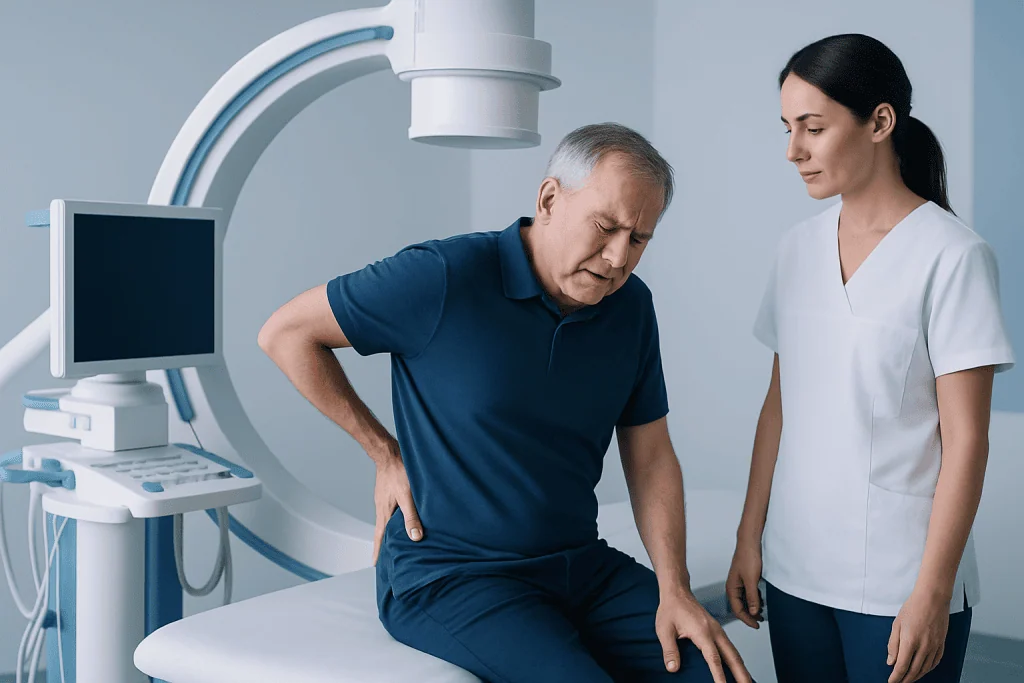
The symptoms of facet arthropathy often depend on which part of the spine is affected. In the lower back, pain is usually felt in the low back itself and may spread into the buttocks or thighs, but it typically does not follow the classic pattern of nerve pain traveling below the knee. In the neck, pain may be felt in the neck, shoulders, or upper back and can sometimes contribute to headaches.
A common feature is pain that worsens with movements that compress the facet joints, such as leaning backward, twisting, standing for long periods, or getting up after rest. Many people notice morning stiffness or stiffness after sitting still. Some feel better when bending slightly forward or changing position regularly.
Symptoms can vary from mild and occasional to more persistent. Typical complaints may include:
- Localized back or neck pain
- Stiffness and reduced flexibility
- Pain when twisting or arching the back
- Tenderness over the affected area
- Muscle tightness or spasm around the spine
If nearby nerves become irritated because of associated swelling, bone spurs, or other spine changes, additional symptoms such as numbness, tingling, or weakness may occur. In that situation, the symptoms may overlap with conditions such as spinal stenosis, so a medical assessment becomes especially important.
Causes and risk factors
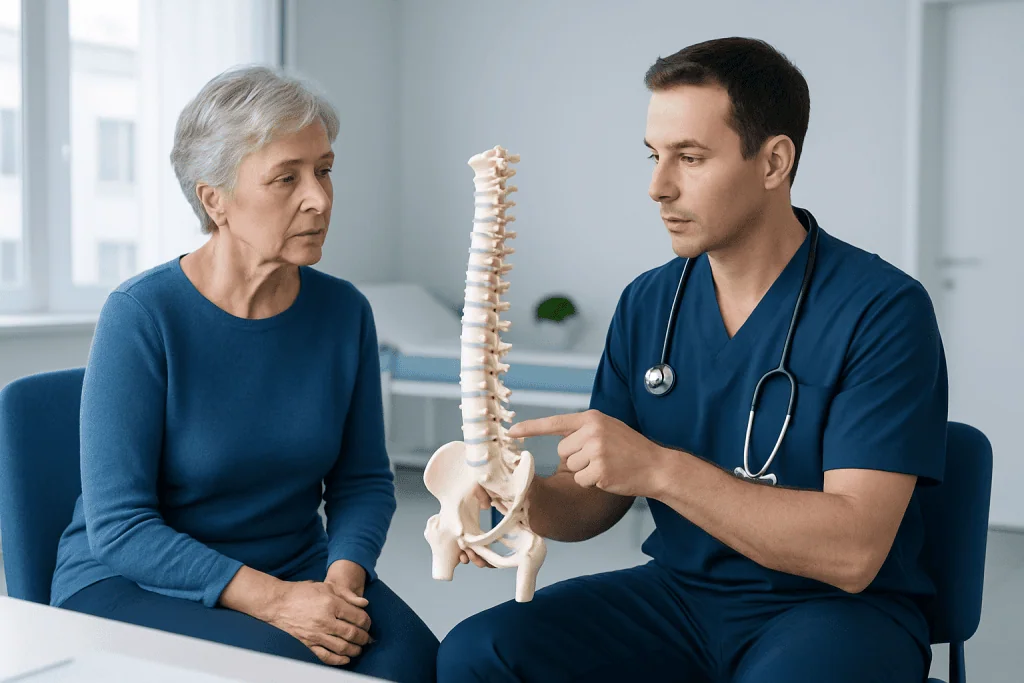
The most common cause of facet arthropathy is gradual joint degeneration over time. Like other joints in the body, facet joints have cartilage that cushions movement. With age and repeated use, this cartilage can thin. The joint capsule may thicken, small bone spurs may form, and inflammation can develop, all of which may contribute to pain.
Changes elsewhere in the spine can also increase stress on the facet joints. For example, when spinal discs lose height because of degeneration, more force may shift onto the facet joints. Poor posture, repetitive heavy lifting, prior injury, and occupations or sports that involve repeated extension or rotation of the spine may increase strain over time.
Factors associated with a higher chance of symptomatic facet arthropathy include:
- Increasing age
- General osteoarthritis
- Previous spine injury or trauma
- Excess body weight
- Low physical conditioning or weak core muscles
- Repetitive spinal loading at work or during sports
- Coexisting degenerative disc disease
Less commonly, inflammatory joint conditions can affect the facet joints. Because back or neck pain may have more than one cause at the same time, doctors often look at the broader mechanics of the spine rather than viewing facet arthropathy in isolation.
How doctors diagnose it
Diagnosis begins with a detailed medical history and physical examination. A doctor asks where the pain is felt, what makes it worse or better, whether stiffness is present, and whether any leg or arm symptoms suggest nerve involvement. Examination may include checking posture, range of motion, areas of tenderness, muscle strength, sensation, and reflexes.
Imaging can help identify degenerative changes, but it does not always prove that the facet joints are the main pain source. X-rays may show joint space narrowing or bone spurs. CT scans can show bony detail clearly, while MRI is often used when soft tissues, discs, nerves, or spinal canal narrowing also need evaluation. Imaging is especially useful when symptoms are persistent, severe, or associated with neurological signs.
In some cases, the diagnosis is supported by a diagnostic injection. Under imaging guidance, a specialist may numb the suspected facet joint or the small nerves supplying it. If pain improves significantly for a short time, that may indicate the facet joint is a major contributor. This approach can also help guide treatment planning.
Because back and neck pain can come from discs, muscles, sacroiliac joints, nerves, or other spinal structures, diagnosis often involves ruling out other causes. A careful, stepwise assessment helps avoid unnecessary treatment and focuses care on the most likely pain generator.
Treatment options
Treatment for facet arthropathy usually starts with conservative measures. Many people improve with a combination of activity modification, short-term pain relief, and physical therapy. The aim is not only to reduce pain but also to improve movement patterns, strengthen support muscles, and help the person return to usual daily activities as comfortably as possible.
Physical therapy often focuses on posture, flexibility, core and back muscle strength, and safe movement mechanics. A clinician may suggest avoiding repeated backward bending or twisting during painful flare-ups while still encouraging regular, gentle movement. Heat, stretching, and a structured exercise plan may help reduce stiffness.
Common treatment approaches may include:
- Relative rest during flares, without prolonged bed rest
- Physical therapy and guided exercise
- Pain-relieving or anti-inflammatory medicines recommended by a doctor
- Posture correction and ergonomic changes
- Weight management when appropriate
- Image-guided facet joint injections or medial branch blocks in selected cases
- Radiofrequency ablation for persistent pain linked to the facet joints
When symptoms remain significant despite conservative care, interventional pain procedures may be considered. Some patients benefit from pain management strategies that include targeted injections. If other structural problems are contributing, such as severe compression of nerves, more specialized assessment may be needed, including spine surgery in carefully selected situations. Treatment is individualized, based on symptoms, function, examination findings, and imaging results.
Prevention and self-care
Facet arthropathy cannot always be prevented, especially when age-related changes are involved, but certain habits may lower strain on the spine and help control symptoms. Staying active is one of the most useful strategies. Gentle, regular movement supports joint nutrition, reduces stiffness, and helps maintain muscle strength around the spine.
Exercises that build core stability and improve flexibility may help distribute load more evenly through the spine. Good posture during sitting, standing, and lifting is also important. Long periods in one position can aggravate symptoms, so many people benefit from taking movement breaks throughout the day.
Helpful self-care measures may include:
- Maintaining a healthy body weight
- Using safe lifting techniques
- Improving workstation ergonomics
- Doing regular low-impact exercise such as walking or swimming
- Stretching tight hip, hamstring, and shoulder muscles as advised
- Stopping smoking if applicable, since smoking may affect spinal health overall
Self-care should be practical and sustainable. Sudden increases in activity, high-impact exercise during pain flares, or unsupervised manipulation may worsen symptoms in some people. If pain keeps returning, a doctor or physical therapist can help tailor a long-term plan.
When to seek medical care
Medical care is appropriate when back or neck pain lasts more than a few weeks, returns frequently, limits normal activity, or does not improve with rest and basic self-care. A person should also seek evaluation if pain disrupts sleep, causes difficulty walking or working, or feels significantly different from previous episodes.
Urgent medical assessment is important if spinal pain is accompanied by weakness, numbness, loss of balance, fever, unexplained weight loss, pain after a major injury, or problems with bladder or bowel control. These features may point to a condition other than uncomplicated facet arthropathy and should not be ignored.
People with a history of cancer, osteoporosis, inflammatory arthritis, or immune suppression should also discuss new spine pain with a doctor promptly. In complex cases, a team approach involving orthopedics, neurology, rehabilitation, and pain specialists may be helpful. Acibadem International’s multidisciplinary specialists in JCI-accredited hospitals diagnose and treat spine conditions for international patients, including cases that may require physical therapy and rehabilitation or further spinal evaluation.
Frequently asked questions
Is facet arthropathy the same as arthritis?
Facet arthropathy usually refers to degenerative or inflammatory changes in the facet joints of the spine, so it is often a form of arthritis in those joints. However, the term emphasizes the spinal location and the effect on movement and pain.
Can facet arthropathy cause nerve pain?
By itself, facet arthropathy more often causes localized neck or back pain and stiffness. But if swelling, bone spurs, or related spinal changes affect nearby nerves, symptoms such as tingling, numbness, or radiating pain can occur.
Does facet arthropathy always show up on MRI or X-ray?
Imaging can show facet joint changes, but not every abnormality causes symptoms. Some people have visible degeneration with little pain, while others have pain that comes from several structures at once, so doctors interpret scans together with the physical examination.
Can exercise help facet arthropathy?
Yes, appropriate exercise often helps by improving flexibility, posture, and spinal support from the surrounding muscles. The key is choosing movements that do not aggravate symptoms, ideally with guidance from a doctor or physical therapist.
Are injections a cure for facet arthropathy?
Injections do not cure the underlying joint wear, but they may help confirm the diagnosis and reduce pain in selected patients. Relief may be temporary, and injections are usually part of a broader plan that includes exercise, posture, and activity changes.
When might surgery be considered?
Surgery is not usually the first treatment for facet arthropathy alone. It may be considered when there are additional structural problems, such as significant nerve compression or spinal instability, and when non-surgical treatment has not provided enough relief.
References
- National Institute of Arthritis and Musculoskeletal and Skin Diseases
- American Academy of Orthopaedic Surgeons
- National Institute of Neurological Disorders and Stroke
- North American Spine Society
- Mayo Clinic
This article is for general information only and is not a substitute for professional medical advice. Please consult a qualified doctor about your individual situation.
Joint and spine care in Turkey — expert assessment & treatment
JCI-accredited · board-certified surgeons · reply within 24h
Add us as a Preferred Source to see more of our trusted health content across Google Search, AI Overviews and Discover.