Facetite: A Complete Medical Overview

FaceTite combines small-incision fat treatment with radiofrequency energy intended to promote tissue contraction and collagen remodeling. It is commonly considered for mild to moderate skin laxity and localized fullness around the lower face and neck.
Key Takeaways
- FaceTite combines small-incision fat treatment with radiofrequency energy intended to promote tissue contraction and collagen remodeling.
- It is commonly considered for mild to moderate skin laxity and localized fullness around the lower face and neck.
- The procedure is usually performed with local anesthesia, sometimes with sedation, depending on the treatment plan and patient needs.
- Swelling, bruising, numbness, and tenderness are common during recovery; final contour changes develop gradually over several months.
- FaceTite is not a replacement for facelift surgery when there is substantial excess skin, marked jowling, or significant tissue descent.
FaceTite is a minimally invasive aesthetic procedure that uses controlled radiofrequency energy to heat tissue beneath the skin, with the aim of reducing localized fat and improving skin firmness in areas such as the jawline, chin, neck, and cheeks. It may suit selected people seeking contouring with smaller incisions and less downtime than a surgical facelift, but it does not provide the same degree of correction as surgery.
What Is FaceTite?
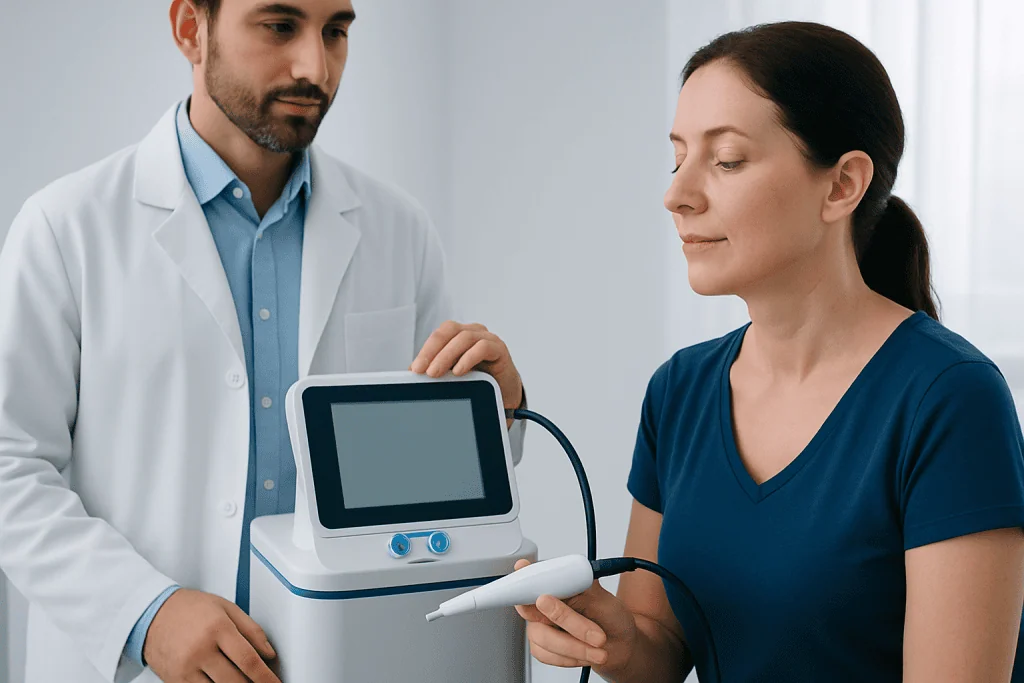
FaceTite is a brand name for a minimally invasive procedure that uses radiofrequency-assisted lipolysis (RFAL). A clinician places a thin probe under the skin through very small entry points, while an external electrode rests on the skin surface. Radiofrequency energy passes between these components, creating controlled heating in targeted tissue.
The procedure is intended to address two related concerns: small deposits of fat and mild to moderate looseness of the skin. Heat can help coagulate and treat fatty tissue while also causing immediate tissue contraction and stimulating longer-term collagen remodeling. FaceTite is most often used beneath the chin, along the jawline, on the neck, and in selected cheek or lower-face areas.
Although it is sometimes described as a nonsurgical facelift, this wording can be misleading. FaceTite involves a procedure beneath the skin and requires incisions, anesthesia, healing time, and careful follow-up. It may improve contour in appropriately selected patients, but it cannot reproduce every effect of a surgical facelift.
Who May Be a Candidate for FaceTite?
FaceTite may be considered by adults who are bothered by localized fullness or reduced firmness in the lower face and neck, especially when skin laxity is not severe. Good candidates generally have realistic expectations, are in stable overall health, and understand that results are gradual rather than immediate.
Skin quality is an important part of assessment. People with some natural skin elasticity may be more likely to see a visible tightening response than those with substantial excess skin. Facial anatomy, fat distribution, age-related changes, prior procedures, smoking status, and medical history can all affect whether the procedure is appropriate.
It may be less suitable for people with significant sagging of the cheeks or neck, marked jowls, very thin or fragile skin, active skin infection, uncontrolled medical conditions, or certain implanted electronic devices. A qualified plastic surgeon or aesthetic physician should assess the person in person and discuss alternatives, which may include noninvasive treatments, injectable options, liposuction, neck lift, or facelift surgery.
How the FaceTite Procedure Is Performed

Before treatment, the clinician reviews medical conditions, allergies, medicines and supplements, smoking or nicotine use, and previous facial procedures. Photographs and facial assessment may help identify the areas that can be treated safely and clarify the expected degree of improvement. Patients should disclose blood-thinning medicines and any history of poor wound healing, scarring, or anesthesia complications.
FaceTite is often performed using local anesthetic medicine that numbs the area, sometimes combined with oral or intravenous sedation. The exact approach depends on the planned treatment, the patient’s health, and local clinical practice. Small incisions are made in discreet locations, allowing the internal probe to be positioned beneath the skin.
The clinician moves the probe through the target layer while monitoring the treatment area and temperature. If fat reduction is planned, treated fat may be removed through aspiration or managed according to the clinician’s technique. The procedure can be performed alone or combined with other facial contouring treatments, but combining procedures may increase recovery needs and should be discussed carefully.
Expected Results and Recovery
Some change in contour may be noticeable after initial swelling begins to settle, but the early appearance does not represent the final result. Radiofrequency-related tissue remodeling takes time. Improvement in skin firmness and definition may continue to develop over several weeks to months as healing progresses and new collagen forms.
Most people experience temporary swelling, bruising, tenderness, firmness, numbness, and mild drainage from incision sites. A compression garment may be recommended for a period determined by the treating clinician. Patients are commonly advised to rest initially, avoid strenuous exercise until cleared, protect healing skin from sun exposure, and attend scheduled follow-up appointments.
Recovery varies according to the treatment extent and whether other procedures were performed at the same time. Many people return to light daily activities within days, while visible swelling or bruising may last longer. It is sensible to plan social events with enough recovery time rather than expecting a fully settled result immediately after treatment.
Benefits, Limits and Alternatives
The potential benefits of FaceTite include treatment through small incisions, targeted reduction of limited fat deposits, and an approach that may support skin contraction without the scars associated with a traditional facelift or neck lift. For selected patients, it can offer a middle option between external noninvasive treatments and more extensive facial surgery.
Its limitations are equally important. FaceTite cannot lift deeply descended facial tissues to the same extent as surgery, remove large amounts of loose skin, or reliably correct all signs of aging. Results vary with anatomy, skin elasticity, weight changes, healing response, and the skill and judgment of the treating clinician. A single procedure may not address every concern a person has about facial aging.
Alternatives may include skin-care measures, energy-based treatments applied from outside the skin, injectable treatments, fat-dissolving injections in carefully selected areas, facial liposuction, thread-based procedures, or surgical lifting procedures. Each option has different evidence, risks, durability, cost considerations, and likely outcomes. The most suitable choice depends on the individual rather than on the name of a particular device.
Risks and Safety Considerations
All procedures that enter the skin carry some risk. Common short-term effects after FaceTite include bruising, swelling, discomfort, numbness, uneven firmness, and temporary changes in skin sensation. Small incision marks usually fade over time, but any incision can leave a visible scar or heal differently than expected.
Less common but potentially important complications include infection, bleeding, fluid collection, burns, prolonged numbness, contour irregularities, asymmetry, skin injury, pigmentation changes, nerve irritation or injury, and the need for additional treatment. Rare complications can be more serious. The risk profile may be affected by smoking, diabetes, blood-clotting conditions, certain medications, previous surgery, and treatment of overly large areas.
Safety depends on proper patient selection, training, sterile technique, appropriate anesthesia, and close attention to device settings and tissue temperature. Patients should choose a properly qualified clinician who can explain the procedure, possible complications, recovery plan, and realistic alternatives in clear terms. They should also receive specific instructions about medicines, nicotine avoidance, wound care, and whom to contact after treatment.
When to Seek Medical Care
Before arranging FaceTite, a person should seek a medical consultation if they have a chronic health condition, take prescription medicines or supplements that may affect bleeding, have an implanted medical device, are pregnant or breastfeeding, or have a history of abnormal scarring. A full medical review helps identify whether the treatment can be performed safely or whether another approach may be preferable.
After the procedure, patients should contact their treating team promptly if they develop worsening rather than improving pain, increasing redness or warmth, fever, foul-smelling drainage, significant bleeding, a rapidly enlarging swelling, skin color changes, or new weakness of facial movement. Urgent medical evaluation is appropriate for symptoms such as trouble breathing, chest pain, fainting, or signs of a severe allergic reaction.
Acibadem International’s multidisciplinary specialists and JCI-accredited hospitals assess and treat aesthetic concerns for international patients, with care plans based on individual health, anatomy, and goals. A consultation with a qualified clinician remains the best way to determine whether FaceTite or another option is appropriate.
Frequently asked questions
Is FaceTite the same as a facelift?
No. FaceTite is a minimally invasive radiofrequency-assisted procedure that may improve mild to moderate skin laxity and localized fat. A facelift is a surgical operation that can reposition deeper tissues and remove excess skin, usually producing a more substantial correction when aging changes are advanced.
Is FaceTite painful?
Local anesthesia is commonly used to numb the treatment area, and some patients also receive sedation. During recovery, soreness, tightness, tenderness, and numbness can occur, but the treating clinician can provide an individualized pain-management plan.
How long does FaceTite recovery take?
Many people can resume light activities after several days, but swelling and bruising may remain noticeable for longer. The exact timeline depends on the treatment area, the amount of work performed, individual healing, and whether procedures were combined.
How long do FaceTite results last?
Results can be long-lasting, but they do not stop natural aging or future changes in weight and skin quality. Maintaining a stable weight, avoiding tobacco, protecting the skin from sun exposure, and following general health advice may help support the result.
Can FaceTite remove a double chin?
FaceTite may be used to treat selected patients with localized fat and mild skin laxity beneath the chin. However, the best treatment depends on whether the fullness is caused by fat, loose skin, muscle banding, chin structure, or a combination of factors.
What is the difference between FaceTite and liposuction?
Liposuction primarily removes fat through a cannula and suction. FaceTite uses radiofrequency energy beneath the skin and may be combined with fat removal, with the additional goal of promoting tissue contraction and skin tightening.
References
- U.S. Food and Drug Administration
- American Society of Plastic Surgeons
- American Academy of Facial Plastic and Reconstructive Surgery
- International Society of Aesthetic Plastic Surgery
This article is for general information only and is not a substitute for professional medical advice. Please consult a qualified doctor about your individual situation.
Explore treatments in Turkey — costs, top hospitals & a free quote
JCI-accredited · board-certified surgeons · reply within 24h
Add us as a Preferred Source to see more of our trusted health content across Google Search, AI Overviews and Discover.