Femoral Artery — Explained by Medical Evidence, Not Myths

The femoral artery is the main continuation of the external iliac artery and supplies blood to the thigh and much of the leg. It is commonly examined by doctors because its pulse can be felt in the groin and it is important in emergency care and catheter-based procedures.
Key Takeaways
- The femoral artery is the main continuation of the external iliac artery and supplies blood to the thigh and much of the leg.
- It is commonly examined by doctors because its pulse can be felt in the groin and it is important in emergency care and catheter-based procedures.
- Problems affecting the femoral artery include injury, atherosclerotic narrowing, aneurysm, blood clot, and procedure-related complications.
- Symptoms can range from no symptoms at all to leg pain while walking, a cold or pale foot, numbness, or severe bleeding after trauma.
- Diagnosis often involves physical examination, pulse assessment, Doppler ultrasound, CT angiography, or MR angiography.
- Prompt medical care is important for sudden leg pain, loss of pulse, significant groin swelling, or heavy bleeding.
The femoral artery is a major blood vessel in the groin that carries oxygen-rich blood to the thigh and lower leg. Most people never notice it unless there is injury, narrowing, or a circulation problem, but understanding its role can help explain symptoms such as leg pain, a weak pulse, or sudden bleeding.
What the femoral artery is and why it matters
The femoral artery is a large artery located in the groin and upper thigh. It is the main route by which oxygen-rich blood travels from the heart to the lower limb. In simple terms, it acts like a major highway of circulation, delivering blood to the muscles, skin, and other tissues of the thigh, knee, lower leg, and foot.
It begins as the external iliac artery passes under the inguinal ligament and enters the upper thigh, where it becomes the femoral artery. Along its course, it gives off branches that supply the abdominal wall, groin region, and deep structures of the thigh. Farther down, it continues toward the knee and changes name as it passes into the back of the leg.
Doctors pay close attention to this artery because it is both easy to access and medically important. The femoral pulse can often be felt in the groin during a routine exam, helping clinicians assess circulation. The artery is also used for some catheter-based tests and treatments because it provides a pathway to larger blood vessels inside the body.
Although the femoral artery is strong and usually works without problems, it can be affected by injury, plaque buildup, blood clots, or weakness in the artery wall. When this happens, the blood supply to the leg may be reduced or interrupted, which can lead to symptoms that should not be ignored.
How the femoral artery works in the body
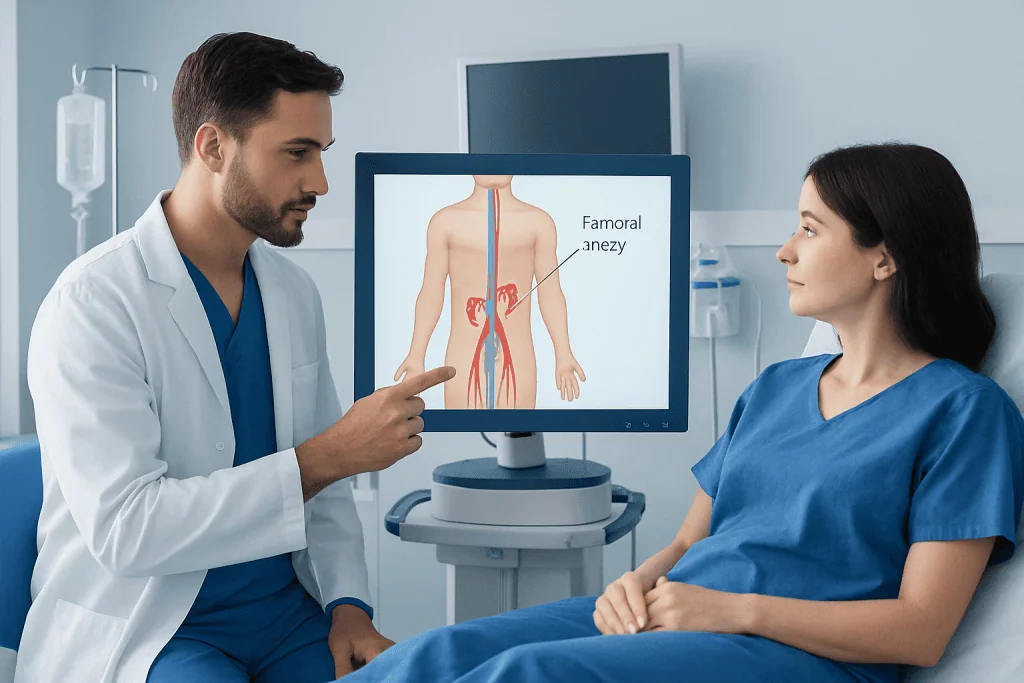
Every artery has a job, and the femoral artery’s job is to deliver blood efficiently to the lower extremity. With each heartbeat, blood moves from the heart through the aorta into the iliac arteries and then into the femoral artery. This steady flow supports walking, balance, wound healing, temperature regulation, and normal muscle function.
The femoral artery has several important branches. One of the most significant is the deep femoral artery, also called the profunda femoris, which supplies much of the thigh. Other smaller branches help nourish the skin and superficial tissues. This branching pattern explains why blockages in one area may cause pain in a specific muscle group or why blood flow may sometimes be partly preserved through collateral circulation.
Because the artery lies relatively close to the surface in the groin, it can be compressed in an emergency if there is severe bleeding from the leg. This same accessibility is why doctors may use it for procedures such as angiography or endovascular treatment, including angiography and selected peripheral artery disease treatment.
Normal blood flow through the femoral artery depends on healthy artery walls and open vessel channels. Conditions that narrow, weaken, or injure the artery can reduce oxygen delivery. Over time, poor circulation may lead to pain, slower healing, or tissue damage, especially in people who also have diabetes, smoking exposure, or other vascular risk factors.
Common femoral artery problems and symptoms

Several medical conditions can affect the femoral artery. The most common is atherosclerosis, in which fatty plaque builds up inside the artery and narrows the passage for blood flow. This is one form of peripheral artery disease, and it may cause cramping or aching in the buttock, thigh, or calf during walking that improves with rest.
Another possible problem is acute blockage, often caused by a blood clot or sudden plaque disruption. This can reduce blood flow very quickly and may cause severe pain, a cold foot, numbness, weakness, or a pale or bluish color in the leg. This situation can be urgent because tissues need a constant blood supply to remain healthy.
The artery can also develop an aneurysm, which is a weakened and bulging section of the vessel wall. Some femoral artery aneurysms cause no symptoms and are found during an exam or scan. Others may present as a pulsating groin lump, discomfort, swelling, or complications such as clot formation and downstream blockage.
Injury is another important cause of femoral artery problems. Trauma to the groin or upper thigh can lead to internal or external bleeding. In some people, a lump, bruise, or pseudoaneurysm develops after a catheter-based procedure. Symptoms that deserve attention include:
- Leg pain during walking or exercise
- Weak or absent pulse in the groin, knee, ankle, or foot
- Coldness, paleness, or color change in one leg
- Numbness, tingling, or weakness
- A new pulsating mass in the groin
- Rapid swelling, bruising, or bleeding after injury or a procedure
Causes and risk factors
The causes of femoral artery disease vary depending on the specific problem. Atherosclerosis is the leading cause of gradual narrowing. It develops when cholesterol, inflammatory cells, and fibrous tissue build up in the artery wall. This process may affect arteries in many parts of the body at the same time, which is why a femoral artery problem can sometimes occur alongside coronary or carotid artery disease.
Major risk factors for atherosclerotic disease include smoking, diabetes, high blood pressure, high cholesterol, older age, obesity, low physical activity, and a family history of vascular disease. Kidney disease and certain inflammatory disorders may also raise risk. These factors damage blood vessels over time and make plaque formation more likely.
Femoral artery aneurysms may be linked to atherosclerosis, connective tissue weakness, infection, or prior vessel injury. Trauma can result from accidents, penetrating injuries, fractures, or medical procedures involving vascular access. Less commonly, emboli from the heart or other large arteries can travel and lodge in the femoral artery or its branches.
Not everyone with risk factors develops symptoms right away. Some people have reduced blood flow for years before pain appears. Others may first notice poor wound healing, slower recovery after exercise, or changes in skin temperature or hair growth on the lower leg. This is why medical evaluation is helpful when circulation concerns persist, even if symptoms seem mild.
How doctors diagnose femoral artery problems
Diagnosis starts with a careful history and physical examination. A doctor asks about walking-related leg pain, rest pain, numbness, wounds, recent trauma, and cardiovascular risk factors. During the exam, pulses are checked in the groin and farther down the leg, and the skin is assessed for temperature, color, ulcers, swelling, and signs of poor circulation.
One common test is the ankle-brachial index, which compares blood pressure in the ankle with blood pressure in the arm. A lower-than-expected result may suggest peripheral arterial narrowing. This test is simple and noninvasive, and it often helps guide the next steps in evaluation.
Imaging is used when doctors need a more detailed view. Doppler ultrasound can show blood flow and identify narrowing, clot, aneurysm, or pseudoaneurysm. CT angiography and MR angiography can map the artery and surrounding vessels more precisely. In some cases, catheter angiography is used for both diagnosis and treatment planning, especially if an intervention may be needed.
Because symptoms in the leg can also come from nerve, muscle, joint, or spine conditions, doctors may need to distinguish femoral artery disease from other causes of pain. For example, some people with walking pain may actually have spinal narrowing or venous disease rather than an arterial problem. Accurate diagnosis helps ensure the right treatment and avoids unnecessary delays.
Treatment options and what recovery may involve
Treatment depends on the cause, the severity of symptoms, and how much blood flow is affected. For atherosclerotic narrowing, treatment often begins with risk-factor control. This may include stopping smoking, improving blood pressure and cholesterol levels, managing diabetes, increasing supervised exercise when appropriate, and using medicines prescribed by a doctor to lower cardiovascular risk or reduce clotting tendency.
When symptoms are more significant or blood flow is severely reduced, procedures may be considered. Endovascular methods can include balloon angioplasty, stent placement, or other minimally invasive techniques to open the artery. In some situations, especially with complex blockages, vascular surgery may be recommended. Related care may involve vascular surgery or cardiovascular surgery depending on the individual case and the vessels involved.
Acute blockage, major trauma, or uncontrolled bleeding requires urgent assessment and may need emergency treatment to restore circulation or repair the vessel. Aneurysms may be monitored if small and stable, but larger or symptomatic aneurysms may need repair to prevent clotting, embolization, or rupture. Procedure-related pseudoaneurysms can sometimes be treated with compression, injection therapy, or repair, depending on size and symptoms.
Recovery varies widely. Some people improve with lifestyle changes and medication alone, while others need a planned procedure followed by follow-up imaging and long-term vascular risk reduction. Near the end of the care pathway, some patients choose centers with multidisciplinary expertise; Acibadem International’s JCI-accredited hospitals diagnose and treat femoral artery conditions for international patients through coordinated vascular and cardiovascular teams.
Prevention, self-care, and protecting leg circulation
Many femoral artery problems, especially those linked to atherosclerosis, can be partly prevented by protecting overall vascular health. Not smoking is one of the most effective steps. Regular physical activity, a balanced eating pattern, weight management, and good control of blood pressure, cholesterol, and blood sugar all support healthier arteries over time.
People with known circulation problems benefit from consistent follow-up. Taking prescribed medicines as directed, attending vascular appointments, and reporting any changes in walking tolerance or wound healing can help catch progression early. Foot care is especially important for people with diabetes or reduced blood flow, since even small injuries may heal slowly.
Self-care should not replace medical advice, but it can help reduce strain on the circulation. Helpful habits may include staying active within personal limits, avoiding prolonged immobility, protecting the legs from injury, and wearing well-fitting footwear. If leg pain develops during walking, it is sensible to discuss it with a doctor rather than assuming it is only due to aging or muscle fatigue.
After a groin catheter procedure, patients are usually advised to follow specific instructions about rest, lifting, and monitoring the access site. New swelling, increasing pain, numbness, color change, or persistent bleeding at the groin should be reported promptly because these may signal a femoral artery complication.
When to seek medical care
Medical care is appropriate whenever symptoms suggest reduced leg circulation or possible injury to the femoral artery. A non-urgent appointment is reasonable for recurring pain in the thigh or calf with walking, a weak pulse noted on an exam, or a new groin lump that is not painful but seems to pulse. Early assessment may help prevent worsening symptoms and identify related cardiovascular risks.
Urgent medical attention is important for sudden severe leg pain, a cold or pale foot, new numbness or weakness, rapid groin swelling after a procedure, or any significant bleeding from the groin or upper thigh. These symptoms can suggest acute loss of blood flow or vessel injury and should not be monitored at home without advice.
People with diabetes, known vascular disease, or a history of aneurysm should be especially cautious about changes in leg symptoms. Wounds that do not heal, skin color changes, or increasing pain at rest deserve prompt review by a qualified clinician.
Anyone who is unsure whether symptoms are serious should contact a doctor or emergency service for guidance. Timely evaluation is the safest approach when circulation to the leg may be affected.
Frequently asked questions
Where is the femoral artery located?
The femoral artery is located in the groin and upper thigh. It begins where the external iliac artery passes under the inguinal ligament and then travels down the thigh to supply blood to the lower limb.
Can a person feel the femoral artery pulse?
Yes, the femoral pulse can often be felt in the groin by a trained clinician. It is an important pulse point used to assess blood flow to the leg and sometimes overall circulation in urgent situations.
What does pain from a femoral artery problem feel like?
Pain from reduced blood flow may feel like cramping, tightness, aching, or fatigue in the thigh or calf during walking. If blood flow drops suddenly, the pain can be severe and may come with coldness, numbness, or a pale foot.
Is femoral artery blockage the same as peripheral artery disease?
A femoral artery blockage can be one form of peripheral artery disease, but PAD is a broader term that describes narrowing or blockage in arteries supplying the limbs. The femoral artery is one of several arteries that can be affected.
Are femoral artery aneurysms dangerous?
They can be, although some remain stable and cause no symptoms for a time. Risks depend on size and location and may include clot formation, reduced blood flow to the leg, or, less commonly, rupture, so medical follow-up is important.
How are femoral artery problems treated?
Treatment depends on the cause and severity. It may include lifestyle changes, medicines to reduce vascular risk, imaging follow-up, minimally invasive procedures such as angioplasty or stenting, or surgery when needed.
This article is for general information only and is not a substitute for professional medical advice. Please consult a qualified doctor about your individual situation.
Explore treatments in Turkey — costs, top hospitals & a free quote
JCI-accredited · board-certified surgeons · reply within 24h
Add us as a Preferred Source to see more of our trusted health content across Google Search, AI Overviews and Discover.

More from the Health Library

Arm Stretches: What Patients Need to Know

Typhoid Vaccine: What Patients Need to Know

Aquagenic Urticaria: A Complete Medical Overview

Piles — Explained by Medical Evidence, Not Myths

Hyperacusis: What Patients Need to Know