Fennel: What Patients Need to Know

Fennel is eaten as a bulb, stalk, leaves, and seeds, and it is also used in teas and supplements. It may help with digestion and bloating for some people, but evidence for many health claims is limited.
Key Takeaways
- Fennel is eaten as a bulb, stalk, leaves, and seeds, and it is also used in teas and supplements.
- It may help with digestion and bloating for some people, but evidence for many health claims is limited.
- Fennel is not right for everyone, especially people with allergies, certain hormone-sensitive conditions, or possible medication interactions.
- Whole food forms of fennel are generally preferred over concentrated supplements unless a doctor advises otherwise.
- Medical advice is important if symptoms are persistent, severe, or linked to food reactions or digestive disease.
Fennel is a plant used as a vegetable, herb, spice, and tea ingredient. Many people use fennel for its mild licorice-like flavor and possible digestive benefits, but it is important to understand its nutrition, common uses, and situations where caution is needed.
Overview: what fennel is and why people use it
Fennel is a flowering plant in the carrot family. Its bulb, stalks, fronds, and seeds are all used in cooking, and fennel is also prepared as tea, essential oil, and dietary supplements. Patients often ask about fennel because it is widely described as a natural aid for digestion, gas, and bloating.
From a medical point of view, fennel is best understood as a food with traditional uses rather than a cure for disease. It contains fiber and plant compounds, and many people tolerate it well in normal food amounts. However, not every claimed benefit has strong clinical evidence, and concentrated preparations may not be suitable for everyone.
Fennel should be seen as one part of an overall healthy eating pattern. If a person has symptoms such as repeated abdominal pain, unexplained weight loss, persistent reflux, or changes in bowel habits, fennel should not replace a proper medical evaluation for digestive conditions such as gastritis or other gastrointestinal disorders.
Nutrition and potential health benefits

Fresh fennel bulb provides water, fiber, and small amounts of vitamins and minerals. Depending on the amount eaten, it can contribute vitamin C, potassium, and other nutrients that support general health. Fennel seeds contain aromatic compounds and are commonly used after meals in some cultures.
The best-known potential benefit of fennel is digestive comfort. Some people find that fennel tea or fennel used in meals may help reduce feelings of fullness, mild bloating, or gas. This is one reason it is often grouped with other diet-based strategies for digestive wellness, alongside measures such as smaller meals and identifying personal trigger foods.
Fennel also contains antioxidants and phytochemicals, but this does not mean it can prevent or treat serious illness by itself. Health claims about immunity, hormone balance, weight loss, or detox effects are often overstated online. For patients, the most balanced view is that fennel can be a nutritious food and a traditional comfort measure, while evidence for medical treatment remains limited.
In people with recurrent indigestion, symptoms may be related to reflux, ulcers, food intolerance, or motility problems. Supportive nutrition can help, but persistent symptoms may require assessment by a specialist, and some patients may benefit from a broader plan that includes gastroenterology evaluation.
Common forms of fennel and how it is used
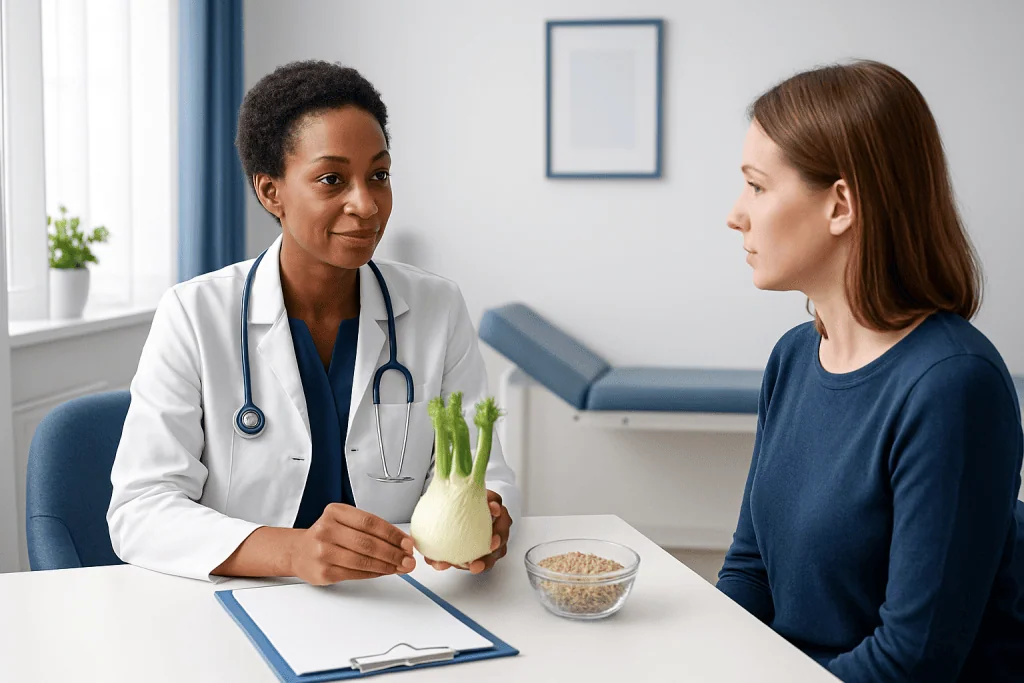
Fennel appears in several forms, and each is used differently. The bulb is eaten raw or cooked, the fronds are used like an herb, and the seeds are added to breads, spice blends, and teas. Some products contain fennel extract or essential oil, which are much more concentrated than food forms.
Many patients choose fennel tea after meals because it is easy to prepare and usually mild in taste. Culinary use is generally the simplest and safest way to include fennel in the diet. Whole food forms also make it easier to control the amount consumed compared with supplements.
Concentrated fennel products should be approached more carefully. Supplements are not the same as medicines tested for a specific condition, and product quality may vary. Essential oils should never be assumed to be harmless because they are plant-based; they can be irritating or unsafe if used incorrectly.
- Fresh fennel bulb: used in salads, soups, and roasted dishes
- Fennel seeds: used in cooking or brewed as tea
- Fennel tea: commonly used for mild digestive comfort
- Extracts and supplements: more concentrated and not always necessary
- Essential oil: should only be used with appropriate guidance
Possible side effects, allergies, and medication interactions
Although fennel is often well tolerated as a food, side effects are possible. Some people may notice nausea, stomach irritation, or allergic symptoms. Allergy is more likely in those who react to plants in the carrot family, such as celery, carrot, or certain pollens.
Fennel may also not be appropriate in concentrated amounts for people with hormone-sensitive conditions, because some plant compounds may have estrogen-like activity. This is an area where patients should be cautious about self-treating with supplements, especially during pregnancy, breastfeeding, or when managing conditions that require specialist care.
Medication interactions are another reason to use care. Herbal products can affect how the body handles medicines or may add to side effects. Anyone taking regular prescriptions, especially for seizures, hormones, blood clotting, or chronic gastrointestinal symptoms, should ask a doctor or pharmacist before using fennel supplements routinely.
If a person develops hives, swelling, wheezing, severe vomiting, or faintness after taking fennel, urgent medical attention is needed. Milder but repeated digestive symptoms should also be discussed with a clinician to rule out underlying disease rather than assuming the issue is food-related.
What the evidence says and what fennel cannot do
Research on fennel includes laboratory studies, traditional-use reports, and some small human studies. These suggest that fennel may have effects on digestion and intestinal comfort in certain situations. However, the quality and consistency of evidence vary, and results from supplements cannot automatically be applied to the whole plant used in normal meals.
It is important for patients to separate supportive use from treatment. Fennel cannot diagnose the cause of abdominal symptoms, replace prescribed medicine, or treat serious conditions such as infections, inflammatory bowel disease, ulcers, gallstones, or cancer. If symptoms are ongoing, a clinician may recommend testing and, when appropriate, endoscopy to look for structural causes.
Online advice sometimes presents fennel as a universal remedy for bloating, colic, menopause, or weight management. A more evidence-based approach is to view it as a possible comfort measure for some people, while recognizing that the right treatment depends on the actual diagnosis. For example, recurrent upper abdominal discomfort may need medical assessment rather than repeated self-treatment with teas or herbs.
How to use fennel safely in everyday life
For most healthy adults, using fennel in food is the most practical approach. It can be sliced into salads, roasted as a vegetable, or added to soups and grain dishes. Fennel tea may be tried in modest amounts if it seems soothing, but it is sensible to stop if symptoms worsen or if any reaction occurs.
Patients should be especially careful with supplements marketed for detox, rapid weight loss, hormone support, or chronic digestive relief. Products that combine multiple herbs can be harder to assess for safety and interactions. In general, the more concentrated the product, the more important it is to ask a healthcare professional before use.
People with ongoing digestive complaints may benefit from keeping a symptom diary. Tracking meals, timing, stress, bowel habits, and associated symptoms can help identify patterns and guide medical consultation. This may be helpful when distinguishing simple food sensitivity from conditions that need investigation, including irritable bowel syndrome.
A balanced diet, adequate fluid intake, regular movement, and attention to meal size are often more helpful than relying on a single herb. Fennel can fit into these habits, but it should not become a substitute for evidence-based care when symptoms are frequent or disruptive.
When to seek medical care
Medical care is important if digestive symptoms are persistent, severe, or changing over time. This includes abdominal pain that does not improve, repeated vomiting, trouble swallowing, black stools, blood in the stool, unexplained weight loss, or ongoing bloating with loss of appetite. These symptoms deserve evaluation rather than self-treatment with fennel or other home remedies.
Care should also be sought for possible allergic reactions after eating fennel or using fennel products. Rash, swelling of the lips or tongue, breathing difficulty, dizziness, or fainting need urgent attention. In children, pregnant people, and those with chronic illness, any regular use of herbal supplements should be discussed with a qualified clinician first.
If symptoms suggest a digestive disorder, specialists may consider targeted testing, dietary review, imaging, or procedures depending on the person’s history. In appropriate cases, a structured assessment through gastroenterology evaluation can help identify reflux, ulcers, food intolerance, gallbladder issues, or other causes of symptoms.
For international patients who need specialist review, Acibadem International’s multidisciplinary teams in JCI-accredited hospitals diagnose and treat digestive and general health concerns with individualized medical assessment.
Frequently asked questions
What is fennel used for?
Fennel is used as a vegetable, herb, spice, and tea ingredient. Many people use it for flavor and for mild digestive comfort, especially after meals. It is also sold in supplements, although concentrated products need more caution.
Can fennel help with bloating?
Fennel may help some people with mild bloating or gas, particularly when used as part of meals or as tea. However, it is not a treatment for the underlying cause of ongoing symptoms. Persistent bloating should be discussed with a doctor.
Is fennel tea safe to drink every day?
For many healthy adults, fennel tea in modest amounts is likely to be tolerated. Still, daily use is not appropriate for everyone, especially if there is allergy risk, pregnancy, breastfeeding, hormone-sensitive conditions, or regular medication use. A clinician or pharmacist can advise based on personal health history.
Who should avoid fennel?
People with known allergy to fennel or related plants should avoid it. Extra caution is also sensible for those with hormone-sensitive conditions, pregnant or breastfeeding individuals, and anyone taking regular medicines that could interact with herbal products. Concentrated supplements are more concerning than normal food use.
Can fennel replace treatment for digestive problems?
No. Fennel may be a supportive dietary option for mild symptoms, but it cannot diagnose or treat serious digestive disease. If symptoms are frequent, painful, or associated with warning signs, proper medical evaluation is important.
Is fresh fennel better than fennel supplements?
In many cases, yes. Fresh fennel and fennel used in cooking are generally simpler, less concentrated, and easier to include in a balanced diet. Supplements may offer higher doses, but they also bring more uncertainty about interactions, side effects, and product quality.
References
- World Health Organization
- National Center for Complementary and Integrative Health
- U.S. Food and Drug Administration
- National Institutes of Health
- European Medicines Agency
This article is for general information only and is not a substitute for professional medical advice. Please consult a qualified doctor about your individual situation.
Persistent digestive symptoms? Get evaluated in Turkey
JCI-accredited · board-certified surgeons · reply within 24h
Add us as a Preferred Source to see more of our trusted health content across Google Search, AI Overviews and Discover.