Fetal Doppler: A Complete Medical Overview

Fetal Doppler uses sound waves to evaluate a baby's heartbeat and, in some cases, blood flow in pregnancy. A handheld Doppler used in clinic is different from a formal Doppler ultrasound scan that measures circulation in the placenta and fetus.
Key Takeaways
- Fetal Doppler uses sound waves to evaluate a baby's heartbeat and, in some cases, blood flow in pregnancy.
- A handheld Doppler used in clinic is different from a formal Doppler ultrasound scan that measures circulation in the placenta and fetus.
- Doctors may recommend fetal Doppler more often in high-risk pregnancies or when there are concerns about fetal growth or wellbeing.
- Home fetal Doppler devices can be misleading and should not be used to delay medical advice if symptoms occur.
- Regular prenatal visits remain the safest way to monitor pregnancy health.
Fetal Doppler is an ultrasound-based method used in pregnancy to listen to a baby’s heartbeat or assess blood flow in the baby, placenta, and umbilical cord. It is a useful medical tool when used appropriately by trained professionals, but home devices do not replace prenatal care or professional evaluation.
Overview: what fetal Doppler means
Fetal Doppler is a type of ultrasound technology used during pregnancy to detect a baby’s heartbeat and, when needed, study blood flow in the placenta, umbilical cord, and fetal blood vessels. In everyday use, the term may refer either to a small handheld device used during a prenatal visit or to a more detailed Doppler ultrasound scan performed by an imaging specialist.
The handheld version helps a clinician listen to the fetal heartbeat from outside the abdomen. A formal Doppler scan does more than that: it measures how blood moves through specific vessels and can give important information about placental function and the baby’s wellbeing. This is especially helpful when a pregnancy needs closer monitoring.
Fetal Doppler is different from a standard ultrasound, although both use sound waves rather than radiation. Standard ultrasound mainly creates images of the baby and pregnancy structures, while Doppler techniques focus on movement, particularly the movement of blood. Because of this, fetal Doppler is often used as part of broader pregnancy assessment rather than as a stand-alone test.
How fetal Doppler works and what it is used for
Doppler ultrasound works by sending high-frequency sound waves into the body. When these sound waves bounce off moving blood cells, the device detects changes in frequency and converts them into sound or visual waveforms. In a handheld device, this may be heard as the baby’s heartbeat. In a full ultrasound exam, it may appear as color flow or a measured blood-flow pattern on a screen.
In routine prenatal care, a clinician may use a handheld fetal Doppler to confirm and monitor the fetal heartbeat after it becomes detectable externally, usually later in the first trimester or in the second trimester depending on body shape, baby position, and gestational age. Not hearing the heartbeat immediately does not always mean there is a problem, especially early in pregnancy.
A formal Doppler scan may be recommended when a doctor wants more information about circulation between the placenta and baby. Common reasons include suspected fetal growth restriction, high blood pressure in pregnancy, twin pregnancy, diabetes, reduced fetal movements, or other concerns. In this setting, fetal Doppler is part of pregnancy follow-up and delivery care and helps guide safe monitoring and timing of further assessments.
- Listen to or confirm the fetal heartbeat during prenatal visits
- Assess blood flow in the umbilical artery and other fetal vessels
- Support monitoring in high-risk pregnancies
- Help evaluate placental function and fetal wellbeing
When fetal Doppler may be recommended

Not every pregnancy needs repeated formal Doppler studies. In many uncomplicated pregnancies, routine prenatal visits and standard ultrasounds are enough. However, a doctor may recommend fetal Doppler when there is a medical reason to look more closely at blood flow or fetal condition.
One common indication is concern about fetal growth. If the baby appears smaller than expected, Doppler assessment of the umbilical artery and other vessels can help show whether the placenta is delivering blood efficiently. This can be important in pregnancies complicated by preeclampsia, chronic high blood pressure, kidney disease, or certain autoimmune conditions.
Fetal Doppler may also be used in multiple pregnancy, especially when twins share a placenta, or when there is decreased fetal movement, abnormal amniotic fluid, diabetes, or a history of complications in a previous pregnancy. In some cases, it is combined with growth scans, biophysical profile, or cardiotocography to build a more complete picture. The decision to use it, and how often, depends on the individual pregnancy rather than a single rule for everyone.
What happens during the test
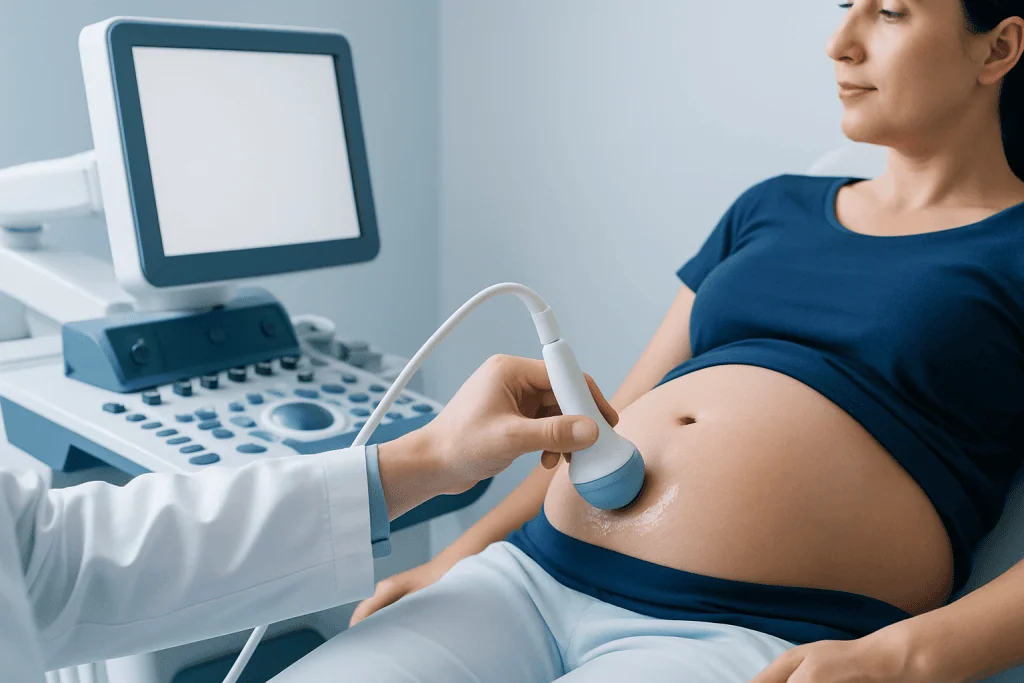
A handheld fetal Doppler check during a prenatal visit is usually quick. Gel is placed on the abdomen, and the clinician moves the device over the skin to find the heartbeat. The sound is then amplified so it can be heard. This type of check is generally painless and takes only a few minutes.
A formal Doppler ultrasound scan is also noninvasive. The pregnant person usually lies on an examination bed while a sonographer or doctor applies gel and moves an ultrasound probe across the abdomen. Images and blood-flow waveforms are recorded from selected vessels, such as the umbilical artery, middle cerebral artery, or uterine arteries, depending on the clinical question.
Preparation is usually minimal. A full bladder is not always necessary, especially later in pregnancy, although instructions can vary by gestational age and facility. The scan itself does not harm the baby when performed appropriately by trained professionals. If fetal growth or other concerns are present, the doctor may pair Doppler assessment with a standard ultrasound examination for a fuller evaluation.
Understanding the results
The meaning of fetal Doppler results depends on why the test was ordered and how far the pregnancy has progressed. A normal handheld Doppler check confirms that a fetal heartbeat is present, but it does not provide a complete assessment of fetal health. A reassuring heartbeat still needs to be interpreted alongside symptoms, fetal movement, gestational age, and other clinical findings.
In a formal Doppler scan, doctors look at blood-flow patterns and whether resistance in certain vessels is higher or lower than expected. For example, abnormal flow in the umbilical artery can suggest that the placenta is not working as efficiently as it should. Changes in other vessels may show how the baby is adapting if oxygen or nutrient delivery is reduced.
Abnormal Doppler findings do not always mean an emergency, but they do mean the pregnancy may need closer follow-up. This could include repeat scans, more frequent prenatal visits, fetal heart monitoring, or planning the safest time and method of delivery. If concerns are identified, care may involve specialists in perinatology or maternal-fetal medicine to support decision-making.
Safety, limitations, and home fetal Doppler devices
Medical fetal Doppler is considered safe when used appropriately by trained healthcare professionals. Ultrasound has been used in obstetric care for many years, and professional guidance supports its use when there is a clear medical purpose. The goal is to use the lowest level of ultrasound exposure needed to obtain useful information.
Home fetal Doppler devices deserve special caution. Although they may seem reassuring, they can also be confusing. A person may mistake their own pulse or blood flow for the baby’s heartbeat, or hear a heartbeat and assume everything is fine despite symptoms that need urgent evaluation. For this reason, home devices should never replace prenatal appointments or be used to decide whether to seek care.
Fetal Doppler also has clinical limits. It cannot diagnose every pregnancy problem, and a normal reading at one moment does not guarantee that all is well later. Reduced fetal movement, vaginal bleeding, fluid leakage, severe abdominal pain, or signs of high blood pressure in pregnancy still require prompt medical advice, even if a heartbeat was heard at home or earlier in the day.
Prevention, self-care, and healthy pregnancy monitoring
Fetal Doppler is a monitoring tool, not a way to prevent complications by itself. The best approach to a healthy pregnancy is regular prenatal care, early reporting of symptoms, and following the care plan recommended by the obstetric team. This may include blood pressure checks, blood tests, urine tests, growth scans, and treatment of existing medical conditions.
Simple self-care can also support pregnancy health. Attending scheduled appointments, taking prescribed prenatal supplements, eating a balanced diet, staying hydrated, and avoiding smoking, alcohol, and non-prescribed drugs all matter. People with conditions such as hypertension or diabetes should work closely with their doctors to keep these under control during pregnancy.
Learning the baby’s usual pattern of movement in the third trimester can be useful, although movement naturally varies. Any clear reduction or change should be discussed with a healthcare professional rather than checked only with a home device. If there is concern about pregnancy complications, doctors may also investigate related conditions such as gestational diabetes as part of overall monitoring.
When to seek medical care
Medical advice should be sought promptly during pregnancy if there is vaginal bleeding, leaking fluid, strong or persistent abdominal pain, fever, severe headache, vision changes, swelling of the face or hands, or reduced fetal movements after they have become established. These symptoms can have different causes, but all deserve professional assessment.
Urgent care is especially important if there is a known high-risk pregnancy, a history of complications, or a recent scan showing concerns about fetal growth or placental blood flow. In these situations, it is safest not to rely on a home fetal Doppler for reassurance. A clinician may need to perform an examination, fetal heart monitoring, blood pressure check, or repeat imaging.
For international patients who need evaluation or follow-up, Acibadem International’s multidisciplinary specialists in JCI-accredited hospitals diagnose and manage pregnancy-related concerns, including those that may require advanced fetal monitoring. The most appropriate next step should always be decided with a qualified obstetric professional who knows the details of the pregnancy.
Frequently asked questions
What is a fetal Doppler used for in pregnancy?
Fetal Doppler is used to detect the baby’s heartbeat and, in a more detailed scan, to assess blood flow in the placenta, umbilical cord, and fetal vessels. It helps clinicians monitor fetal wellbeing, especially when a pregnancy needs closer observation.
Is fetal Doppler the same as a regular ultrasound?
No. Both use sound waves, but a regular ultrasound mainly creates images, while Doppler ultrasound focuses on movement such as blood flow. A handheld Doppler used in the clinic is also different from a formal Doppler scan done by an imaging specialist.
When can a fetal heartbeat be heard with a Doppler?
A fetal heartbeat may sometimes be heard with a handheld Doppler toward the end of the first trimester, but timing varies. Factors such as gestational age, body shape, and the baby’s position can affect when it becomes detectable.
Are home fetal Doppler devices safe to use?
The main concern with home fetal Doppler devices is not usually physical harm, but false reassurance or confusion. Hearing a sound at home does not rule out a problem, and not finding a heartbeat can create unnecessary anxiety. They should never replace prenatal care or delay medical evaluation.
Why would a doctor order a Doppler ultrasound in pregnancy?
A doctor may order Doppler ultrasound if there are concerns about fetal growth, placental function, high blood pressure in pregnancy, diabetes, twin pregnancy, or reduced fetal movement. The test provides additional information that helps guide monitoring and treatment decisions.
What happens if fetal Doppler results are abnormal?
Abnormal results usually mean the pregnancy needs closer follow-up, not necessarily that an emergency is present. The doctor may recommend repeat scans, additional fetal monitoring, or changes to the care plan based on gestational age and the overall clinical picture.
This article is for general information only and is not a substitute for professional medical advice. Please consult a qualified doctor about your individual situation.
Explore treatments in Turkey — costs, top hospitals & a free quote
JCI-accredited · board-certified surgeons · reply within 24h
Add us as a Preferred Source to see more of our trusted health content across Google Search, AI Overviews and Discover.
Check your numbers in seconds
BMI, calories, due date, blood pressure and 30+ more clinical calculators — free, instant, doctor-reviewed ranges.

More from the Health Library

Dead Tooth: An Evidence-Based Guide for Patients

Stiffness: A Complete Medical Overview

Brachycephaly: What Patients Need to Know

Benjamin Button Illness: What Patients Need to Know

Ulnar Nerve: A Complete Medical Overview